Learn how a regional trucking company transformed audit preparation from a three-week scramble into a routine 30-minute task—passing 100% of DOT audits, reducing compliance violations by 89%, and maintaining continuous audit readiness that improved their CSA scores by 34 points.
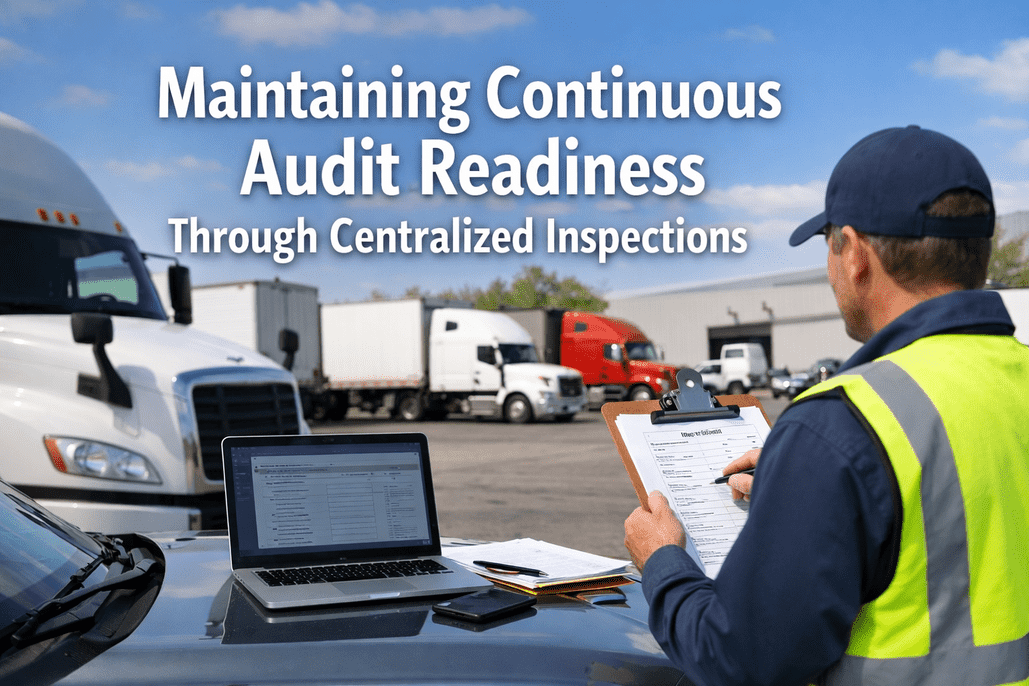
Maintaining Continuous Audit Readiness Through Centralized Inspections
The Fleet & Compliance Challenge
For most trucking operations, the words "DOT audit" trigger panic. Files get pulled from cabinets, staff scrambles to locate missing documents, and everyone hopes the paperwork from six months ago is actually where it should be. This regional carrier had experienced that chaos three times—and decided the fourth audit would be different. Schedule a consultation to discuss your fleet's audit readiness challenges.
This carrier had grown rapidly through acquisition, inheriting three different documentation systems, inconsistent inspection practices, and a compliance culture that treated audits as emergencies rather than routine business. Their CSA scores were creeping toward intervention thresholds, and the safety director spent more time hunting for paperwork than actually improving safety.
Audit Readiness Challenges
A comprehensive assessment revealed that the fleet's audit struggles weren't about missing safety practices—they were about proving those practices existed. Documentation was scattered across three terminals, multiple filing systems, and dozens of driver clipboards.
Scattered Documentation
Inspection records lived in truck cabs, terminal offices, and personal filing cabinets. Finding a specific DVIR could take hours—if it could be found at all.
Inconsistent Compliance
Each terminal had developed its own inspection procedures. Auditors found significant variation in what got checked, how defects were documented, and whether repairs were verified.
Expired Document Gaps
Medical certificates, annual inspections, and driver qualifications frequently lapsed without anyone noticing until an audit or roadside inspection exposed the gap.
Audit Preparation Burden
Every DOT audit required 2-3 weeks of preparation, pulling staff from safety duties to hunt for documents. The compliance team dreaded audit notices more than the audits themselves.
Recent Audit Performance
Missing DVIRs, incomplete driver files, expired medical certificates
12 violations documented, 90-day corrective action required
8 violations, CSA scores approaching intervention threshold
Inspection Record Gaps
A detailed documentation audit revealed the scope of the problem. The fleet wasn't failing to perform inspections—they were failing to create an audit trail that could prove compliance on demand.
Documentation Gap Analysis
Percentage of records that could be produced within required timeframes
Most Common Audit Failures (Industry Data)
The safety director summarized the problem: "We were doing the work. Our drivers were inspecting vehicles. Our mechanics were making repairs. But if an auditor asked for proof, we couldn't produce it reliably. That's not a safety problem—it's a documentation problem. And it was costing us just as much."
Centralized Documentation Strategy
The solution required more than digitizing paper forms—it meant creating a single source of truth for all compliance documentation across all three terminals, accessible in real-time by anyone who needed it. Schedule a demo to see how centralized documentation works in practice.
Single Digital Repository
All inspection records, driver files, maintenance documentation, and compliance certificates stored in one cloud-based system. Every document tagged by vehicle, driver, date, and document type for instant retrieval.
Standardized Inspection Protocols
Unified digital checklists across all terminals ensuring every driver checks the same items in the same sequence. Required fields, photo documentation, and GPS timestamps create audit-proof records automatically.
Automated Expiration Tracking
System monitors all time-sensitive documents—medical certificates, annual inspections, CDL renewals, drug test schedules—and alerts appropriate staff 60, 30, and 7 days before expiration.
Real-Time Compliance Dashboard
Executive visibility into fleet-wide compliance status at any moment. Drill down by terminal, vehicle, driver, or document type. Know exactly where gaps exist before auditors find them.
Struggling with Scattered Documentation?
Our team can help you assess your current documentation gaps and design a centralized system that keeps your fleet audit-ready 365 days a year—without adding administrative burden.
Implementation & Adoption
Rolling out centralized documentation across three terminals with 203 drivers required careful change management. The fleet used a phased approach that prioritized quick wins to build momentum.
Foundation (Weeks 1-3)
- Migrated existing digital records to centralized platform
- Scanned and indexed critical paper documents
- Configured document types, retention rules, and alert thresholds
- Trained compliance staff on new system
Digital Inspections (Weeks 4-6)
- Deployed mobile inspection app to all drivers
- Standardized DVIR checklists across terminals
- Integrated with maintenance system for automatic work order creation
- Paper DVIRs officially retired
Full Integration (Weeks 7-10)
- Connected ELD data feeds for automatic HOS record archival
- Integrated drug/alcohol testing provider documentation
- Automated annual inspection scheduling and certificate tracking
- Launched compliance dashboard for management visibility
Continuous Improvement (Ongoing)
- Quarterly mock audits using centralized documentation
- Monthly compliance reviews with terminal managers
- Automated weekly compliance score reports
- CSA score monitoring with proactive intervention
"The biggest change wasn't the technology—it was the mindset. We stopped thinking about compliance as something we prove during audits and started thinking about it as something we maintain every day. The system just makes that possible."
— Safety DirectorAudit Confidence Improvements
Within 12 months of implementing centralized documentation, the fleet experienced a complete transformation in their audit readiness—from dreading DOT reviews to welcoming them as validation of their compliance program.
Zero violations in two subsequent audits
Now well below intervention thresholds
Down from 18 days previously
From 8 violations to zero in most recent audit
Up from 67% with paper process
Down from 3+ hours searching files
Automated alerts prevent lapses
Reduced admin labor, avoided fines, lower insurance
Down from 4-5 people previously
Audit Experience: Before vs. After
Compliance Best Practices
The transformation revealed several best practices that any fleet can apply to improve audit readiness—whether using digital tools or not.
Think "Audit-Ready" Daily, Not Annually
The goal isn't to prepare for audits—it's to never need preparation. Every document should be audit-ready the moment it's created. If you can't produce a record in 60 seconds today, you won't produce it in an audit tomorrow.
Automate Expiration Tracking
Human memory isn't reliable for tracking 203 drivers' medical certificates, CDL renewals, and annual inspections. Automated alerts at 60, 30, and 7 days prevent gaps before they become violations.
Standardize Across Locations
Multi-terminal operations need identical processes everywhere. Auditors compare records across your fleet—inconsistency itself becomes a finding, even if individual locations are compliant.
Conduct Quarterly Mock Audits
Request 20 random records using the same criteria DOT auditors use. If you can't produce them quickly and completely, fix the gap before a real auditor finds it.
Make Compliance Visible
Dashboards showing real-time compliance status create accountability. When everyone can see the fleet's audit-ready percentage, gaps get fixed faster.
Close the Loop on Defects
Every reported defect needs documented resolution. Auditors look for evidence that defects were actually repaired—not just that they were reported.
"Our last DOT audit was almost anticlimactic. The auditor asked for 25 different records, and we produced every single one in under a minute each. He actually commented that we were one of the most organized fleets he'd reviewed. Three years ago, that same audit would have taken us two weeks to prepare for and we still would have had violations. The difference is night and day."
Achieve Continuous Audit Readiness
Stop treating DOT audits as emergencies. With centralized inspection documentation, continuous compliance becomes routine—protecting your operating authority, improving CSA scores, and freeing your safety team to focus on actually improving safety instead of hunting for paperwork. Start your free trial and experience audit confidence from day one.
Ready to Pass Every Audit?
See how centralized inspection documentation can transform your compliance program—making audit readiness automatic instead of exhausting.
Start Free Trial Schedule Compliance Consultation

.png)