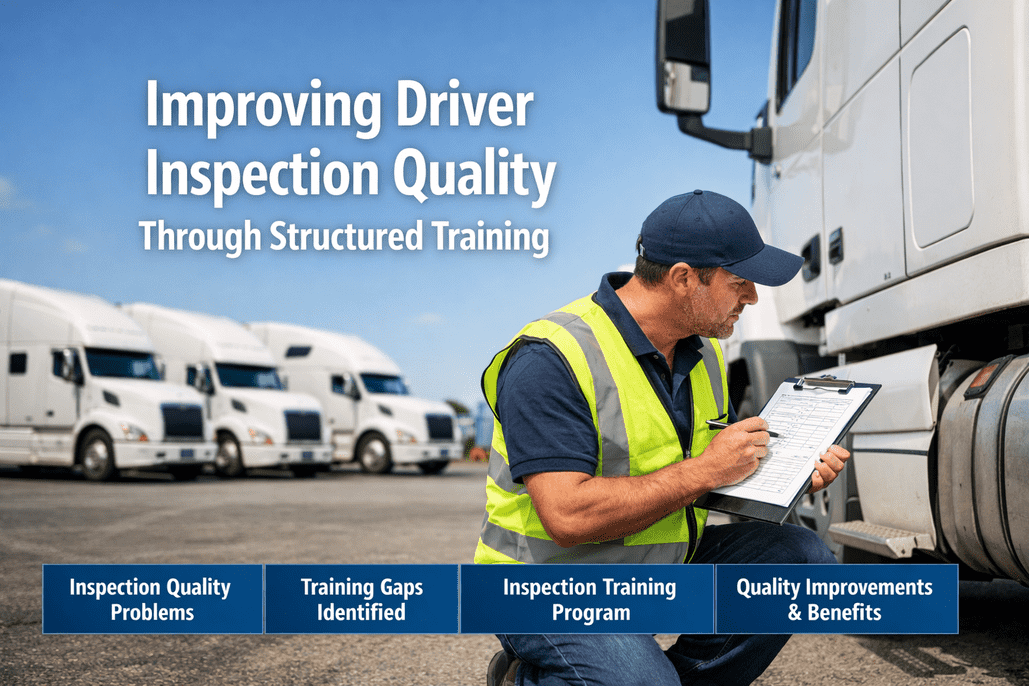
Discover how a targeted driver training program transformed inspection accuracy from 68% to 94% defect capture rate—reducing roadside violations by 71% and building a lasting culture of inspection excellence.
Improving Inspection Accuracy Through Targeted Driver Training
The Accuracy Challenge
When drivers rush through inspections or lack proper training, defects get missed. And missed defects don't stay hidden—they show up at roadside inspections, cause breakdowns, and create safety incidents. This fleet discovered that their inspection accuracy problem wasn't about compliance—it was about capability. Schedule a consultation to discuss your inspection training challenges.
Fleet Profile
Accuracy and Safety Risks
Research shows that manual inspections typically achieve only 70-80% accuracy in defect detection—meaning 20-30% of issues go unreported. For this fleet, the consequences were adding up.
Inspection Errors Identified
Before training could improve, the fleet needed to understand exactly where inspections were failing. A 60-day audit comparing driver inspection reports against technician findings revealed clear patterns.
Where Inspections Were Failing
Key Finding: 73% of missed defects were visual items that required knowing what to look for—not complex mechanical knowledge.
Training Gaps Analysis
The error patterns pointed to specific training gaps. Drivers weren't careless—they were undertrained. Start your free trial to see how digital inspections guide drivers through proper procedures.
No Consistent Method
Drivers inspected in random order, frequently missing the same areas. No "circle check" routine was taught or enforced.
Unknown Thresholds
Drivers couldn't distinguish between "worn" and "requires attention"—tire tread depth, brake pad limits, and fluid levels were guesswork.
Time Pressure
Average inspection time was 4 minutes—half the 8-10 minutes needed for thorough checks. Speed was prioritized over accuracy.
No Feedback Loop
Drivers never learned what they missed. When technicians found defects, the information didn't flow back to the driver who missed it.
The Coaching and Training Program
Rather than generic compliance training, the fleet built a targeted program addressing the specific gaps identified. The approach combined structured learning with hands-on coaching and ongoing reinforcement.
Structured Inspection Method
Every driver learned the "circle check" method—walking around the vehicle three times at different heights (ground level, mid-level, overhead). This creates muscle memory and ensures consistent coverage.
- Front section inspection sequence
- Passenger side walk-through
- Rear component checks
- Driver side completion
- Interior and under-hood final review
Defect Recognition Training
Hands-on sessions with real defects—worn tires, damaged lights, fluid leaks—taught drivers exactly what to look for and when to report.
- Tire tread depth measurement
- Brake wear indicator identification
- Fluid leak severity assessment
- Light and reflector functionality
- Safety-critical vs. monitor items
Digital Guidance Tools
Mobile inspection app with visual cues, required photo fields, and pass/fail logic helped drivers complete inspections properly every time.
- Step-by-step guided workflows
- Photo requirements for key components
- Automatic time tracking
- Defect severity classification
- Instant maintenance alerts
Continuous Feedback System
When technicians found defects drivers missed, the driver received immediate feedback with photos showing what was overlooked and why it matters.
- Weekly accuracy scorecards
- Missed defect photo reviews
- One-on-one coaching sessions
- Monthly recognition for top performers
- Quality bonuses tied to accuracy metrics
Behavior Change Implementation
Training alone doesn't change behavior—systems do. The fleet implemented accountability mechanisms that reinforced proper inspection habits daily. Learn more about inspection best practices in our comprehensive guide.
Baseline Assessment
Audited current inspection quality, established individual driver accuracy scores, identified top training priorities.
Core Training Delivery
All 189 drivers completed structured training in small groups. Hands-on practice with real defects. Digital tool onboarding.
Reinforcement Period
Daily coaching for drivers below 85% accuracy. Random quality audits comparing reports to vehicle condition.
Performance Integration
Inspection quality added to performance reviews. Recognition program launched. Peer mentoring for struggling drivers.
Continuous Improvement
Monthly refresher sessions, quarterly defect recognition updates, annual recertification with hands-on evaluation.
Accuracy Metrics and Results
Within 6 months, the fleet transformed from below-average to industry-leading inspection accuracy—with the compliance improvements to prove it.
Accuracy Improvement by Category
Ready to Improve Your Inspection Accuracy?
See how digital inspection tools with built-in training guidance can transform your defect capture rates.
Long-Term Benefits
The real value of inspection training isn't immediate compliance—it's the sustained culture change that compounds over time.
Immediate Accuracy Gains
Defect capture rate reached 90%. Drivers began catching issues before they became violations.
Compliance Transformation
Roadside violations dropped 71%. CSA scores improved enough to exit intervention threshold.
Insurance Recognition
Insurance premiums stabilized, then reduced 8% at renewal based on improved safety record.
Culture Embedded
New drivers onboard faster. Peer mentoring sustains quality. Inspection excellence becomes "how we do things."
Lessons Learned
After 18 months of sustained improvement, the fleet identified the principles that made their training program successful.
Target Specific Gaps
Generic compliance training doesn't improve accuracy. Analyze where inspections fail, then train those exact skills.
Show Real Defects
Drivers learn best from seeing actual worn tires, damaged lights, and fluid leaks—not just pictures in a manual.
Close the Feedback Loop
When technicians find missed defects, that information must reach the driver who missed it—with coaching, not blame.
Measure and Reward
What gets measured gets improved. Individual accuracy scores, recognition programs, and quality bonuses drive sustained behavior change.
"We thought our drivers were being careless. Turns out, they just didn't know what 'worn' looked like versus 'needs replacement.' Once we showed them real defects and gave them a consistent method, accuracy jumped almost overnight. The technology helps, but the training is what changed the culture."
Build Your Inspection Excellence Program
Inspection accuracy is a trainable skill. With the right methods, tools, and feedback systems, your drivers can achieve industry-leading defect capture rates—and the compliance improvements that follow. Start your free trial and experience guided digital inspections that reinforce proper technique.
Ready to Transform Inspection Accuracy?
See how digital inspection tools with built-in guidance can improve defect capture rates across your fleet.