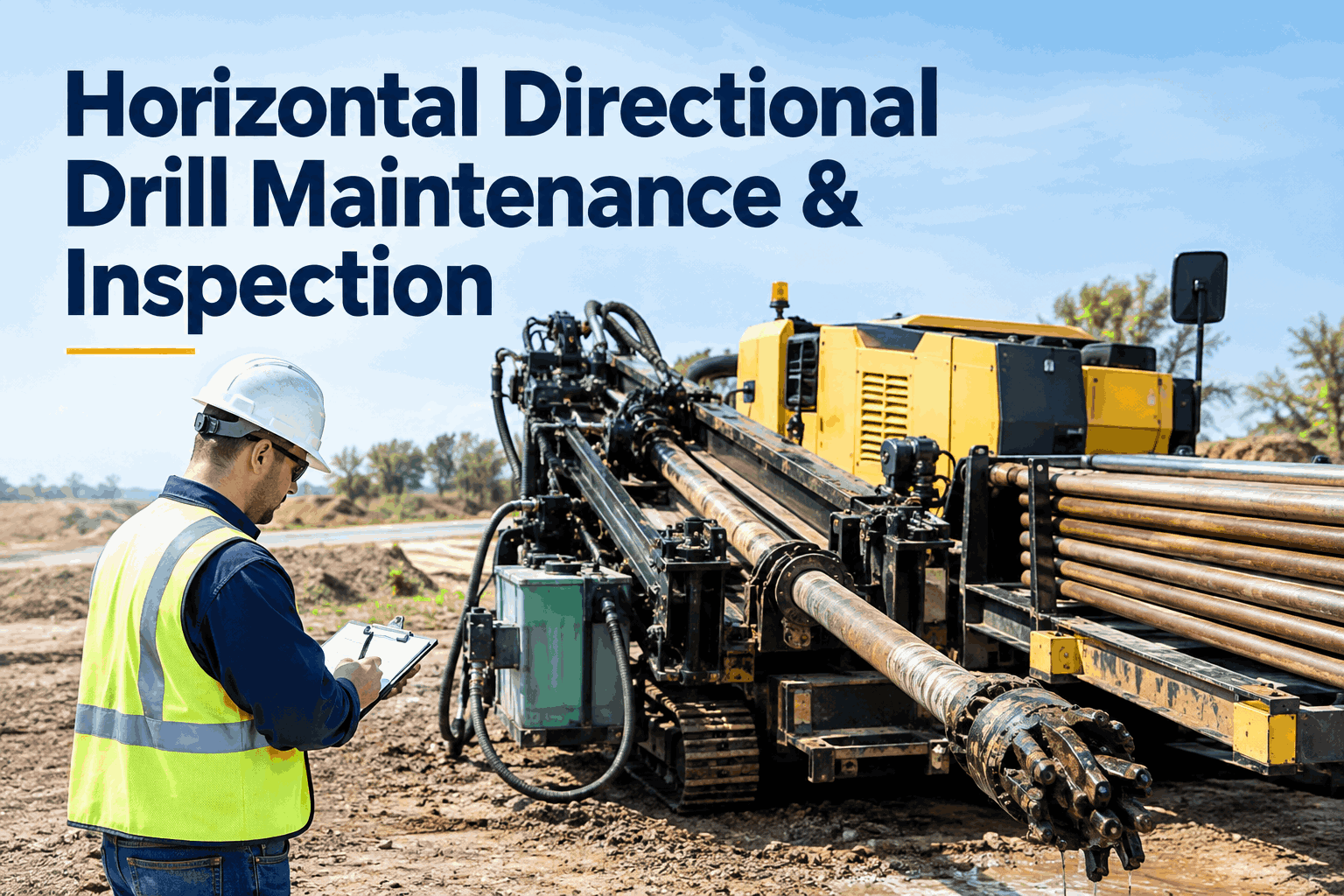
Every HDD crew knows the sound they dread: the rig loading up on pullback with 300 feet of tooling still in the ground. That is the moment directional drill maintenance stops being paperwork and becomes the most expensive call on the jobsite. This page breaks down what a downhole failure actually costs, which faults strand a bore and how a tracked program keeps the problem in the yard — book a demo to see it on your rigs.
The Real Cost of Skipping Directional Drill Maintenance
A missed check on a directional drill doesn't cost you a repair bill. It costs you a stranded bore, an idle crew, and a utility install that slips past its deadline. Here's where the money actually goes — and how a tracked program keeps the failure on the surface.
The reason directional drill maintenance carries more weight than almost any other equipment on a jobsite comes down to one thing: location of failure. When a wheel loader breaks down, the fix happens where you can see it. When an HDD rig fails, the most expensive part of the machine is often hundreds of feet underground and getting harder to reach by the minute. That single difference is what turns a cheap part into a five-figure problem. This is a separate concern from the day-to-day systems servicing — for the mechanical side-by-side, see our four-system HDD maintenance breakdown; this page is about the cost math that makes that servicing pay for itself.
Why The Same Defect Costs 20x More Underground
A worn mud-pump seal, a mushroomed rod connection, a chafed hydraulic hose — these are cheap parts. What makes them dangerous on a directional drill is timing. Caught on the morning walk-around, it's a ten-minute fix. Caught 40 feet into a pilot bore, it's a lost shift. Caught on pullback with product in the hole, it can become a recovery job. The part never changes price; the moment you find it does.
Caught before the bore
A pre-shift check flags the worn seal or loose fitting. You swap the part, log it, and the rig starts on time. The cost is the part and a few minutes of labor.
Caught during drilling
The same defect surfaces 40 feet down. Now it's a trip-out, a crew standing around, and a bore you may have to re-establish. A half-day gone, plus the part.
Caught on pullback
Failure hits with tooling and product in the hole. Recovery can mean a hammer, a push rig from the exit side, or abandoning the bore and re-permitting a new one — days lost and liquidated damages in play.
Industry accounts of stuck-tooling recoveries read like disaster stories — contractors bringing in million-pound hammers and second drill rigs, or abandoning a hole and waiting up to 45 days to re-permit an adjacent bore while liquidated damages accrue every day past the contract deadline. None of that starts as a big failure. It starts as a small part nobody checked. Keeping the failure at Stage 1 is the entire job of a directional drill maintenance program, and it's why utility contractors are moving pre-shift checks off paper. Book a demo to see a defect flagged before the bore.
Which HDD Failures Actually Strand A Bore
Not every fault on a directional drill is a crisis. The maintenance dollars that matter most are the ones aimed at the failures that can trap tooling underground — because those are the ones the cost model above punishes hardest. Here's how the common faults sort out.
A mushroomed pin end from under-torqued makeup, a galled thread, or a cracked starter rod fails downhole with the string committed. This is the classic stuck-tooling scenario — and the most expensive consumable on the rig.
A mud pump that quits mid-bore stops cooling the bit and carrying cuttings, and the hole can start to collapse around the tooling. Fluid failure is one of the fastest ways to lose a bore you were winning.
Overheating or contamination cuts thrust, pullback, and rotation power. It usually stops the bore rather than trapping it — but a stall at the wrong moment on pullback still puts product at risk.
Engine, drivetrain, and undercarriage faults are serious but recoverable where you can see them. They cost you a shift, not a bore — still worth catching early, but rarely the reason tooling gets stuck.
The pattern is clear: the two systems unique to directional drilling — the drill string and the mud system — are also the two that strand a bore. A generic heavy-equipment inspection skips both. That's why HDD rigs need a template built for them, where every pre-shift check knows the difference between a fault that costs a shift and a fault that costs a bore. Try HVI free and inspect a drill the way it deserves.
The Pre-Shift Directional Drill Inspection Checklist
This is the routine that keeps failures at Stage 1. Run it every morning before boring starts — it takes minutes and it's the single highest-return habit on an HDD jobsite. The items are ordered the way the cost model tells you to prioritize: the bore-stranding systems first.
Drill rod & connections
- Inspect pin-end threads for mushrooming, galling, or flaring
- Confirm makeup torque is correct — under-torque is the root of stuck rods
- Check rod loader alignment, especially on larger rigs
- Lubricate connections; look for cracked or worn starter rods
Mud / drilling-fluid system
- Inspect the mud pump and seals for wear or leaks
- Clean the mixing system and screens; clear any buildup
- Verify the correct fluid mix and flow before the bore begins
- Check hoses and fittings; confirm the system was flushed after the last job
Hydraulic system
- Check reservoir level and fluid condition
- Scan for leaks under the machine and at fittings
- Inspect hoses for chafing and cracking at the carriage and hose carrier
- Confirm filters are within their service interval
Fluids & powertrain
- Verify engine oil, coolant, and fuel levels; top off as needed
- Check the air-filter restriction indicator
- Inspect belts and hoses for cracking or looseness
- Check track tension, rollers, and lugs
Electrical & safety
- Confirm battery, connections, and harnesses — look for fraying
- Test lights, alarms, E-stop, and interlocks
- Inspect shields and safety decals; replace damaged ones
- Log every check — a photo-backed record beats a signature nobody reads
On paper, this checklist gets skipped the moment the site runs hot and the crew's chasing footage — and the morning it gets skipped is usually the morning something small slips through. On HVI, each item is a required, photo-backed step, so a mushroomed rod connection or a weeping mud-pump seal can't be waved past on a busy day. Book a demo to see the HDD pre-shift template in action.
How A Tracked PM Program Pays For Itself
The math on preventive maintenance for directional drills is unusually favorable, because the thing you're avoiding is so expensive. You're not just saving a repair — you're avoiding the lost shift, the recovery job, and the schedule slip behind it. A tracked program earns its keep in three moves.
Inspect daily, by phone
The crew runs the guided pre-shift check on a phone — drill rod, mud system, hydraulics, powertrain — with a photo on any defect. The bore-stranding systems get eyes on them every single morning.
Schedule by engine hours
The 50 / 250 / 500 / 1,000-hour services track against actual engine hours, not the calendar, so a hard-bored rig gets serviced when it's earned it. The work order fires before each interval comes due.
Fix early, document everything
A flagged defect becomes a routed work order; every inspection and service logs to the rig's record. When the program cuts breakdowns, you have the timestamped proof — and an audit-ready history for the fleet.
Across fleet-heavy operations, unplanned downtime is consistently one of the largest recurring costs on the books, and HVI users report meaningfully lower annual maintenance spend once inspections and PM move off paper onto one connected system. On a directional drill, where a single stranded bore can dwarf a year of routine servicing, the payback case writes itself. Explore how it fits your fleet on the preventive maintenance and daily operator reporting pages, or book a demo to see the numbers on your rigs.
From a maintenance manager who's pulled tooling out of the ground
The first time we lost a bore to a mud-pump seal, I stopped thinking of the walk-around as paperwork. That seal was a forty-dollar part. Getting the tooling back cost us the better part of a week and a very uncomfortable call with the utility.
Now the pre-shift check is on a phone and it will not let a crew start until the drill string and the mud system are signed off with a photo. I don't chase clipboards anymore, and I can show a client the rig's whole service history in about thirty seconds. It's not the fuel savings that sold me — it's that we haven't left tooling underground since.
Frequently asked questions
Why is directional drill maintenance more critical than on other equipment?
Because the failure happens where you can't reach it. A surface machine that quits gets towed; a directional drill that fails downhole can strand the drill string hundreds of feet into a bore. The same cheap part costs a repair on the surface and a recovery operation underground — that gap is what makes HDD maintenance high-stakes.
Which HDD failures are most likely to strand a bore?
Drill string and mud-system failures. A mushroomed or cracked rod connection can trap tooling, and a mud pump that quits stops cooling the bit and carrying cuttings, so the hole can collapse around the string. Hydraulic and powertrain faults usually halt the bore rather than trap it. Prioritize the drill string and mud system on every pre-shift check.
What should be on a daily HDD pre-shift inspection?
Drill rod and connections first (pin threads, makeup torque, loader alignment), then the mud system (pump, seals, screens, fluid mix), hydraulics (level, leaks, hose chafing, filters), fluids and powertrain, and electrical and safety systems. Order it so the bore-stranding systems get checked before the surface-fixable ones.
How often should a horizontal directional drill be serviced?
By engine hours, following your model's manual. Vermeer and Ditch Witch publish services at 50, 100, 150, 250, 500, and 1,000 hours, plus a daily walk-around. Usage-based scheduling beats the calendar for hard-bored rigs — a drill working heavy ground earns its service faster than the calendar would predict.
Can inspection software really prevent a stuck-tooling event?
It can't guarantee it, but it removes the most common cause: a skipped check on a busy morning. HVI makes each pre-shift item a required, photo-backed step and schedules PM by engine hours, so a weeping seal or mushroomed rod gets flagged in the yard instead of downhole. It's a compliance and documentation layer, not a replacement for operator judgment.
Stop Leaving Tooling Underground
Guided daily inspections for the drill string, mud system, hydraulics, and powertrain. Hour-based PM scheduling that fires the work order before the interval's due. Defect-to-work-order routing with photos, and a timestamped service history for every rig — trusted by 25,000+ users worldwide.
No credit card · No hardware · HDD inspection templates ready on day one