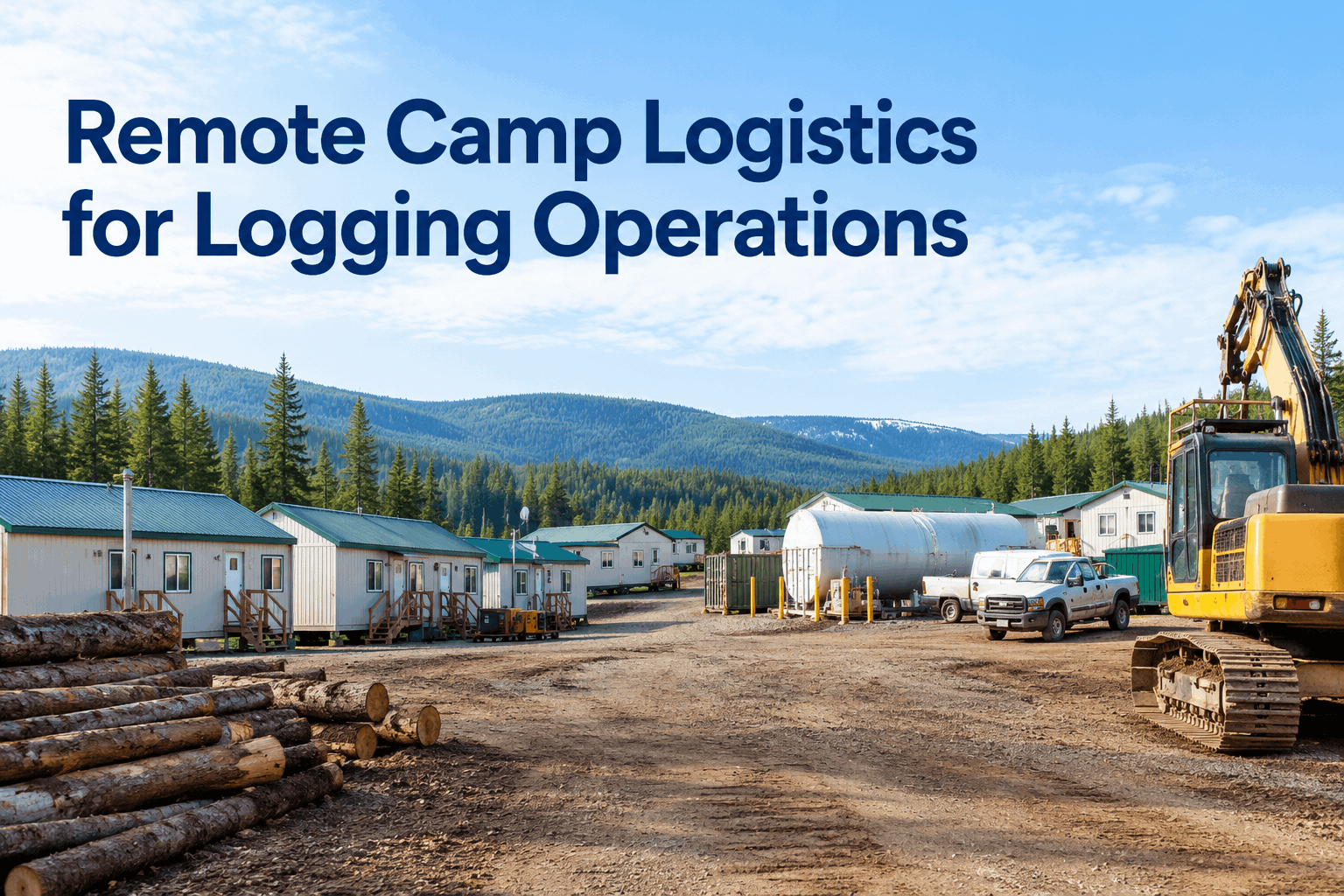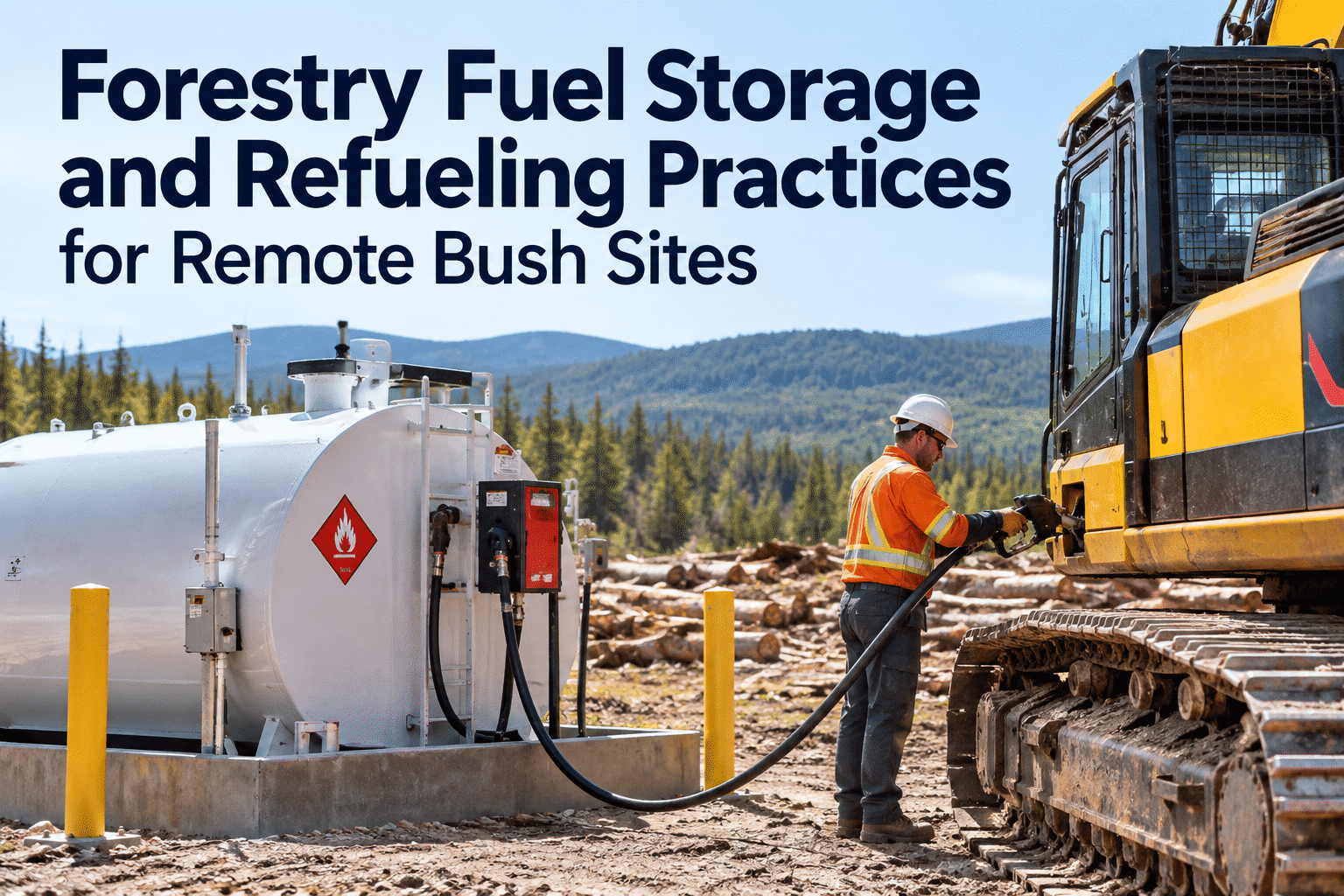
Forestry fuel storage at remote bush sites needs more than a tank and a delivery schedule. Logging crews need secure storage, suitable containment, safe refueling routines and records that remain usable when connectivity is limited. This guide shows how to organize fuel checks, track issues and respond to leaks before they disrupt operations.
Keep remote fuel sites safe, stocked and accountable
From temporary diesel tanks to mobile refueling trucks, build one practical routine for inspection, transfer, spill readiness and fuel accountability.
Set up the fuel cache around real bush-site risks
Choose a stable, accessible location away from vehicle conflict points and sensitive drainage paths. Confirm local environmental, fire and dangerous-goods requirements before deciding on tank size, separation distances or secondary containment.
Before the first delivery
- Confirm landowner and regulatory approvals where applicable.
- Protect tanks from vehicle strikes and unauthorized access.
- Provide suitable secondary containment and rainwater management.
- Position extinguishers and spill supplies according to the site risk assessment.
- Post the emergency procedure and location details for responders.
Use Book a Demo to discuss digital fuel-site inspection records across dispersed forestry locations.
Inspect the storage system, not just the tank level
Use a short inspection at the start of each operating period and after deliveries, relocation, heavy weather or a suspected leak. Increase frequency where site conditions demand it.
Tank and fittings
Look for seepage, corrosion, damage, loose caps and abnormal levels.
Hoses and nozzles
Inspect for abrasion, leaks, secure connections and safe storage.
Containment
Check bund integrity, accumulated liquid and evidence of overflow.
Fire and spill readiness
Confirm clear access, suitable supplies and known reporting contacts.
Record defects, photographs and follow-up actions. Start Free to organize repeatable equipment and site inspection checklists in HVI; confirm the exact setup for stationary fuel assets with the team.
Build a controlled refueling routine for logging crews
Remote conditions make shortcuts tempting. A consistent transfer sequence reduces the chance of spills, overfills and incomplete fuel records.
Prepare
Choose a safe position, isolate ignition sources and verify equipment is stable.
Inspect
Check hose, nozzle, couplings and receiving tank condition.
Transfer
Use approved equipment, follow the site procedure and attend the transfer throughout.
Close out
Stop flow, secure caps, check for leaks and record quantity and machine ID.
Reconcile deliveries, issues and remaining stock
A fuel log should identify where fuel went—not merely what was purchased. Record delivery receipts, equipment issues, corrections and periodic stock checks using consistent units.
| Event | Equipment / source | Fuel in | Fuel out | Running balance |
|---|---|---|---|---|
| Opening stock | Tank F-02 | — | — | 2,000 L |
| Delivery | Supplier receipt #104 | 1,500 L | — | 3,500 L |
| Issue | Harvester HV-18 | — | 260 L | 3,240 L |
| Issue | Forwarder FW-07 | — | 180 L | 3,060 L |
Log these fields every time
Date, site, operator, equipment ID, fuel type, volume, hour-meter reading when available, and receipt or transaction reference.
Investigate discrepancies
Compare expected balance with a safe physical measurement. Check missing entries, meter calibration, transfers and possible leaks before assigning a cause.
Book a Demo to review HVI fuel logs and equipment-level consumption records for forestry fleets.
Make every fuel issue traceable to a machine
Bring fuel entries, inspections and equipment history into a more consistent maintenance routine.
Plan the first response before a spill happens
Spill plans must reflect local laws, fuel volumes, terrain, waterways, communications and emergency response access. Train crews on who to contact and what actions they are authorized to take.
Protect people
Stop operations and isolate hazards only when safe to do so.
Notify and contain
Activate site reporting and use trained, approved containment methods.
Document and restore
Record the event, response, disposal arrangements and corrective actions.
Avoid generic spill-volume thresholds: notification and cleanup obligations vary by jurisdiction and site conditions.
A simple weekly review keeps remote fuel sites under control
Track completion rates, unexplained fuel variance and repeat defects rather than focusing only on total liters used. Start Free to bring fuel and inspection records into your HVI workflow.
Forestry fuel storage FAQs
What is the safest way to organize forestry fuel storage at a remote site?
Start with a site-specific risk assessment, compliant tanks and containment, protected access, fire and spill arrangements, inspections and a documented fueling procedure. Applicable requirements vary by location and fuel quantity.
How often should a temporary fuel tank be inspected?
Set the schedule from applicable requirements, manufacturer guidance and site risk. Common operational checkpoints include before use, after deliveries, after severe weather and whenever a leak or damage is suspected.
What should a forestry equipment fuel log contain?
Record date, location, machine ID, operator, fuel type, quantity, hour reading when available, and a delivery or issue reference. Reconcile these transactions against tank stock periodically.
How can logging contractors reduce unexplained fuel losses?
Use consistent issue records, verify deliveries, check meters and tank measurements, investigate discrepancies promptly and inspect for leaks. Do not assume every variance is theft or misuse.
Can HVI replace a fuel tank monitoring or spill detection system?
HVI can help organize fuel logs, inspections and maintenance records. It should not be presented as a replacement for certified tank instrumentation, emergency detection or jurisdiction-specific safety controls.
Connect remote fuel checks with fleet maintenance
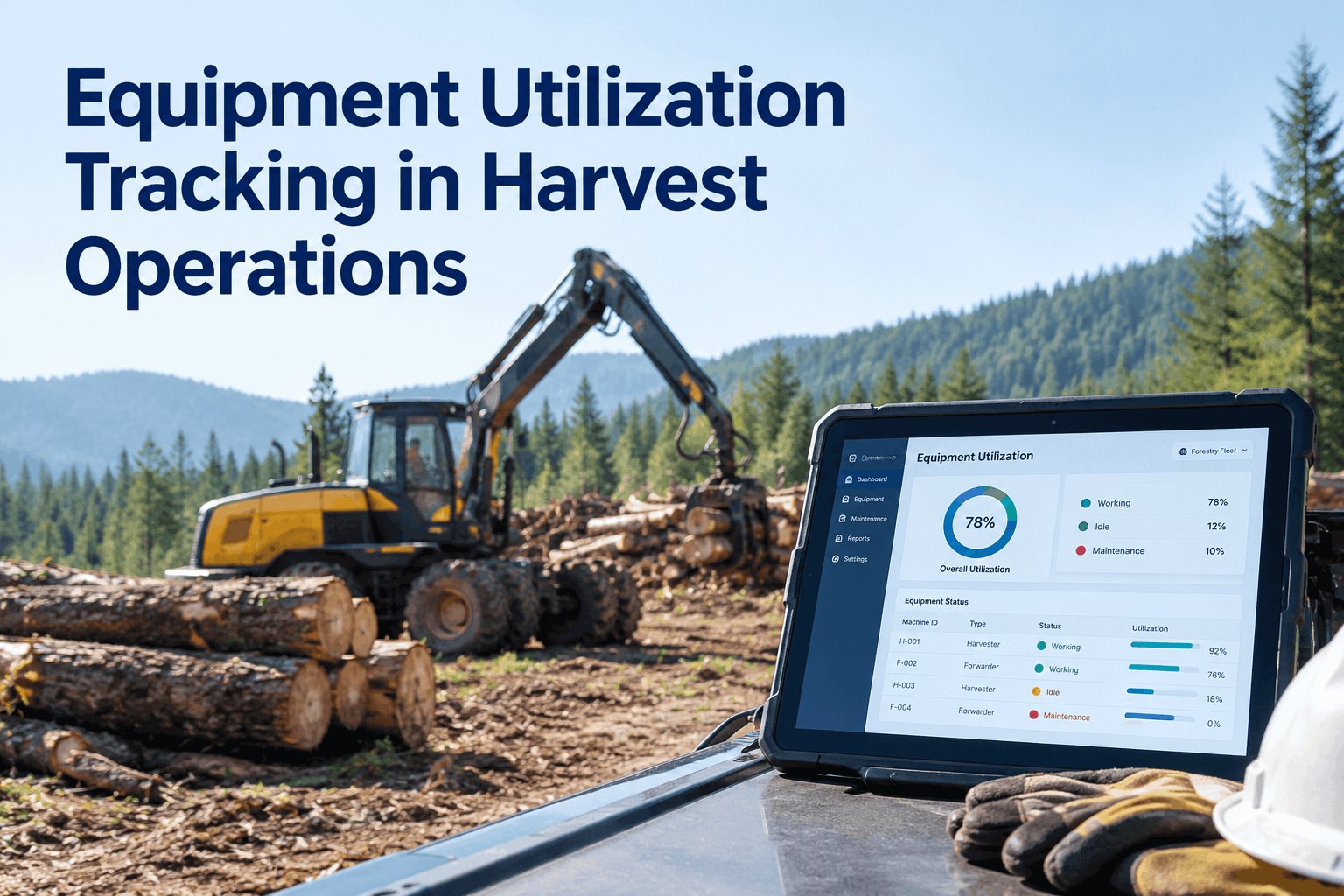
See how HVI can support fuel entry records, digital inspections and equipment service history across forestry operations.