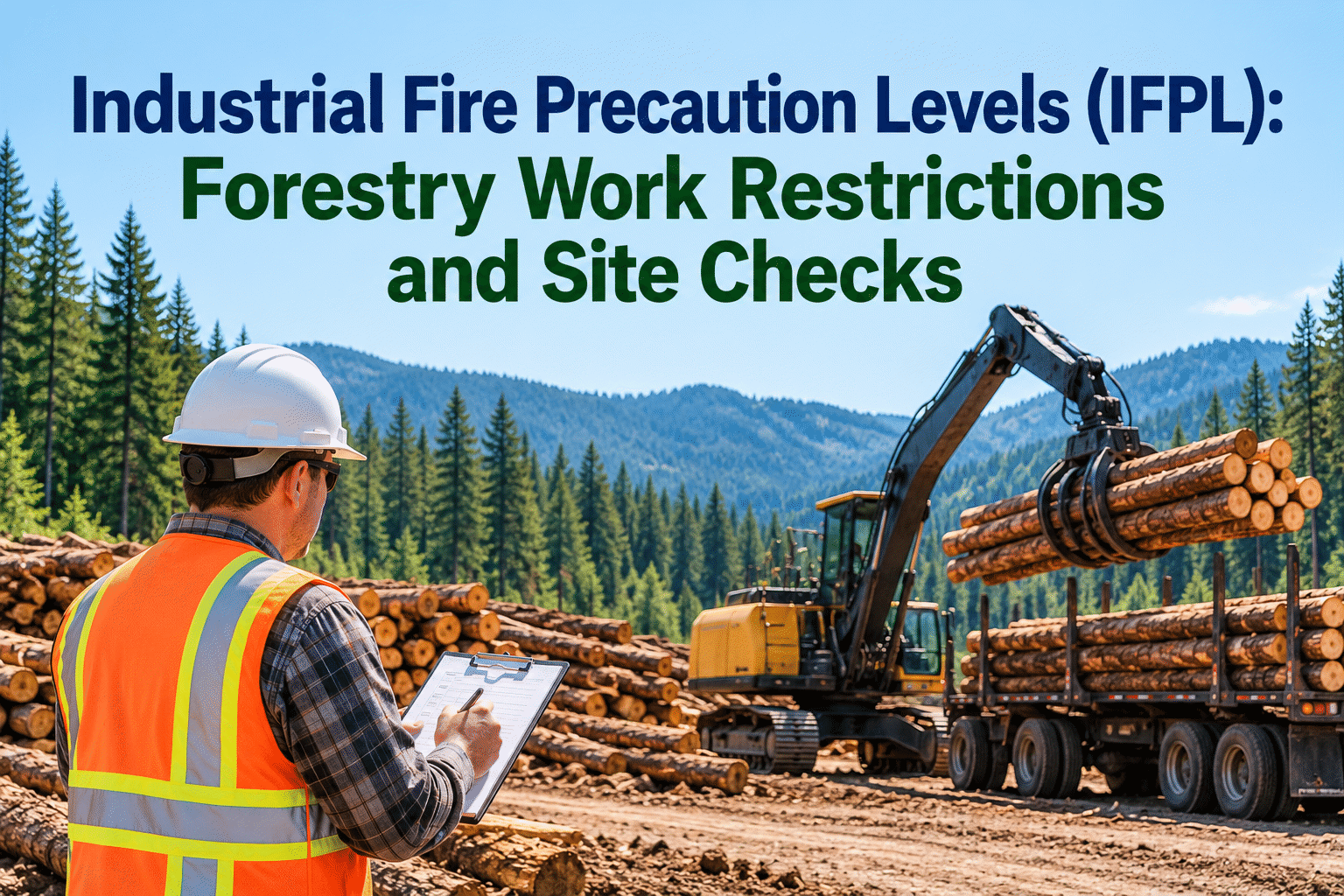
Industrial fire precaution levels help forestry contractors decide which activities may continue during elevated wildfire danger and which need limits or shutdowns. For logging crews in Oregon and Washington, the practical challenge is checking the current notice for the exact operating area, briefing each shift and keeping evidence that restrictions were followed. This guide explains the IFPL framework and a repeatable daily inspection process.
Industrial Fire Precaution Levels: turn daily restrictions into a clear work plan
Know the posted level. Confirm which equipment and activities are restricted. Record the briefing, required precautions and any decision to stop work.
What are Industrial Fire Precaution Levels?
IFPL is a staged system used in parts of the Pacific Northwest to reduce industrial ignition risks during fire season. It affects activities such as logging, cutting, yarding and other spark-producing work. The restrictions that apply depend on the jurisdiction, land manager, location, current notice and any authorized exceptions.
Industrial activity may proceed subject to applicable baseline fire-season requirements and precautions.
Verify firefighting equipment, spark controls and any applicable fire-watch duties.Some higher-risk operations may face time-of-day limits or activity-specific restrictions.
Check exactly which tasks and operating windows are affected in the current notice.Restrictions typically become substantially tighter, with certain operations prohibited or allowed only under defined conditions.
Do not infer permission from another site or a prior day's schedule.Industrial operations subject to the IFPL generally cease unless a specific authorized exception applies.
Confirm the controlling authority's exact wording before any work resumes.Oregon and Washington: verify the right authority
Do not apply a generic IFPL chart across every forest or ownership. Identify the land manager, the fire-protection district and the agency notice covering the worksite.
Oregon operations
Check Oregon Department of Forestry district announcements and applicable industrial fire restrictions. Federal land and other jurisdictions may impose additional requirements.
Before dispatch: Record the district, notice date, IFPL, activity restrictions and any separately issued public-use restrictions.
Washington operations
Check Washington Department of Natural Resources industrial fire restrictions and the applicable operating area. Other land managers may set their own conditions.
Before dispatch: Record the location, official source, level, restricted activities and required fire precautions.
IFPL is not the same as a general public-use campfire ban or a local burn ban. Multiple restrictions can apply at once. Build an HVI daily inspection checklist when you start free to record the notice reviewed and the crew's acknowledgement.
The daily IFPL check: five decisions before equipment starts
Use a documented gate before the first engine starts. The supervisor should resolve uncertainty before releasing the crew to work.
Locate the worksite
Confirm county, operating area, land ownership and the relevant protection district.
Read today's notice
Record the posted IFPL, issue time and official source; check for changes during the shift.
Match work to rules
Review logging, cutting, welding, grinding, transport and other activities against applicable restrictions.
Verify controls
Check required firefighting equipment, machine condition, communication and fire-watch coverage.
Authorize or pause
Brief operators, document the decision and stop any task whose permitted status is unclear.
Keep fire-season inspections alongside equipment records
Use HVI to document equipment checks, report defects and retain maintenance history. Confirm any permit or regulatory authorization through your designated authority.
What to do when the fire level changes mid-shift
Restriction changes should trigger a fresh activity review—not just a note in the daily log. Use this practical response matrix.
Activity is clearly permitted
Proceed only with the required precautions, inspection checks, fire watch and supervision in place.
Notice changed or permission is unclear
Pause the affected task. Verify the exact restriction, timing and any valid authorization before resuming.
Activity is prohibited or controls are missing
Stop the affected operation, secure equipment safely and follow site emergency and shutdown procedures.
For equipment defects identified during the check, book an HVI demo to see inspection-to-maintenance follow-up. A maintenance work order does not itself authorize restricted industrial activity.
Pre-start inspection points that support fire prevention
Operators should follow the machine manufacturer's instructions and the site fire plan. These checks help surface common ignition hazards before a permitted shift begins.
Hot surfaces and spark controls
Inspect exhaust areas and any required spark-arresting equipment for damage, loose components or combustible buildup.
Needles, bark and chaff
Check engine bays, cooling packs, belly pans and other debris traps using approved shutdown and cleaning methods.
Fuel and hydraulic leaks
Identify leaks, damaged hoses and fluid accumulation near heat sources; escalate unsafe defects.
Fire equipment and communication
Verify the equipment and communication arrangements required by the current rules and site plan.
Keep defect evidence attached to the asset's history. Start free with HVI to organize daily machine inspections and follow-up records.
A useful IFPL shift record: capture decisions, not just a checkbox
A consistent record lets a supervisor explain what restriction was reviewed, who approved the work plan and how changing conditions were handled.
Fire-season shift release
Build a practical IFPL routine in four weeks
Map jurisdictions
List worksites, land managers, official notices and responsible supervisors.
Standardize checks
Create a shift-release form and equipment fire-prevention checklist.
Rehearse changes
Practice an IFPL escalation, stop-work communication and fire-watch handoff.
Review evidence
Audit missing records, overdue defects and unclear shift decisions.
HVI can help organize equipment inspection findings and maintenance records; it does not replace official IFPL notices, legal interpretation, permits or supervisor authorization. Book a demo to discuss your forestry inspection workflow.
Industrial Fire Precaution Levels: common questions
What do IFPL Levels I, II, III and IV mean?
They represent increasing levels of industrial fire precautions and work restrictions, from baseline precautions to a general shutdown at Level IV. The exact prohibited activities, timing and exceptions must be checked against the current official notice for your location.
Are Oregon and Washington IFPL restrictions the same?
No. Both use industrial fire precaution systems, but agencies, operating areas, applicable activities and published requirements can differ. Check the responsible authority and any land-manager or permit conditions.
Does IFPL Level II always mean logging stops at the same hour?
No. Do not rely on a universal cutoff time. Time windows and affected activities vary by jurisdiction and notice, and authorized exceptions may be subject to conditions.
How long must a logging crew maintain a fire watch?
Required fire-watch coverage and duration depend on applicable state rules, the current restriction, activity, permit and site conditions. Confirm the current requirement and record the assigned person, checks and closeout time.
Can HVI automatically check IFPL notices or issue permits?
This guide does not assume automatic IFPL feeds or regulatory permit issuance. HVI can support digital equipment inspections, defect follow-up and maintenance records while supervisors verify restrictions and obtain any required approvals through the proper authority.
Turn daily fire-season checks into traceable equipment actions
Keep operator inspections, identified defects and repair follow-up organized across forestry machines. Start with a free HVI account or see the workflow in a live demo.