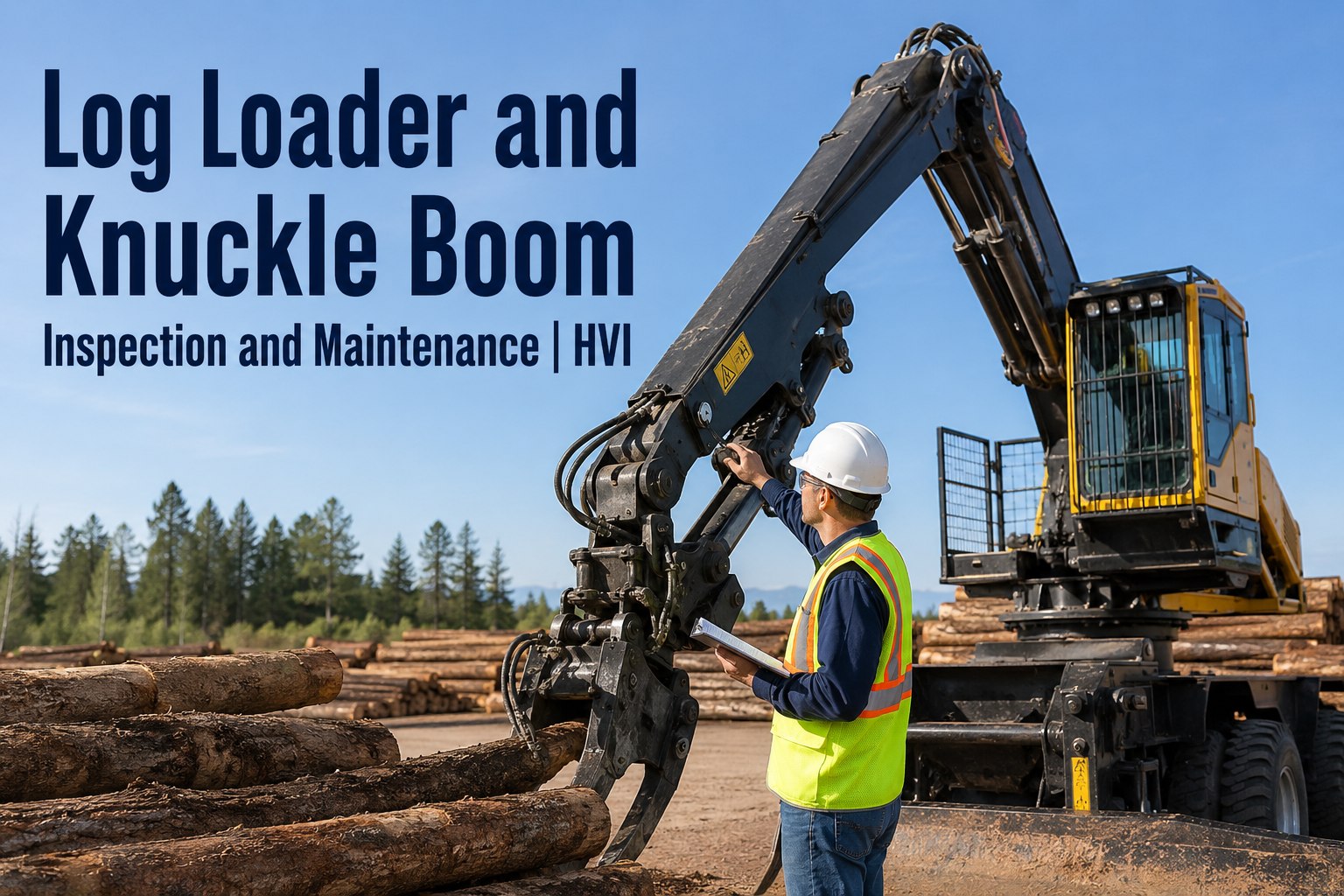
Your landing loader cycles every couple of minutes, all shift long - pick, swing, drop, repeat - and by the time the hour meter shows 2,000 hours the boom structure has lived through far more stress than that number suggests. A solid log loader inspection routine is what stands between steady production and a dropped load, a cracked boom heel, or a slew bearing that lets go with a grapple full of logs overhead. This page walks through exactly what to check on a knuckle boom loader, how often, and how to keep the records straight without paper. If you want to see how digital inspections handle this on real machines, you can book a 30-minute walkthrough on your own loaders and watch it live.
What does a daily log loader inspection actually cover?
Six systems decide whether your loader keeps cycling or drops a load: boom structure, slew bearing, grapple, stabilisers, hydraulics and cab protection. Here is the working checklist, the cadence, and the failure signs to catch early.
- Boom, stick and heel welds - crack checks at weld toes and pin bosses
- Slew bearing play and every mounting bolt, top and bottom
- Grapple tines, rotator, cylinder pins and hose condition
- Stabiliser pads, cylinders and footing on soft ground
The cost of skipping a log loader daily check
Knuckle boom maintenance: the six systems that decide uptime
Each system below fails in its own way and on its own schedule. Treat them as separate inspection targets, not one glance at the machine.
Boom & Stick Structure
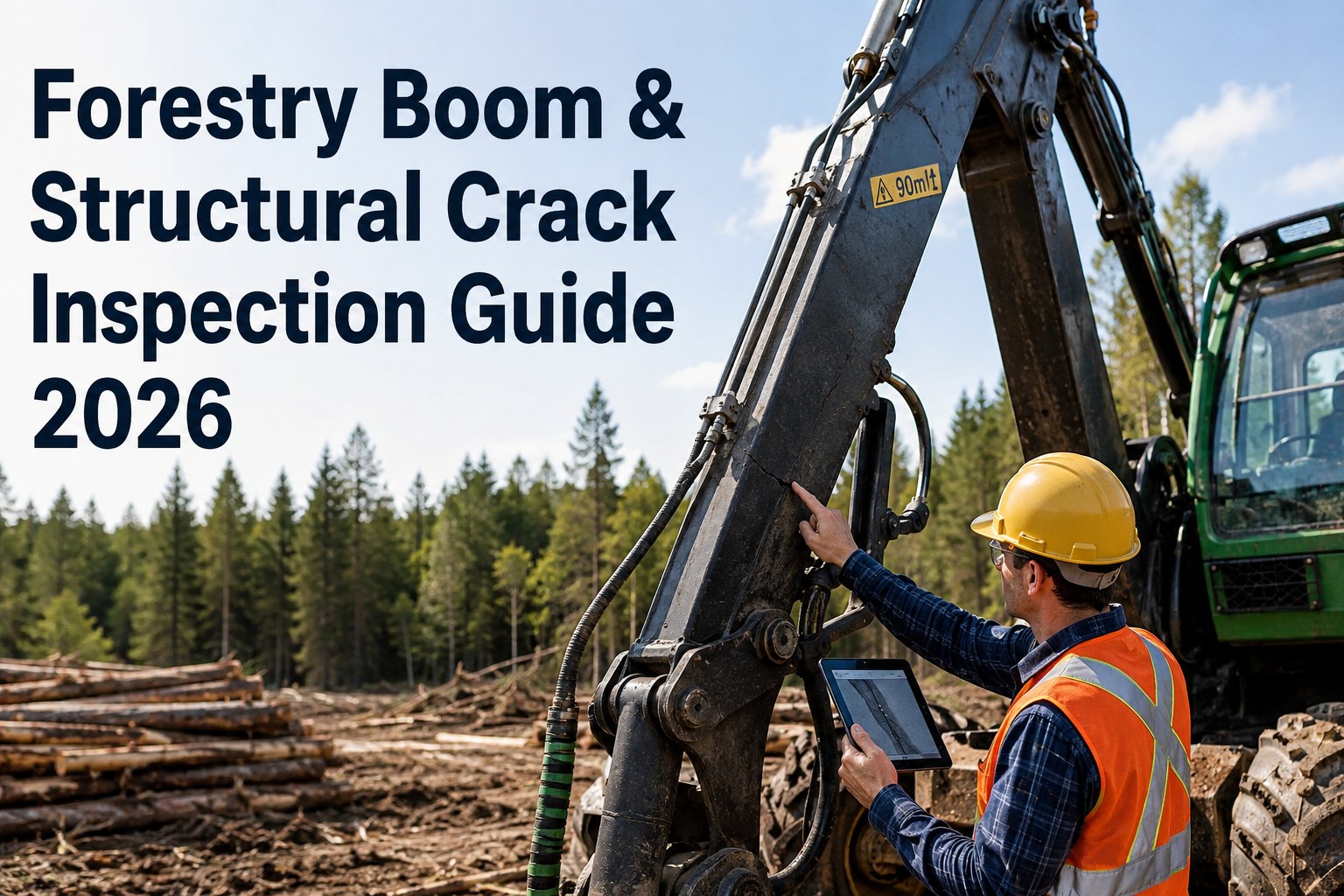
Fatigue cracks start at weld toes, pin bosses and the boom heel where stress concentrates. Look for paint flaking, rust bleed lines and any fresh shiny metal. Escalate from weekly to daily crack checks as the machine passes mid-life hours.
Slew / Rotate Bearing
Wear shows up as play - rock the grapple and watch for movement. Check every mounting bolt for stretch, rust trails or a missing head. A bolt failure under load is catastrophic, so torque checks belong on the PM, not the breakdown.
Grapple & Rotator
Check tine tips for wear-through, the rotator for leaks and play, and cylinder pins for slop. A worn tine drops logs; a weeping rotator seal becomes a fire risk near a hot engine. Grease points here take abuse every cycle.
Stabilisers & Pads
On soft ground, setup is a stability question. Inspect pads for cracking and bending, cylinders for drift and weeping seals, and confirm the machine sits level before the first pick. A settled pad mid-lift tips the whole machine.
High-Duty Hydraulics
These systems run high pressure at near-continuous duty. Watch hose chafe points at the boom knuckle, fitting weeps, cylinder rod scoring and oil temperature. A hose that rubs through at pressure whips - and it never picks a good moment.
Cab Protection
Falling and swinging logs are the killer hazard. Check guard mesh, window glazing, door latches and ROPS mounting daily. A cracked polycarbonate screen or a bent guard bar is a stop-work item, not a note for next week.
A loader PM schedule that tightens as the machine ages
A 1,500-hour loader and a 12,000-hour loader should not share the same inspection cadence. Structural fatigue accumulates with cycles, so the older the iron, the closer you look.
| Interval | What Gets Checked | Why It Matters |
|---|---|---|
| Daily / pre-shift | Boom and heel visual crack check, slew play, grapple tines and rotator, stabiliser pads, hose chafe, cab guards, fluid levels | Catches the failures that develop within a single shift of continuous cycling |
| Weekly | Weld toes and pin bosses up close, slew bolt torque sample, pin and bushing wear measurements, grease all points | Finds crack initiation and bolt stretch before they become structural events |
| 250-500 engine hours | Hydraulic oil and filter analysis, full slew bolt torque, cylinder drift test, stabiliser holding test, structural NDT on known hot spots | Oil analysis flags pump and bearing wear months before failure; drift tests expose internal bypass |
| Annually / high-hour | Full structural inspection with dye penetrant or mag particle on boom heel, stick and rotate base; slew bearing clearance measurement | High-hour machines crack where you cannot see with a flashlight - NDT finds it first |
Engine-hour PM triggers in HVI fire automatically as hours accumulate, so a 500-hour service never slips because someone forgot to check the meter. You can set up your first loader PM schedule free and have alerts running this week.
What happens when an operator spots a boom crack at 6 AM
Operator flags it with a photo
The defect is logged on the phone with a photo of the crack at the weld toe - no paper DVIR, no text message that gets buried, no verbal handoff that loses the detail.
Machine status changes instantly
The loader is marked out of service in the system. Dispatch and the landing crew see it immediately, so nobody climbs into a machine with a structural defect.
Defect becomes a work order
One tap converts the defect into a work order with the photo attached. The welder sees the crack location and size before arriving, and parts can be pulled in advance.
Repair is verified and recorded
The repair photo, weld procedure and sign-off sit on the asset record permanently. When a client, insurer or safety auditor asks about that machine, you pull the file in seconds. See this defect-to-work-order flow in a live demo on a machine profile like yours.
What one missed slew bearing actually costs
A contractor running two landing loaders catches bearing play early on one machine and misses it on the other. Here is how the numbers split.
Caught at weekly check
- Play detected, machine scheduled for planned repair
- Bearing and bolts ordered ahead: parts on site
- Repair done over a weekend, no crane emergency callout
- Total: roughly $8,000 and zero lost production days
Missed until failure
- Bolts shear mid-shift with a grapple of logs overhead
- Emergency crane, expedited parts, overtime labour
- Loader down 5-8 days while the landing backs up
- Total: $25,000+ plus a near-miss investigation
The difference between those two columns is a ten-minute weekly check with a photo attached. That is the entire business case for a disciplined log grapple inspection and slew bearing routine.
Built for loaders that never stop cycling
HVI is cloud + mobile inspection and maintenance work order software. Your operators inspect on any phone at the landing, and every record lands in one audit-ready file per machine.
Configurable loader templates
Checklists built for this machine class: carrier frame, rotate base, boom and stick, hardware, wire rope and hook, grapple and stabilisers. Add your own hot spots per unit.
Photo capture on structural items
Force a photo on boom welds, slew bolts and tine tips so the check actually happens. Photos are timestamped and tied to the asset record permanently.
Engine-hour PM with alerts
PM triggers by engine hours, date or mileage with due and overdue alerts. The 500-hour oil sample and slew torque check fire on schedule, not on memory.
Defect-to-work-order in one tap
A flagged crack becomes a tracked work order instantly, with the photo attached. Nothing lives in a group chat or a binder in the pickup. Walk through it on your own units in a short demo.
See HVI running on your own loaders
Book a 30-minute demo and we will build a landing loader checklist live - boom, slew, grapple, stabilisers and all - on a machine profile like yours.
The short version on forestry loader maintenance
Cycles, not hours, drive wear
A landing loader accumulates structural fatigue faster than the hour meter implies. Inspect the boom, slew and grapple on a cadence that tightens with machine age.
Slew bolts are life-safety items
Bearing play is a warning; bolt failure is the event. Torque checks belong on the PM schedule, and any rust trail or missing bolt head stops the machine.
Photos make checks real
A checklist item with a required photo gets done; one without gets pencil-whipped. Photo-backed records also settle client, insurance and safety questions in seconds.
Paper loses the thread
A knuckle boom maintenance history scattered across binders and text messages cannot tell you which machine cracks every season. One digital record per asset can - and you can start logging inspections free to build that history from today.
The number I watch is slew play, measured the same way every Monday. We lost a set of bolts years back on a machine that "felt fine" the week before, and I still think about it. Now every crack photo and every torque check sits in the machine file, and when the mill asks for maintenance records on the loader feeding their deck, I send a PDF before they finish the sentence. My only gripe is we did not do it ten years earlier.
Dale Merrick - Maintenance Manager, regional logging and hauling contractor
Log loader inspection and maintenance FAQs
How often should you inspect a log loader or knuckle boom?
A visual walk-around every pre-shift, a closer structural and hardware check weekly, and engine-hour-based PM at 250-500 hour intervals. High-hour machines should get annual NDT on the boom heel, stick and rotate base, because fatigue cracks there are not always visible to the eye.
What are the first signs of slew bearing wear on a landing loader?
Play is the giveaway: rock the grapple with the boom low and watch for movement between the upper structure and the carrier. Also look for rust trails or stretched mounting bolts, grinding or popping during rotation, and metal in the bearing grease. Any of these means measure the clearance and plan the repair before a bolt lets go.
Where do boom cracks usually start on a knuckle boom loader?
At stress concentration points: weld toes, pin bosses, the boom heel and anywhere the section changes shape. Paint flaking, rust bleed lines and fresh shiny metal are the early tells. Once a crack starts under continuous cycling it can grow within a shift, so daily visual checks on known hot spots matter more as hours climb.
Can a phone app really replace paper inspection forms in the woods?
Yes - modern inspection apps work offline and sync when the machine reaches coverage, which suits remote landings and roadside processing setups. Operators photograph defects on the spot, and records are timestamped and audit-ready. You can book a demo to see the offline inspection flow before committing anything.
What records should you keep for loader maintenance and why?
Keep every inspection, defect, repair, torque check and PM service tied to the asset, with photos and timestamps. Clients, insurers and safety auditors increasingly ask for proof that structural items were actually inspected, and a complete digital file answers in seconds. Sign up free and every check you log from today builds that file automatically.
Put every boom, bearing and bolt on record
Start with one loader and one checklist. Photo-backed inspections, engine-hour PM and instant defect-to-work-order - on any phone, at any landing.
Free to start - Works on any phone - No card needed