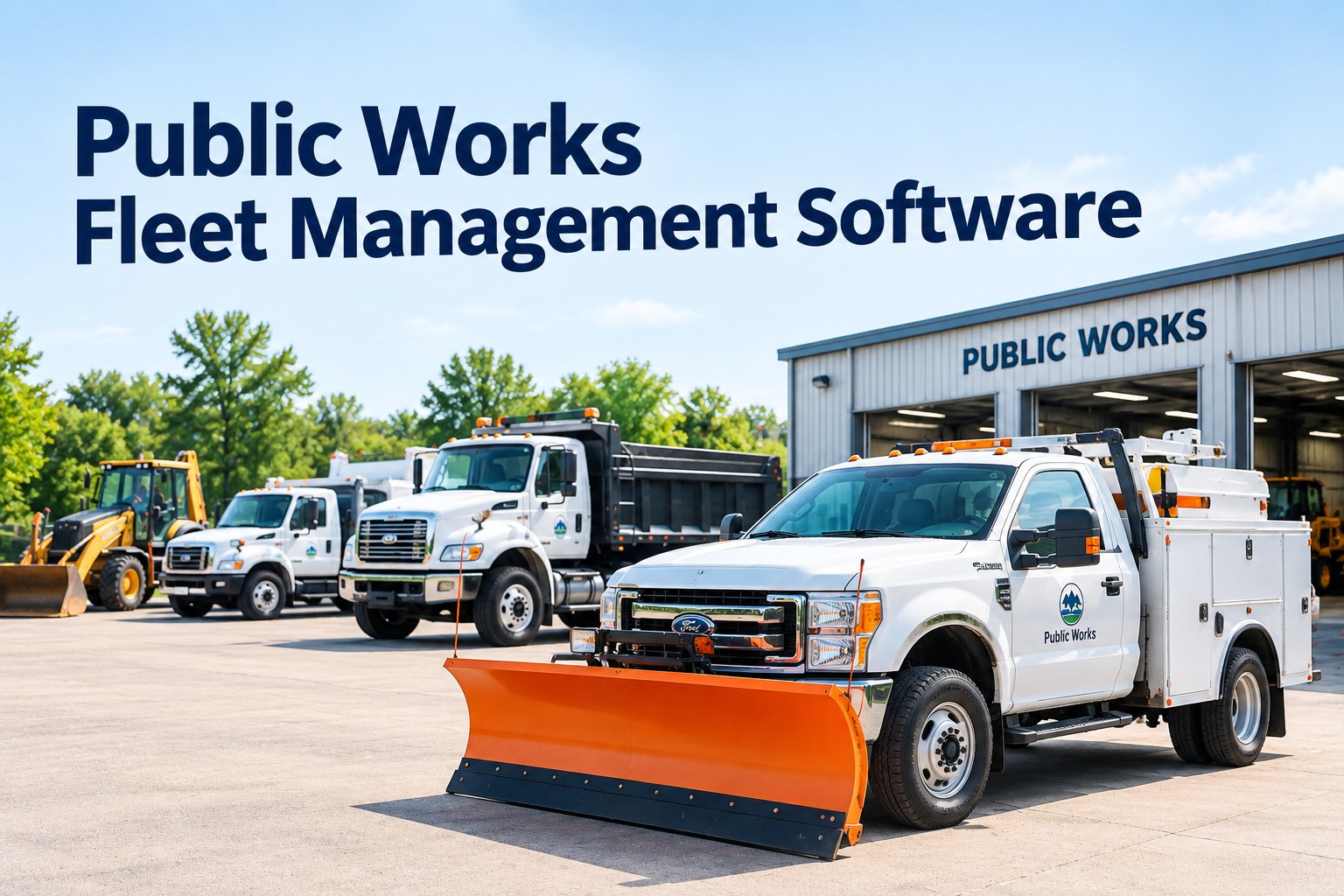
Ask the finance director for last quarter's total fleet maintenance cost and watch what happens. Public works pulls a number from their system. Police pulls theirs from a different one. Parks hands over a spreadsheet, and transit's number is "close enough," because nobody's fully sure. Five departments, five sources of truth, and not one number the council can actually trust. Government fleet consolidation software exists to make every vehicle — patrol car, dump truck, mower, transit van — show up in the same record, the same report, the same login. See what consolidation looks like on your fleet
One Fleet, Five Departments, Five Different Systems
Public works, police, parks, and transit each built their own way of tracking maintenance — usually because nobody gave them a better option. Consolidation puts every vehicle on the same platform without taking away what each department actually needs.
Most of these department-level systems weren't a bad decision at the time — public works needed something, bought something, and parks did the same thing two budget cycles later with a different vendor. Multiply that a few times and a municipality ends up paying for, training staff on, and reconciling data across several platforms that all do roughly the same job, badly duplicated. None of it is anyone's fault exactly — it's just what happens when five departments each solve the same problem on their own timeline, with no one responsible for noticing the overlap until a budget review forces the question.
What fragmented fleet systems actually costwhy "it still technically works" isn't the same as efficient
None of this shows up as a single line item on a budget — it shows up as a finance director spending an afternoon reconciling three spreadsheets before a council meeting, or a new fleet director spending their first month just figuring out which system has the real numbers. Book a demo to see what one report across every department looks like.
What one platform covers across departmentsdifferent vehicles, different checklists, one system underneath
Public works & streets
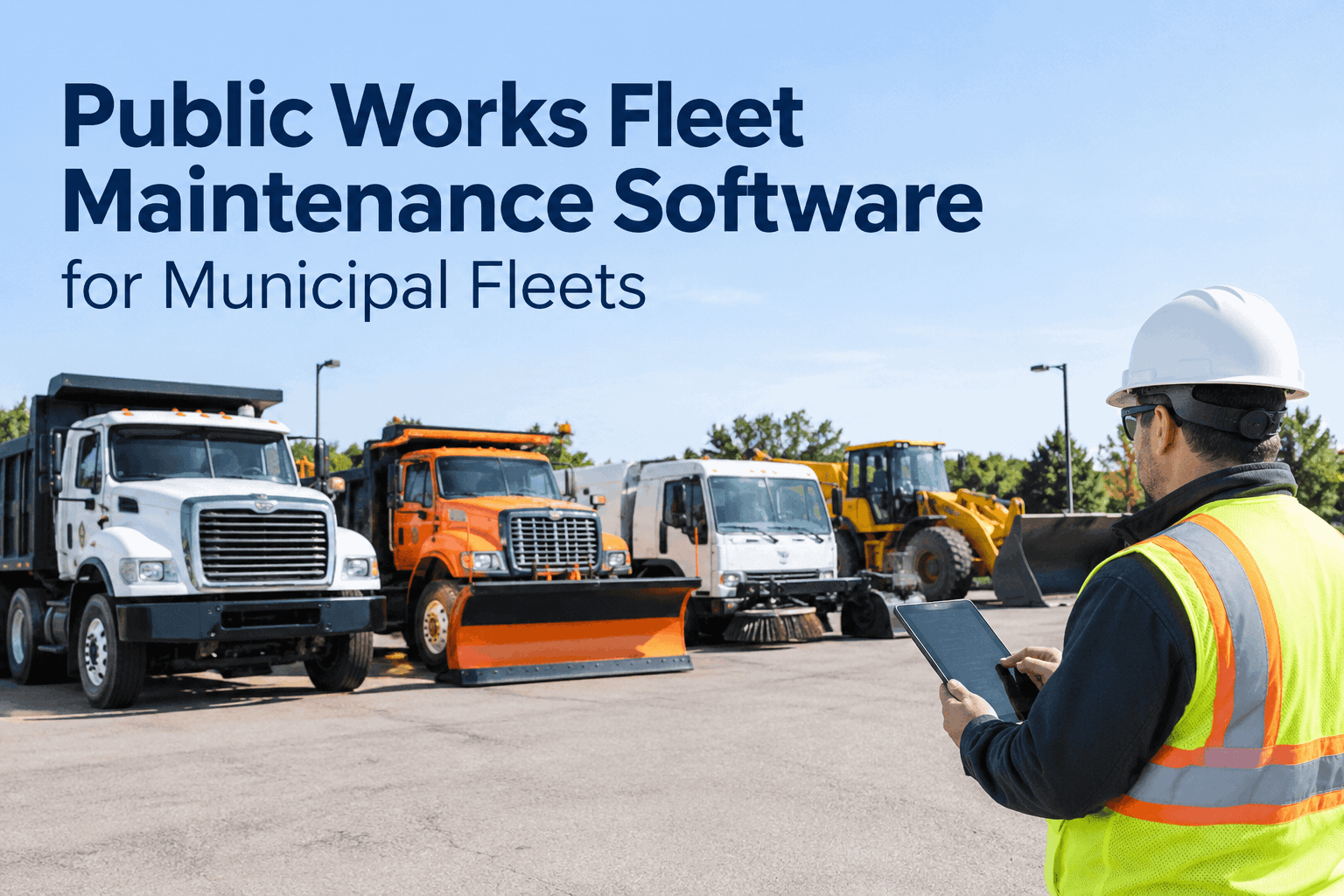
Dump trucks, plows, and sweepers, with hoist and PTO checks built into the same inspection standard as every other department.
Police & patrol
Patrol vehicle pre-trips and PM run on the same platform, with emergency-equipment checks added to the standard vehicle checklist.
Parks & recreation
Mowers, trailers, and utility trucks get inspected to the same standard as the rest of the fleet, instead of running on memory and a paper log.
Transit & paratransit
Daily pre-trips for a public-facing fleet, with defect-to-work-order turnaround tracked for the vehicles residents actually ride.
Each department keeps a checklist built for its own equipment — nobody's running a dump truck checklist on a patrol car — but every inspection lands in the same system, under the same vehicle record. HVI's checklist library covers templates for each of these out of the box. Start free and load your first department's checklist this week.
Fragmented systems vs. one platformthe same city fleet, run two different ways
- Each department's data lives in its own system, or a spreadsheet
- A fleet-wide cost report means someone manually combining four exports
- Inspection standards vary — some departments skip them entirely
- A public records request means calling four different offices
- Every renewal is four separate contracts, four separate negotiations
- Every vehicle's record lives in the same system, searchable by department
- A fleet-wide report is one export, not a reconciliation project
- Every department runs a digital inspection to the same accountability standard
- A records request is one search, not four phone calls
- One contract, one renewal, one vendor relationship to manage
How a consolidation actually rolls outnobody migrates five departments on day one — here's a realistic path
One department, usually public works, runs on HVI alongside its old system for a few weeks, with checklists built for its actual equipment.
A second and third department come on, reporting is checked against what finance already trusts, and templates get refined department by department.
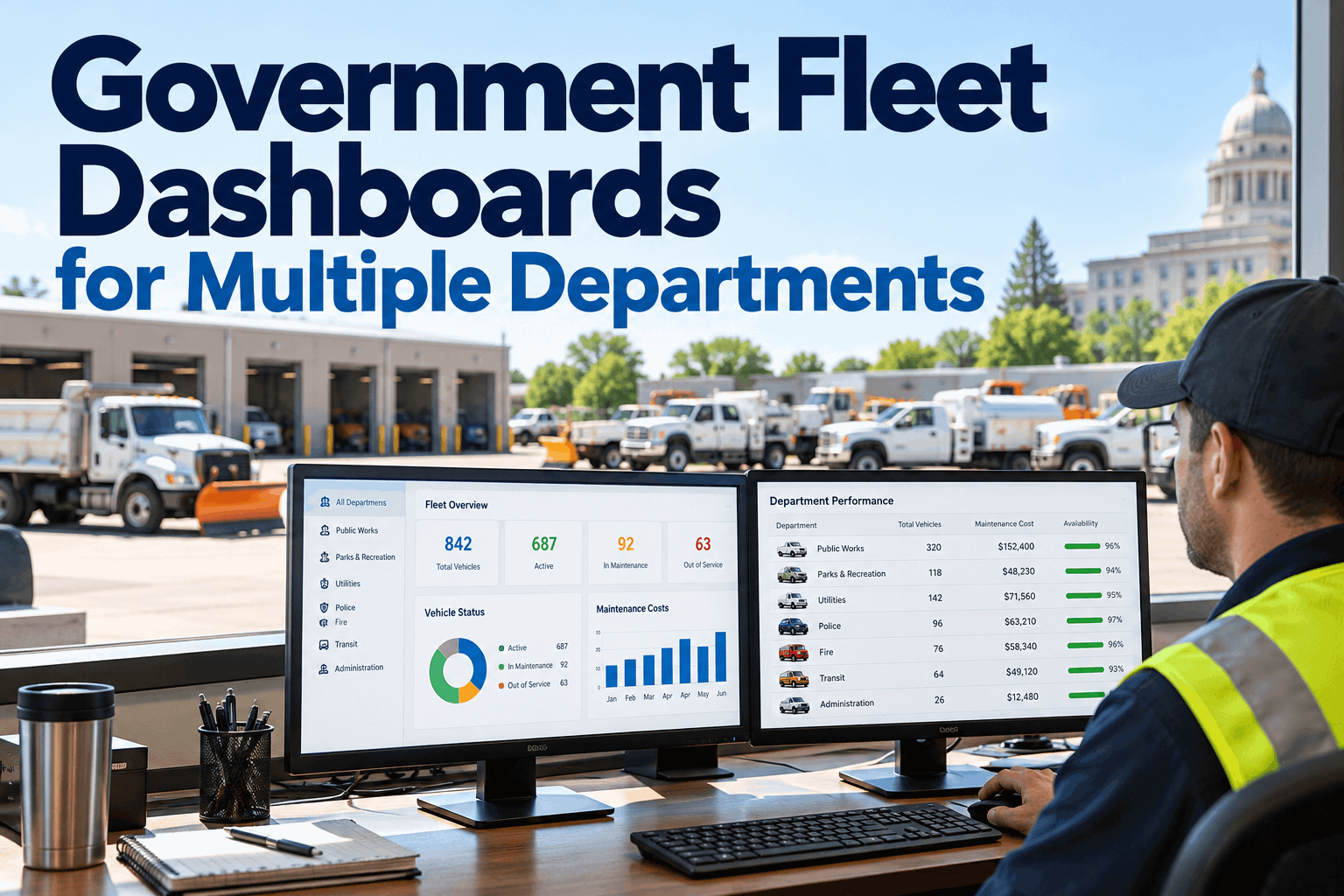
Every department runs on one system, old contracts lapse, and the fleet director gets one dashboard instead of four logins.
No department loses the parts of their workflow that already work — PM scheduling and work orders carry over, they just run on the same platform as everyone else's. Vehicle history, open work orders, and PM due dates migrate in from whatever each department was using before, so nobody starts from a blank slate the week they switch over. Book a demo to talk through a realistic timeline for your departments.
What to check before consolidating onto one systema short list for the department heads who'll actually have to agree
Each department keeps its own checklists
Consolidation shouldn't mean forcing a patrol car template onto a mower.Role-based access per department
Parks shouldn't see police maintenance data, and vice versa, by default.One report rolls up across every department
Finance and the fleet director should pull one number, not combine four exports.A phased rollout, not a forced cutover
One pilot department first protects every other department from a bad first impression.Records are pull-able for any department, any date
A public records request shouldn't depend on which office you call.One contract instead of several
A single renewal is easier to budget, defend, and explain to a council than four.Department heads were part of the decision
A platform nobody asked them about gets quietly ignored within a year.HVI is built to check every item on that list — start free with one department and expand on your own timeline.
From a fleet director who consolidated four systems into one
When I started, every department had its own way of tracking maintenance. Public works had something decent. Police had a spreadsheet someone built a decade ago. Parks kept it on paper. Every budget season I'd spend two full days just trying to get one honest number for total fleet spend, and I never fully trusted it.
We moved public works first, kept the old systems running alongside it for a month, then brought the rest on department by department. Nobody lost their workflow — they just stopped needing four different logins to do their job. Now budget season is a report I pull in an afternoon, not two days of chasing people down for spreadsheets.
Want to see a phased rollout mapped to your own departments? Book a 20-minute demo and walk through it together.
Frequently asked questions
What is government fleet consolidation software?
It's a single maintenance platform that replaces several department-level systems or spreadsheets, giving every city department its own workflow while rolling everything up into one record per vehicle and one report for leadership.
Do all departments have to switch over at the same time?
No. A typical rollout starts with one pilot department running alongside its existing system, then expands department by department as templates and reporting are validated.
Can different departments keep different inspection checklists?
Yes. Each department runs checklists built for its own vehicles — a dump truck template for public works, a patrol vehicle template for police — while all the data lands in the same underlying system.
Who can see which department's maintenance data?
Access is role-based by department, so staff see what's relevant to their job, while a fleet director or finance role can view the consolidated picture across every department.
How does this help with budget season and public records requests?
A fleet-wide cost report becomes a single export instead of combining several departments' numbers by hand, and a records request for any vehicle's history is one search instead of calls to multiple offices.
Stop reconciling four spreadsheets to answer one question
HVI lets public works, police, parks, and transit each keep their own checklists and workflow, while giving the fleet director and finance one consolidated record across every department. Start with one pilot department this week.