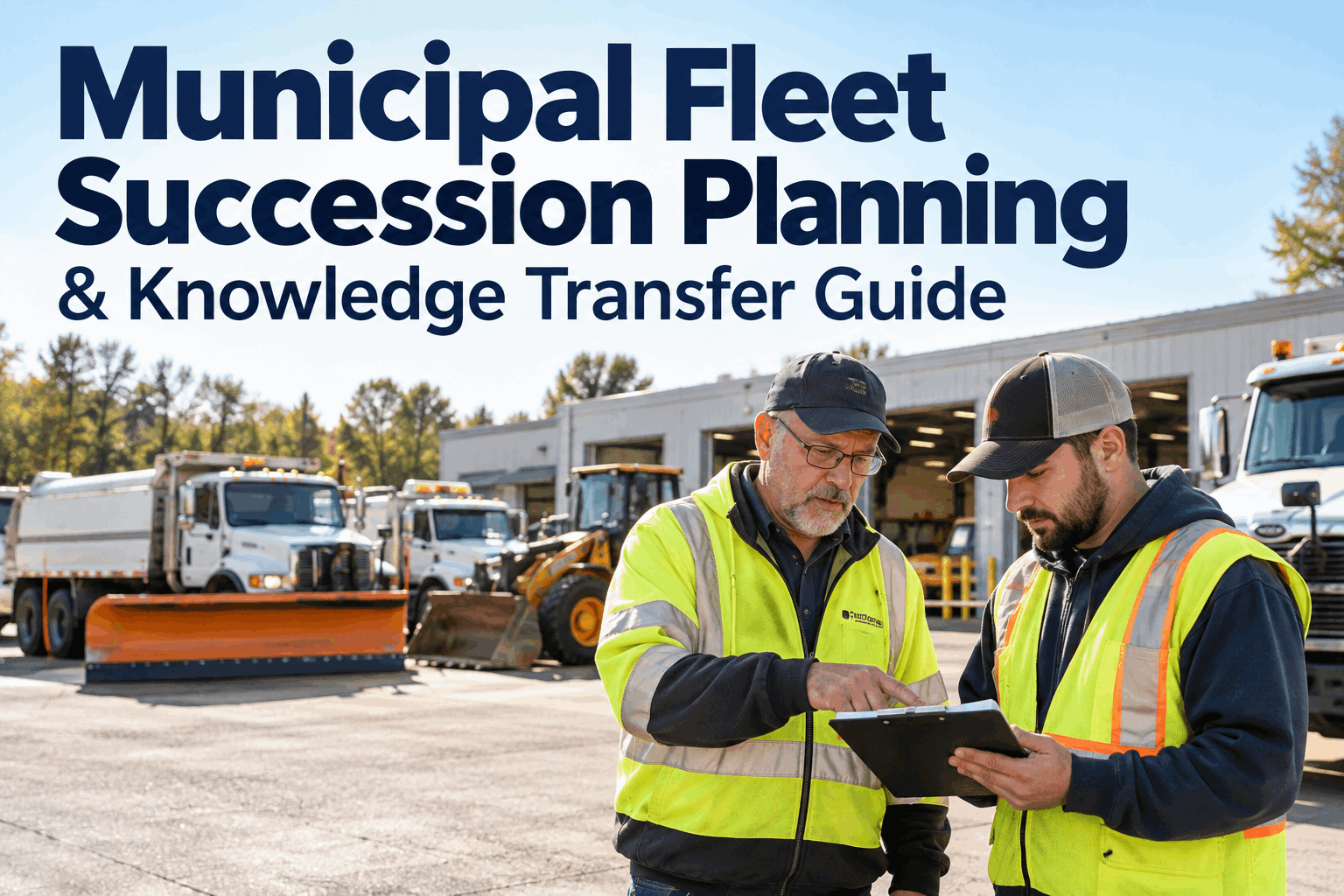
Government fleet knowledge transfer gets real when the technician who knows Unit 317 is retiring—and everyone realizes its most useful maintenance history is still in that technician's memory. The goal is not to document every conversation before someone leaves. It is to preserve the asset-specific repair history, inspection context and maintenance decisions the next employee will actually need.
When the Expert Retires, the Fleet Should Keep What They Learned
Experienced technicians build knowledge one repair at a time. HVI helps keep inspections, work orders and maintenance history connected to the asset so useful context can remain available when employees and responsibilities change.
Public fleets face a genuine continuity challenge. In Government Fleet's 2023 survey of 81 qualified public-sector fleet professionals, about 59% said they planned to retire within 10 years. Retirement creates a staffing gap, but the less visible risk is losing the history behind years of maintenance decisions. A replacement can learn a job description. Reconstructing why a difficult vehicle was repaired a certain way is much harder.
Government Fleet Knowledge Transfer Begins With the Questions Only One Person Can Answer
Before creating another succession-planning binder, listen to the questions people already ask your most experienced employees. Those questions reveal where the fleet still depends on individual memory.
The answer disappears when the employee is unavailable.
Information exists, but the next technician may not know where to find it.
Relevant history remains associated with the equipment it describes.
planned to retire in less than 10 years
reported having a succession plan in place
reported working on a succession plan
The figures come from Government Fleet's 2023 Industry Handbook survey and illustrate the workforce pressure rather than predicting every agency's staffing outlook. The practical response is to make useful documentation part of everyday fleet work. See how HVI can keep maintenance knowledge connected to the vehicles and equipment your technicians work on.
Capture Fleet Knowledge Where the Next Technician Will Look for It
A generic handover document can explain responsibilities, contacts and recurring administrative tasks. Maintenance knowledge needs a different home. If the information concerns a particular truck, loader, mower, snowplow or other asset, the most useful context should remain connected to that asset's operational history.
Recurring defects, symptoms and previous findings provide a starting point when the same issue appears again.
Work-order history and technician notes can preserve repair actions instead of leaving only a closed status.
Previous inspection findings help the next employee see how asset condition has changed over time.
Document useful context when recurring experience leads the fleet to adjust a maintenance task or response.
HVI's maintenance management workflows help keep maintenance activity associated with fleet assets, while digital inspection records preserve condition findings that may matter later. See how an HVI asset history can give the technician taking over a better place to start.
Use Real Maintenance Jobs to Expose Knowledge-Capture Gaps
Do not ask a retiring technician to sit down and “write everything they know.” That is too broad. Instead, review actual maintenance events together. Pick assets with recurring faults, unusual modifications, specialized attachments or a long repair history and see whether the records tell the same story the experienced employee tells.
Repair completed.
Inspection completed.
Work order opened.
Useful diagnostic context is missing from the earlier record.
The next technician should not have to repeat the same investigation unknowingly.
The reason for that maintenance decision should remain understandable later.
The objective is not longer notes for their own sake. Capture information that could materially help someone understand the asset or the maintenance decision in the future.
This is where a CMMS becomes part of workforce continuity rather than only a scheduling tool. When useful notes and completed work remain in the preventive maintenance and service record, institutional knowledge becomes easier to reuse. See how HVI can make completed maintenance records more useful to the technician who comes next.
Fleet Succession Planning Needs Both Documented History and Human Handover
Software cannot capture every form of expertise. Experienced employees recognize sounds, symptoms, operating patterns and shop realities that may require observation and coaching. Government Fleet reporting on succession planning also emphasizes training existing staff, written responsibilities and direct transition time. APWA similarly identifies training, education and mentorship as important tools for retaining institutional knowledge during workforce change.
- Asset maintenance history
- Inspection findings
- Completed work orders
- Repair and service context
- Recurring maintenance evidence
- Diagnostic judgment
- Hands-on techniques
- Leadership responsibilities
- Shop and department relationships
- Decision-making under unusual conditions
Use the maintenance system to preserve operational evidence while mentoring, cross-training and supervised experience transfer the judgment that cannot be learned from a record alone.
That combination gives the replacement something valuable: documented history for what has already happened and experienced colleagues who can explain how to handle what happens next. See how HVI can support the maintenance-record side of your government fleet knowledge-transfer plan.
Run a “Tomorrow Without Me” Test on Critical Fleet Knowledge
The best time to discover a documentation gap is while the experienced employee can still fill it. Choose several difficult assets and let another technician use the existing records first. The retiring employee should observe what the replacement can—and cannot—work out without being given the answer.
Run this exercise before the final week. It turns vague requests to “document your knowledge” into specific gaps the team can correct while there is still time. The result is useful even when nobody is currently retiring because unexpected departures, promotions and extended absences create the same continuity problem.
Government Fleet Knowledge Transfer Should Happen Every Time Useful Work Is Recorded
A retirement interview can capture important context, but it should not be the first time a fleet tries to preserve years of experience. The stronger approach is to leave useful evidence behind as inspections, diagnoses, repairs and maintenance decisions happen.
HVI helps keep inspection history, work orders and maintenance records connected to fleet assets so staffing changes do not have to erase the operational story the previous team built.
Fleet Knowledge Capture FAQs
What is government fleet knowledge transfer?
Government fleet knowledge transfer is the process of keeping important operational, technical and management knowledge available when experienced employees retire, leave or move into other roles. For maintenance operations, this includes preserving useful asset history, inspection findings, repair context and maintenance records while also transferring hands-on expertise through mentoring and cross-training.
What maintenance knowledge should be captured before a fleet technician retires?
Prioritize information that would be difficult to reconstruct later: recurring asset problems, significant repairs, unusual modifications, previous diagnostic findings, maintenance decisions and other fleet-specific context. Avoid trying to document everything the employee knows. Focus first on knowledge that could materially affect future inspection, diagnosis, repair or maintenance decisions.
How is fleet knowledge transfer different from succession planning?
Succession planning is broader. It prepares people and the organization for changes in important roles through workforce development, mentoring, cross-training and leadership preparation. Knowledge transfer is one part of that process. It focuses on ensuring useful information and experience do not disappear when responsibilities change.
Can fleet maintenance software replace technician mentoring?
No. A maintenance system can preserve records, inspection findings, work history and useful repair context, but experienced judgment and hands-on skills still require people to teach, demonstrate and practice them. Strong continuity combines accessible records with mentoring, job shadowing, cross-training and supervised experience.
How can HVI help retain fleet maintenance knowledge?
HVI helps keep digital inspections, work orders, preventive maintenance activity and maintenance history associated with fleet assets. This gives future technicians and managers a more durable operational record to review when employees or responsibilities change, reducing dependence on information held only in individual memory or scattered files.