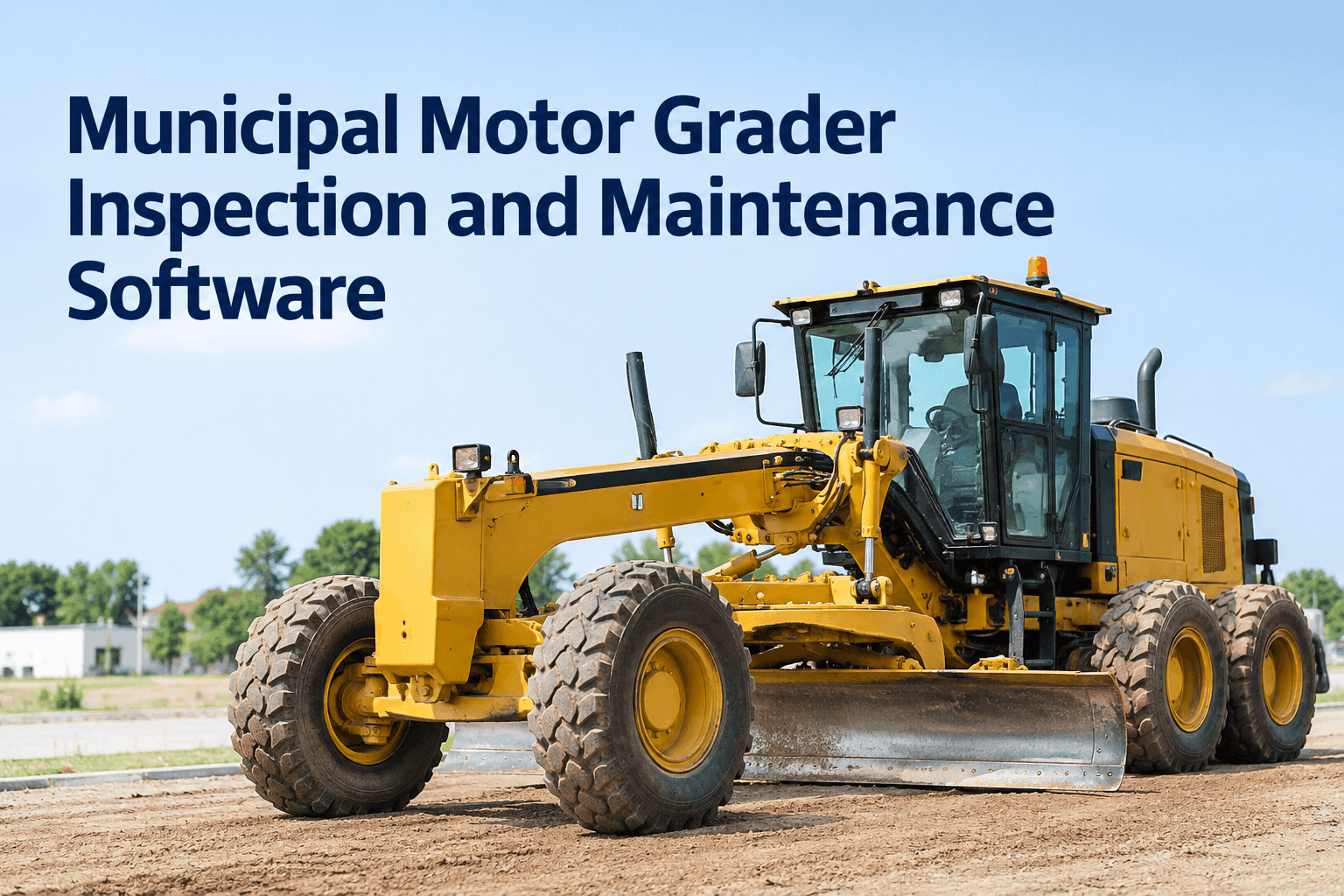
Grader MG-12 comes up for budget review this spring — 19 years old, still running, no case for replacement because nobody can produce its service history. The council tables it another year, on a machine with no record either way. Motor grader inspection, and maintenance software exists so that conversation has an answer. See the record HVI builds for you
The PM Record That Pays Off at the Council Meeting, Not Just the Shop
Municipal graders run 15–25+ years. HVI tracks every one of them by engine hours from day one, so when the capital plan comes up, you walk in with a record instead of a guess.
Build Years
Warranty-period PM logged by engine hours from the first service, establishing the baseline record.
Workhorse Years
Circle, blade, articulation, and tandem-drive service tracked against hours, not a guess at wear.
Capital Decision Years
Full cost-per-hour and repair history ready the moment the unit comes up for replacement review.
A grader isn't judged the way a truck is. It doesn't get swapped out at a mileage number or a lease term — it works a road district for two decades, and the only question anyone eventually asks is whether to keep rebuilding it or retire it. That question gets answered with a service record or it gets answered with a guess, and most municipal fleets are guessing.
Why government graders live longer — and cost more to get wrongthe case for treating PM as a budget document, not just a shop task
None of that is a maintenance number — it's a budget number. A grader with a documented, engine-hour PM history makes a stronger case either way: rebuild it with confidence, or retire it with evidence instead of a hunch. Book a demo to see what that record looks like for your own fleet.
Two graders, same age, two different budget meetingsthe record is the only thing that's different
- "It's needed more repairs lately" is the whole case
- Nobody can say when the circle was last serviced
- Repair spend is scattered across invoices, not totaled
- The council tables the decision for another budget cycle
- The grader keeps running undocumented, right up to failure
- Full cost-per-hour report printed straight from the fleet record
- Every PM service logged against engine hours, not memory
- Repair history totaled automatically by unit
- The decision gets made on numbers, not impressions
- A kept unit is rebuilt on schedule; a retired one is replaced with the record to justify it
Same machine, same age — the only difference is whether anyone can prove what's been done to it. Start free and put your own grader fleet on the record before the next review.
From a flagged defect to a closed work orderhow a grader's daily check becomes part of its permanent record
A grader's PM schedule only means something if the daily check feeds into it. In HVI, a defect an operator flags in the field doesn't sit on a clipboard — it moves straight into the unit's record.
Operator flags it
A worn moldboard edge or a slow hydraulic leak gets logged with a photo from the cab, through a daily operator check.
Work order opens
The flag becomes a work order automatically, with parts needs pulled from inventory where they're tracked.
PM clock keeps running
The engine-hour schedule doesn't pause for the repair — it stays tied to the meter, not a calendar guess.
It joins the record
Closed work order, cost, and hours all roll into the one report pulled at the next budget or capital planning cycle.
Book a demo to walk through that flow on a grader from your own fleet.
What to look for in government motor grader softwarea short list before it's attached to a 20-year asset
PM scheduled by engine hours, not just the calendar
Graders in heavy rotation wear faster than the date alone would suggest.A cost-per-hour report, by unit, on demand
Ready to print for a capital plan or council review without rebuilding it from invoices.One record that survives staff turnover
A grader's history shouldn't live in one shop foreman's memory.Spare cutting edges tracked against upcoming PM
Blade and edge wear is predictable — the part should already be on hand.Visibility across every garage, not just one yard
A multi-district road department needs one view of every grader, wherever it's based.Works offline on remote routes
Road districts run into dead zones — a check logged there should sync when signal returns.HVI is built to clear every item on that list for motor graders and the rest of a public works heavy-equipment fleet — start free and put your graders on the record this season. The same engine-hour discipline also runs HVI's municipal dozer tracking, if your fleet runs both.
From a county fleet manager who stopped guessing at budget time
Every spring we'd sit in a capital planning meeting and argue about graders from memory. Somebody would say a unit "felt rough lately" and that was the whole case for replacing a $300,000 machine, or for not replacing one that actually needed it.
Now I walk in with a report — hours, every PM service, every repair, cost per hour, by unit. The council stopped debating impressions and started reading numbers. We've kept two graders running another five years on that record, and retired one we couldn't have justified keeping, and both calls were easy because the data made them for us.
Want your own grader fleet on a record like that before the next budget cycle? Book a 20-minute demo walked through your fleet.
Frequently asked questions
How does motor grader software help with capital replacement decisions?
It keeps every PM service, repair, and engine hour logged against the unit, so a cost-per-hour report is ready whenever a grader comes up for a rebuild-or-replace decision.
Why track graders by engine hours instead of a maintenance calendar?
Grader usage varies heavily by route and season, so hours reflect actual wear far more accurately than a fixed date, especially across a fleet running at different rates.
Can a defect flagged in the field turn into a work order automatically?
Yes. An operator's flagged defect, with a photo, opens a work order immediately and stays attached to that grader's permanent service record.
Does HVI work across multiple public works garages or road districts?
Yes. Fleet managers get one view across every garage and district, so a grader's record and status are visible regardless of where it's based.
Is HVI suited to equipment a municipality keeps for decades?
Yes. Records carry forward for the full service life of a unit, which matters for graders and other heavy equipment municipalities run far longer than private fleets typically do.
Walk into the next budget cycle with a record, not a guess
HVI tracks every motor grader in your fleet by engine hours from the day it's added, turns every flagged defect into a work order, and rolls it all into one report that works as well at a council meeting as it does in the shop.
No credit card · Engine-hour PM built in · Records that outlast staff turnover