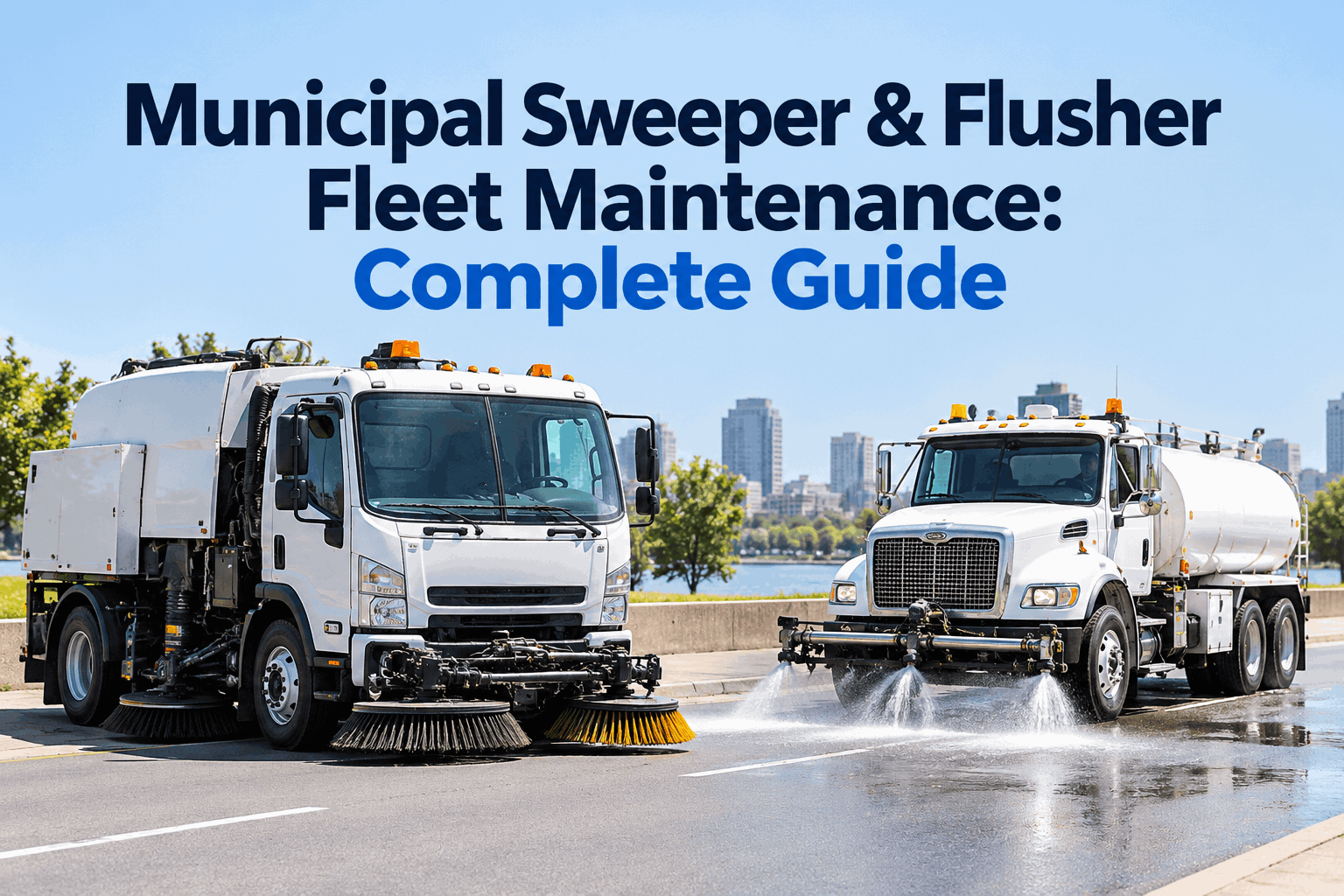
Municipal sweeper maintenance keeps street-cleaning routes dependable while helping crews catch broom wear, blocked suction paths, hydraulic leaks, and water-system faults before they interrupt service. Flusher trucks need equally deliberate pump, nozzle, tank, and winterization checks. This guide gives municipal fleet teams a practical inspection, and service framework, with ways to organize records and follow-up work in HVI.
Municipal Sweeper & Flusher Fleet Maintenance
Build a repeatable plan for brooms, vacuum paths, water systems, hydraulics and hour-based preventive maintenance—without losing sight of the next street-cleaning shift.
Inspect the systems that actually do the cleaning
A sweeper can drive normally yet clean poorly. Check both vehicle roadworthiness and the attachments that collect, move, and discharge debris. For flushers, pressure and flow performance matter as much as chassis condition.
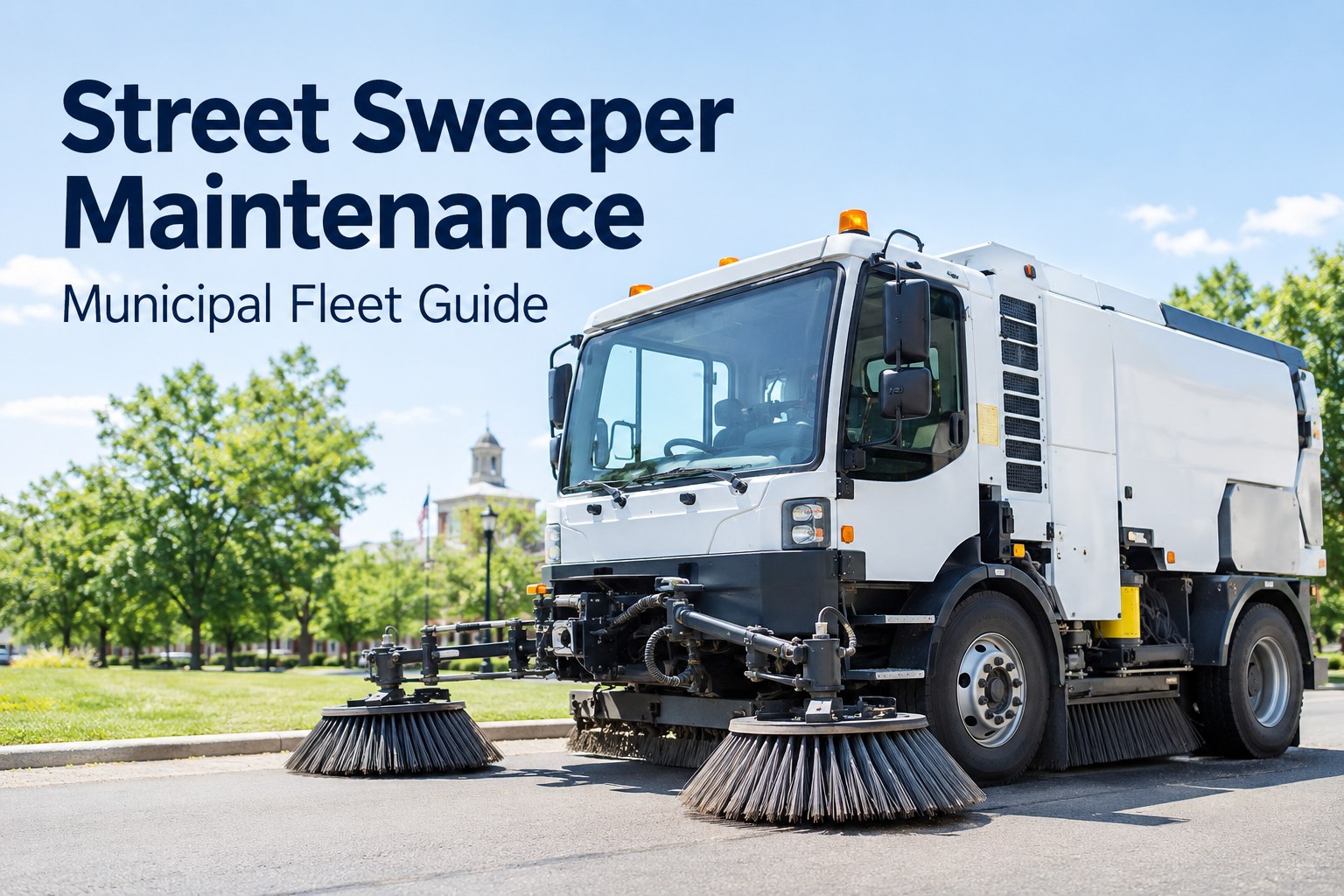
Brooms & skirts
Look for uneven bristle wear, incorrect ground contact, damaged skirts, loose mounts, and excessive vibration.
Vacuum, conveyor & hopper
Check suction passages, fan or conveyor condition, seals, hopper latches, filters, and debris buildup.
Water tanks, pumps & nozzles
Inspect strainers, hose connections, spray bars, pump leaks, nozzle patterns, and tank mounting points.
Hydraulics & controls
Check fluid levels, hoses, cylinders, fittings, control response, and unusual heat or noise.
Build equipment-specific checklists instead of relying on a generic truck form. Start free with HVI to organize sweeper inspections and keep findings tied to the correct asset.
Use shift checks and engine hours together
Street sweepers may accumulate heavy auxiliary-system use at low road speeds. Record engine or equipment hours alongside mileage, and set actual service intervals from the manufacturer’s instructions, duty cycle, and operating conditions.
| When | Sweeper focus | Flusher focus | Record to keep |
|---|---|---|---|
| Before each shift | Broom condition, pickup path, leaks, lights, safety devices | Tank level, hoses, nozzles, pump condition, leaks | Operator inspection & defects |
| After each shift | Clean hopper, inspect blockages, wash debris-prone areas | Flush lines as specified, clean strainers, inspect spray bar | Cleaning & defect follow-up |
| Hour-based PM | Lubrication, filters, drives, hydraulic and broom adjustments | Pump service, filters, belts, valves and mounting checks | Hours, parts, labor & completion |
| Seasonal / storage | Corrosion checks, deep cleaning, storage preparation | Drain or protect water circuits per OEM guidance | Winterization / return-to-service sign-off |
Illustrative maintenance framework—not universal service intervals. Follow the exact OEM schedule and your municipality’s safety procedures.
Don't let a failed broom check disappear into a paper log
When an operator reports poor pickup, the maintenance team needs more than a checked box. Capture the condition, assign a repair, verify the result, and preserve the service history.
- Record the symptom. Note the machine, hour reading, component, and visible issue.
- Assess dispatch impact. Follow local policy to decide whether equipment can safely operate.
- Schedule corrective work. Assign inspection, adjustment, replacement, or further diagnosis.
- Close with evidence. Record work performed and confirm acceptable operation before release.
HVI helps teams keep inspections, maintenance tasks, and asset history together. Book an HVI demo for municipal maintenance workflows.
Uneven curb-side pickup
Operator notes broom wear and reduced collection along curb line.
Illustrative workflow—not a live HVI screenshot.
Catch maintenance issues before they delay the next cleaning route
Bring hour-based servicing, daily inspections and repair follow-ups into one clear process—so crews know what needs attention before equipment goes out.
Winterize water circuits before freezing weather arrives
Residual water can damage pumps, valves, hoses, spray bars, and fittings. Prepare both sweeper dust-suppression circuits and flusher water systems using the manufacturer’s procedure for the specific machine.
Drain and protect
Empty tanks and low points; protect pumps, strainers, and lines as the OEM specifies.
Inspect vulnerable parts
Check cracked hoses, seals, nozzle bodies, and exposed connections.
Document storage status
Tag winterized units and record outstanding repairs or removed components.
Recommission deliberately
Restore water systems, test flow and leaks, and complete a pre-service inspection.
Track service by the measure that reflects actual use
For sweepers, road mileage alone may underrepresent wear on brooms, fans, hydraulics, and auxiliary engines. Capture the relevant hour-meter reading and review manufacturer-specific service triggers.
For flusher trucks, combine chassis service with separate pump and water-system checks. Keep each inspection and repair associated with the correct unit so supervisors can spot recurring faults and prepare work ahead of the next route.
Start free with HVI to organize hour-based maintenance and build a more consistent inspection history.
Five questions to review every week
Use these prompts during maintenance planning to prioritize equipment that may affect cleaning coverage.
Municipal sweeper maintenance FAQs
How often should a municipal street sweeper be inspected?
Complete an operator pre-use inspection before each shift, check cleaning-system condition after use, and perform preventive maintenance at the intervals specified by the equipment manufacturer and your fleet policy. Adjust checks for heavy dust, debris, or severe operating conditions.
Should street sweeper maintenance be based on miles or hours?
Often both. Mileage supports chassis maintenance, while engine or auxiliary-equipment hours can better reflect wear on cleaning systems during slow-speed operation. Follow the OEM’s service measures for each component.
What causes premature street sweeper broom replacement?
Incorrect broom contact pressure, uneven adjustment, abrasive debris, damaged mounts, and prolonged operation with worn bristles can accelerate wear. Check adjustment and cleaning performance before replacing parts.
What should be included in flusher truck maintenance?
Inspect tanks and mounts, water pumps, strainers, hoses, valves, spray bars, nozzles, hydraulic or PTO components where fitted, and the truck chassis. Include draining and cold-weather protection when applicable.
How can HVI help municipal sweeper fleet maintenance?
HVI can help teams organize equipment inspections, preventive maintenance schedules, repair follow-up, and service records. Configure the process to your equipment and verify specific workflow requirements during a demo.
Spend less time chasing records. More time keeping routes ready.
Give your team a clearer view of sweeper inspections, upcoming service and unresolved repairs. Start with HVI and see how a more organized maintenance routine could work for your fleet.