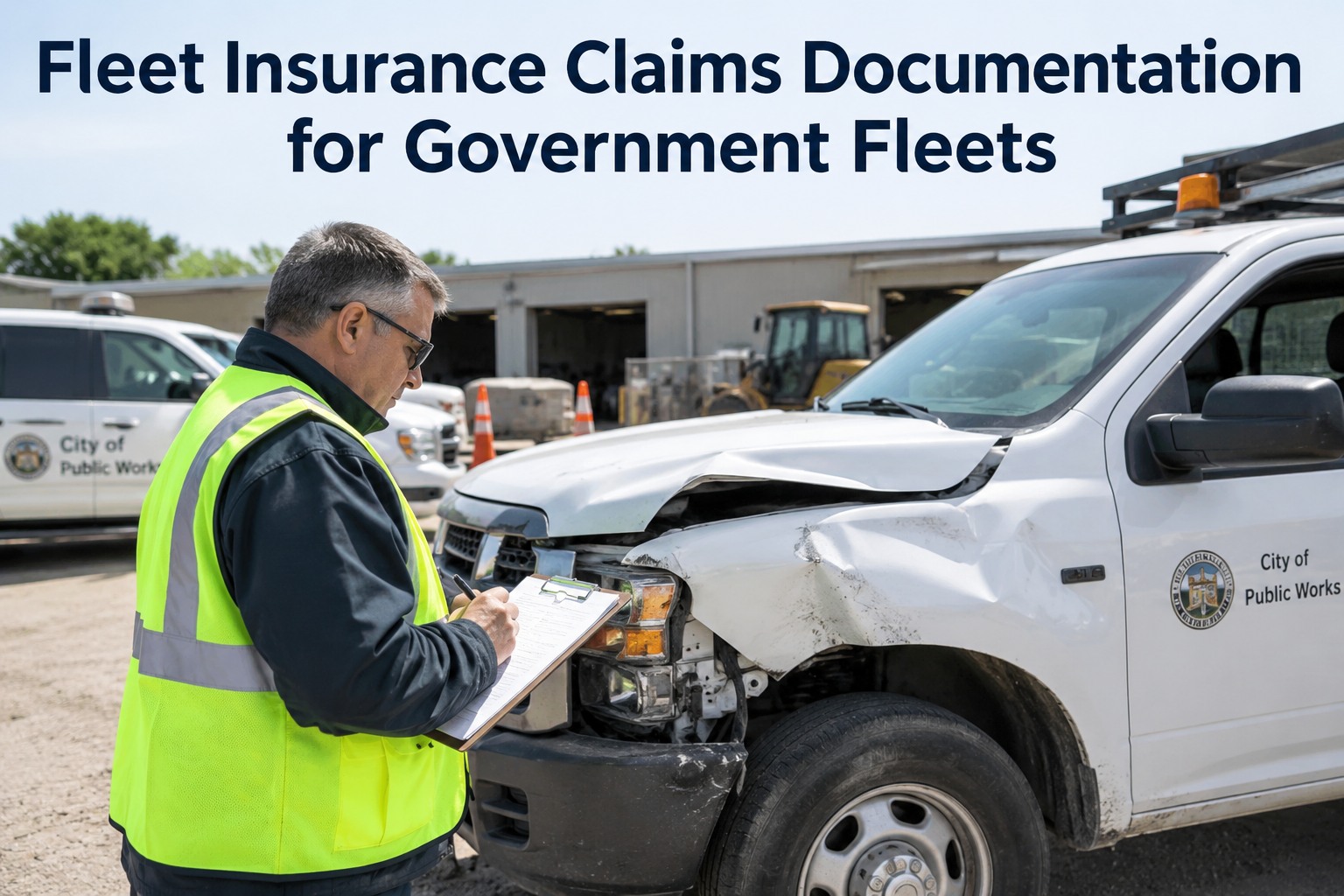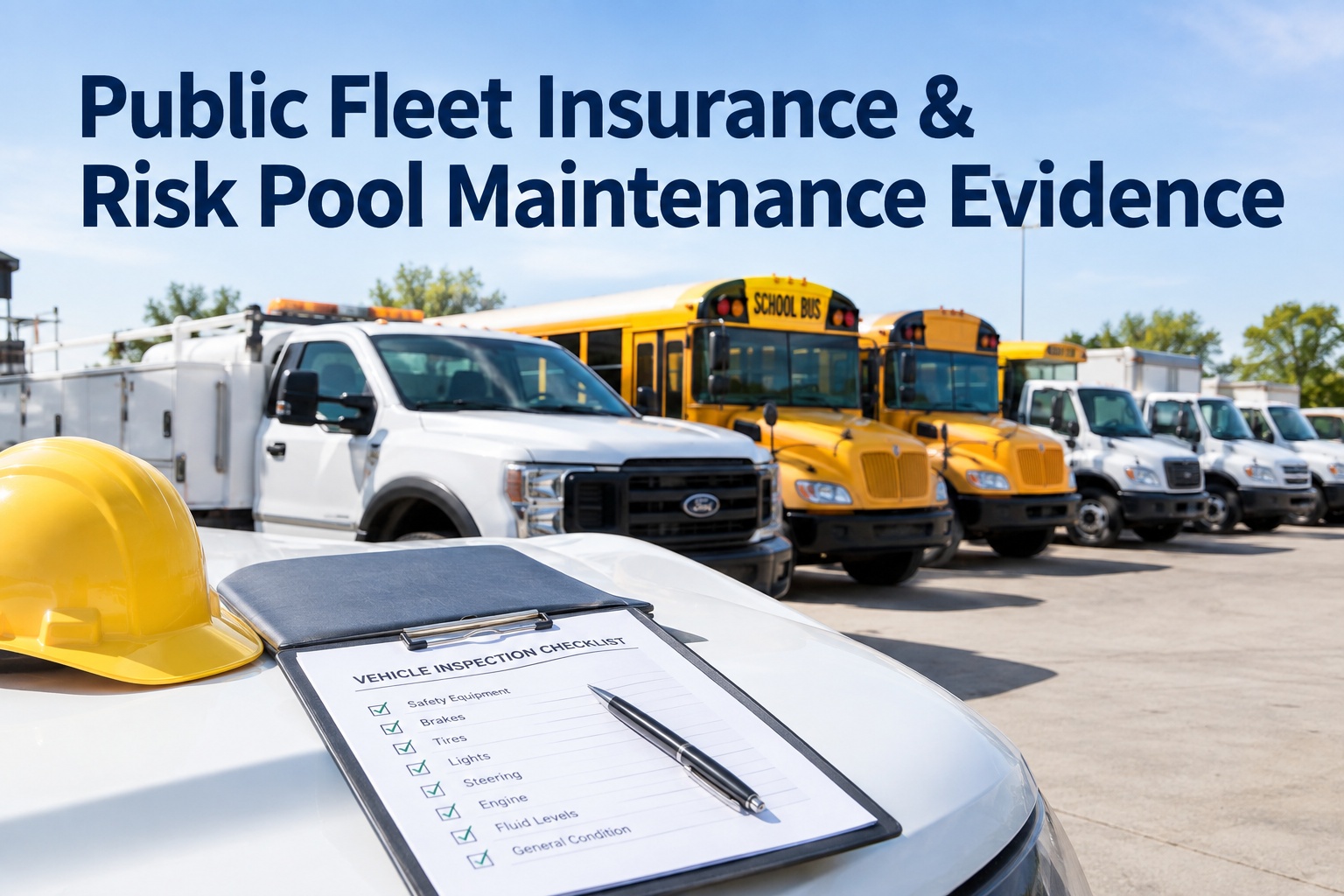
A city bus rear-ends a car at a red light. The claim comes in for $180,000. Six months later, the risk pool's adjuster asks a simple question: when was this vehicle's brake system last inspected, and who signed off on it? If nobody can answer in under a week, public fleet insurance stops being a policy on file and starts being a liability the agency carries alone. Book a demo to see what that answer looks like when it's already on record.
Commercial, Self-Insured, or Pooled — How Public Fleets Actually Carry Risk
Most public agencies assume they know which bucket they fall into. In practice, many carry a mix: primary coverage through a municipal risk pool, a self-insured retention layer under that, and a small commercial excess policy sitting on top for catastrophic loss. Each layer asks the same underlying question after a claim — can you prove the vehicle was properly maintained and the driver properly trained?
Commercial Insurance
A traditional insurer prices your premium off loss history and inspects your maintenance program during underwriting. Weak records don't just slow a claim — they raise next year's renewal quote before a claim ever happens.
Self-Insurance
The agency pays claims directly from its own reserve fund. There's no outside insurer to push back on a bad claim, which means the burden of proving reasonable maintenance falls entirely on the fleet's own paperwork.
Municipal Risk Pool
Dozens or hundreds of agencies share risk through a member-governed pool — often cheaper than commercial coverage, but pools track member loss ratios closely, and a fleet with poor documentation can see its assessment rise relative to better-documented peers.
None of the three structures forgives missing records. If anything, a pool or self-insured program puts the agency closer to the claim, not further from it — there's no large carrier absorbing the cost of a poorly defended case. Sign up for a free trial to see where your own fleet's records would stand up today.
Why Maintenance Records Are Insurance Evidence, Not Just Paperwork
A claims adjuster or defense attorney doesn't ask whether your fleet has a maintenance program. They ask whether this specific vehicle, on this specific date, was inspected, flagged, and repaired on a schedule a court would call reasonable. That's a different question, and it's one a filing cabinet full of loose work orders usually can't answer fast enough to matter.
That five-link chain is what a defense attorney wants to hand a jury. Break the chain anywhere — a defect that was "noted" but never turned into a work order, a repair with no completion date — and the claim gets harder to defend, regardless of how good the underlying maintenance actually was. If your maintenance management workflow can't produce that chain in minutes, the gap isn't in your shop — it's in your records.
Governmental Immunity Doesn't Mean No Liability
Most states carve out a specific exception for the negligent operation or maintenance of a government-owned vehicle, meaning the general immunity that protects an agency from many lawsuits does not extend to a poorly maintained truck that causes a crash. Courts have narrowed and widened this exception in different jurisdictions over the years, but the pattern holds across most states: immunity protects discretionary governmental decisions, not a brake system that was flagged and never fixed.
Fleet directors sometimes treat this exception as a legal technicality for the risk manager to worry about. It isn't. It's the reason your agency's exposure on a single unmaintained vehicle can look identical to a private trucking company's — full liability, full damages, no immunity shield to fall back on. Book a demo to see how flagged defects get tracked to closeout before they turn into that exact scenario.
Subrogation: The Recovery Agencies Leave on the Table
When a third party is at fault for damage to a public vehicle — a distracted driver, a contractor's equipment failure, a defective part — the agency's insurer or risk pool can pursue subrogation to recover what it paid out. This only works cleanly when the agency's own records rule out contributing negligence on its side. A dump truck with a documented, current inspection history is a clean subrogation case. The same truck with no inspection record on file invites the other side's insurer to argue the agency shares the blame, cutting the recovery or killing it outright.
Loss-run analysis — reviewing the pattern of an agency's own past claims — is where this becomes visible at scale. A fleet that pulls its loss runs annually and cross-references them against maintenance records can usually spot which vehicle classes, which yards, or which shifts are driving cost, long before the risk pool's own actuaries flag it at renewal. Book a demo to see that cross-reference run against your own last three claims.
Reading Your Own Claims History Before the Pool Does
From a Risk Manager Who Reads the Loss Runs Herself
Our pool used to send us a claims summary once a year and we'd nod at it. The year we actually cross-referenced every at-fault claim against our own maintenance logs, we found two trucks responsible for almost a third of our incident cost — both overdue on brake inspections at the time of the claim.
Fixing that didn't just lower our loss ratio. It changed how our attorney handled the next claim entirely — instead of negotiating from a weak position, we had the inspection record on the table before opposing counsel asked for it.
Conclusion: Public Fleet Insurance Runs on Evidence, Not Assumptions
Whether an agency is commercially insured, self-insured, or part of a municipal risk pool, the outcome of a claim rarely comes down to the policy wording — it comes down to whether the fleet can produce a clean, timestamped chain from inspection to repair to closeout, plus proof the driver was trained and qualified. Public fleet insurance is only as strong as the records sitting behind it. Agencies that build that evidence chain into daily operations stop dreading claims season and start walking into renewal negotiations, audits, and council reviews with the answer already in hand. If you want to see what an audit-ready evidence chain looks like against your own fleet, book a demo and bring your last claim to the call.
Frequently Asked Questions
Does governmental immunity protect a public fleet from vehicle liability claims?
Not fully. Most states carve out a specific exception to governmental immunity for the negligent operation or maintenance of a government-owned vehicle. This means an agency can still be held liable for damages resulting from a poorly maintained vehicle even though it enjoys broader immunity for many discretionary governmental functions. Agencies should never assume vehicle-related claims are automatically shielded by immunity.
What's the difference between a municipal risk pool and self-insurance?
A municipal risk pool is a member-governed cooperative where multiple public agencies share risk and costs collectively, often at lower cost than commercial insurance because pools reduce overhead and reinvest surpluses into member dividends or reduced assessments. Self-insurance means an agency sets aside its own reserve fund and pays claims directly, without pooling risk with other entities. Many agencies actually use a blend: primary coverage through a pool, a self-insured retention layer, and commercial excess coverage on top for catastrophic losses.
Why do maintenance records matter for an insurance claim?
Insurers, risk pools, and courts evaluate whether a specific vehicle was reasonably maintained at the time of an incident, not whether the fleet has a maintenance program in general. A complete, timestamped chain of inspection, defect identification, work order, repair, and closeout is what allows an agency to defend a claim, pursue subrogation against an at-fault third party, and avoid inflated settlements based on an assumption of neglect.
What is subrogation and why does it matter for public fleets?
Subrogation is the process by which an agency's insurer or risk pool recovers costs from a third party who was at fault for damage to a public vehicle. Successful subrogation depends heavily on the agency's own records showing it wasn't contributorily negligent — for example, that the vehicle involved had a current, documented inspection and maintenance history. Missing or incomplete records make it easier for the at-fault party's insurer to argue shared blame, reducing or eliminating recovery.
How often should a public fleet review its loss runs?
Best practice is at least annually, and ideally on a rolling basis rather than only at policy or pool renewal. Reviewing loss runs regularly and cross-referencing them against maintenance and driver training records helps agencies identify specific vehicles, departments, or shifts driving cost before a risk pool's own actuarial review flags it, giving the agency time to act rather than simply absorb a higher assessment or premium.
Turn your fleet records into your strongest claims defense
HVI connects timestamped inspections, photo-documented defects, repair chains, driver training records, and signed sign-offs into one searchable system — so your risk pool, insurer, or council gets the evidence they need in minutes, not weeks.
No credit card · Cost reporting by vehicle and department · Live in under two weeks