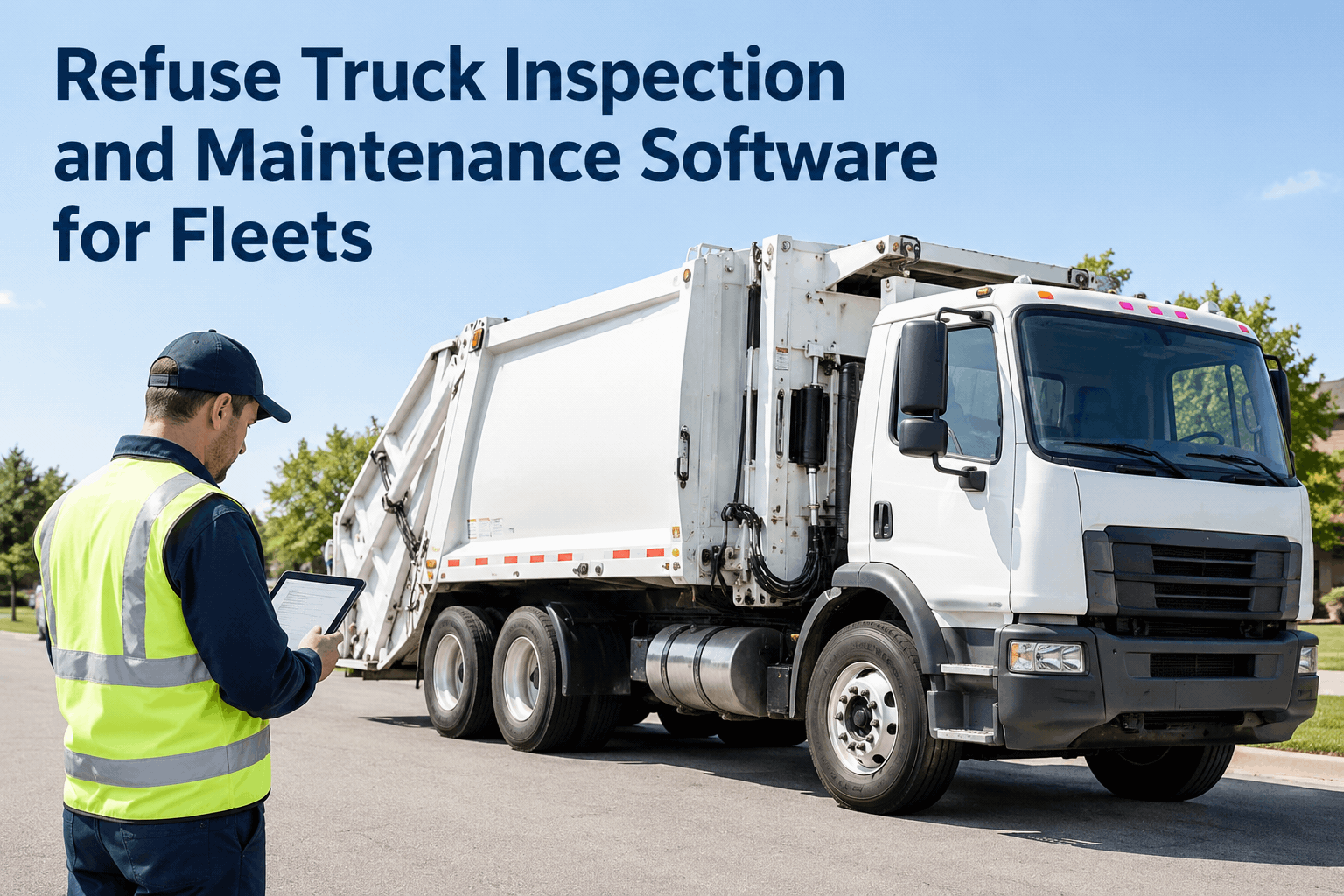
A packer truck's hydraulic pump gives out halfway down Route 4 at 9:40am. The back half of the street doesn't get picked up that day, and by lunchtime the city's 311 line has a dozen calls about carts still sitting at the curb. For a sanitation department, a down truck isn't a maintenance metric — it's a visible service failure the public calls city hall about. See how HVI catches it before the route starts
Every Route a Refuse Truck Completes Is a Street That Doesn't Call City Hall
Most sanitation operations run one truck per route with no spare standing by. HVI flags a weakening packer system before the truck leaves the yard, so the route gets finished by a truck that's actually sound.
A fleet manager measures a breakdown in repair hours and parts cost. A resident measures it in a trash can that's still full on Tuesday. Those are two different scoreboards, and most refuse truck software is built for the first one. For a municipal sanitation operation, what actually matters is whether every route gets finished — and that depends on catching a failing truck before it leaves the yard, not after it's stalled halfway down someone's street.
Why a missed route costs more than the repair billthe scoreboard a municipal sanitation operation actually gets judged on
None of that shows up on a repair invoice. It shows up as a 311 call log, a council question at the next meeting, and a crew sent back out on a street they already covered once. Book a demo to see a route held in the yard instead of stalled on the street.
What actually stalls a route mid-streamthe systems that take the whole truck out, not just slow it down
A refuse truck's chassis fails the way any truck does — but what actually stops a route is almost always the body. A generic inspection built for a chassis alone misses the systems doing the real work.
Packer / compaction cylinder
A slow or sticking packer cycle doesn't stop the route instantly — it slows every stop until the crew is behind schedule before midday.
Lift arm / hopper
A worn lift arm pivot shows up as hesitation under load first — easy to dismiss as "a little slow today" until it stops lifting at all.
Hydraulic pump & lines
The pump that drives the packer and the lift is a single point of failure for the entire body — when it goes, nothing on the back of the truck works at all.
Tailgate & seals
A tailgate that doesn't seal fully leaks load and liquid along the whole route — a visible problem for residents long before it's a mechanical one for the shop.
Each of these has a specific, catchable early sign. For the full body-type-specific checklist and the odd way a refuse truck's clocks run, see HVI's waste fleet inspection software guide. Start a free trial and put these checkpoints on your own fleet's daily check.
Stalled mid-route vs. held in the yardthe same weak hydraulic pump, two very different mornings
- A slow packer cycle goes unflagged on yesterday's paper DVIR
- Dispatch assigns the truck to today's full route anyway
- The pump fails at stop 180 of 400, mid-street
- Half the route sits uncollected until a return trip is arranged
- 311 calls start before the shop even knows the truck is down
- The slow cycle is flagged with a photo on a digital pre-route check
- The flag opens a work order and the unit's status updates immediately
- Dispatch swaps the route to a different truck before pull-out
- The route finishes on schedule, on a sound unit
- The weak pump gets serviced in the shop, not on a residential street
The defect existed either way — what changed is whether it was caught before the route started or discovered by the residents on it. Book a demo to see that same catch on your own fleet.
What to look for in municipal refuse truck softwarea short list before a missed route becomes a council question
Route-level visibility, not just a truck list
Dispatch needs to see which routes are covered this morning, not just which trucks are running.A flagged defect holds the truck before pull-out
A note that's read after the route starts protects nobody.Body-specific checklists, not a generic truck template
A front loader and a rear loader fail at completely different points.Photo evidence on every finding
A sticking packer cycle is judged on what's documented, not a verbal note from the route.Reports ready for a council or contract review
A record of what was caught and when is the answer to "why was my street missed."Fast enough for a 5am pull-out line
If the digital check slows down dispatch, crews under route pressure will skip it.HVI is built to clear every item on that list for municipal refuse fleets — start free and put your own routes on the record this week. For the private-hauler side of this same equipment, see HVI's garbage truck inspection app.
From a sanitation superintendent who stopped answering for missed streets
Every missed street used to be a mystery by the time it reached my desk. A resident calls 311, 311 forwards it to us, and I'm trying to reconstruct what happened on a route from two days ago with nothing but a driver's memory and a paper DVIR that may or may not have been filled out completely.
Now I can tell a council member exactly which truck was flagged, what it was flagged for, and which route got reassigned because of it, inside of a minute. We still have breakdowns — it's a fleet of hardworking trucks — but we've stopped finding out about them from a citizen complaint instead of our own dispatch desk.
Want every route on your schedule backed by a truck that's actually ready? Book a 20-minute demo walked through your fleet.
Frequently asked questions
Why does route-level visibility matter more than truck status alone?
Dispatch ultimately needs to know whether every scheduled route is covered, not just which individual trucks are running, since a flagged truck still has to be swapped onto a route someone can run.
Can a flagged defect stop a refuse truck from being dispatched?
Yes. A defect logged during the pre-route check opens a work order immediately and updates that unit's status before pull-out, so dispatch can reassign the route to a different truck.
What's the most common reason a refuse truck stalls mid-route?
A failing hydraulic pump is a frequent single point of failure, since it drives both the packer and the lift arm — when it goes, the entire body stops working at once.
How does this help respond to a city council or citizen complaint?
A digital record shows exactly what was flagged, when, and how the route was reassigned, so a missed-collection question can be answered with specifics instead of a reconstructed guess.
Does HVI support different refuse truck body types?
Yes. Rear loaders, front loaders, and automated side loaders each wear differently, and inspections can be configured to the specific body type on each unit.
Hold the truck in the yard, not the route on the street
HVI flags a weakening packer, pump, or lift system before the truck pulls out, turns the defect into a work order instantly, and gives dispatch the route-level view to swap trucks before a street gets missed, not after.
No credit card · Route-level visibility built in · Records ready for a council question in minutes