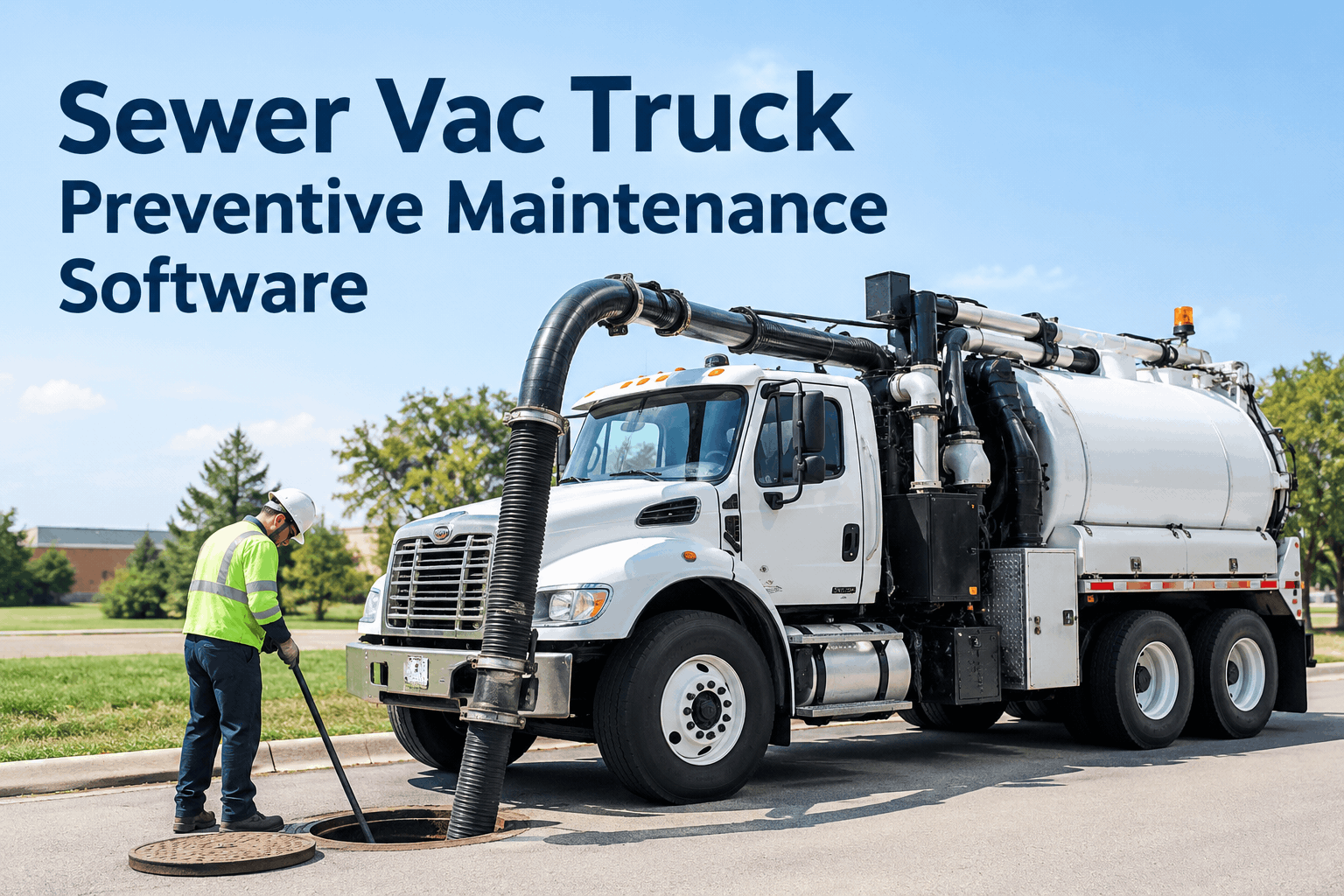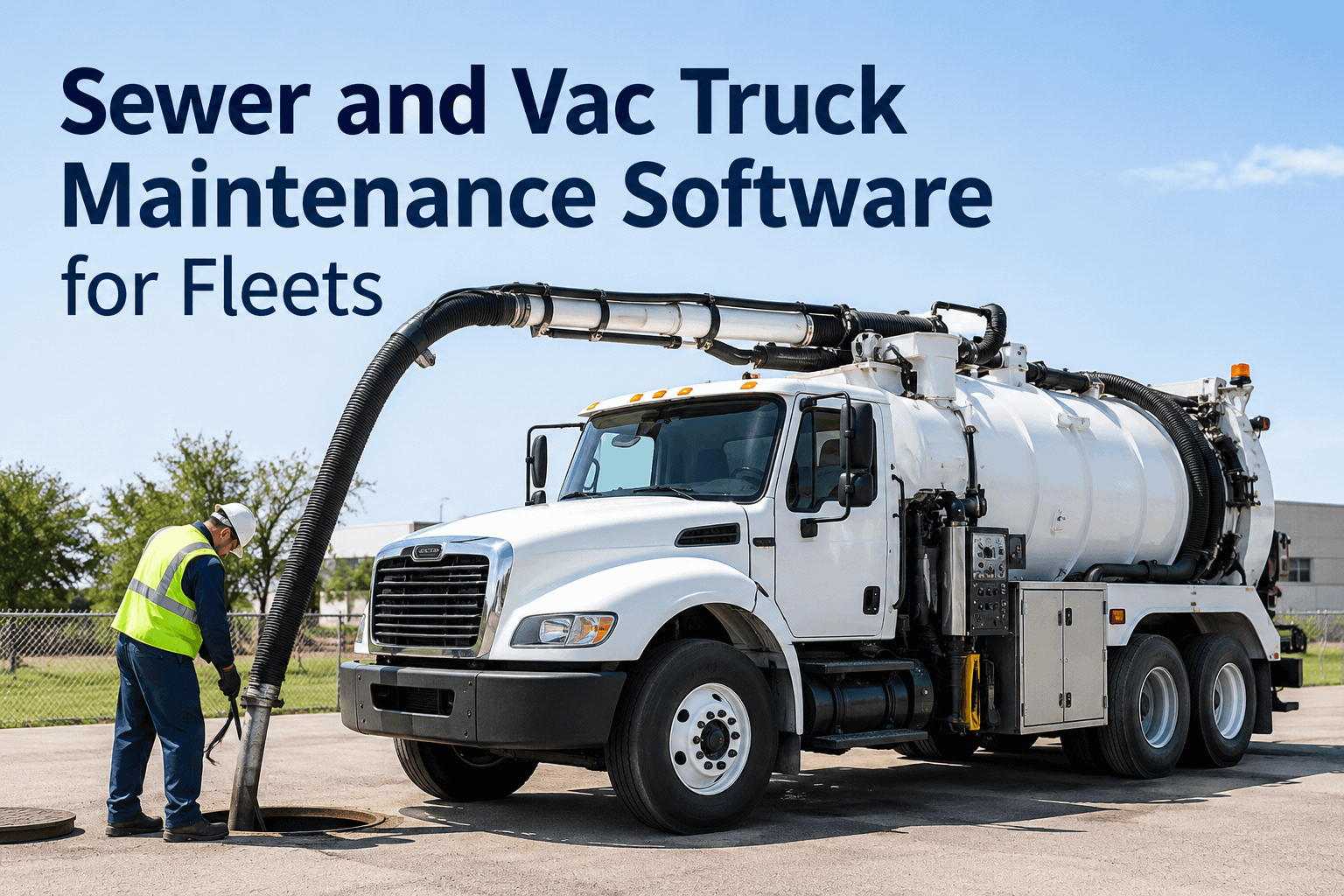
A blocked sewer line backs up into a basement on a Friday afternoon, and the only combo truck in the yard won't build vacuum — a worn blower seal nobody caught in time. The call still has to get answered, but now it's a rented unit at premium rate, or a neighboring department's truck, while the one you own sits in the shop. Sewer and vac truck maintenance software exists to catch that seal before the call comes in. See how HVI tracks every system on the truck
Five Systems Have to Work for the Truck to Work at All
A combination sewer and vac truck isn't one machine — it's five working together. HVI tracks each one's own inspection and PM schedule, so a worn seal or a tired nozzle gets caught before it takes the whole unit down.
A dump truck that loses one system still dumps. A combo truck that loses one of its five systems is just a truck — it can't clean a line, can't build vacuum, can't do the one job it exists for. And because these units run six figures, most public works departments own one, maybe two, with no third unit sitting in reserve. One failure doesn't slow the response, it stops it.
Why one failed system takes down a six-figure assetthe math most fleets don't run until the truck is already down
None of that shows up as a maintenance line item — it shows up as a rented truck, a mutual-aid call to a neighboring department, or a blockage that sits longer than it should. Book a demo to see how HVI catches a worn system before it becomes a rental invoice.
Where each system actually failsthe wear points a quick walkaround won't catch
Each of the five systems wears differently, and a generic truck inspection template — built for an engine, tires, and lights — misses all of them. A structured digital inspection names each one so it isn't left to memory.
Vacuum blower
Seals and vanes wear gradually, so vacuum pressure drops before it fails outright — a slow decline that's easy to dismiss as "it's just a little weaker today."
Water jetter & nozzles
Nozzles wear from abrasive debris and lose cutting pressure long before anyone notices, turning a one-pass job into three.
Boom & hydraulics
Hydraulic fittings exposed to debris and grit corrode and weep slowly — a slow leak that drops reach and lift before it drops outright.
Debris tank & doors
A tank door seal that's lost its edge leaks vacuum at the one place that's easy to miss on a visual pass — it has to be checked under load.
Each one is a quick, specific check when someone knows to look for it — and a dead-in-the-field truck when nobody does. Book a demo to see these checkpoints run on your own fleet's inspection.
Reactive repair vs. a system that's watchedthe same truck, two very different Friday afternoons
- PM is logged for "the truck," not its five systems individually
- A weakening blower seal goes unnoticed until it fails mid-call
- Specialized parts get ordered after the breakdown, not before
- The only backup is a rental or a call to another department
- The next blocked line waits on whichever truck comes free
- Each system carries its own PM schedule, not a single truck-wide one
- A weakening blower gets flagged on a daily operator check, with a photo
- Seals and nozzles sit in inventory ahead of the service that needs them
- The truck stays in rotation because the wear was caught early
- The next call gets answered by your own fleet, not a rental
The regulation and the call volume don't change either way — what changes is whether the truck is there to answer the call. Start free and put your own combo truck's five systems on the record.
What to look for in sewer and vac truck softwarea short list before it's protecting your only truck
PM scheduled per system, not per truck
Vacuum, jetter, boom, tank, and PTO wear on different clocks and need separate schedules.Specialized parts tracked against upcoming service
Blower seals and jetter nozzles should be on the shelf before the PM date, not ordered after.A flagged defect becomes a work order instantly
No gap between a crew noticing weak suction and a shop ticket.Photo evidence on every finding
A weeping hydraulic fitting is judged on what's actually there, not a verbal note.One record if you run more than one unit
A multi-truck fleet needs one view across every combo and hydro-excavation unit, not one app per truck.Works from a phone in wet, muddy field conditions
If logging a defect at the jobsite is a hassle, it won't happen until the truck's back at the yard.HVI is built to clear every item on that list for sewer and vac trucks and the rest of a public works fleet — start free and put your combo truck on the record this week. Comparing units before you buy? See HVI's vacuum truck buyer's guide.
From a public works fleet manager with one truck and no backup
We run one combo truck for the whole town. For years that meant every PM was "check the truck," which really meant check whatever we remembered to check, and the blower was the thing that always got looked at last because it's the hardest part to get at.
It finally failed on a call, and we spent three days on a rental while we waited on a seal kit we should have had on the shelf. Now every system on that truck has its own schedule and its own parts list, and nothing gets ordered after it's needed anymore. We haven't rented a backup truck since.
Want your own combo truck's five systems tracked before the next call comes in? Book a 20-minute demo walked through your fleet.
Frequently asked questions
Why track a sewer/vac truck by system instead of as one unit?
The vacuum blower, water jetter, boom, debris tank, and PTO each wear differently, so a single truck-wide PM schedule misses the specific interval each one actually needs.
What parts should be kept on hand for a combo sewer truck?
Blower seals, jetter nozzles, and common hydraulic fittings are the parts most likely to have long lead times, so they're worth stocking ahead of the PM date that needs them.
Can a crew flag a defect from the jobsite, not just back at the yard?
Yes. A crew can log a defect with a photo from a phone in the field, and it opens a work order immediately instead of waiting until the truck returns.
Does HVI work for both combination sewer cleaners and hydro excavation trucks?
Yes. Both run similar vacuum, water, and boom systems, and each unit's inspection and PM schedule can be configured for its specific equipment.
Is HVI suited to a fleet running just one or two combo trucks?
Yes. A small fleet with no true spare benefits most from catching wear early, since one truck going down often means no backup is available at all.
Catch the weak seal before it costs you a rental truck
HVI tracks every system on your sewer and vac trucks — vacuum, jetter, boom, tank, and PTO — on its own schedule, turns a flagged defect into a work order automatically, and keeps the parts that matter on the shelf before you need them.
No credit card · Five systems tracked separately · Specialized parts built into PM