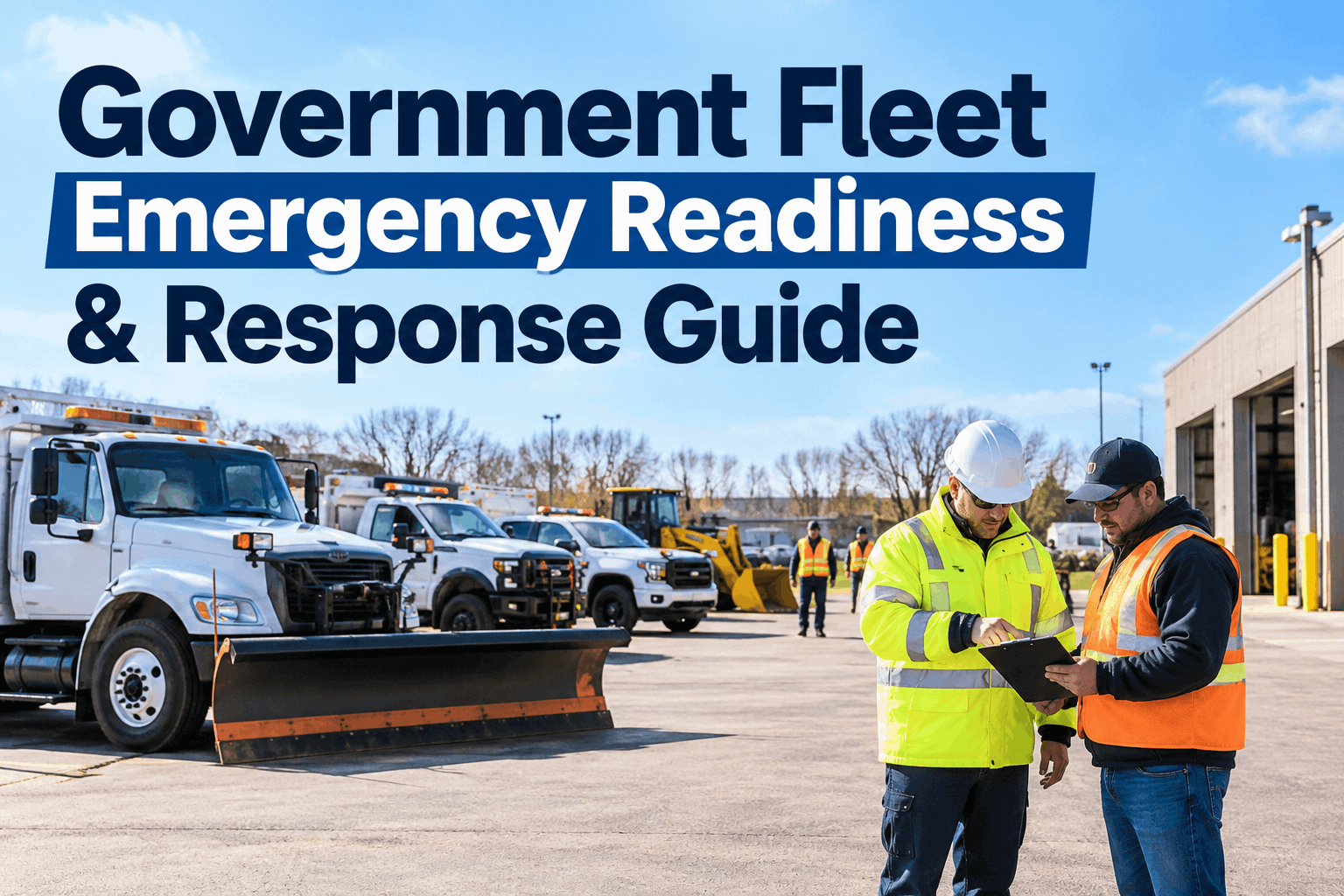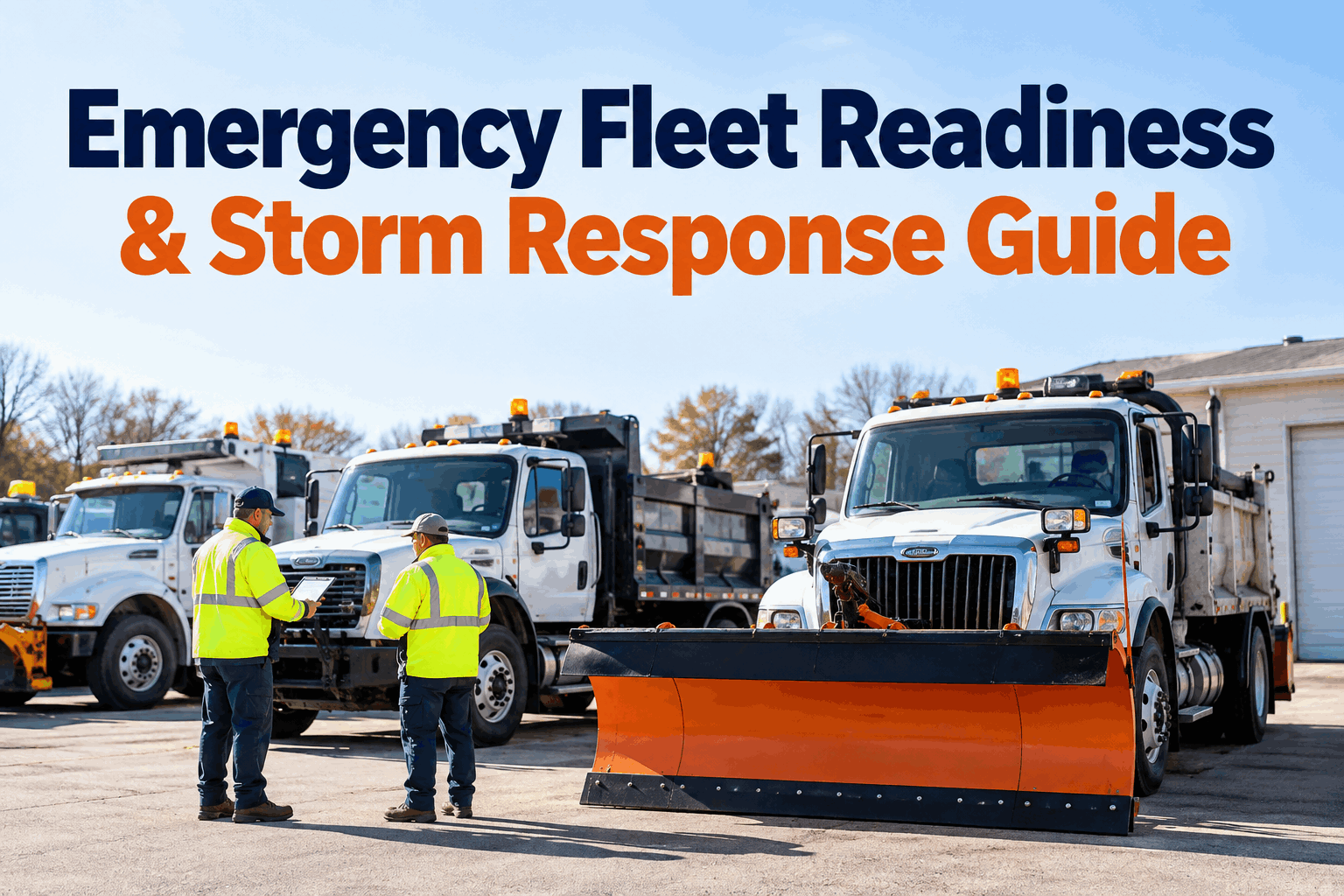
When the forecast turns, a public works fleet gets no grace period — the plows, pumps and loaders either roll that night or they don't. And 2 a.m. with the storm on the ground is the worst time to discover a unit has an open defect or a skipped PM. Emergency fleet readiness is knowing, before the call comes, exactly what can deploy. Book a demo to see fleet-wide readiness at a glance.
The storm is a deadline you can't move
Readiness is a status you have before the warning, not a scramble after it. Know which units are deploy-ready, which are held by a defect, and which are overdue — while there's still time to fix it.
Emergency fleet readiness isn't a document you file at the start of the season — it's a live status that decays every day a unit sits with an unresolved defect or a skipped service. Public works fleets that respond well to storms aren't luckier; they walk into the event knowing their numbers, because they built readiness in the quiet weeks and tracked it right up to deployment. The ones that get caught are the ones who assumed "it was fine last time." A storm is the worst possible moment to discover otherwise — and the one moment you're guaranteed to.
Readiness is built before the warning, not after
By the time a storm is named, the window to fix anything is nearly closed. Readiness has to be earned in the green days — here's where it's won or lost.
Catch up PM, close open defects, run readiness inspections across the fleet. This is the only phase where you have time — and it's the one most fleets waste.
Pull the readiness status, resolve the few units still held, stage fuel and parts. You can only fix what you had time to find — and only if you can see it.
Equipment deploys on schedule because the work was already done. No 2 a.m. surprises, no units discovered down when they're needed most.
Slip in the calm phase and there's nothing to do in the storm phase but hope. Book a demo to see readiness tracked from calm to deploy.
The four things readiness actually requires
"Ready" isn't a gut feeling — it's four conditions a unit either meets or doesn't. Miss one and the truck is a liability, not an asset, the moment it's needed.
Inspection current
A recent readiness inspection confirms the unit was actually looked at — not assumed fine because it ran last month.
No open defects
No unresolved safety-critical defect sitting on the record. An open fault means the unit is held, not ready, however urgent the storm.
PM not overdue
Preventive maintenance is current, so a unit doesn't fail mid-event on a service that was due before the storm ever hit.
Equipment accounted for
Plow, spreader, pump or attachment is on the unit and functional — readiness is the whole rig, not just the chassis.
HVI rolls all four into one readiness status per unit, so "ready" is a fact you can see, not a hope. Start free and define your readiness criteria.
Two ways that phone call goes
Same fleet, same storm, same 5 a.m. call to mobilize. The only difference is whether readiness was tracked before it — and that difference is the whole response.
- Crews walk the yard checking units one by one
- Two plows found down — defects nobody logged
- A loader overdue on PM, no one's sure if it's safe
- Scramble for parts that should've been staged
- Deployment slips hours — roads go untreated
- Pull the board — 24 ready, 8 flagged, instantly
- The 8 were known days ago and mostly fixed
- PM status visible per unit, no guessing
- Parts staged because the gaps were seen early
- Equipment rolls on time — routes get covered
The call is the same. The outcome is decided before the phone rings. Book a demo to make the call a non-event.
Readiness that still works when the network doesn't
Storms take down connectivity exactly when you need records most. Readiness documentation can't depend on a signal that may not be there.
No signal at the yard or in the field
Pre-storm inspections happen in remote yards, flooded zones and dead-cell areas. A cloud-only tool goes blank right when crews are checking equipment.
Offline inspections keep going
Crews complete readiness checks on the device with no signal; records and photos sync to the fleet the moment a connection returns. No gap in the trail.
Mutual-aid deployments and multi-day events especially need records that survive the conditions. Start free with offline-ready inspections.
Emergency fleet readiness checklist
Run this across the fleet in the calm weeks, not the warning hours. Every box unticked is a unit that might not roll when the storm lands.
On a clipboard this is a once-a-season ritual nobody can verify later. In HVI it's a live status you can pull the instant a forecast lands. Book a demo to run the readiness check digitally.
A public works director on walking in ready
The old routine was a mad dash the day before a storm — everybody in the yard, flashlights out, finding problems we should've caught weeks earlier. One year we sent a plow out that died on its route in the first hour, and that stretch of road stayed untreated through the morning commute. Now readiness is a number I can look at any day of the season. When the warning comes, I already know what rolls. The storm stopped being the test of our maintenance and went back to being just a storm.
Derek N.Public Works Director · County fleet · 90+ units
Run emergency readiness on HVI
Readiness inspections
Standardized pre-storm inspections per unit, so "ready" means verified, not assumed.
Preventive maintenance alerts
PM alerts surface overdue service before a storm, not during it.
Defect tracking
Open defects are visible and held in maintenance management, so a flagged unit never gets deployed by mistake.
Offline inspections
Crews capture readiness in dead-signal yards and field sites; records sync when the connection returns.
One readiness status per unit, built on the inspections your crews already run — see how it fits broader pre-storm inspection practice. Book a demo to see the readiness board.
Emergency fleet readiness questions
Q1What is emergency fleet readiness?
It's the verified ability of a fleet to deploy on short notice for a storm or emergency — every unit with a current inspection, no open safety-critical defects, preventive maintenance up to date, and its equipment mounted and working. It's a live status you can check, not a seasonal assumption, which is what lets a fleet mobilize without surprises.
Q2How do municipal fleets prepare for storms?
By building readiness in the calm period before the season: catching up PM, closing open defects, running readiness inspections on front-line and reserve units, checking attachments like plows and spreaders, and staging fuel and parts. The fleets that respond well track that status right up to deployment rather than scrambling when a warning lands.
Q3Why track readiness before the storm instead of during it?
Because once a storm is forecast, the window to repair anything is almost gone. A defect found weeks out is a scheduled fix; the same defect found the night of the storm is a unit that can't roll. Tracking readiness in advance turns deployment into executing a known plan instead of discovering problems under pressure.
Q4Does readiness tracking work without connectivity?
It should — storms frequently take down networks, and pre-storm inspections often happen in remote yards or dead-cell areas. With offline-capable inspections, crews complete readiness checks on the device and the records and photos sync to the fleet once a connection returns, so there's no gap in documentation during the event.
Q5How does HVI support emergency fleet readiness?
HVI runs readiness inspections per unit, alerts on overdue preventive maintenance, tracks and holds open defects, and keeps asset-level records — including offline — so public works and government fleets can see fleet-wide readiness before deployment. It's an inspection and maintenance readiness layer, not a replacement for your emergency management plan or jurisdiction's procedures.
Manage emergency fleet readiness with HVI
Verify inspection status, surface unresolved defects, schedule readiness maintenance and keep asset-level records — so your fleet walks into every storm knowing exactly what can deploy. Live in weeks, not seasons.
Readiness status · PM alerts · Defect holds · Works offline