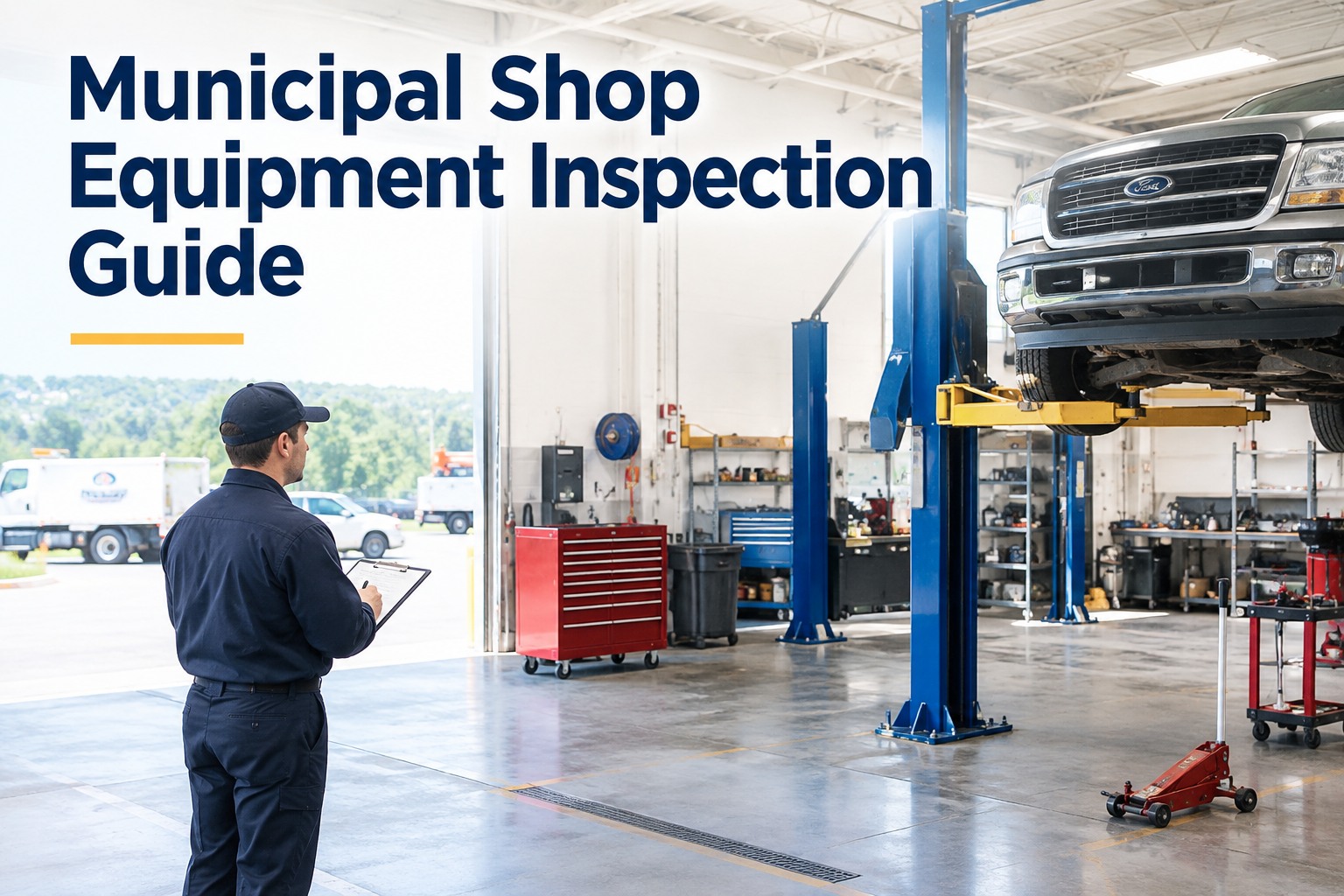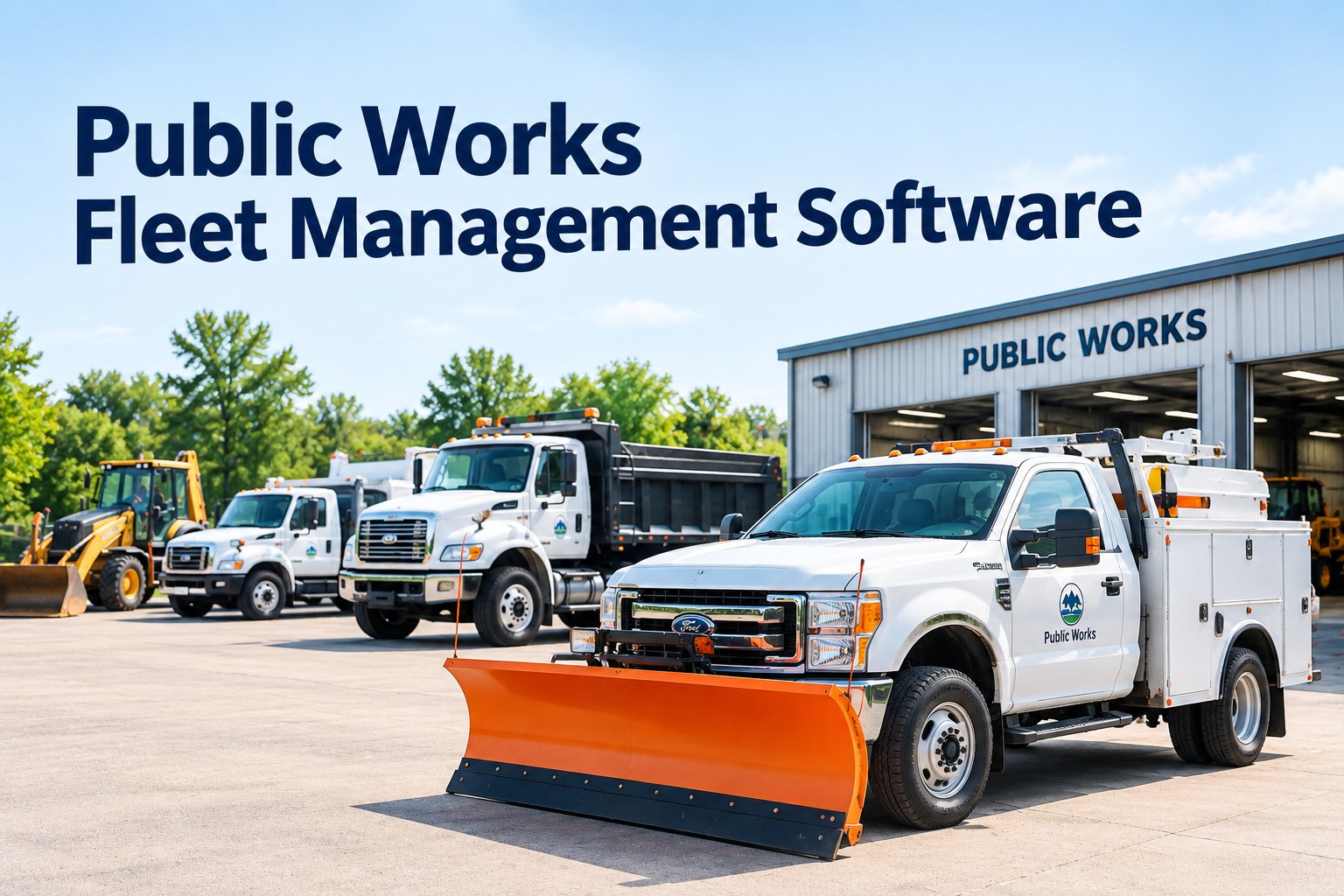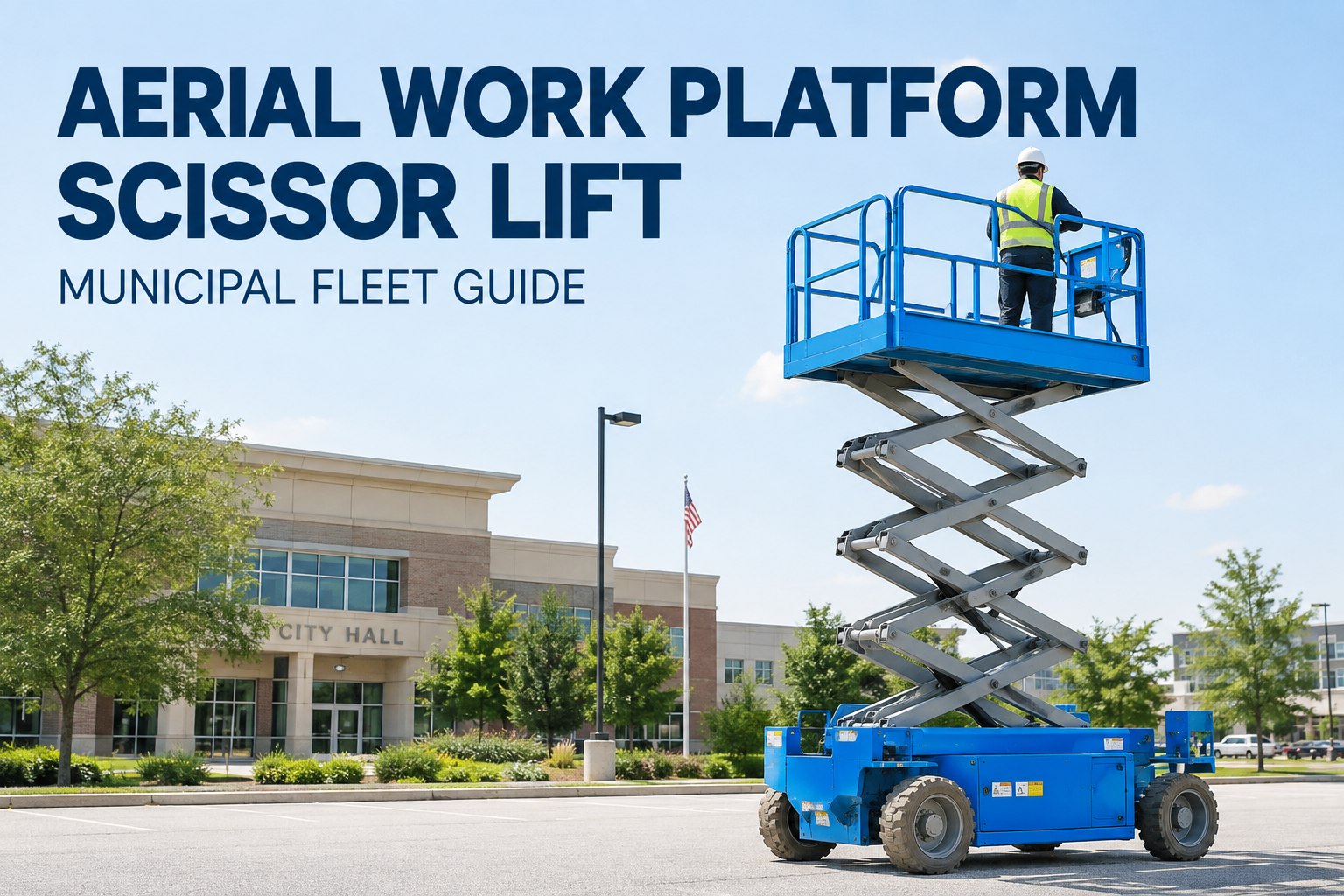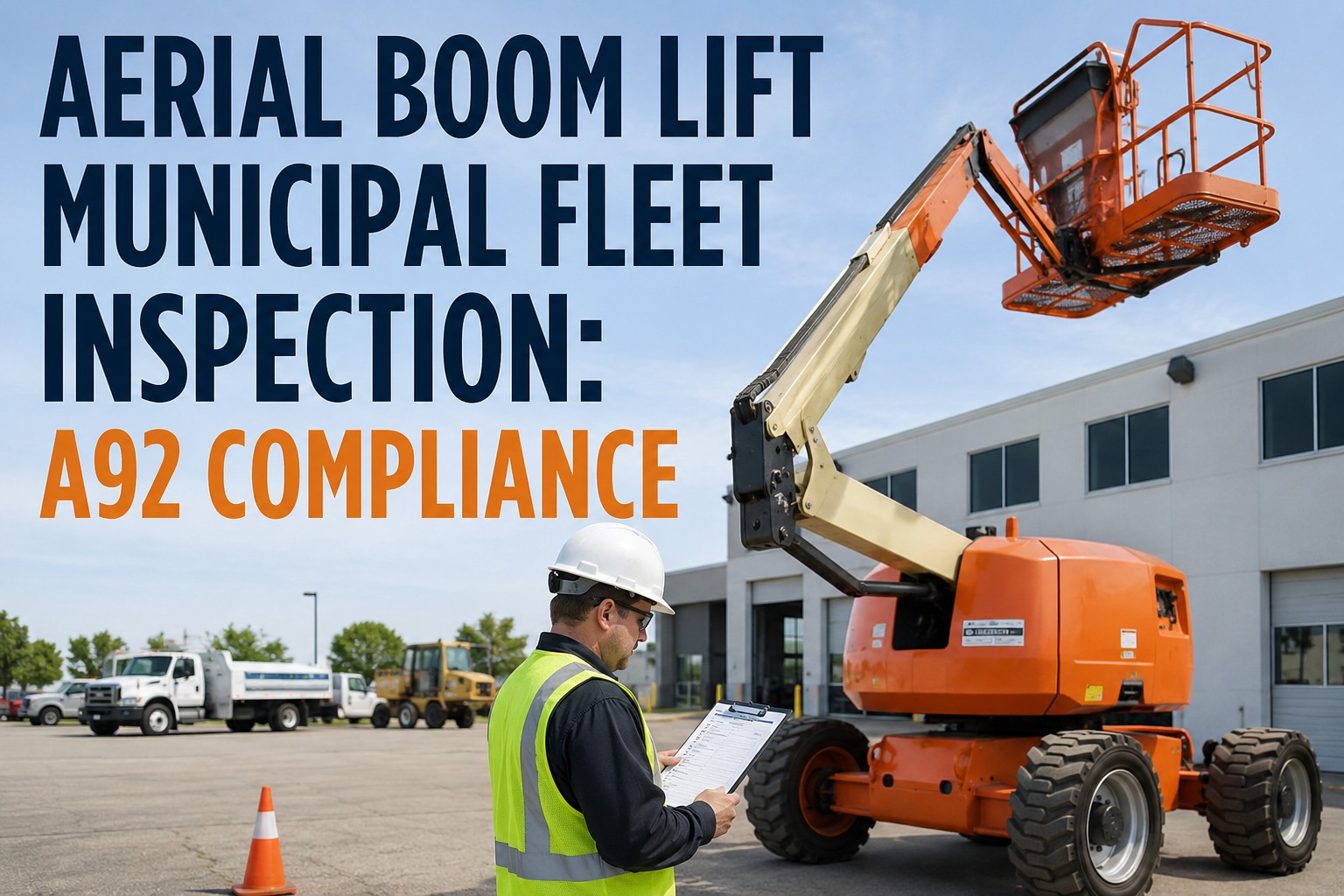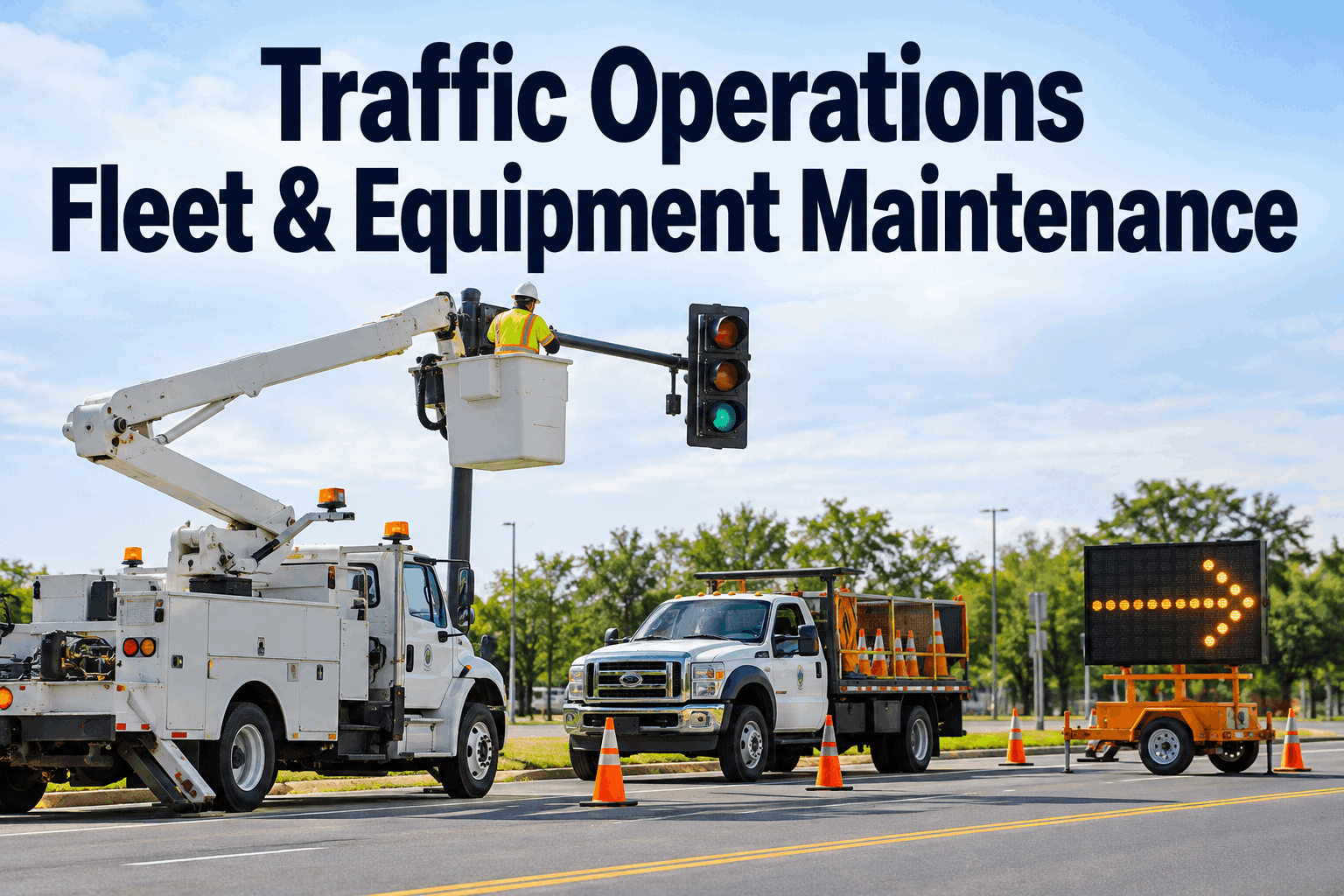
A traffic maintenance fleet rarely fails as one simple vehicle. A bucket truck may drive normally but have an aerial-device defect; a sign truck may arrive without working warning equipment; a message-board trailer may have healthy tyres but weak batteries or an unsecured display. Municipal traffic operations therefore need maintenance built around the work window: every truck, lift, trailer and traffic-control asset required for the job must be ready together.
One Roadside Work Window. Four Different Maintenance Jobs.
Keep vehicles, aerial equipment, sign-support trucks and portable traffic-control trailers inspection-ready without forcing every asset through the same maintenance checklist.
The maintenance challenge is not simply the number of assets. It is the difference between them. OSHA requires covered vehicle-mounted aerial-lift controls to be tested each day before use, while portable traffic-control trailers bring their own tyres, hitch, structure, batteries, electronics and transport configuration. A useful traffic operations maintenance program preserves those differences while giving supervisors one place to see readiness.
Build Traffic Maintenance Fleet Inspections by Asset Class
A traffic operations manager should not have to interpret a generic “equipment OK” checkbox across four completely different assets. Inspection questions need to reflect what each asset actually does. The truck chassis still matters, but the mission equipment often determines whether the crew can perform the assignment.
Use manufacturer instructions and applicable regulations to define the actual inspection and maintenance requirements for each model and configuration. The maintenance platform should organize those requirements—not replace them.
HVI's digital inspection workflows can give each equipment class its own inspection profile while keeping the records within the same municipal fleet. If your traffic department currently uses one paper form for everything, see how HVI can separate bucket trucks, sign trucks and traffic-control trailers into practical inspection profiles.
Use a Pre-Deployment Gate Before Traffic Equipment Leaves the Yard
Traffic work is coordinated work. A crew may need a service truck, aerial device and portable traffic-control equipment at the same location. Checking those assets independently is necessary, but supervisors also need a final operational question: is the complete equipment package ready for this assignment?
Resolve the message-board finding or assign a ready replacement before deployment.
For aerial equipment, this release process should respect the required pre-use checks. OSHA's vehicle-mounted aerial-platform rule requires lift controls to be tested each day before use, and its guidance also covers operating and emergency controls, hydraulic and electrical systems, outriggers, stabilizers and other components. The exact checklist must still reflect the equipment and work involved.
A digital record makes the finding visible before it becomes a roadside surprise. See how HVI can give supervisors a clearer pre-deployment view across mixed traffic-operations equipment.
Message-Board and Arrow-Board Maintenance Needs a Trailer View
Portable message and arrow boards are easy to treat as accessories because they do not look like conventional fleet vehicles. Operationally, however, they combine several maintenance concerns: a towable chassis, display structure, electrical system, batteries and—in many configurations—solar charging equipment.
Check the equipment using its manufacturer procedure, including battery and electrical condition where applicable.
Review tyres, wheels, hitching, loose equipment and the required transport configuration before the unit moves.
Attach the problem to the trailer's own record rather than burying it in the towing vehicle's inspection.
Manufacturer guidance illustrates why the distinction matters. Portable traffic-equipment manufacturers call attention to tyre and wheel condition, secure transport configuration, battery connections and electronic condition. Those items do not belong in a generic truck PM alone. HVI can keep the trailer as a maintainable asset with its own inspection and service record; see how portable traffic-control equipment can be managed alongside the municipal vehicles that tow it.
Move Traffic Equipment Defects From the Road Crew to the Fleet Shop
A good inspection only creates value when a reported problem reaches the person who can resolve it. Traffic operations make this particularly important because defects are often discovered by field crews rather than technicians: a boom control behaves differently, an arrow-board lamp fails, a trailer connector is damaged or a battery will not hold the expected operating condition.
HVI connects digital inspections with maintenance and work-order workflows, helping the original equipment finding remain associated with the repair instead of disappearing into calls, texts or paper notes. That creates a more useful history when the same asset develops a repeat problem.
Build Preventive Maintenance Around Different Traffic Operations Equipment
A mixed traffic maintenance fleet should share one maintenance process without sharing one maintenance schedule. Chassis service may be driven by mileage or time. Aerial equipment can have separate inspection and service requirements. Portable message boards may need battery, electrical, structural and trailer maintenance based on their manufacturer instructions and operating conditions.
The important rule is simple: do not invent a common interval just because all the equipment belongs to the traffic department. HVI's preventive maintenance scheduling can organize different recurring tasks by asset while maintaining a common workflow for supervisors and the fleet shop.
Make the Traffic Maintenance Fleet Ready for the Work Window
A traffic maintenance fleet is a connected operating package. Bucket trucks provide access, sign trucks carry crews and equipment, and message-board or arrow-board trailers support traffic control. A problem with any required asset can delay the assignment even when every truck engine starts.
HVI helps municipal teams give each asset the right inspection, schedule preventive work, route defects into work orders and retain service records without flattening a mixed fleet into one generic checklist. Equipment manufacturers and applicable safety requirements still define the technical inspection and service requirements; HVI helps make the maintenance workflow repeatable and visible.
Traffic Maintenance Fleet FAQs
What equipment should be included in a traffic maintenance fleet program?
The program should cover the vehicles and specialized equipment the department depends on for field work. Depending on the municipality, that can include bucket trucks, signal or service trucks, sign trucks, digger derricks, message-board trailers, arrow boards and other portable traffic-control equipment. Each asset class should have inspection and maintenance requirements appropriate to its configuration.
Should bucket trucks use the same inspection as municipal sign trucks?
No. They can share common vehicle items, but a bucket truck also has an aerial device with controls, hydraulic or electrical systems, outriggers or stabilizers, platform components and other equipment-specific requirements. OSHA requires covered vehicle-mounted aerial-lift controls to be tested each day before use. The complete inspection should follow the applicable rules and manufacturer instructions for the specific unit.
What should be checked on message-board and arrow-board trailers?
Inspection scope depends on the specific trailer, but common maintenance areas can include tyres and wheels, hitch and transport hardware, frame and mast condition, display operation, batteries, electrical connections, controls and solar equipment where fitted. Always use the manufacturer's operating and maintenance documentation for the actual unit.
How should traffic equipment defects be tracked?
A defect should be recorded against the asset where it was found, reviewed for the appropriate maintenance response and retained with the resulting work and service history. Keeping the inspection finding and repair connected makes repeat problems easier to identify and reduces dependence on calls, paper notes or individual memory.
How can HVI help manage municipal traffic operations equipment?
HVI can help traffic and fleet teams create equipment-specific digital inspections, schedule preventive maintenance, document defects, manage work orders and retain service histories across trucks, aerial equipment and trailers. This gives a mixed traffic operations fleet a common maintenance workflow without requiring every asset to use the same checklist or schedule.