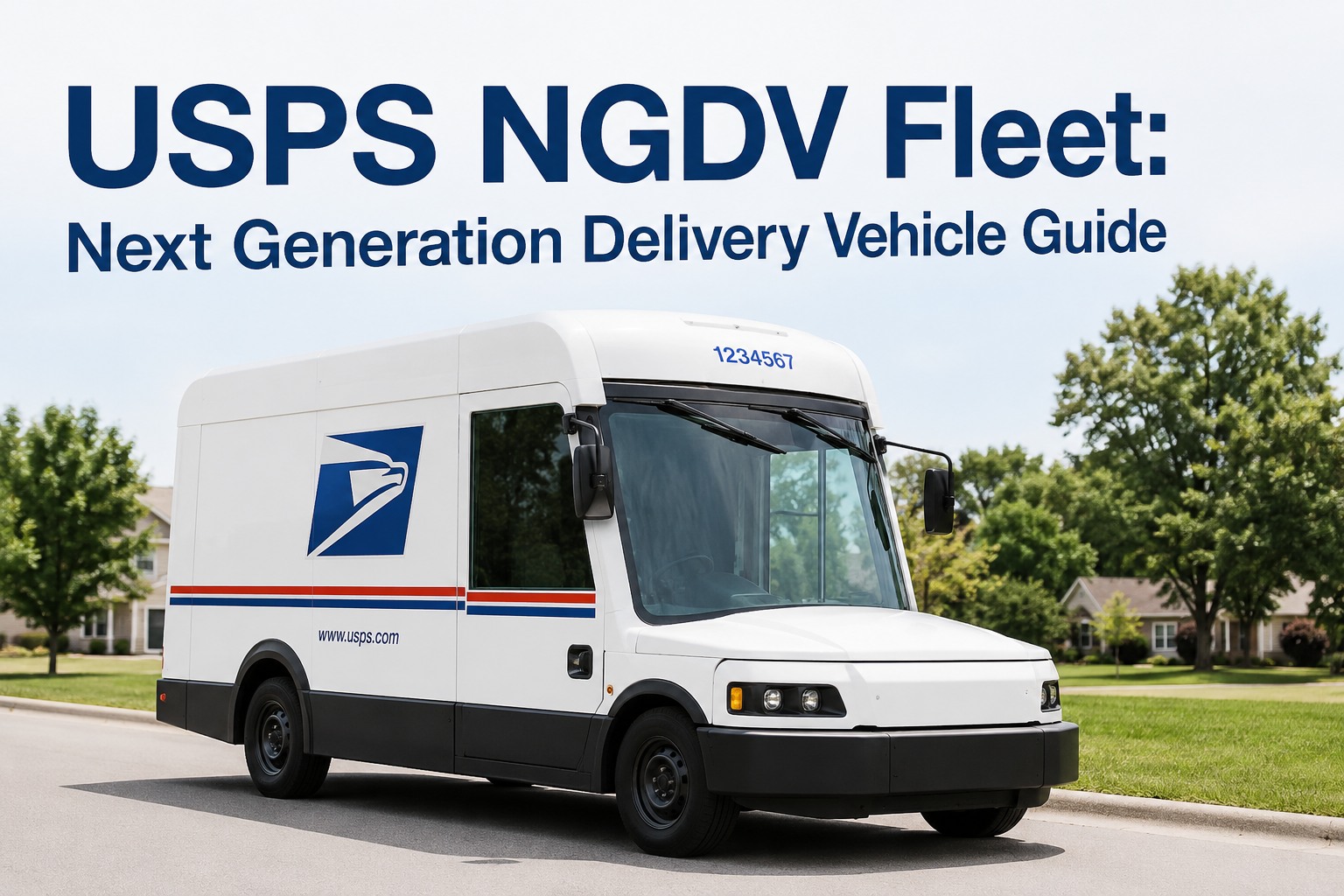
Picture a right-hand-drive delivery van parked at your municipal depot with a cracked mirror bracket and a dead defroster, and the only record of the defect is a sticky note on the clipboard. That is exactly the situation thousands of government and contractor fleets will face as the USPS NGDV fleet rolls out: the United States Postal Service is replacing its aging Grumman LLVs with roughly 66,000 Oshkosh Next Generation Delivery Vehicles through 2028, about 60,000 of them battery-electric. Even if you do not run postal routes, this program matters to you, because the same right-hand-drive, stop-and-go delivery spec is showing up at USDA delivery operations, FedEx municipal contracts and county mail fleets. If you maintain any gov mail delivery fleet or muni mail delivery vehicles, the maintenance playbook is changing fast, and the shops that win will be the ones that digitize inspections and preventive maintenance before the new units hit the yard. You can see how HVI handles a mixed delivery fleet in a 30-minute demo before your first NGDV-style unit arrives.
What does the USPS NGDV rollout mean for your delivery fleet maintenance?
The largest postal fleet replacement in decades is also a preview of where every government and municipal delivery fleet is heading: right-hand drive, high-cycle routes, and a fast shift to electric. Here is what changes in your shop, and how to stay ahead of it.
USPS NGDV fleet stats every maintenance manager should know
These are not trivia numbers. Each one translates directly into workload, parts planning and technician training for any shop that touches postal-style delivery vehicles.
Oshkosh NGDV vs the Grumman LLV: what actually changes in your shop
The LLV was a simple, mechanical, parts-bin truck. The NGDV is not. Here is the honest side-by-side that matters for preventive maintenance scheduling and work order management.
| Maintenance Area | Grumman LLV (outgoing) | Oshkosh NGDV (incoming) |
|---|---|---|
| Powertrain | GM 2.5L Iron Duke gas engine, simple and familiar | Mix of gas and battery-electric; EVs need high-voltage lockout procedures |
| Brakes | Basic hydraulic, constant wear from stop-and-go | Regenerative braking on EVs changes pad wear intervals and inspection points |
| Electrical | Minimal electronics, mostly analog | Cameras, sensors, telematics-ready wiring, more diagnostic time per fault |
| Safety systems | Lap belts, no airbags, no modern driver aids | Airbags, 360 cameras, collision warnings that must be inspected and documented |
| PM scheduling | Mostly mileage and calendar based | Mileage, engine hours and battery state-of-health triggers combined |
| Records | Paper binders and shop memory | Audit-ready digital DVIR and photo-backed work orders are the expectation |
Beyond USPS: the NGDV-style delivery vehicle is spreading
The USPS program gets the headlines, but the same right-hand-drive, high-cycle delivery spec is already in use or being piloted across government and contractor fleets. If you maintain any of these, the same maintenance logic applies.
USDA and federal delivery fleets
Agricultural inspection, food distribution and rural federal delivery routes use the same stop-and-go duty cycle. Expect similar right-hand-drive units and the same PM pressure on brakes, tires and doors.
FedEx and municipal contractors
Contract delivery fleets running municipal mail and parcel routes are adopting NGDV-adjacent vehicles. Mixed fleets of gas and electric delivery vans are becoming the norm, not the exception.
County and city mail fleets
Local government mail, records and inter-office delivery fleets are watching the USPS EV pilot closely. Many are writing NGDV-style requirements into their own procurement specs right now.
Private postal and courier operators
Owner-operators and regional couriers bidding on government delivery contracts will be expected to match USPS-level inspection and maintenance documentation to win and keep the work.
What poor delivery fleet maintenance actually costs you
A delivery van that misses its route is not just a repair bill. It is missed stops, overtime, contract penalties and a safety exposure. Here is a worked example from a typical 40-vehicle muni mail delivery fleet.
Brake and tire failures
Stop-and-go routes destroy pads and tires faster than any other duty cycle. Miss the wear interval by two weeks and you are buying rotors and risking an out-of-service hit.
Door and liftgate wear
Sliding doors and liftgates cycle hundreds of times a day. A failed door on a route means an undelivered load and a driver waiting for a tow.
EV battery neglect
On electric delivery vehicles, skipped battery health checks quietly erode range until a route can no longer be completed, and the fix is a service call, not a part swap.
Audit and contract risk
Government delivery contracts increasingly require proof of inspection. A missing DVIR or undocumented repair can cost you the contract, not just a fine.
Ready to run your delivery fleet like the new postal standard?
See HVI running on your own vehicles, your routes and your shop workflow in a live 30-minute demo.
How to prepare your shop for NGDV-style delivery vehicles in 4 steps
You do not need to wait for the vehicles to arrive. The shops that handle this transition smoothly are the ones that digitize inspections and preventive maintenance before the first unit is delivered.
Digitize your daily vehicle inspection now
Move drivers off paper pre-trip forms onto a mobile DVIR with photo capture. When the new right-hand-drive units arrive, your inspection habit is already digital and audit-ready. You can start logging inspections free on your current fleet this week.
Rebuild PM schedules for high-cycle duty
Delivery routes need PM triggered by mileage, engine hours and calendar together, not just one. Set up due and overdue alerts so brake, tire and door inspections never slip past the interval.
Add EV-specific checks before the first electric unit
Battery state-of-health, charging equipment inspection, high-voltage lockout and regenerative brake checks all need to live in your inspection templates. Build them now so the EV pilot does not catch your shop unprepared.
Connect defects straight to work orders
The biggest time leak in any delivery fleet is the gap between a driver reporting a defect and a technician getting a work order. Close that gap with instant defect-to-work-order conversion so nothing sits in a text message or a notebook. Walk through that workflow on your own units to see how much time it saves.
How HVI keeps a gov delivery fleet audit-ready and on the road
HVI is built for exactly this kind of high-cycle, mixed, government-adjacent fleet. Here is what it does for your day.
Digital DVIR with photo capture
Drivers complete pre-trip and post-trip inspections on any phone, with photos and defect notes. Every record is timestamped and audit-ready, killing the paper binder for good.
Preventive maintenance by mileage, hours and date
Set PM triggers that match the brutal delivery duty cycle, with due and overdue alerts so brake, tire and door inspections never slip. Cut unplanned downtime instead of reacting to it.
Instant defect-to-work-order conversion
A driver flags a cracked mirror or a soft brake pedal, and it becomes a work order in seconds. No group chats, no lost notes, no defects that fall through the cracks between shifts.
Uptime, cost and compliance analytics
See cost per vehicle, PM compliance rate and downtime trends across your whole fleet in one dashboard. Walk into any audit or contract review with proof, not excuses.
USPS fleet electrification: what 60,000 EVs mean for maintenance teams
The USPS EV pilot is the largest fleet electrification test in the country. Whether you run two electric vans or two hundred, the maintenance shift is the same, and it is bigger than most shops expect.
What changes with electric delivery vehicles
- High-voltage lockout and safety procedures become part of every inspection
- Battery state-of-health tracking replaces oil analysis as the key health metric
- Regenerative braking changes pad and rotor wear intervals
- Charging equipment needs its own inspection and PM schedule
- Technician training shifts from mechanical to electrical diagnostics
What stays the same (and still breaks)
- Tires, suspension and steering still take the stop-and-go beating
- Doors, liftgates and mirrors still cycle hundreds of times a day
- HVAC, lights and wipers still fail on the same calendar
- Drivers still need to complete and document daily inspections
- Auditors still want timestamped, photo-backed maintenance records
The fleets that struggle with electrification are the ones that treat EVs as a separate, special program. The fleets that succeed fold EV checks into the same digital inspection and PM system they already use for everything else. If you want to see how a mixed gas-and-electric fleet looks in one dashboard, that is exactly what a short demo is for.
The bottom line on the USPS NGDV fleet and your shop
Whether you maintain postal vehicles directly or run a government-adjacent delivery fleet, the NGDV program is a clear signal of where the whole sector is heading.
The USPS NGDV fleet is replacing 30-year-old LLVs with 66,000 modern, mostly electric delivery vehicles through 2028, and the same spec is spreading to USDA, FedEx municipal and county fleets.
The maintenance shift is real: EV safety procedures, new wear intervals, more electronics and higher documentation expectations. Paper binders and shop memory will not survive it.
The cost of staying reactive is measurable. A small fleet losing six vehicle-days a month to breakdowns is burning over $30,000 a year before you count contract and audit risk.
The fix is not complicated: digitize inspections, rebuild PM schedules for high-cycle duty, add EV checks and connect defects straight to work orders. HVI does all four in one platform.
You do not need to overhaul your whole operation this quarter. You just need to start before the new vehicles arrive, so your inspection and maintenance habits are already digital when they do. If you want to sign up free and test it on your current fleet, you can be running digital DVIRs by the end of the week.
I manage a county delivery fleet, 38 vans, and the thing that used to keep me up was not the breakdowns, it was the paperwork. A driver would text me a photo of a cracked mirror at 6am, and by the time I got to the shop it was buried under forty other messages. We lost a contract renewal two years ago because we could not produce clean inspection records for three vehicles. Now every defect goes straight from the driver's phone into a work order, and I can pull a full maintenance history in about ten seconds. I track one number every Monday morning: overdue PMs. If it is above zero, I want to know why.
Marcus Delaney, Fleet Manager, county government delivery services
USPS NGDV fleet: your questions answered
What is the USPS NGDV and who makes it?
Does the USPS NGDV program affect non-postal fleets?
What maintenance changes come with electric delivery vehicles?
How do I prepare my shop for NGDV-style vehicles before they arrive?
Can HVI handle a mixed fleet of gas and electric delivery vehicles?
Get your delivery fleet ready for what is coming
The NGDV rollout is a preview of every government delivery fleet's future. See how HVI keeps your inspections digital, your PM on schedule and your records audit-ready.
Free to start - Works on any phone - No card needed