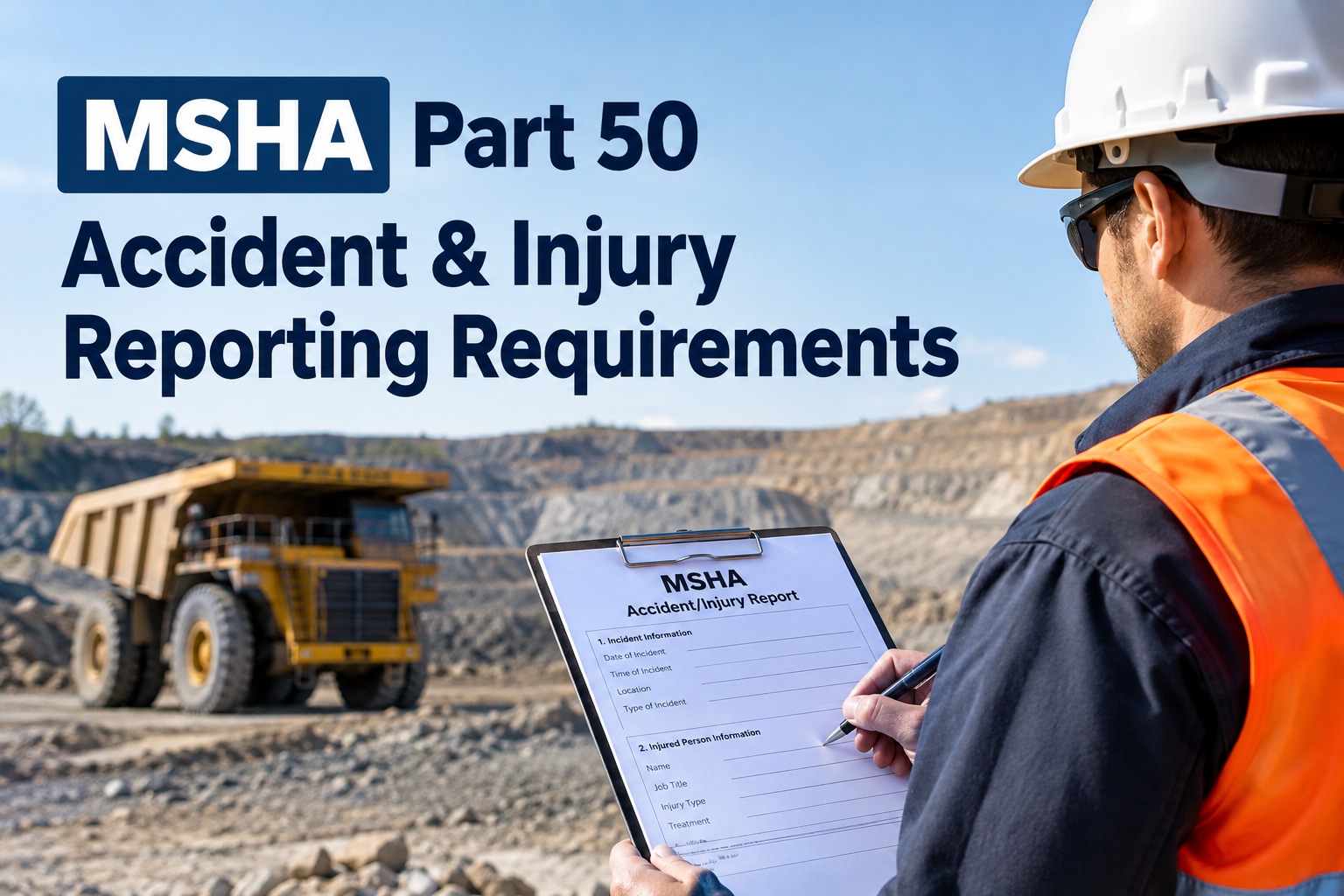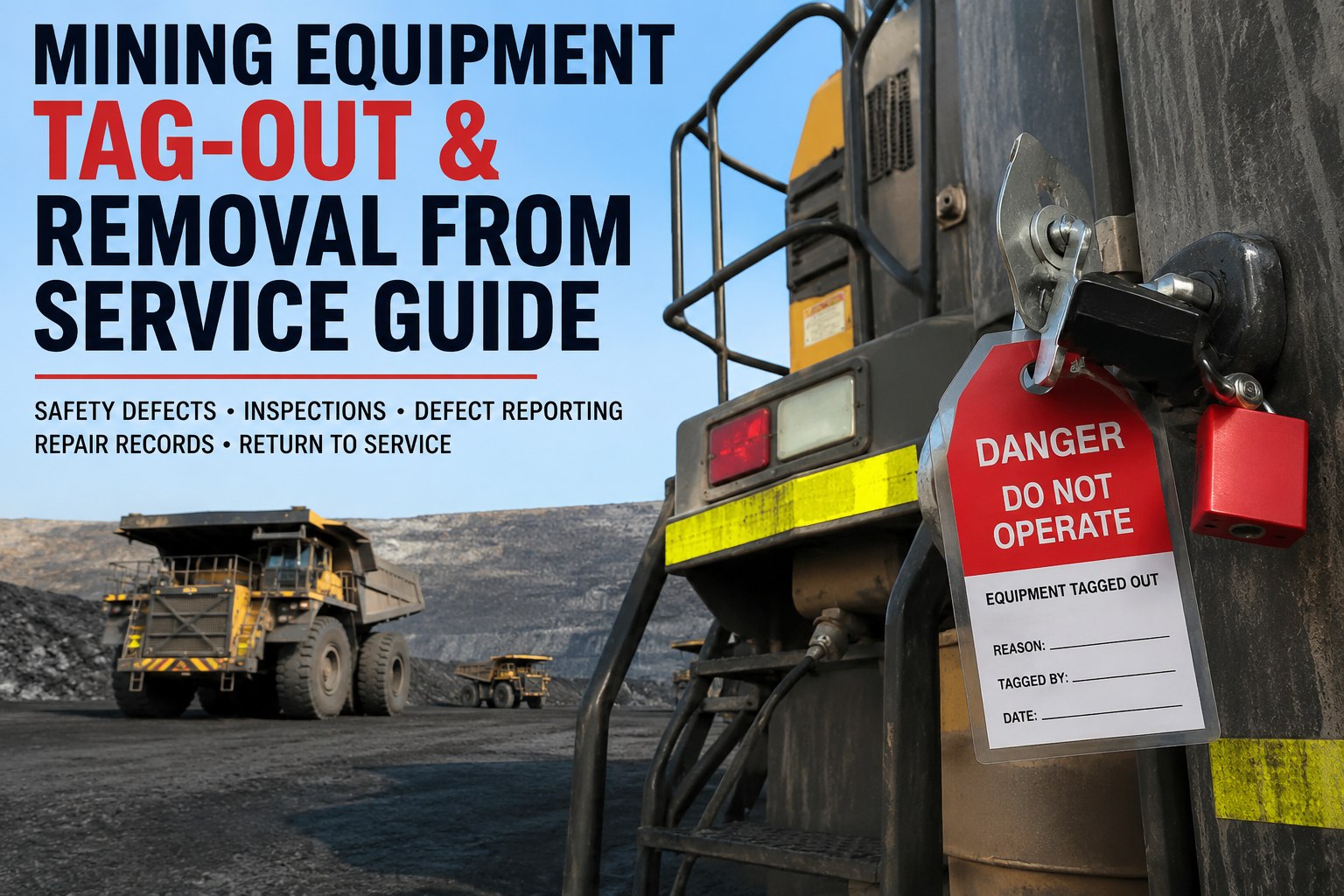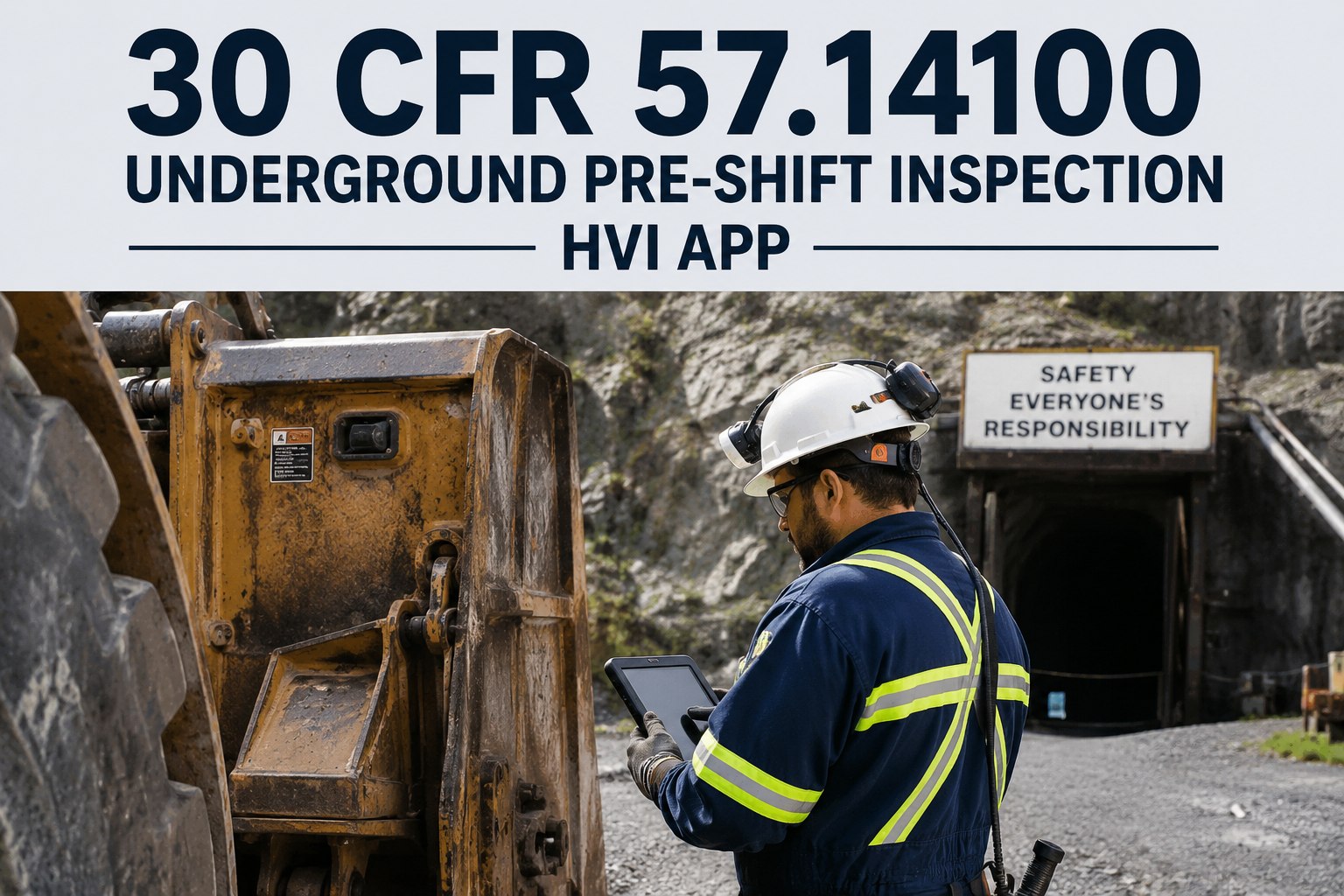
Thirty CFR 56.14100 is only four sentences long, yet it generates one of the largest shares of mobile equipment citations at surface mines and aggregates operations. If you run a fleet of haul trucks, loaders, or dozers, a missed pre-operation check on a self-propelled machine can trigger an MSHA inspection flag, pull the asset out of service, and stall your production targets. The rule is deceptively simple, but defending your compliance program requires knowing exactly what the standard demands, what it does not, and how to prove your operators actually did the work. Before your next shift change, walk through it on your own units to see where your current documentation gaps are.
Four sentences. One massive compliance risk.
30 CFR 56.14100 governs pre-shift inspections for all self-propelled mobile equipment at surface mines. Most operations fail it not because they skip the walkaround, but because they cannot prove the defects were reported and corrected before the machine moved.
Why a four-sentence rule drains maintenance budgets
When MSHA inspectors arrive at your site, they look for proof that 56.14100 is happening in practice, not just on paper. A failed citation means more than a fine; it means unplanned downtime, delayed production, and a compromised safety record. Here is what is typically at stake when pre-shift documentation falls apart.
What 30 CFR 56.14100 actually requires
The MSHA pre shift rule focuses on the act of inspecting and the act of reporting. It does not mandate a specific form, but it sets four hard conditions for putting equipment into operation.
Operator Inspection
Equipment must be inspected by the equipment operator before it is placed into operation each shift. This means the person actually running the machine performs the walkaround, not a shop technician or a supervisor glancing at it from a pickup.
Defect Reporting
Any defects found during the inspection that affect safety must be reported to the mine operator or a designated supervisor. The threshold is safety-affecting defects, which leaves room for interpretation and is exactly where citations often stick.
Removal from Service
If a defect affects safety, the equipment must be immediately removed from service or tagged out to prevent anyone else from operating it. A verbal heads-up is not enough; physical or electronic lockout is required to stop the asset from moving.
Correction Before Return
A tagged-out machine cannot return to operation until the safety defect is corrected and verified. The operator must also document the corrective action taken before that specific asset rolls back into the pit or onto the haul road.
Where operations fail the MSHA defect reporting test
Most fleets do the walkaround. They fail the audit because their paper trail cannot hold up under inspector scrutiny. Here are the most common failure points that generate a 56.14100 citation during a surface mine regulation review.
| Operational Reality | Inspector's View | Citation Trigger |
|---|---|---|
| Paper DVIR left in the cab | No digital timestamp or GPS proof of location | Cannot verify the inspection happened at the machine before operation |
| Defect called in via radio | No record of the defect being logged or acknowledged | No proof the defect was reported to mine management as required |
| Machine runs with a bad brake | Operator assumed it was a maintenance issue, not safety | Failure to remove from service under 56.14100 and 56.14101 |
| Tag removed before repair | No documented work order or mechanic sign-off | Equipment returned to service before defect was corrected |
The friction usually happens at the handoff. An operator notices a steering delay or a soft brake pedal at 5:30 AM, radios the shop, and leaves for the haul road anyway because they assume someone heard it. If an inspector pulls the records, there is no timestamped defect report, no automatic work order, and no proof of tag-out. To close this gap, you need a system that forces defect capture at the machine before the equipment can move.
How 56.14100 connects to brakes and steering rules
A 56.14100 citation rarely travels alone. Inspectors look at the broader condition of the mobile equipment, which pulls in adjacent MSHA standards that define exactly what a safety-affecting defect looks like.
Brakes
Requires service brakes, emergency brakes, and parking brakes capable of stopping and holding the equipment. If a pre-shift check reveals weak braking, 56.14100 dictates the immediate removal from service.
Steering
Requires steering mechanisms to maintain control of the equipment. Loose play or delayed response identified during the 56.14100 walkaround immediately crosses into 56.14106 compliance territory.
See how HVI handles MSHA 56.14100 compliance on your site
Stop relying on paper DVIRs and radio calls that vanish. Book a 30-minute demo and see how digital inspections, automatic work orders, and GPS-tagged timestamps keep your fleet audit-ready.
Digital proof that your pre-shift inspections actually happened
Moving off paper binders and group chats to a cloud + mobile CMMS closes the documentation gap that triggers most 56.14100 citations. HVI maps directly to the four elements of the MSHA standard, giving you audit-ready records in real time.
Timestamped GPS-Tagged Inspections
Every pre-shift inspection is locked with a time and location stamp. When an inspector asks if the operator checked the haul truck before moving it, you have digital proof from the cab, not a clipboard in the office. You can start logging inspections free to see the difference immediately.
Photo-Verified Critical Sections
Operators snap photos of defects right from the app. If a brake line is leaking or a tire is chunked, the image is attached to the record, eliminating the argument over whether the defect was safety-affecting.
Automatic Work Order Creation
When a defect is flagged, HVI instantly generates a work order and routes it to the shop. There is no radio call to forget and no sticky note to lose. The maintenance team knows exactly what needs fixing before the operator finishes the walkaround.
Dispatch Blocked on Critical Defects
If an operator logs a safety-affecting defect, HVI blocks the asset from being dispatched until a mechanic signs off on the repair. This enforces the removal-from-service requirement automatically, protecting you from 56.14100 failures. See how this works on a live fleet before your next MSHA visit.
Paper vs. digital: proving 56.14100 compliance
The standard focuses on the act and the reporting, but operations still need records to prove it happened. Paper DVIRs sit in cabs for weeks, get smeared with grease, and rarely make it to the compliance binder. Digital records live in the cloud forever.
- Clipboard stays in the cab, often filed days late
- No timestamp to prove pre-operation timing
- Defects called in by radio, easily forgotten or misheard
- Illegible handwriting hides critical safety notes
- No photos to verify the actual condition of the defect
- Inspection locked with GPS and time at the machine
- Pre-operation timestamp verified before engine start
- Defects trigger instant work orders to the shop floor
- Mandatory fields ensure no safety check is skipped
- Photo evidence attached to every flagged defect
The true cost of a missed pre-operation check
Consider a 40-truck aggregate fleet running two shifts. If just two operators per shift skip a thorough brake check because they are rushing to hit haul targets, the math gets ugly fast.
Making 30 CFR 56.14100 a defensible part of your daily routine
The standard is short, but the stakes are high. Surviving an MSHA inspection under 56.14100 comes down to proving that your operators inspected, reported, tagged, and corrected. Here is what to lock down.
Enforce the operator requirement
Ensure the person running the equipment is the one doing the pre-shift check, and that the record reflects their identity and timestamp.
Define safety-affecting defects clearly
Train operators on what crosses the line from a minor wear item into a safety defect, especially regarding brakes, steering, and tires.
Lock out tagged equipment
Use a system that physically or digitally prevents a tagged-out machine from being dispatched until the repair is signed off.
Keep digital audit trails
Always verify current MSHA interpretation and Program Policy Manual guidance, and maintain timestamped, photo-backed records to prove compliance instantly. To see a live compliance dashboard, schedule a walkthrough today.
We were passing our walkarounds but failing the paperwork. An inspector asked for three days of pre-shift logs on a loader, and our supervisor spent two hours digging through grease-smudged clipboards. We moved to digital inspections just so we could stop scrambling every time a white hard hat showed up at the gate.
Common questions about 30 CFR 56.14100
Does 30 CFR 56.14100 apply to all surface mobile equipment?
Does MSHA require a specific form for the pre-shift inspection?
Who is considered a qualified equipment operator under the MSHA pre shift rule?
What happens if a defect is found but does not affect safety?
Can I use a mobile app instead of paper DVIRs for MSHA compliance?
Audit-ready inspections start with one demo
Book a 30-minute demo and see how HVI enforces 30 CFR 56.14100 with timestamped, photo-verified pre-shift checks that hold up under any MSHA inspection.
Free to start - Works on any phone - No card needed