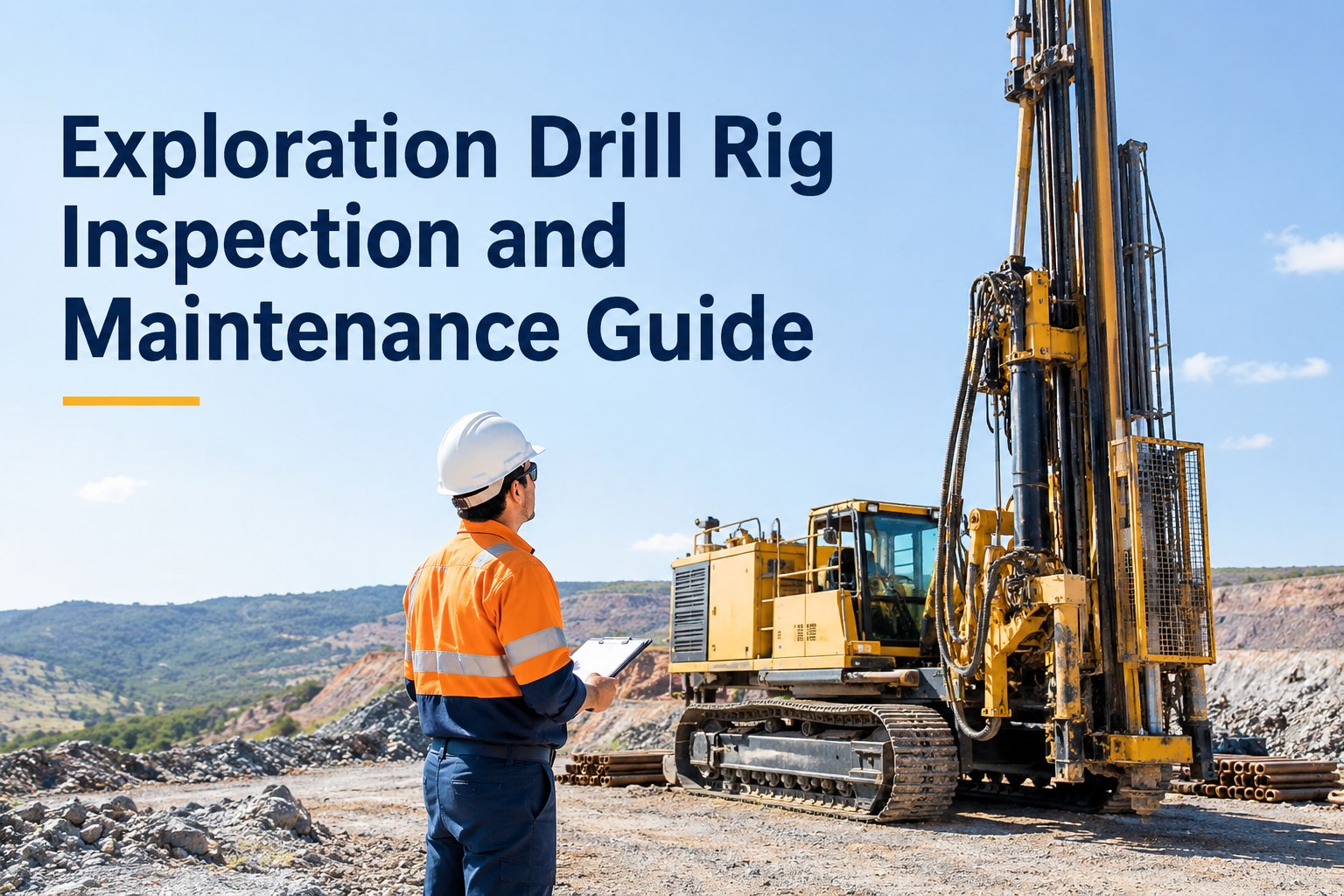
Your diamond drill rig is forty minutes down a bush track, the nearest parts store is a four-hour drive, and there's no cell signal to pull up last week's inspection. Then the mast winch starts making a noise. That scenario — not the machine itself — is what makes exploration drill rig inspection its own discipline. These rigs move constantly, work in the remotest ground, and can't lean on a workshop when something goes wrong. This guide walks the critical systems to inspect, and how to keep records and maintenance running when you're beyond the reach of a signal or a spare. Book a demo to see field inspections that work offline.
The Rig Is Only Half the Inspection. The Location Is the Other Half.
On an exploration program, the systems that fail are the same ones on any drill rig — but the consequences are magnified by distance. A missed defect isn't a workshop repair; it's a rig stood down for days while a part travels hundreds of kilometres.
Exploration drill rigs — whether diamond core or reverse circulation (RC) — live a harder life than most heavy equipment. They're trucked, towed, or even helicopter-lifted between drill pads, set up on rough ground, run hard, then packed up and moved again. Every one of those cycles is a chance for something to loosen, crack, or leak. Reliable inspection is what keeps a program on schedule, and doing it well means covering the right systems and solving the field-conditions problem that makes exploration different from any workshop-based fleet.
The critical systemswhat a drill rig inspection must cover
An exploration drill rig inspection has to hit the systems that both stop production and endanger the crew when they fail. Rod handling and the mast top that list every time, because those are where the highest forces and the highest injury risk concentrate. Here are the systems that belong on every inspection, and what you're actually looking for on each.
Inspect for cracks, weld failures, and deformation — especially at pivot points and load-bearing welds. Masts get weekly structured inspections and periodic non-destructive testing (NDT) for a reason: a mast failure under load is catastrophic. Check alarms and mast-raising interlocks too.
The rig's muscle — and its most common source of downtime and mess. Check hoses and lines for chafing, cracking, and leaks, verify fluid levels and condition, and watch pumps and motors for overheating or lost efficiency. A hose failure at pressure is both a stoppage and a hazard.
Where most serious injuries happen. Verify rod cages, guarding on rotating equipment, hands-free rod handling systems, and rod loader interlocks and alarms. Any defeated guard or bypassed interlock is an immediate stop-work item, not a note for later.
Inspect winch ropes for broken wires, kinks, and wear, and confirm rope limiters and over-hoist protection function. On diamond rigs the wireline retrieves the core barrel constantly, so rope condition is both a productivity and a safety check.
Reverse circulation rigs and air-drilling setups depend on compressors, boosters, and receiver tanks. Check air hoses and couplings, pressure relief provisions, and receiver certification — stored-energy systems demand extra care.
Test every emergency stop for responsiveness, confirm lockout/isolation points function, and verify control panels and displays operate correctly. On a moving rig these get knocked and worn, so they're checked every setup, not occasionally.
Round it out with the fundamentals every diesel machine needs — engine oil and coolant levels, fuel system integrity, jacking and levelling systems, and fire suppression — and add the working-at-heights and access checks that mast work demands. Book a demo to build a rig-specific inspection template
The mobilization inspectionthe checks unique to a rig that moves
Here's what a workshop-based maintenance program never has to think about: the rig is a different machine every time it's set up on a new pad. Transport — by truck, tow, or helicopter sling — shakes bolts loose, stresses the mast, and shifts loads. That's why exploration drilling adds inspection points around every move that production fleets simply don't have.
Pre-mobilization check: secure loose components, confirm the mast is locked down for transport, verify lifting points and rigging on heli-portable rigs, and log the rig's condition before it leaves the current pad.
Post-setup check: re-torque critical fasteners loosened by transport, confirm the rig is level and jacking systems are stable on the new ground, re-inspect the mast before raising, and re-test e-stops and interlocks that travel can disturb.
These checks catch the failures that transport specifically causes — a fastener backed out by vibration, a hydraulic fitting weeping after a rough haul, a levelling jack sinking into soft ground. Skipping them is how a rig that was perfect at the last hole becomes a hazard at the next one. A custom template that includes the mobilization steps — not just the standard daily pre-start — is what makes sure they actually get done every move. Start free and build a pre-mobilization checklist your crews follow
Inspecting beyond signalthe offline records problem, solved
You can have the best inspection checklist in the industry and still fail in the field if it depends on connectivity. Exploration sites routinely sit outside cell coverage, and a paper-or-cloud system that needs a signal to log a check or look up a history leaves crews doing neither. The result is the classic exploration failure mode: inspections happen in someone's head, records get written up "later" back at camp, and the paper trail is full of holes exactly where a program most needs it — for safety audits, for handovers between crews, and for proving due diligence.
The fix is inspection software built to work offline first. Crews complete the full check on a device at the rig with no signal, capturing photos of a cracked weld or a worn rope right there, and the records sync automatically when the rig or the vehicle next hits coverage. Nothing waits for camp, nothing lives in memory, and the history is available on the device even when the network isn't. For a remote program, offline capability isn't a nice-to-have feature — it's the difference between a real inspection record and a fictional one. Book a demo to see offline inspections sync from the field
Contractors & partsthe two things that keep a remote rig running
Two more realities define exploration maintenance, and both are about closing the distance between a problem and its fix. The first is people: most exploration drilling is run by specialist drilling contractors, not the exploration company's own crews. The second is parts: when you're hours from a supplier, the spare you didn't stock is the spare that stands the rig down.
When contractors run the rigs, they need to complete inspections in your system — but on their own scope. Controlled access lets drilling contractors log checks and defects against the assets they operate, giving the exploration company real-time visibility without handing over the whole platform. Everyone works from one record instead of trading emailed spreadsheets.
Inspection data tells you what tends to fail — the hoses, filters, bits, and rope that wear on your rigs. Tracking those critical spares against that history means the right parts ride out to site before a failure, so a known-wear item is a scheduled swap on the pad, not a multi-day wait for a courier down a dirt road.
Together these close the loop that remoteness keeps trying to break. The contractor inspecting the rig, the exploration manager watching the data, and the parts that match the wear pattern all connect through one record — so a defect found at a remote hole becomes a planned fix instead of a program-stopping surprise. Book a demo to connect contractors, inspections, and parts Or start free and set up contractor access for your rigs
From a drilling supervisor in the field
Out here the enemy isn't the drilling — it's the distance. A worn wireline rope is a ten-minute swap if the rope's on the truck. If it's not, that's the rig sitting idle for two days while someone drives it out. And the paperwork always used to be the weak point: no signal, so the pre-starts got done but not recorded until we were back at camp days later, if at all.
Going offline-first fixed both. The crew does the full check at the rig, photos and all, and it syncs when we hit the highway. I can see from camp what the contractors flagged, and I already know which spares to send before they even ask. The inspection stopped being a formality we backfilled and became the thing that keeps the program moving.
Frequently asked questions
What should an exploration drill rig inspection cover?
An exploration drill rig inspection should cover the systems that both halt production and endanger the crew when they fail. The highest priorities are the mast and tower — inspected for cracks, weld failures, and deformation, with weekly structured checks and periodic non-destructive testing (NDT) because a mast failure under load is catastrophic — and rod handling, where most serious injuries occur, meaning rod cages, rotating-equipment guarding, hands-free handling systems, and loader interlocks all need verification. Hydraulic systems are the most common source of downtime, so check hoses and lines for chafing and leaks, fluid levels and condition, and pumps and motors for overheating. Winch and wireline ropes need inspection for broken wires and wear, with functioning rope limiters. Reverse circulation and air rigs add compressors, boosters, receiver tanks, and air hoses with pressure-relief checks. Every inspection should also test emergency stops, isolation and lockout points, and control panels, and cover the diesel fundamentals of engine oil, coolant, fuel system, jacking and levelling, and fire suppression — plus the working-at-heights and access controls that mast work requires.
How is exploration drill rig maintenance different from other fleets?
The defining difference is the environment, not the machine. Exploration drill rigs operate in remote locations, often hours from the nearest parts supplier or workshop, and they move frequently between drill pads — by truck, tow, or even helicopter sling. Those two facts change everything about how maintenance has to work. Frequent mobilization means the rig is effectively reconfigured every setup, so exploration programs add pre-mobilization and post-setup inspections that workshop-based fleets never need — securing components before transport, re-torquing fasteners loosened by vibration, re-leveling on new ground, and re-inspecting the mast before it's raised again. Remoteness means a defect that would be a quick workshop repair becomes a multi-day stoppage while a part travels a long distance, which raises the value of catching wear early and stocking the right spares. Connectivity is often absent, so inspection and record-keeping must work offline. And because specialist drilling contractors typically run the rigs, maintenance coordination has to span two organizations. In short, exploration maintenance is defined by distance, movement, and disconnection rather than by the drilling itself.
What is a pre-mobilization inspection for a drill rig?
A pre-mobilization inspection is the check performed before a drill rig is moved from one location to another, and it's paired with a post-setup inspection done once the rig is established on the new pad. It exists because transport — whether by truck, tow, or helicopter — introduces failure modes that a stationary rig never experiences: vibration backs fasteners out, rough hauls stress the mast and weep hydraulic fittings, and loads shift. Before the move, the crew secures loose components, confirms the mast is locked down for transport, verifies lifting points and rigging on heli-portable rigs, and logs the rig's condition as it leaves. After setup, they re-torque critical fasteners, confirm the rig is level and jacking systems are stable on the new ground, re-inspect the mast before raising it, and re-test emergency stops and interlocks that travel can disturb. These steps catch the specific problems movement causes — the reason a rig that was running perfectly at the last hole can become a hazard at the next one if the mobilization checks are skipped. Building these steps into a custom template, rather than relying on the standard daily pre-start alone, is what ensures they happen on every move.
How do you inspect drill rigs in areas with no cell signal?
The answer is inspection software built to work offline first, because exploration sites routinely sit outside cell coverage and any system that needs a signal to log a check or view a history simply fails in the field. With an offline-first tool, crews complete the entire inspection on a device right at the rig with no connection — working through the full checklist and capturing photos of defects like a cracked weld or a worn rope on the spot — and the records sync automatically the moment the device next reaches coverage, whether that's when the rig moves or when a vehicle hits the highway. The vehicle and inspection history is available on the device even when the network isn't, so crews can reference the last check during a handover. This solves the classic remote failure mode where inspections get done in someone's head and written up "later" back at camp, leaving gaps exactly where a program needs records most — for safety audits, crew handovers, and demonstrating due diligence. For a remote exploration operation, offline capability isn't a convenience; it's what makes the difference between a genuine inspection record and one reconstructed from memory days after the fact.
How can drilling contractors and exploration companies share inspection data?
Because most exploration drilling is carried out by specialist drilling contractors rather than the exploration company's own crews, inspection data has to flow across two organizations without either losing control. The practical solution is controlled contractor access within a shared inspection system: drilling contractors are given access scoped to the specific assets they operate, so they complete inspections and log defects against those rigs directly, while the exploration company retains oversight of the whole platform and gains real-time visibility into what's being found. This replaces the common but broken approach of trading inspection results back and forth by email and spreadsheet, where records fall out of sync, versions conflict, and the exploration manager only learns about a problem after it has already stopped the rig. With everyone working from one record, a defect a contractor flags at a remote hole is visible to the exploration company immediately, maintenance can be coordinated across both parties, and the parts needed to fix it can be dispatched before the rig is stood down. It also creates a single, complete inspection history for each asset regardless of who performed the check, which matters for safety compliance and for any handover between contractors over the life of a program.
Keep every rig inspected and running, however remote
HVI runs full diamond and RC rig inspections offline, syncing the moment signal returns, so records are real instead of reconstructed. Build custom rig and mobilization templates, give drilling contractors controlled access to the assets they run, and track the critical spares against your wear patterns so parts reach site before a rig is stood down. Distance stops being the thing that breaks your program. Live in under two weeks.
No credit card · Offline inspections & contractor access from day one · Built for remote operations worldwide