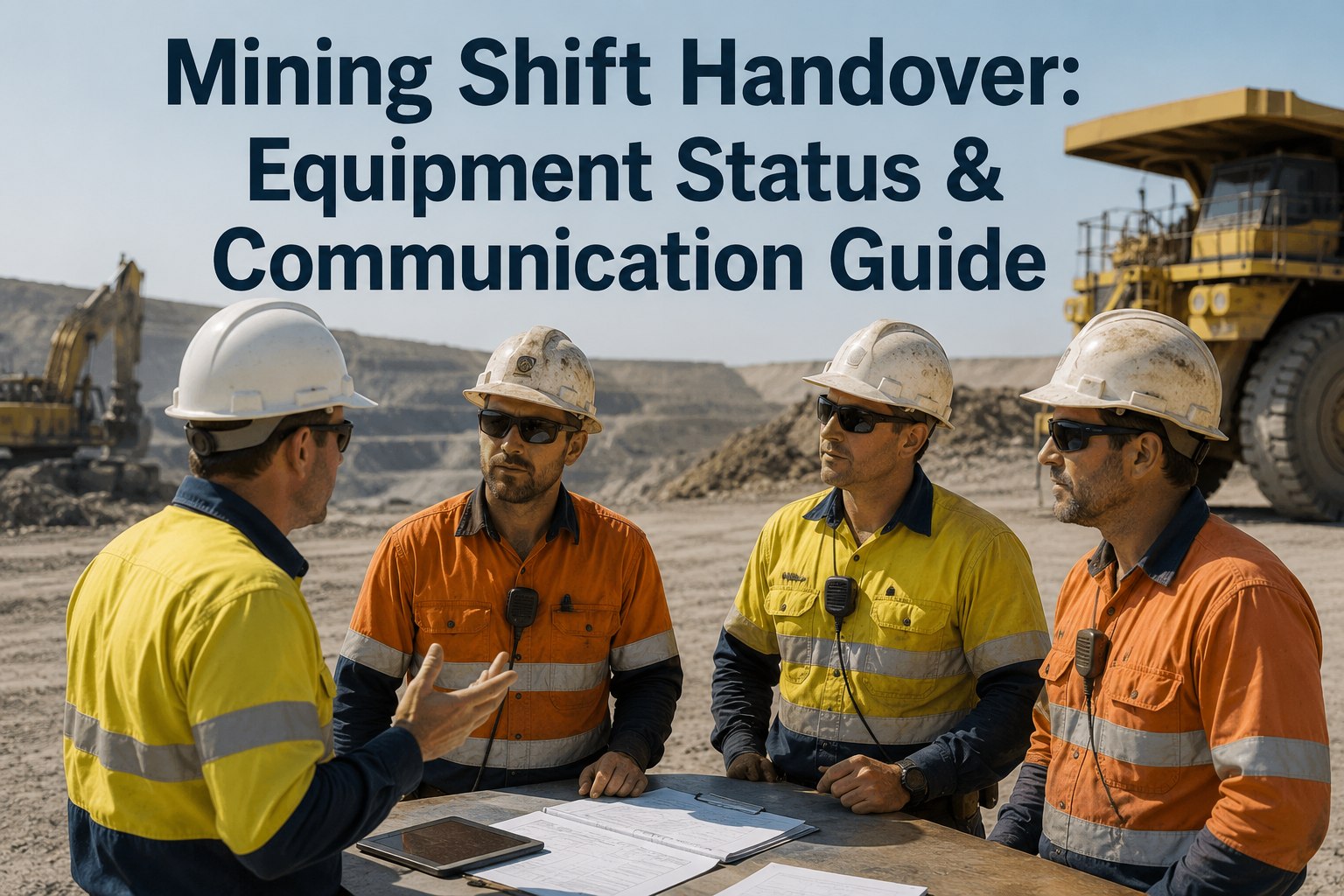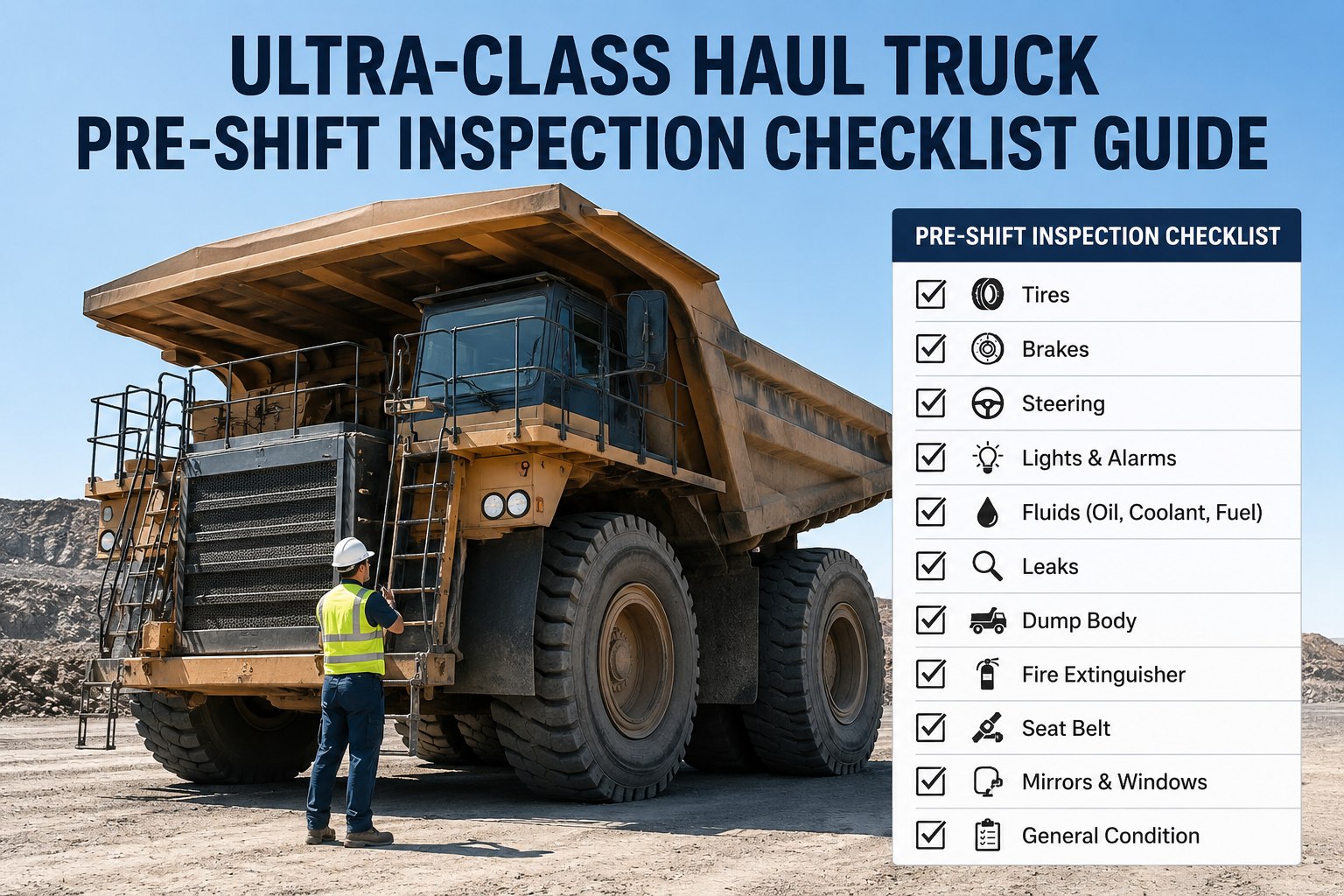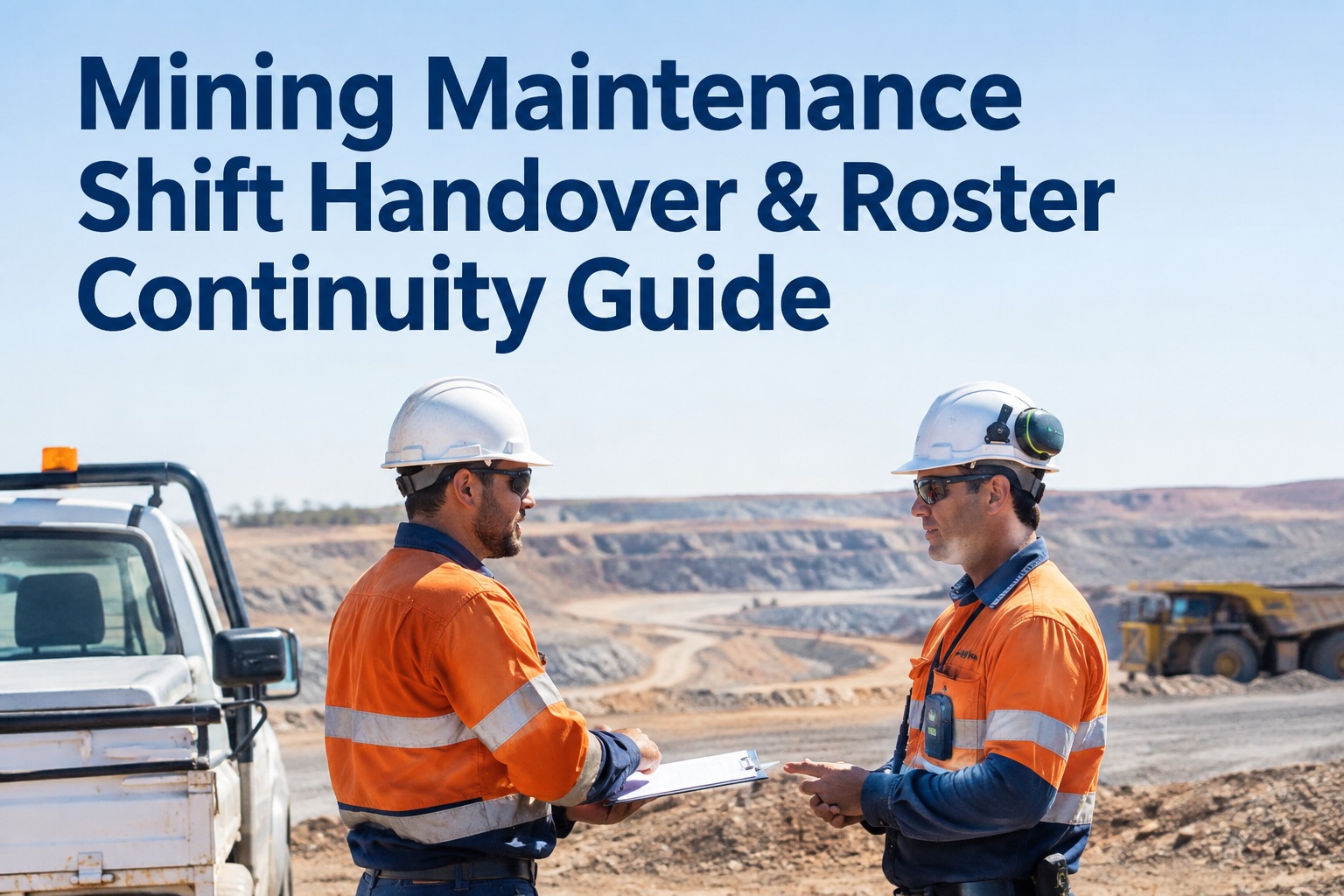
Day shift diagnoses a hydraulic fault on a loader, isolates it, orders a seal kit, and writes "cylinder weeping, kit on order" on a whiteboard. Two weeks later a different crew flies in, sees a machine tagged out with no context, and starts the diagnosis over from zero. That's the mining maintenance continuity problem in one scene — and on a FIFO roster it isn't a communication failure, it's a structural one. When the crew that started a job is on a plane home before the crew that finishes it arrives, there is no conversation to have. Continuity has to live somewhere other than a person's memory. This guide is about where. Book a demo to see the asset record that carries the job across the swing.
What happens to a job at the roster boundary?
A hydraulic repair starts on Crew A's swing and isn't done when they fly out. Switch how the handover works and watch what the incoming crew inherits.
A verbal handover assumes the two people are in the same room. Across a swing boundary they never are — so the only handover that survives is the one written onto the asset itself. Book a demo to see a job cross a swing intact
Every 24/7 operation has a shift-handover problem. Mining has a roster-handover problem on top of it — and it's a different beast. A day-to-night handover is a five-minute conversation across a gap of hours. A swing handover spans days or weeks, and the two crews may never share a single minute on site. Fixing the conversation doesn't fix the roster gap, because there is no conversation. What follows is where continuity actually breaks, and what has to be true for a job to survive the boundary.
How mining maintenance continuity actually breaks
The failures aren't dramatic. They're small, repeated leaks of information that each cost a bit of time, and add up to a maintenance operation that spends a chunk of every swing re-learning what the last swing already knew. These are the ones that show up again and again across rotating crews.
Repeated diagnostics
The incoming crew can't tell what was already tested, so they test it again. Half a shift spent confirming a fault the last swing had already isolated.
Duplicate parts orders
A kit was ordered last swing, but nobody can see that, so it's ordered again — two of everything, budget spent twice, and the machine still waiting.
Lost measurements
A bearing clearance or crack reading taken last swing isn't written down anywhere the next crew can find, so the trend line resets and the wear it revealed is invisible again.
Undocumented temporary repairs
A temporary control or bush-fix gets the machine running to end of swing — but if it isn't flagged, the next crew runs it as if it's a permanent repair. That's the dangerous one.
Work restarted from zero
When the incoming crew can't tell what's done and what's outstanding, the safe default is to start over — the single most expensive continuity failure of them all.
Notice the common root: none of these are caused by a bad conversation. They're caused by information that only ever existed in one person's head or on a board that got wiped — and that person is now off-site. The fix isn't a better talk at shift change; it's making sure the knowledge never depended on the talk in the first place. Start a free trial and the diagnostic findings, measurements, and parts status live on the asset where any crew can see them.
What a maintenance handover has to carry
A handover that survives a roster boundary isn't a note that says "loader's got a hydraulic issue." It's a structured record complete enough that a crew who never saw the failure can pick the job up mid-stream and know exactly what to do next. If it's missing any of these, the incoming crew has to guess — and guessing is where the re-work starts.
Photos make most of these self-explanatory — a picture of the weeping cylinder and the order docket says more than a paragraph. The point isn't a longer form; it's a complete-enough record attached to the asset, so the incoming crew starts from where the last one stopped rather than from scratch. Book a demo to see work-order history with findings and photos
The specialist problem: skills that aren't on every swing
Roster gaps don't just move jobs between identical crews. They move them between crews with different skills on board. Your electrical specialist, hydraulic guru, instrumentation tech, or reliability engineer may be on one swing and not the next — so a fault that needs their eyes can land on a swing where nobody has them.
This is where the record earns its keep twice over. When the specialist who diagnosed a control fault last swing writes the finding, the reasoning, and the recommended fix onto the asset, the generalist crew on the next swing can execute it without needing the specialist physically present — or can make a clean, informed call to wait or escalate. Without that, the job either stalls until the specialist rotates back in, or a crew attempts something outside their depth. Planned job duration, parts lead time, and work-in-progress status all have to be read against the roster: a two-week parts lead on a job started late in a swing means it will cross a boundary, and that needs to be planned for, not discovered. Book a demo to see specialist findings captured for the next crew
Why this is the supervisor's job, not a habit
Here's the uncomfortable part: most operations already "know" handovers matter, and still lose the information — because it's left to individual diligence at the end of a long swing when everyone's focused on the flight home. Documentation that depends on goodwill degrades exactly when it matters most. The role of the maintenance supervisor or superintendent is to make the record a requirement, not a courtesy.
That means the standard is enforced: a job doesn't close, and a swing doesn't end, until the work-in-progress record is complete enough for the next crew to act on. It's the same principle safety regulators have drawn from major incidents — handover is a recognized high-risk point where information transfer fails, and the defense is structure, not memory. When the record lives in a shared system the supervisor can see across crews, enforcement stops being nagging and becomes visible: incomplete handovers are obvious, and the pattern of who documents well and who doesn't is data, not gossip. Confirm the specific handover and documentation standards required at your operation and under the applicable safety framework, then build them into the workflow. Book a demo to see cross-crew visibility for supervisors
From a maintenance superintendent on a 2:1 roster
The one that finally forced the change was a dozer. Day crew on the back end of their swing put a temporary hose on to finish a job, meant to flag it, and flew out. Next swing ran it for four days thinking it was a proper repair before it let go. No one did anything wrong in the moment — the note just lived in a bloke's head and the bloke was in another state.
Now nothing closes until the record's on the asset — findings, what's temporary, what's outstanding, next action. The incoming crew reads the machine's history before they touch it. My specialists write their diagnosis into the job so the generalist swing can carry it. We stopped re-diagnosing our own faults, and the temporary-repair thing simply can't happen quietly anymore.
Mining maintenance shift handover FAQs
Why is maintenance handover harder on a FIFO roster than a normal shift?
A normal day-to-night shift handover is a short conversation across a gap of a few hours, where the outgoing and incoming people are physically together and can talk through what's happening. A FIFO or rotating-roster handover is fundamentally different: the crew that started a job may fly out days before the crew that continues it flies in, so the two teams often never share a single minute on site. That removes the conversation entirely. A verbal or whiteboard handover assumes the two people are in the same room, which across a swing boundary they are not. The result is that information which lived only in someone's head or on a board that got wiped simply disappears when that person leaves site. This is why roster continuity has to rely on a documented record attached to the asset rather than on communication between individuals—the record is the only thing that stays on site when the crew rotates out.
What should a mining maintenance handover record contain?
A handover record that can survive a roster boundary should be complete enough that a crew who never saw the original failure can pick the job up mid-stream. At minimum it should capture: the asset and a real description of the fault symptoms (not just "faulty"); the diagnostic findings, including what was tested and what the fault was traced to; any measurements taken, so wear trends continue rather than resetting; parts used or on order, with the order reference so nobody double-orders; a clear line between work completed and work outstanding; any temporary controls, temporary repairs, isolations, or permits still in place, flagged explicitly; and the recommended next action. Photos make several of these far clearer than text—an image of the failure and the parts docket often communicates more than a paragraph. The goal is not a longer form that nobody fills in, but a complete-enough record attached to the asset so the incoming crew starts from where the last crew stopped.
How do you handle a repair that crosses a roster swing?
A job that will cross a swing boundary needs to be planned as a cross-boundary job from the start, not treated as a surprise when the crew rotates out. That means reading the job against the roster: if a repair started late in a swing has a two-week parts lead time, it is going to land on the next crew, and its work-in-progress status, parts-on-order, and next action all need to be documented on the asset before the first crew leaves. The incoming crew should be able to open the asset's record and see exactly what stage the job is at, what has been done, what is waiting on parts, and what to do first. Temporary repairs or controls used to keep a machine running to end of swing must be flagged clearly so the next crew doesn't mistake them for permanent fixes. Where a specialist skill was involved in the diagnosis, the specialist's findings and recommended fix should be captured so a crew without that specialist on board can either execute the plan or make an informed decision to wait.
What happens when a specialist isn't on every swing?
Rosters routinely put an electrical, hydraulic, instrumentation, or reliability specialist on one swing and not the next, which means a fault requiring that expertise can arrive on a swing where nobody on site has it. The practical answer is to make the specialist's knowledge portable through the record. When the specialist who diagnosed a fault documents the finding, the reasoning behind it, the measurements, and the recommended fix on the asset, a generalist crew on the following swing can often execute the plan without the specialist being physically present, or can make a clean decision to wait for their return or escalate. Without that captured knowledge, the job typically either stalls until the specialist rotates back in—extending downtime by potentially a full swing—or a crew attempts work outside their depth. This is also a planning input: knowing which swings carry which specialists lets a maintenance planner schedule specialist-dependent work into the windows where the skill is on site, and document what's needed for the swings where it isn't.
Whose responsibility is it to enforce maintenance handover standards?
Enforcing handover and documentation standards is a supervisory responsibility—typically the maintenance supervisor or superintendent—rather than something that can be left to individual technicians' diligence. The reason is practical: documentation that depends on goodwill tends to degrade exactly when it matters most, at the end of a long swing when people are focused on the flight home. Leaving it to habit is how information gets lost even in operations that fully understand handovers matter. The supervisor's role is to make a complete work-in-progress record a requirement for closing a job or ending a swing, not a courtesy. This mirrors how safety regulators treat handover: it is a recognized high-risk point where information transfer failures have contributed to serious incidents, and the defense is structure rather than memory. When the record lives in a shared system the supervisor can see across crews, enforcement becomes visible and objective—incomplete handovers are obvious, and documentation quality becomes trackable data rather than an informal impression. Operators should confirm the specific handover standards required at their site and under the applicable safety framework.
Give every swing the same maintenance record, not the same guesswork
HVI keeps work-order history with photos and findings, an asset logbook the incoming crew reads before they touch the machine, outstanding-work visibility, measurement history, and role-based access across every crew — so a job diagnosed on one swing is finished on the next without re-diagnosis, duplicate orders, or a temporary repair running quietly for four days. The record follows the asset, not the technician. See it on your own fleet and roster.
No credit card · Shared asset records from day one · Access across every crew and swing