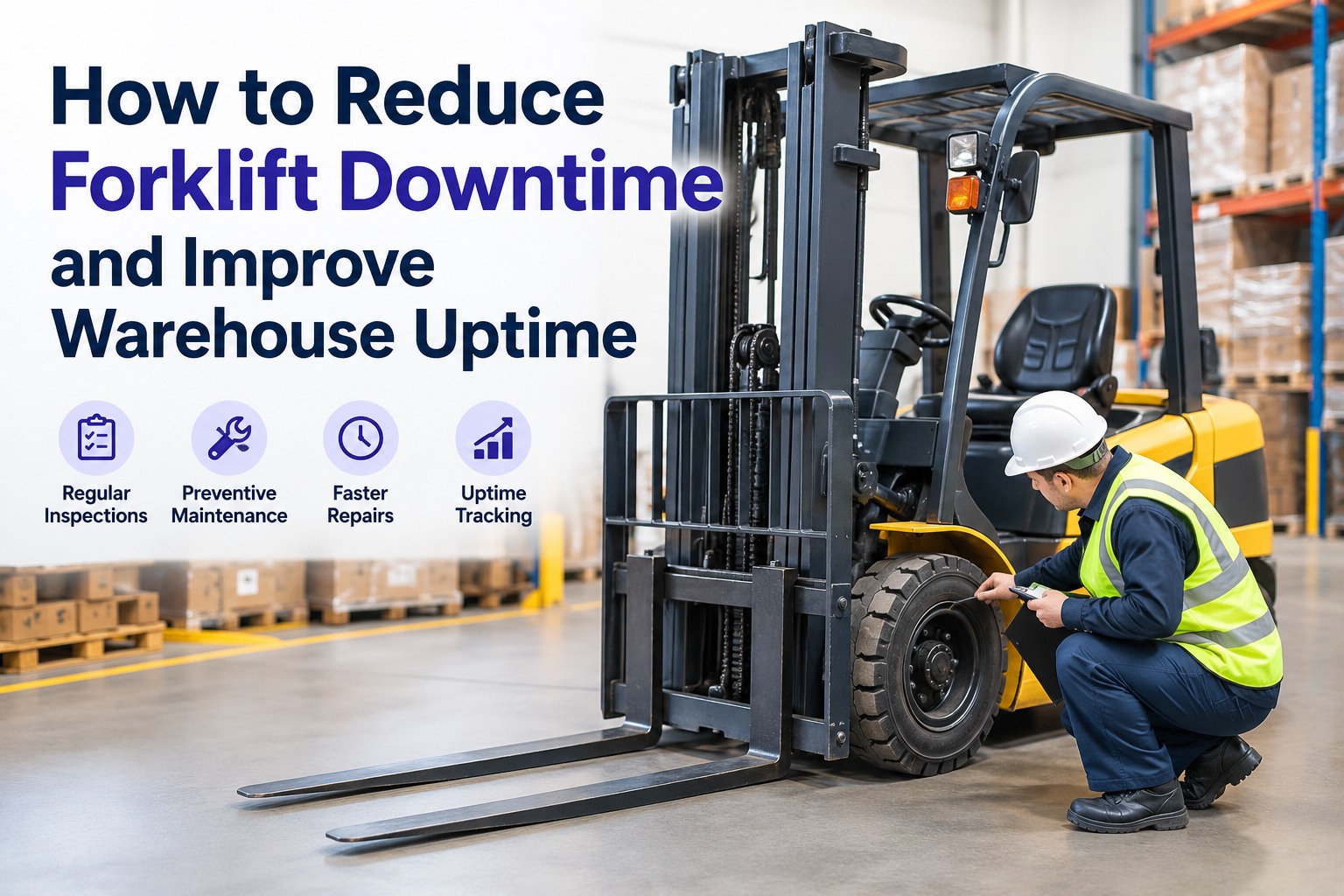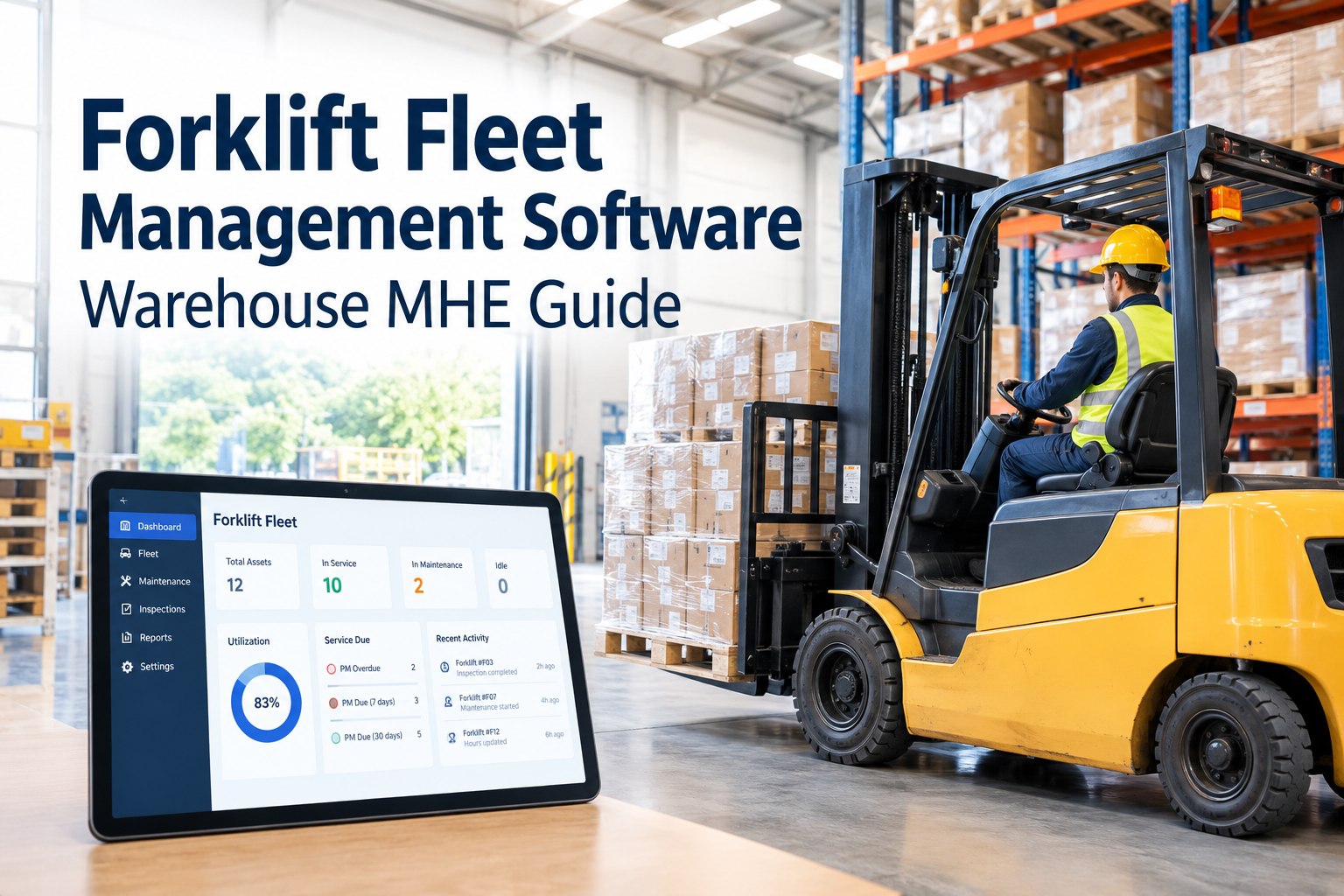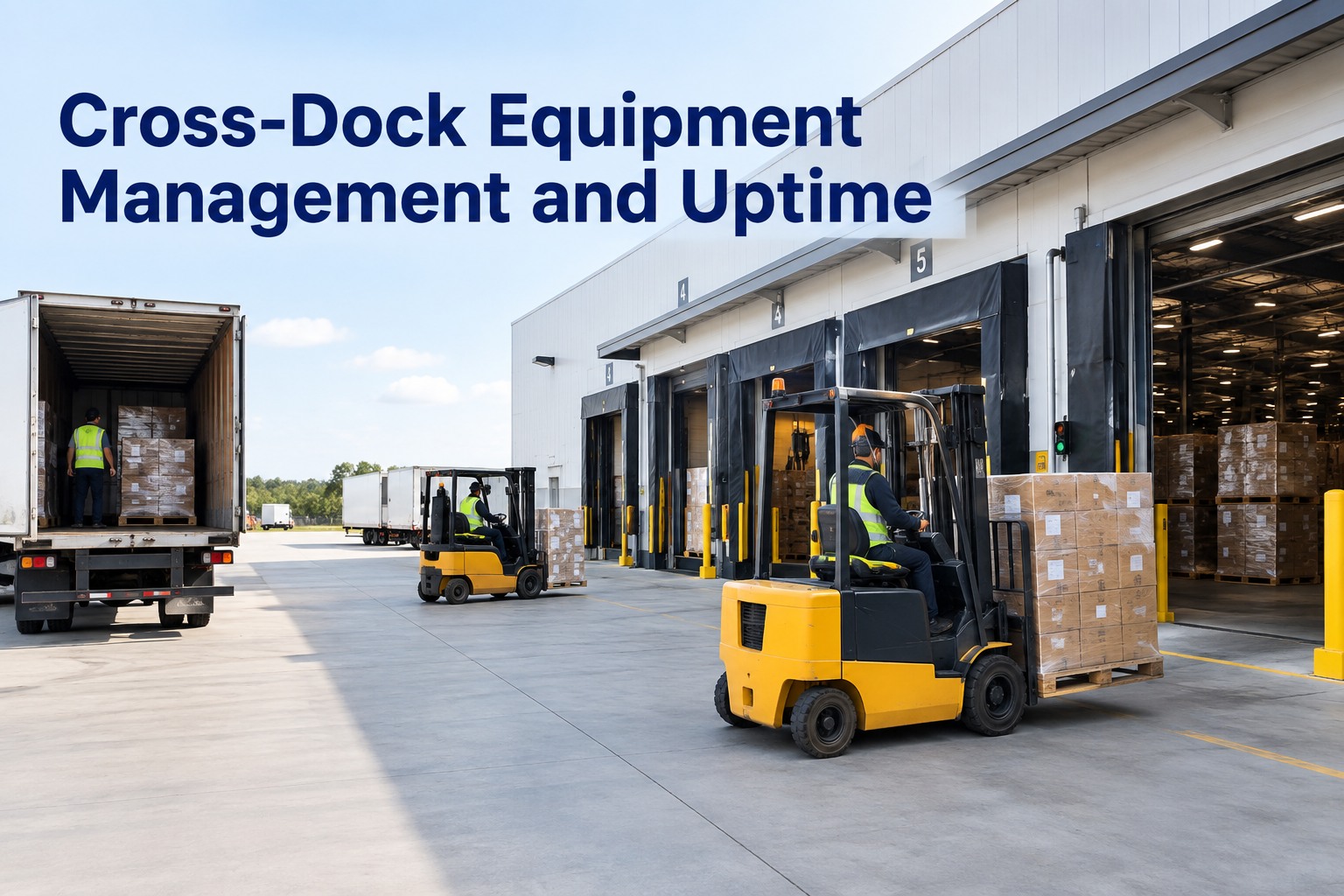
In a warehouse with racking, a broken pallet jack is an annoyance — the freight waits on a shelf. In a cross-dock, there is no shelf: freight comes off an inbound trailer and must be on an outbound one within hours. So cross-dock equipment management isn't about tidy maintenance logs — it's about whether the next truck leaves on time. A door going dark mid-shift doesn't cause "downtime"; it causes freight on the floor and a missed departure. See dock and MHE availability tracked in one place
One Dead Asset Doesn't Stall a Task — It Removes a Door From the Schedule
Cross-docking has no storage to absorb a failure. Watch how a single equipment fault cascades through a buffer-free operation in one shift.
Every problem below comes from the same root: no buffer. In a buffered warehouse, maintenance can slip a day. In a cross-dock, the equipment schedule and the freight schedule are the same schedule — and here's how to run them that way.
The buffer-free reality: availability is throughput
A conventional warehouse stores product, so its equipment has slack — if a forklift dies, the pallet waits on a rack and gets moved later. A cross-dock is built to not store: inbound freight is sorted and reloaded to outbound trailers within hours. That single design choice changes what an equipment failure costs.
Racking absorbs it. The pallet waits, the work shifts to later, and maintenance can be scheduled around the gap. Downtime is real but recoverable within the day.
There's no shelf to hold the freight. A dead leveller or forklift takes a loading position out of the plan — and every trailer routed to it has to be re-slotted or it misses its window.
That's why in a cross-dock, equipment availability isn't a maintenance metric — it's a throughput metric. The doors that are actually usable during the operating window are your capacity for that shift. Book a demo to see live availability across doors and MHE.
Dock equipment is fleet equipment — treat it that way
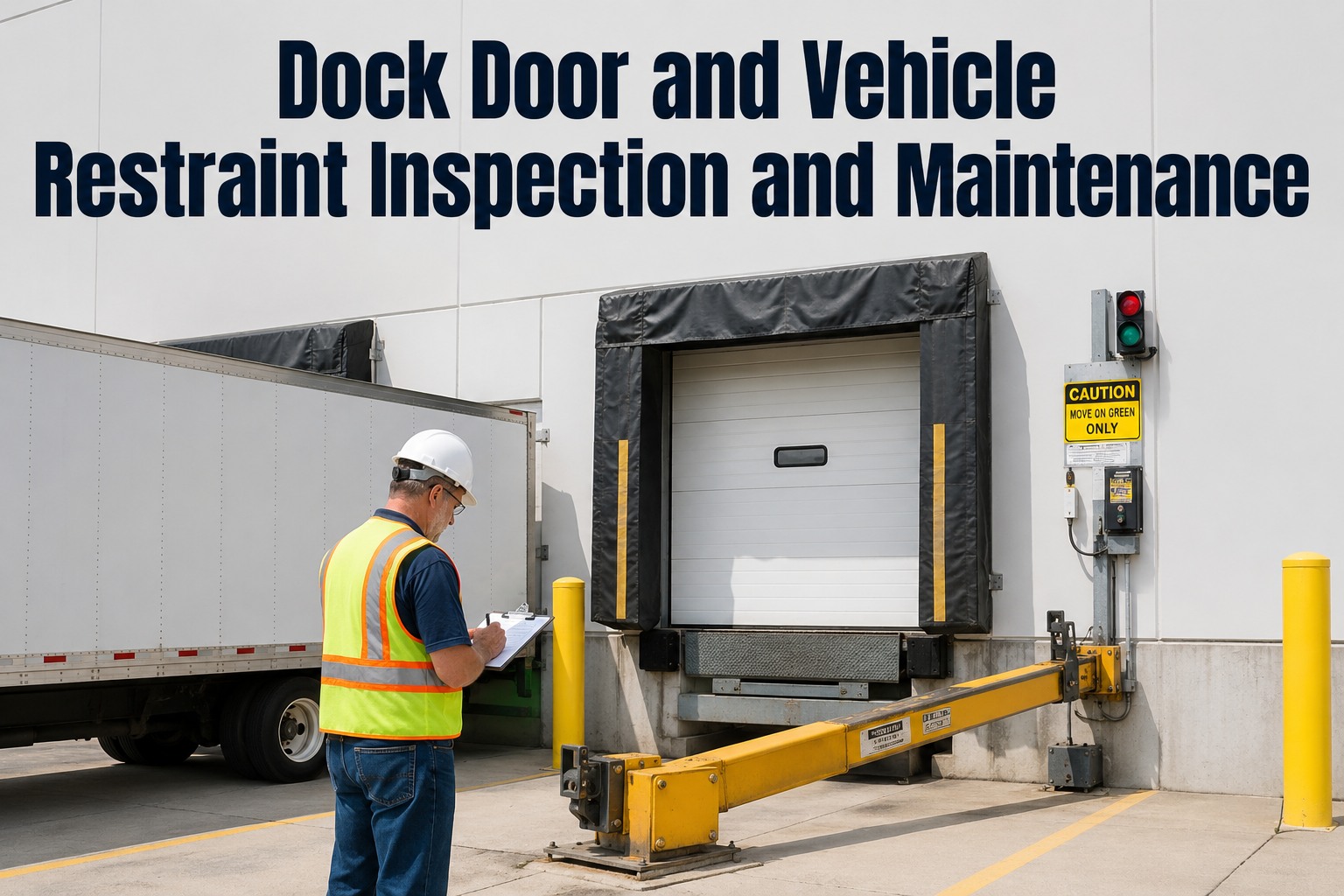
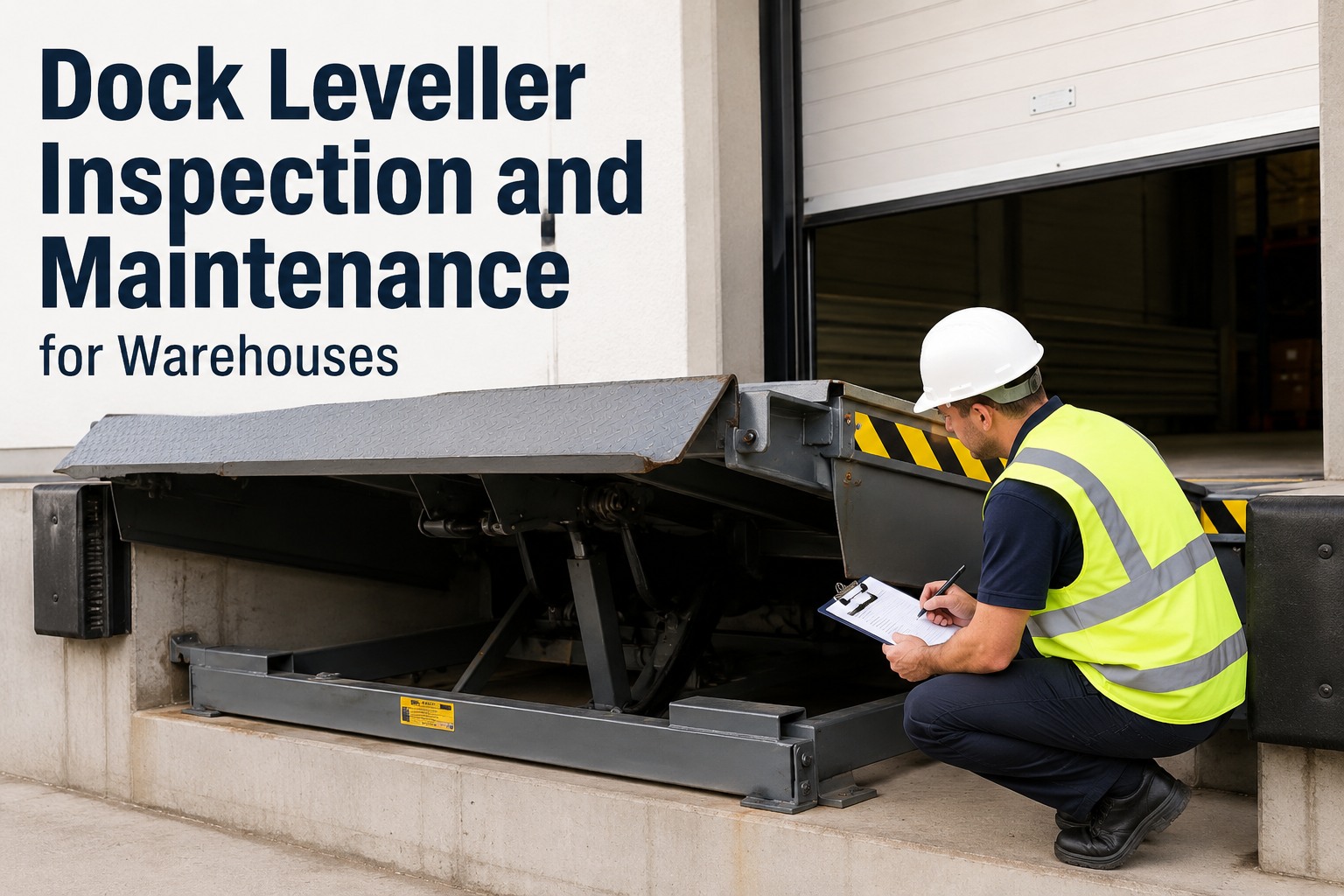
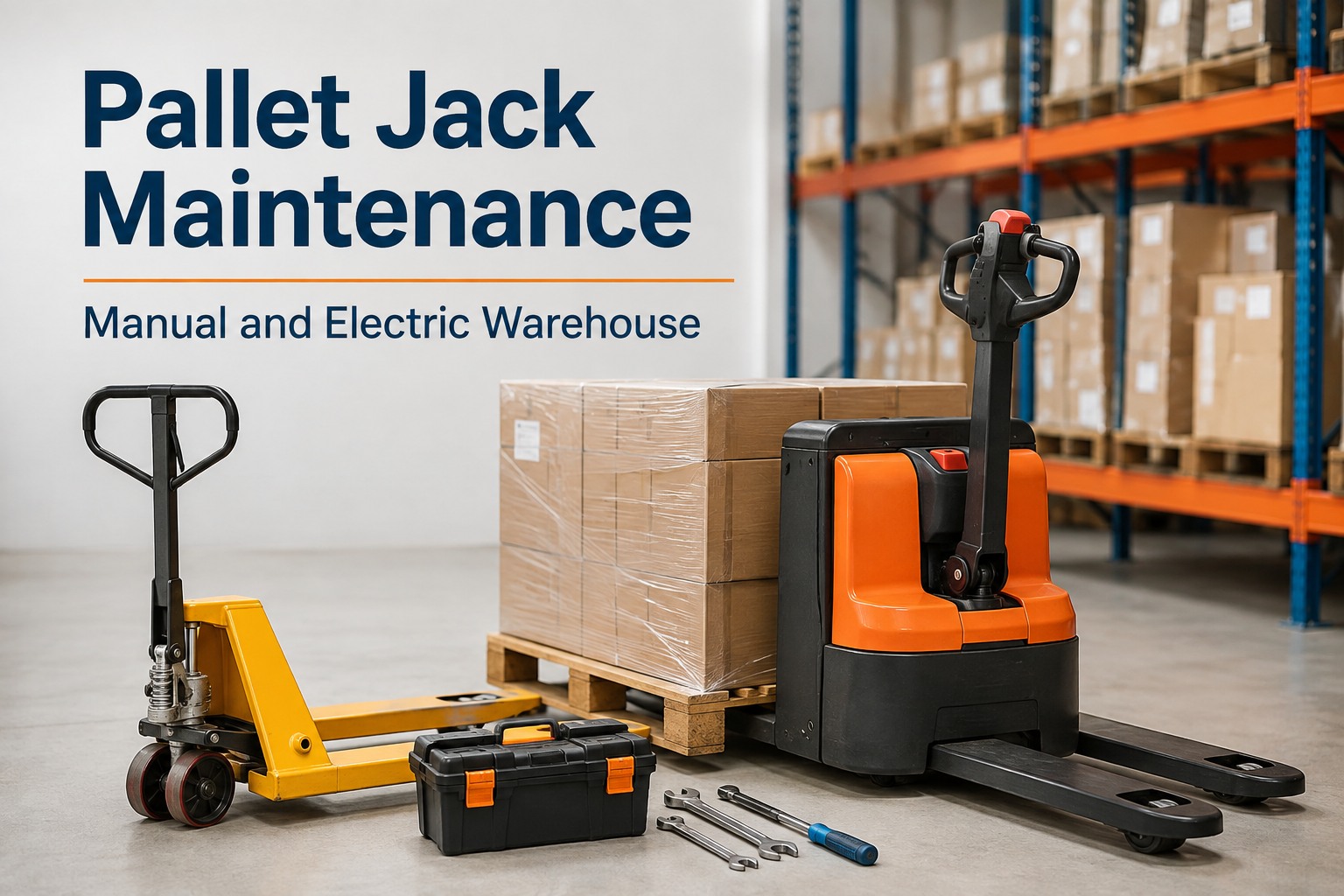
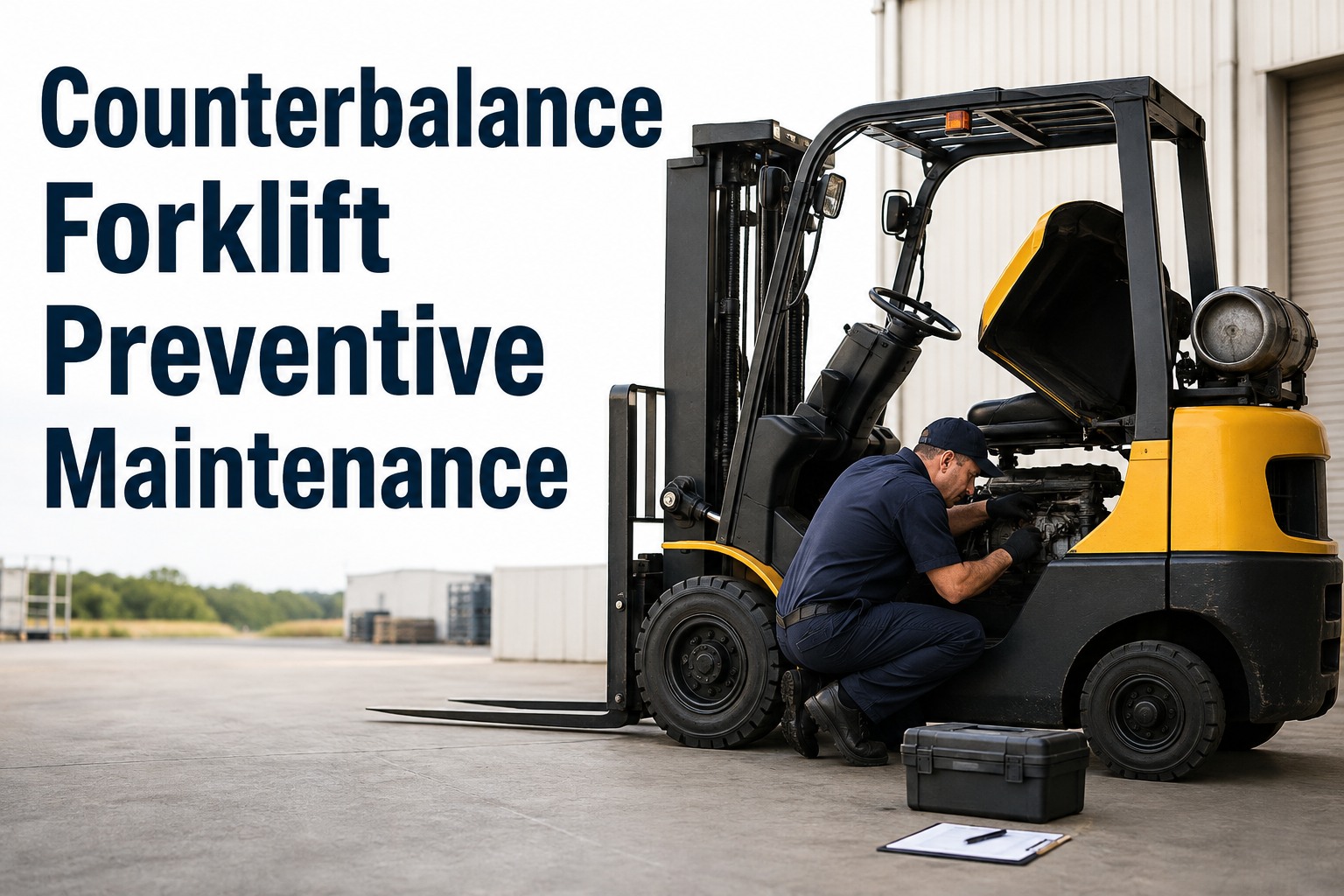
Forklifts and pallet jacks get maintenance schedules; the dock hardware often doesn't — it's treated as "the building." But in a cross-dock, a leveller, a restraint, or an overhead door failing takes out a position just as completely as a dead forklift. Each is a schedulable asset with its own failure modes.
Cycles hundreds of times a shift under load. A failed lip or weak spring means a trailer can't be bridged — the door is out.
Holds the trailer to the dock. If it won't engage, that position is a safety stop, not a loading spot — and it can't be used until fixed.
A stuck or off-track door seals a position shut. On a cold-chain dock it's also a temperature and energy problem the moment it jams.
When dock hardware and MHE live in the same system — same PM schedule, same defect-to-work-order flow, same history — a door is either available or it isn't, and you know which before you allocate a trailer to it. Book a demo to manage dock equipment alongside your MHE.
The compressed maintenance window
A cross-dock that runs long or near-continuous shifts has almost no natural downtime to service equipment in — the quiet hours a normal warehouse uses for PM don't exist. So maintenance either gets skipped (and turns into a mid-shift failure) or it's forced during operating hours (and takes a door out anyway). Both cost throughput.
Calendar-based PM ignores when your dock is actually busy. Scheduling maintenance against real operating windows is what keeps servicing from competing with shipping. Book a demo to see PM scheduled around your operating windows.
Redundancy and the scheduling interface
Some failures are unavoidable, so the question isn't "how do we never fail" — it's "what happens when we do." Two things turn an inevitable failure from a crisis into a shrug: planned spare capacity, and a dock schedule that already knows what's available.
A spare pallet jack, a held-back door, or a bit of scheduling slack means one failure doesn't cap the whole shift. Resilience is cheaper than a missed departure.
When the allocator can see that Door 7's leveller is down and Door 12's PM is due at 2pm, trailers get slotted around it — instead of a driver discovering the dead door on arrival.
The failure you planned for barely registers; the one your schedule didn't know about becomes freight on the floor. Feeding real equipment availability into dock allocation is what closes that gap. Start free and let availability inform every dock assignment.
Measure availability during the window, not the calendar
"99% uptime" sounds great until you learn the 1% of downtime all landed during your peak outbound wave. Calendar availability — up over the whole month — hides the failures that actually cost you, because in a cross-dock only the operating window matters.
Counts every hour the same, including the ones you weren't running. A door down all Sunday looks identical to one down during Monday's peak — but only one cost you a departure.
Measures whether each asset was usable when you needed it. That's the metric that ties equipment straight to throughput — and shows which assets keep failing at the worst time.
Track availability against the hours you actually operate and the maintenance conversation changes from "we hit our uptime target" to "which assets are failing during peak, and why." Book a demo to see availability and utilisation during real operating windows.
The pre-shift cross-dock readiness check
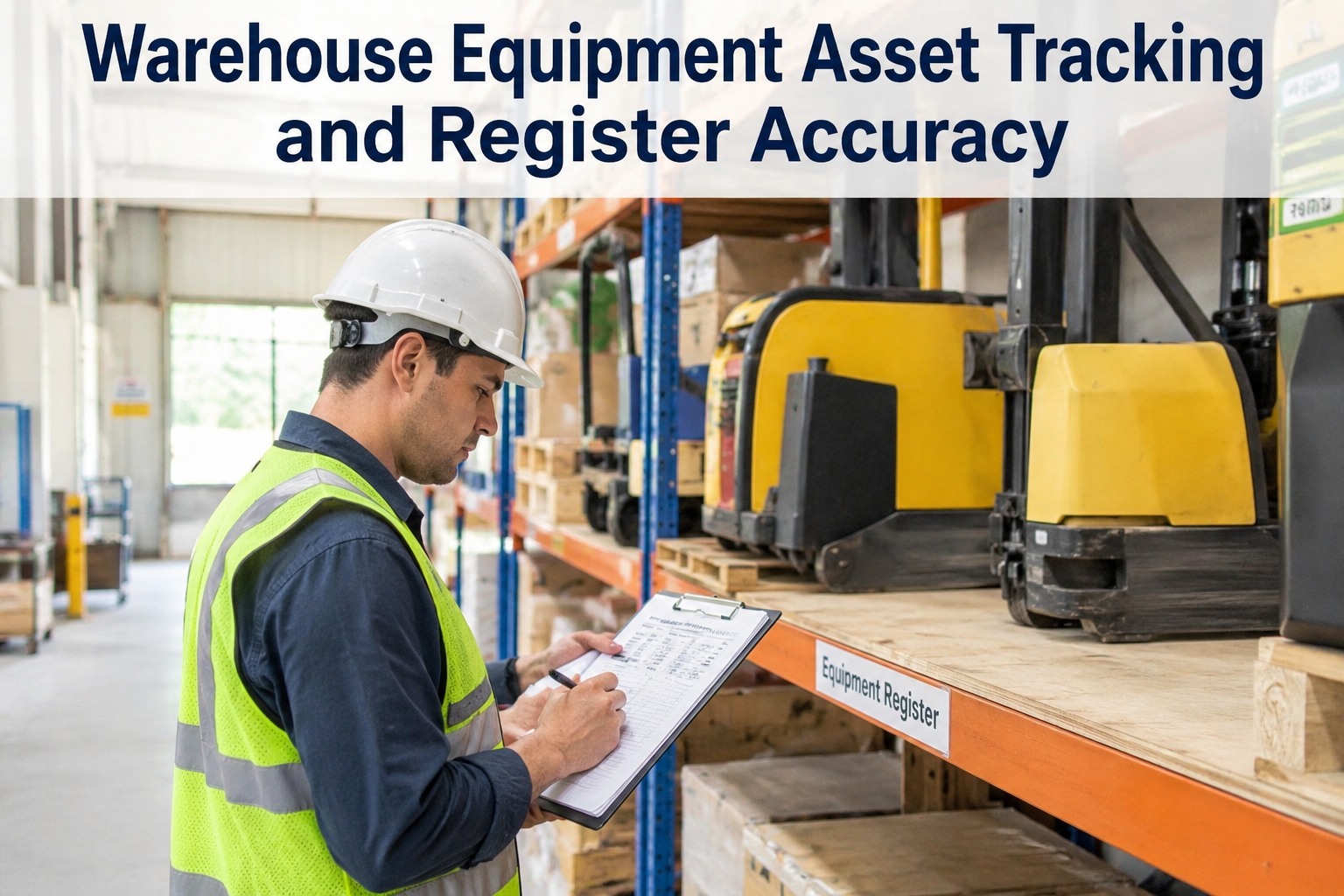
This is the walk that confirms every loading position is actually available before the first trailer backs in — the dock hardware and MHE checks that keep a door from failing you mid-wave. Run it before the shift and log any find with a photo. Use this dock readiness checklist online free, so any defect auto-creates a work order and drops the door from allocation until it's fixed.
From an ops manager who runs a buffer-free dock
We used to treat the dock doors as part of the building and the forklifts as the "real" equipment. Then a leveller went during our biggest outbound wave, we lost the position for three hours, and eleven trailers had to be re-slotted on the fly. That day cost us more than a year of PM would have.
Now the levellers, restraints, doors, and MHE are all in one system on one schedule, and the dock allocator can see what's actually available before assigning a trailer. When something does fail, it's a planned re-slot, not a scramble — because the schedule already knew.
Frequently asked questions
Why is equipment uptime more critical in cross-docking than a normal warehouse?
Because a cross-dock has no storage buffer. A conventional warehouse stores product, so if equipment fails the freight waits on a rack and the work shifts to later. In a cross-dock, inbound freight has to move to an outbound trailer within hours — there's nowhere to park it. So a failure doesn't just delay a task, it removes a loading position from the schedule and pushes freight onto the floor, risking a missed departure that same shift.
Should dock levellers and doors be maintained like fleet equipment?
Yes. In a cross-dock a failed leveller, restraint, or overhead door takes out a position just as completely as a dead forklift, yet dock hardware is often treated as "the building" with no schedule. Each is a schedulable asset with its own failure modes and cycles hundreds of times a shift. Managing dock equipment on the same PM schedule and defect-to-work-order flow as your MHE means you know a door's status before you allocate a trailer to it.
How do you maintain equipment when the dock runs almost continuously?
By scheduling PM around the real operating window instead of the calendar. Long-running docks have little natural downtime, so plan services into genuine low-traffic slots — shift changes, gaps between waves — and sequence work so only one position is out at a time. Catching defects at pre-shift inspection also converts would-be mid-wave failures into planned fixes you slot when a door coming out hurts least.
What's the difference between calendar and operating-window availability?
Calendar availability counts every hour equally, including hours you weren't running — so a door down all weekend looks the same as one down during your peak outbound wave. Operating-window availability measures whether each asset was usable when you actually needed it. In a cross-dock only the second one matters, because it ties equipment directly to throughput and reveals which assets keep failing at the worst possible time.
How does equipment availability connect to dock scheduling?
When the dock allocator can see real equipment status — which levellers are down, which doors have PM due and when — trailers get slotted around unavailable positions instead of a driver discovering a dead door on arrival. Feeding live availability into dock allocation turns an unavoidable failure into a planned re-slot rather than freight backing up on the floor. It only works if dock and MHE availability live in one place the schedule can read.
Keep every door in the schedule and every departure on time
HVI manages dock levellers, restraints, doors, and MHE as one fleet — PM scheduled around your operating windows, defects auto-creating work orders, full history per asset, and availability the dock plan can actually read. So in a cross-dock with no buffer, a failure is a planned re-slot, not freight on the floor and a missed truck.
No credit card · Dock + MHE in one system · Availability by operating window