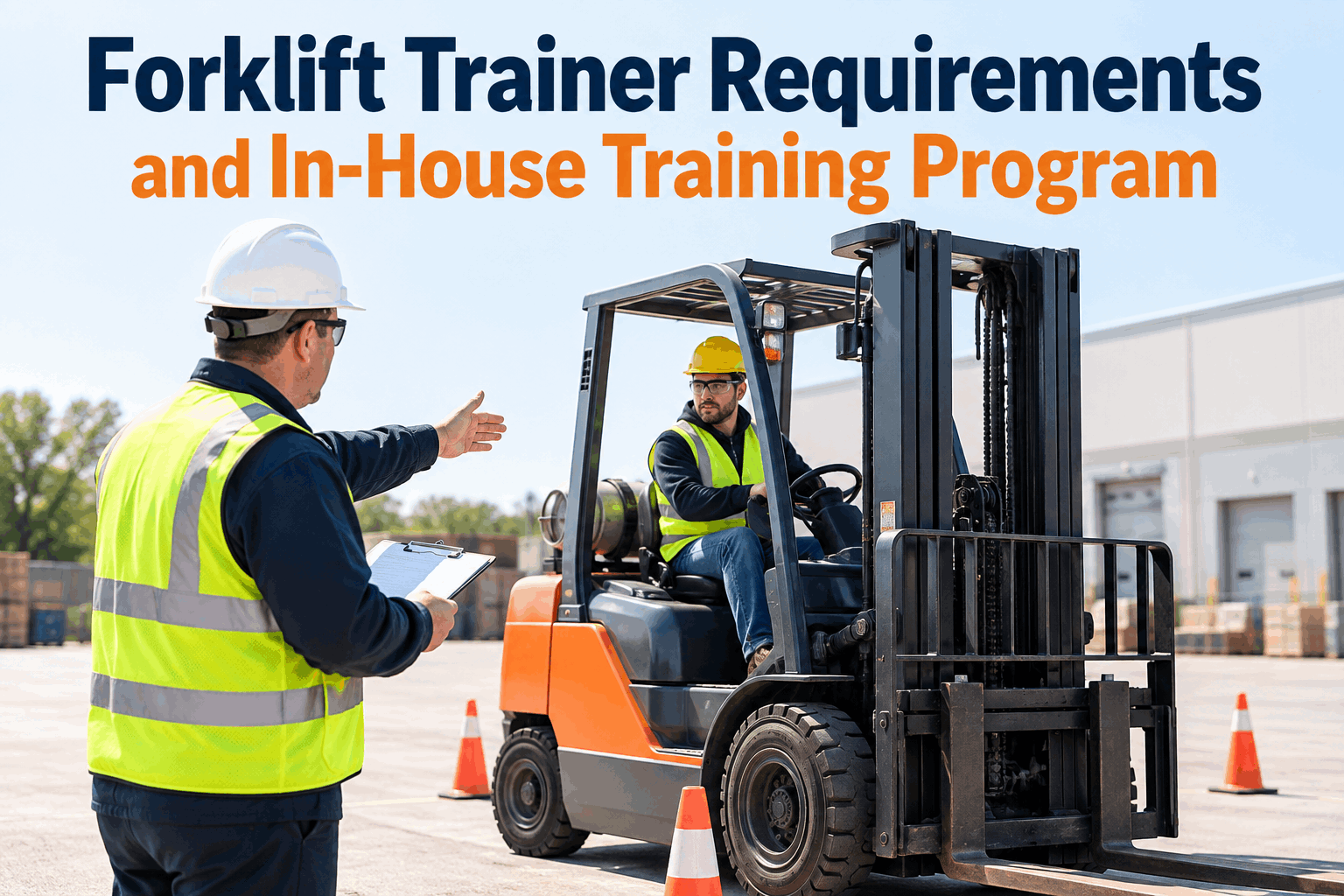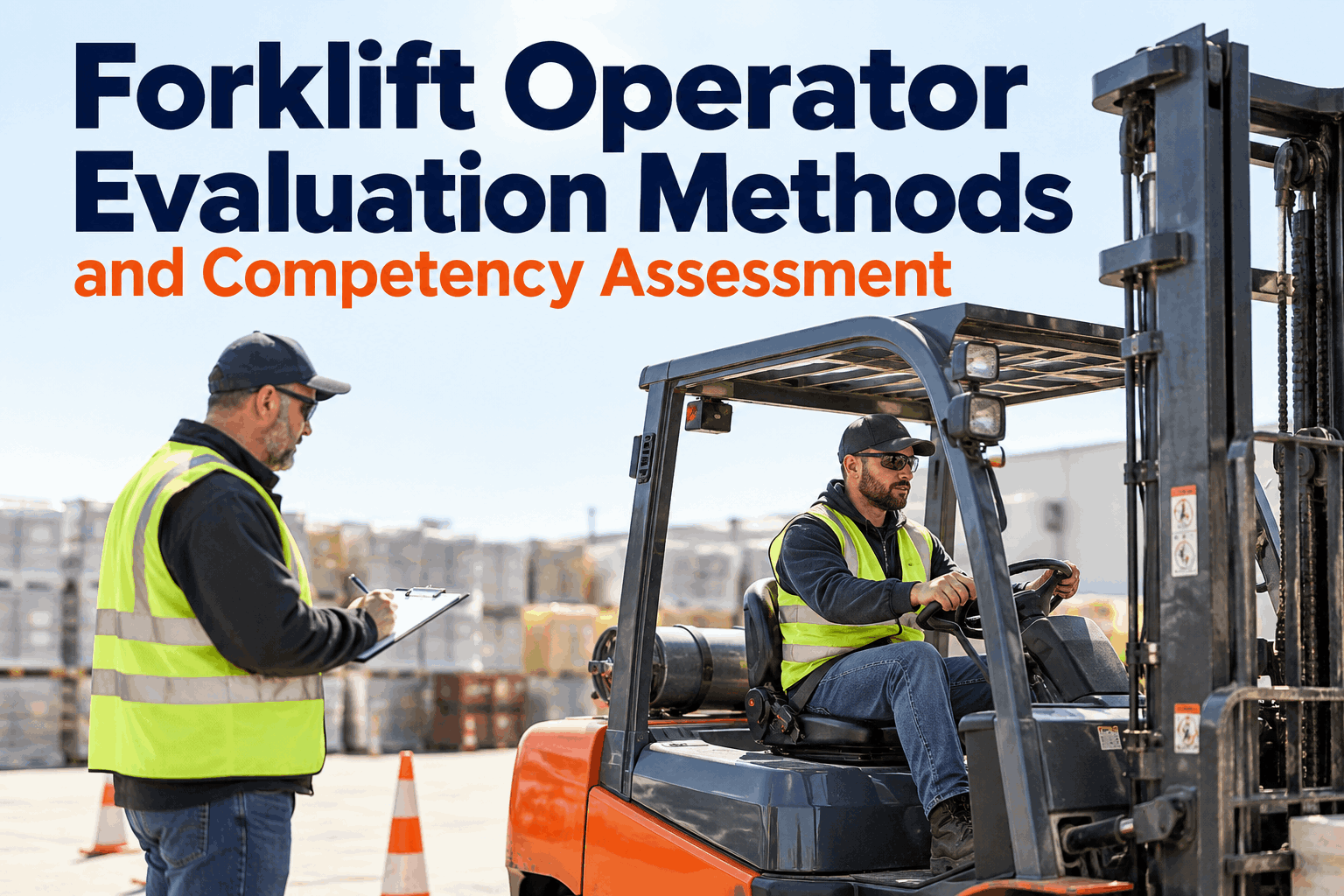
A forklift operator evaluation is the thing an auditor asks for first and a fleet scrambles for last. The training usually happened — someone ran the class, the operator drove the truck — but the dated, signed record proving each operator was evaluated, on the trucks they actually run and within the last three years, is the piece that goes missing. If that gap sounds familiar, book a demo to see evaluations tracked and due-dated.
A Forklift Operator Evaluation Is a Dated, Signed Event — Not a One-Time Certificate
Under OSHA 1910.178(l) every operator must be evaluated on the job, by a qualified person, on the trucks they run — and re-evaluated at least every three years. The proof lives in one record, and that record is what an audit checks.
What a valid evaluation is built on
Three parts have to happen before an operator is cleared to workA forklift operator evaluation is not a form you sign at the end of a video. OSHA requires three parts, in order, and skipping any one of them invalidates the whole thing. You can book a demo to see all three logged against the operator.
Formal instruction
Lecture, written material, video or discussion — covering both truck topics (controls, stability, load handling) and workplace topics (traffic, ramps, dock edges).
Practical training
Hands-on demonstration by the trainer and supervised practice by the operator — on the actual type of truck they will run, not a stand-in.
Workplace evaluation
The operator works under real conditions while a qualified evaluator watches and signs off. This is the part people mean by the practical evaluation.
Cleared to operate
Only now — on that truck type, at that site. A different truck or a different site needs its own evaluation.
This page focuses on the evaluation itself; for the wider program, the OSHA forklift certification requirements cover training delivery and the full certification scope.
The three-year clock and what resets it
Forklift operator evaluation requirements run on a 36-month cycle with five triggersEvery operator must be re-evaluated at least once every three years from their last evaluation. But five events reset that clock to zero and require a refresher and re-evaluation sooner — miss them and a "current" operator quietly isn't. You can book a demo to see the 36-month clock and triggers tracked per operator.
- 01Unsafe operation observed. A supervisor sees the operator driving in a way that isn't safe.
- 02An accident or near-miss. Involvement in either triggers refresher training and a new evaluation.
- 03A different type of truck. Moving an operator to a truck class they weren't evaluated on.
- 04Workplace conditions change. New layout, surfaces, loads or hazards the operator hasn't been assessed in.
- 05An evaluation finds a deficiency. A failed or partial check means retrain and re-evaluate before they run solo.
Stop finding out an operator's evaluation lapsed during an audit
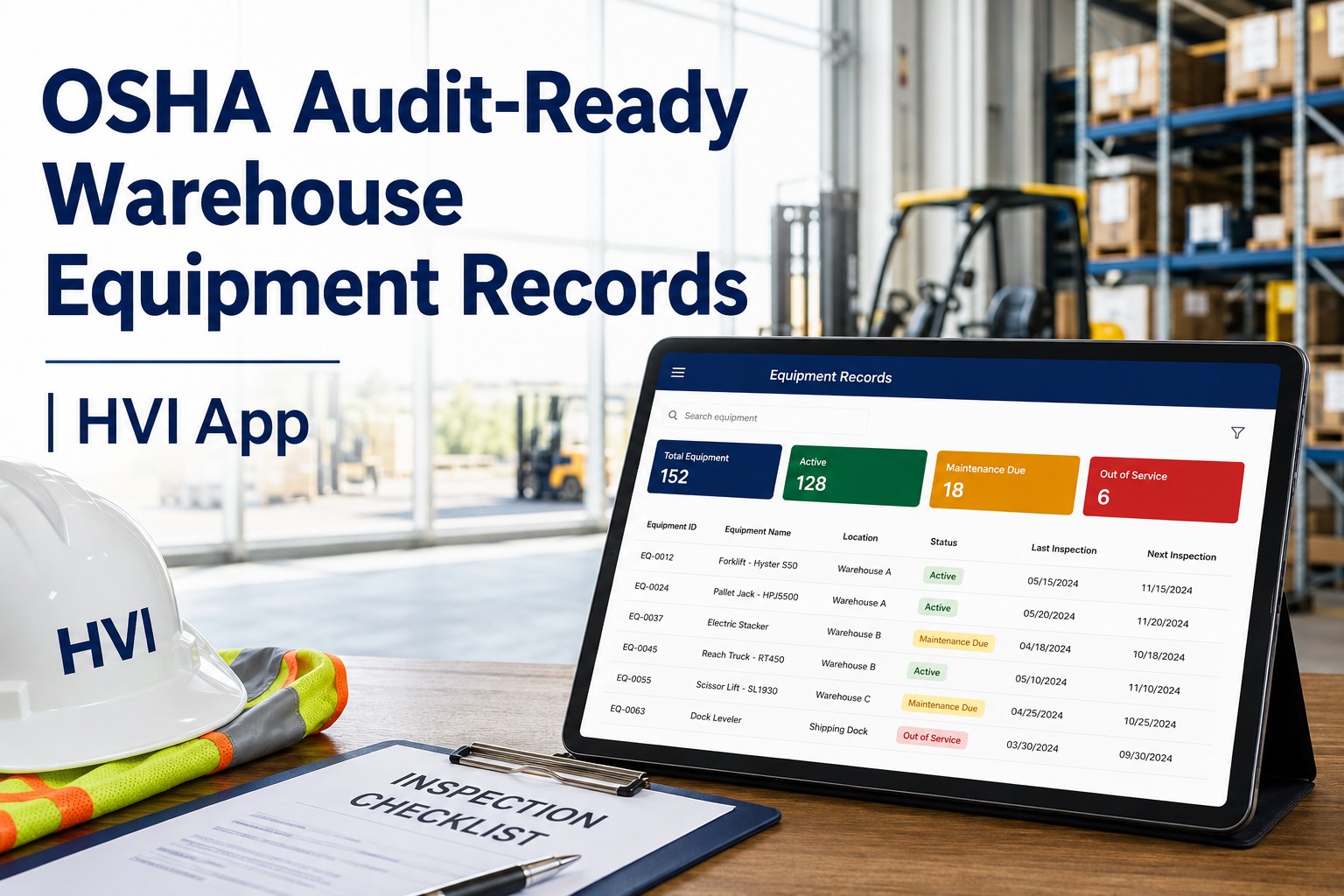
HVI tracks every operator's evaluation date, authorized truck types and 36-month due date, and flags refresher triggers — so the record is current before anyone asks to see it.
What a practical evaluation actually checks
A forklift evaluation checklist the evaluator can score consistentlyA good forklift evaluation checklist isn't a gut feel — it's a repeatable set of observed behaviours grouped by phase, so two evaluators judge the same operator the same way.
Pre-operation
- Completes the daily inspection and reports defects
- Seatbelt on before moving; mirrors and seat set
- Tests horn, lights and brakes before the first move
Travelling
- Controls speed and slows into corners and intersections
- Sounds the horn at blind spots and doorways
- Forks low, travels in reverse when the load blocks the view
Load handling
- Works inside the capacity plate for the load and height
- Tilts, lifts and stacks smoothly and squarely
- Checks the load is stable before travelling
People & workplace
- Keeps clear of pedestrians and yields right of way
- Handles ramps, dock edges and uneven surfaces safely
- No riders, no raised-load travel, parks and secures correctly
Scoring the same criteria every time is what makes a deficiency obvious and defensible. You can sign up free and build your evaluation checklist once, then reuse it for every operator.
Who is allowed to sign off
Forklift evaluator requirements — and the credential that doesn't existThe evaluation only counts if the right person does it. OSHA doesn't issue an evaluator licence, but it does set a competence bar — and a recent interpretation on being present.
Knowledge, training and experience
The evaluator must have the knowledge, training and experience to both train operators and judge their competence — not just seniority.
Physically present
A recent OSHA interpretation requires the evaluator to be on site during the practical training and evaluation. Remote sign-off doesn't satisfy the standard.
Designated by the employer
The employer names the competent person. There is no "OSHA-certified trainer" card to buy — the responsibility stays with you.
Because the evaluator's name is part of the required record, logging who signed off — and when — matters as much as the result. You can book a demo to see the evaluator captured on every record.
Our training was never the problem — we trained everyone. What bit us was the paper. An auditor asked for evaluation dates and half of them were on a clipboard in a drawer, and a few operators were past the three-year mark without anyone noticing. The one that worried me most was a guy we'd quietly moved onto reach trucks who'd only ever been evaluated on a counterbalance. Now every operator has a record with the truck types, the evaluator and a due date, and the refresher triggers are written down so moving someone to a new truck automatically flags a re-evaluation. It turned an audit scramble into a screen I can just show them.
Bringing it together
Treat competency as a record with an expiry dateA forklift operator evaluation is simple to get right once you treat it as a dated, signed event rather than a one-off certificate: three training parts done in order, a qualified evaluator who was actually there, the truck types written down, and a 36-month clock that resets the moment a trigger fires. Do that and competency stops being a story you tell and becomes a record you can show. It also sits inside your wider safety management program rather than living on a clipboard.
The fleets that pass these audits without stress aren't the ones that train hardest — they're the ones whose evaluation records are current, complete, and one click away when someone asks.
Make every forklift operator evaluation current, complete and one click away
Digital evaluation checklists, per-operator records with truck types and evaluator, 36-month due dates and refresher-trigger flags — audit-ready before the auditor arrives.
Questions fleets ask
Forklift operator evaluation, answeredHow often is a forklift operator evaluation required?
OSHA requires each operator to be evaluated at least once every three years from the date of their last evaluation. On top of that baseline, a refresher and re-evaluation are required sooner if the operator is seen operating unsafely, is involved in an accident or near-miss, is assigned a different type of truck, works in changed conditions, or fails an evaluation.
What does a forklift operator evaluation involve?
It is the workplace performance part of training: the operator drives the actual type of truck under real conditions while a qualified evaluator observes against a set checklist — pre-operation checks, travelling, load handling, and pedestrian and workplace safety — and signs off. It follows the formal instruction and practical training, and all three parts must be completed for the operator to be cleared.
Who is qualified to evaluate a forklift operator?
Anyone with the knowledge, training and experience to train operators and judge their competence, designated by the employer. There is no "OSHA-certified trainer" credential to buy. A recent OSHA interpretation also requires the evaluator to be physically present during the practical training and evaluation, so remote sign-off does not meet the standard.
What records does a forklift operator evaluation require?
The employer must certify each operator with a record that includes the operator's name, the date of training, the date of evaluation, and the name of the person who did the training and evaluation. Keeping the authorized truck types and the next due date alongside it makes the record audit-ready and shows at a glance whether the operator is still current.
How does HVI help with forklift operator evaluation?
HVI lets you build a reusable evaluation checklist, record each operator's result with the evaluator's name, authorized truck types and evaluation date, and track the 36-month due date with reminders and refresher-trigger flags. It documents and tracks evaluations — it does not deliver the training or act as the qualified evaluator, which remain the employer's responsibility under OSHA.