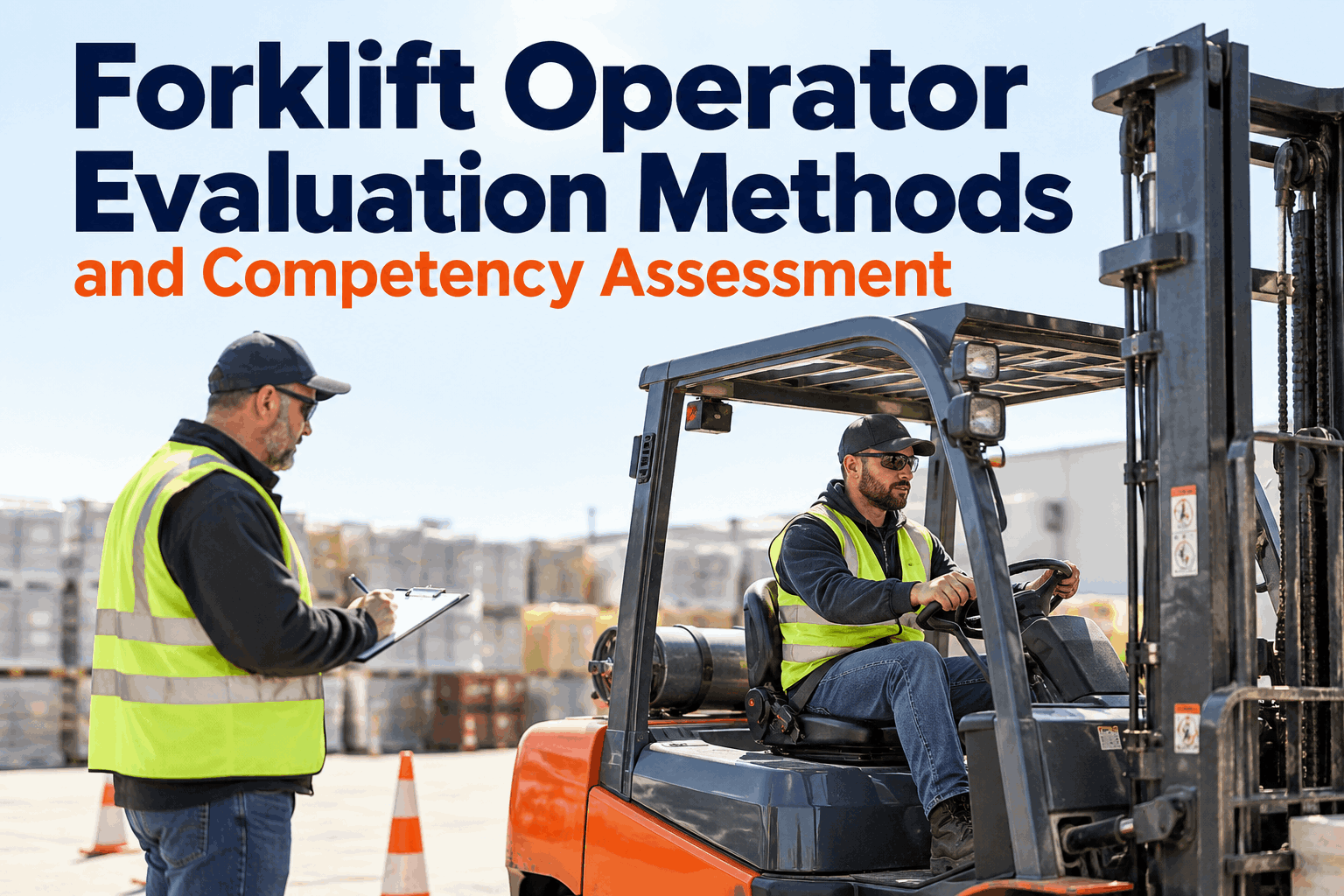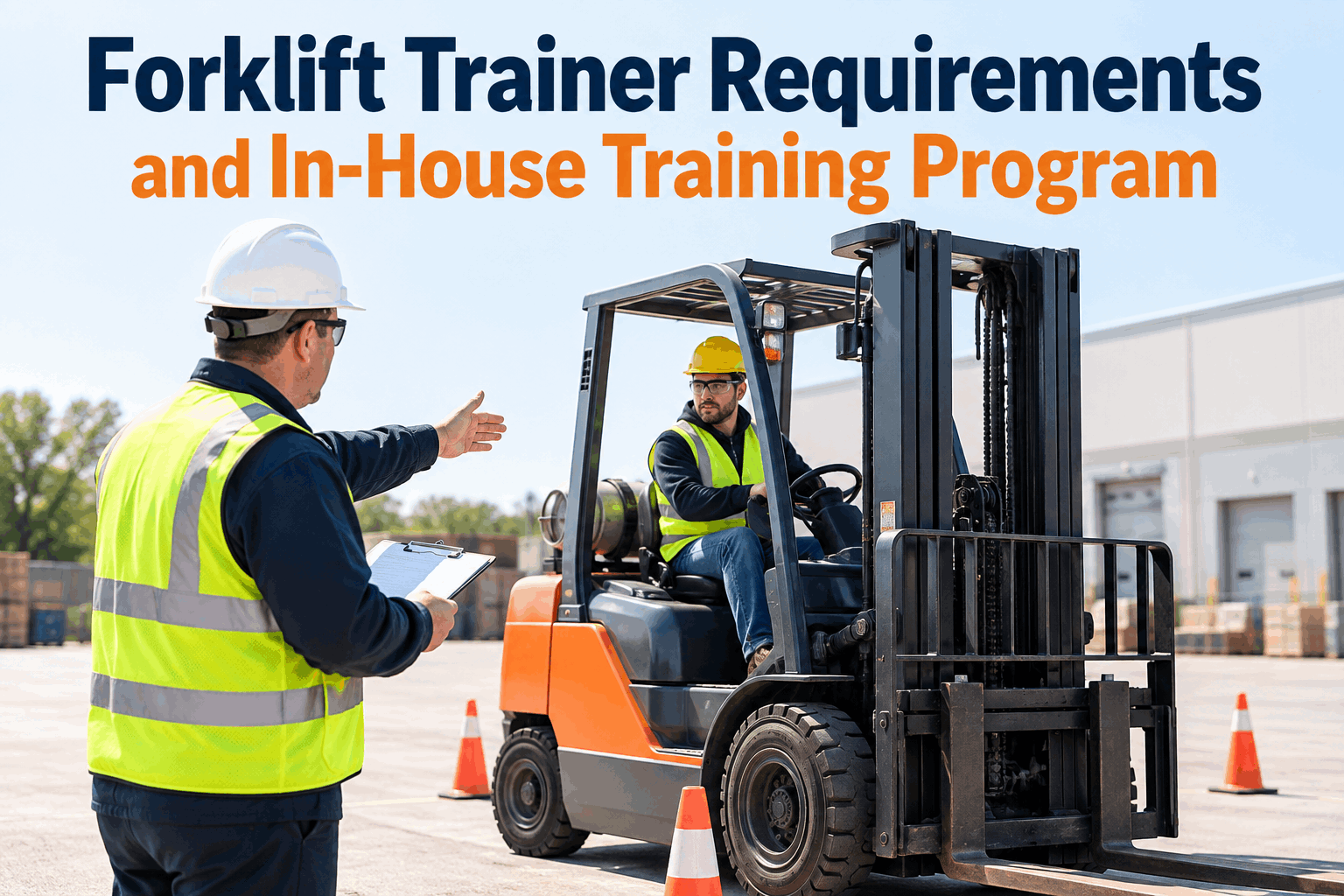
Here's the question that catches most warehouses off guard: who, exactly, is allowed to train your forklift operators? There's no OSHA trainer card to hang on the wall. Forklift trainer requirements come down to one test — the person doing the training must have the knowledge, training and experience to teach operators and judge whether they're competent. That's it, and that's also the catch: if you can't show that person was qualified, every certification they signed is on shaky ground. Book a demo to see trainer and operator records tracked.
There's No Trainer Card — Only a Test
OSHA names no forklift-trainer certificate. It asks one thing: does your trainer have the knowledge, training and experience to teach and to judge competence? Proving that is the whole job.
In-house training is completely allowed, and for most fleets it's the practical choice — your own people know your trucks, your docks and your traffic better than any outside course. But "allowed" comes with a condition: the employer has to be able to stand behind the trainer's qualification, the training that happened and the evaluation that followed. The program isn't the slides. It's the proof.
What the Forklift Trainer Requirements Actually Are
Under OSHA 29 CFR 1910.178(l), training and evaluation must be done by someone with the knowledge, training and experience to do both. There's no national trainer license — the employer decides, and must be able to defend the decision.
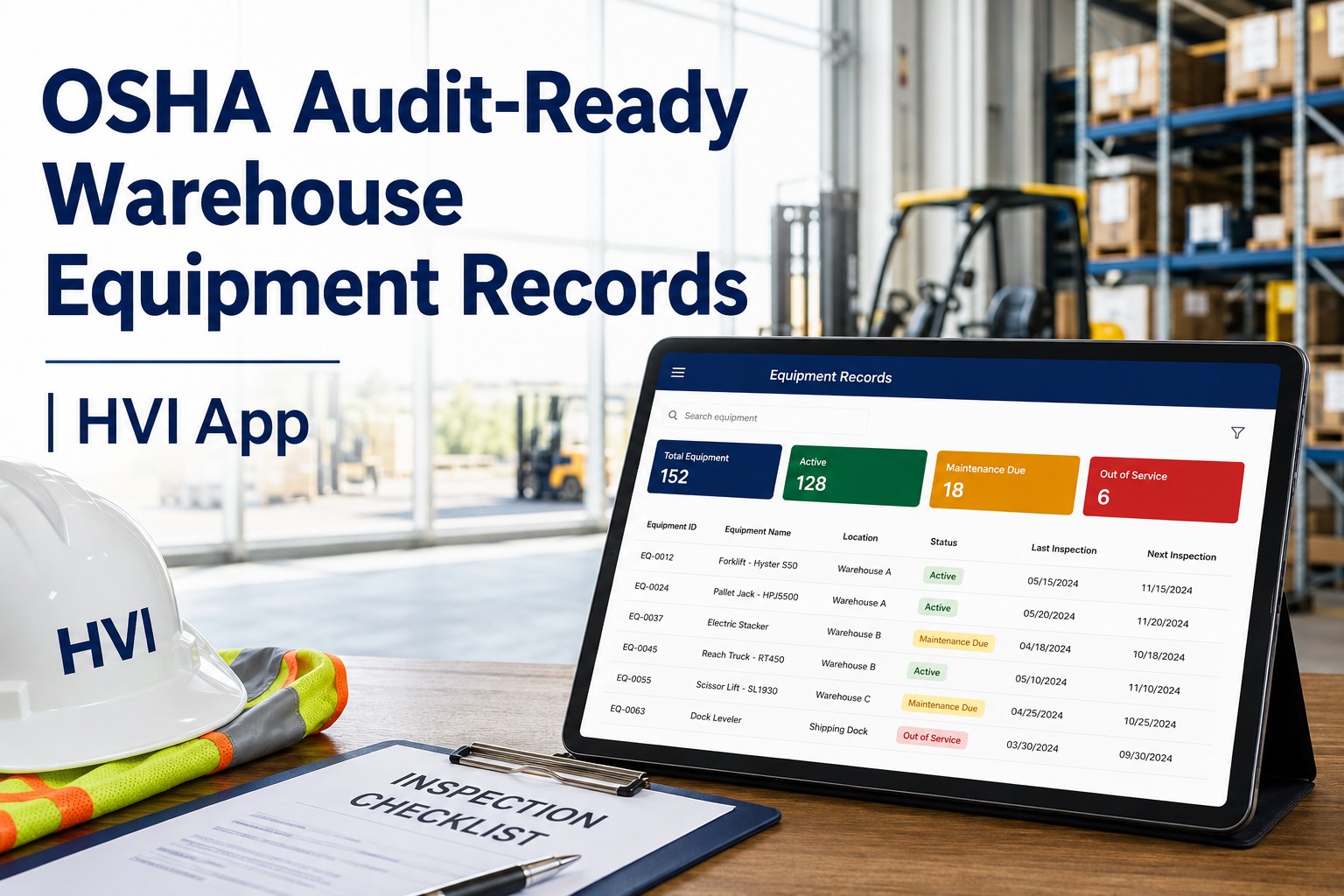
The first three are about the person; the fourth is what protects the employer. Keeping the trainer's credentials on file alongside operator records is exactly what safety and training records are for. Book a demo to see trainer credentials on file.
What an In-House Training Program Must Cover
A compliant program isn't one event — it's three distinct parts, each of which the trainer delivers and documents. Skip any one and the certification isn't complete.
Classroom or online — the rules, the physics, the truck types, the site hazards. The knowledge layer.
Hands-on demonstration and guided operation on the actual trucks the operator will run.
The trainer watches the operator perform on the job and judges competence before sign-off.
That third part — the practical evaluation — is where in-house programs most often fall short, because it's the hardest to prove happened. Capturing it as a dated, signed digital record closes that gap. Sign up free and log evaluations against each operator.
Trainer and Operator Records to Keep
When an auditor or an insurer asks about training, they're asking for records — on both the trainer and the operator. Two files, kept together per person.
- Knowledge, training and experience documented
- Train-the-trainer or equivalent on record
- Truck classes the trainer is qualified for
- Date qualified and who authorized it
- Operator name and training date
- Evaluation date and result
- Trainer / evaluator name
- Truck type certified on & next re-eval due
This is separate from the operator-side detail in our OSHA forklift certification requirements guide — that covers what operators need; this page covers qualifying and documenting the trainer behind them. Book a demo to see both files in one place.
When Operators Need Re-Evaluation
Certification isn't permanent. The trainer-evaluator comes back into the picture on a cycle and whenever something triggers a refresh — and tracking those triggers is a program job, not a memory job.
Miss a three-year re-eval across a fleet and you've got operators running on lapsed certification without knowing it. A system that flags the dates turns that from a liability into a reminder.
A Safety Manager's Take
We ran our own forklift training for years and thought we were covered. Then an auditor asked a question I didn't expect — not about the operators, about the trainer. "What qualifies him to train?" I had operator certificates for days and nothing on the trainer himself. That was the gap.
We wrote up his knowledge, training and experience, put it on file, and now every operator record links back to a trainer we can actually stand behind. Same program, same people — I just finally documented the one person everyone had assumed was qualified.
Celeste H.Warehouse Safety Manager · multi-site distribution
Forklift Trainer Requirements FAQs
What are the forklift trainer requirements under OSHA?
Under 29 CFR 1910.178(l), training and evaluation must be conducted by a person with the knowledge, training and experience to train operators and evaluate their competence. There is no OSHA-issued trainer certificate — the employer determines and must be able to document that the trainer meets that knowledge-training-experience standard.
Can you train forklift operators in-house?
Yes. OSHA allows in-house training, and for most fleets it's the practical choice because your own people know your trucks and site. The condition is that the trainer is qualified, and that the formal instruction, practical training and workplace evaluation are all delivered and documented. In-house is allowed; undocumented is not.
Does a forklift trainer need a certification?
There's no mandatory OSHA trainer credential. A train-the-trainer course is a common and sensible way to meet the "training to teach" part of the requirement, but it isn't legally required on its own. What matters is that the trainer genuinely has the knowledge, training and experience — and that the employer has documented it.
How often do forklift operators need re-evaluation?
At least every three years, and sooner whenever a trigger occurs — involvement in an accident or near-miss, observed unsafe operation, assignment to a different type of truck, or a change in workplace conditions. Each of these calls for refresher training and a fresh evaluation by a qualified trainer before the operator continues.
How does HVI help manage forklift training?
HVI keeps the trainer's qualification on file, records the formal, practical and evaluation steps per operator, stores the certification fields, and flags three-year re-evaluations before they lapse. You get trainer and operator records in one place, audit-ready. It supports training records and scheduling; it doesn't certify your trainers or replace your safety program.
Build a Forklift Training Program That Meets the Requirements
Document the trainer's qualification, record every operator's formal, practical and evaluation steps, and never miss a three-year re-eval — so your in-house program is one you can prove, not just one you run.
No credit card · See trainer and operator records in a short demo