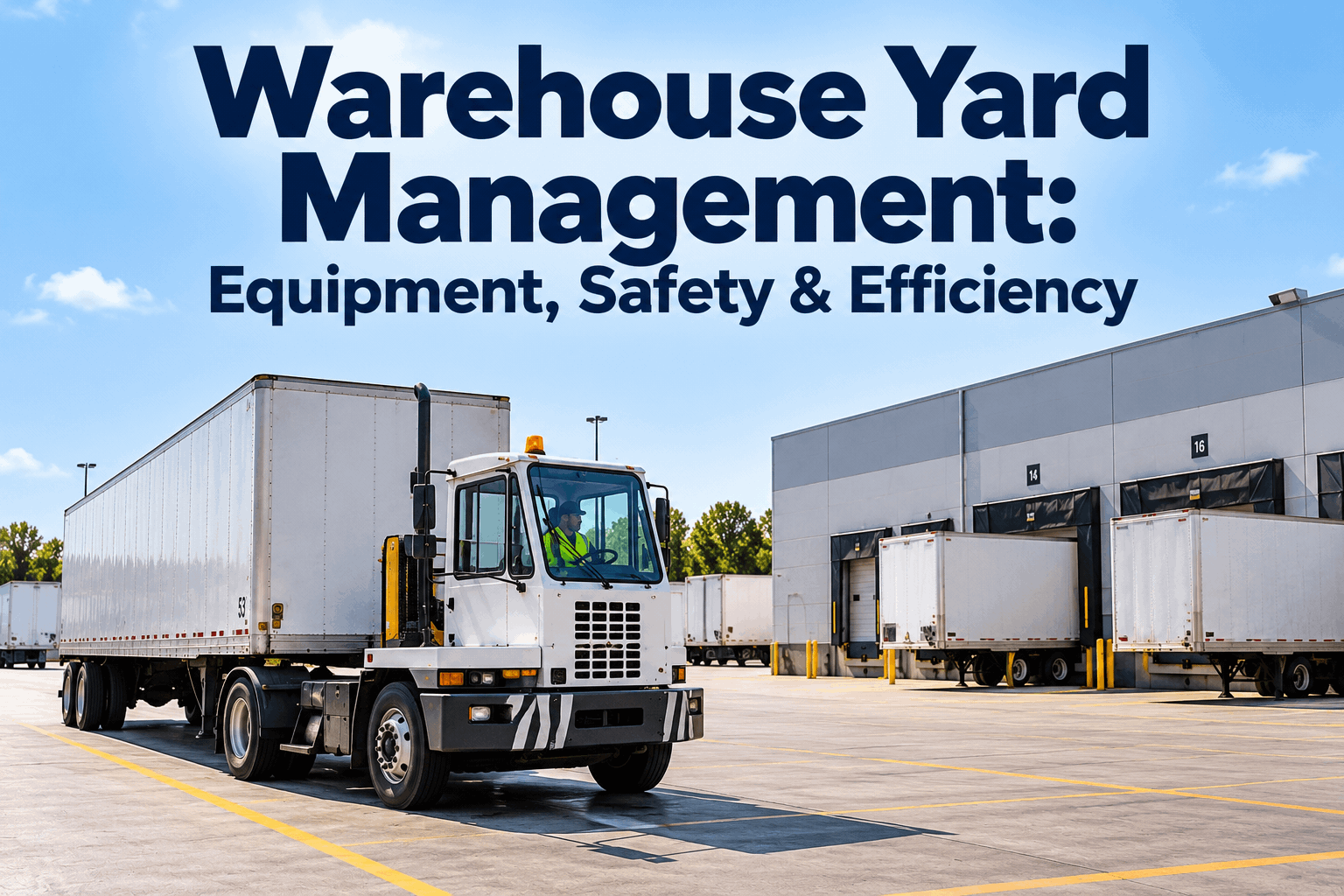
Warehouse yard management is the layer most distribution operations only notice when it breaks — a spotter stalls at 6 a.m., trailers miss their dock slots, and the door schedule unravels by lunch. It looks simple from the office window, but the yard is a live system of gate check-ins, trailer moves, equipment health and traffic safety running at once. Here's where yard efficiency leaks and how HVI holds the equipment and safety half. Book a yard operations demo to see it on your fleet.
Your yard runs on one thing moving: the next trailer
Gate, dock and yard all wait on reliable equipment and a safe surface. When a yard truck goes down or a lane turns hazardous, every door downstream feels it. Manage the equipment and safety side before it becomes a dock problem.
- Spotters ready4 / 5
- Dock doors served32
- PW-214 defectOpen
- Surface checkDone
Yard management isn't one job — it's five that overlap on the same asphalt. Most teams manage three of them in a spreadsheet and the equipment side on a clipboard that lives in the shop. Below is where the yard actually leaks time and money, what a single failed spotter costs downstream, and the exact slice of this problem a maintenance and inspection platform solves — stated plainly, with the line drawn around what it does not.
1 downwhy a single yard truck stalls an entire dock line
-
06:02
Spotter won't liftHydraulic fifth wheel fails on PW-214. One of five units is out.
-
06:30
Trailers back up at stagingInbound units can't be spotted to doors fast enough. A queue forms.
-
08:00
Dock doors sit idle, then floodedDoors wait, then get hit all at once — the bottleneck everyone feels.
-
11:00
Detention clock startsCarriers wait past free time. The invoice meter is now running.
The spotter is the heart of the yard: it may run 300 to 500 coupling cycles in a single shift, a duty cycle no highway tractor ever sees. Keep it available and the docks breathe; lose it and the cost lands three steps downstream where nobody connects it back to a missed inspection. Book a demo of yard uptime tracking to see availability before the dock manager feels the queue.
Gate to parkthe five zones where warehouse yard operations live or die
Trailers flow through the yard in a loop. Each zone has its own failure mode — and the equipment and safety layer touches all five.
Guard booth, trailer check-in/out, driver paperwork. Slow gates add wait that counts toward detention before a trailer ever reaches a door.
Yard trucks move trailers to staging and to doors. This is the equipment-dependent zone — it stops the second a spotter is down.
Doors load and unload. The scarce resource — idle doors waiting on a trailer are the bottleneck that drives dwell cost.
Empties and outbounds swapped back out. Communication gaps here mean misplaced trailers and crews searching the yard.
Trailers parked on the yard surface. Potholes, poor drainage, weak lighting and faded markings turn this zone into a safety and tire-wear risk.
Zones 1, 3 and 4 are the realm of a dedicated yard management system — real-time trailer location and dock appointments. Zones 2 and 5 — the equipment and the surface — are where inspection, maintenance and safety records do the heavy lifting. See how HVI fits warehouse and DC yards, or book a demo of yard equipment tracking to walk your own zones.
Does / doesn'twhere equipment software ends and a dedicated YMS begins
Honest scoping saves you a bad buying decision. HVI is a maintenance, inspection and safety platform — not a trailer-tracking yard management system. Here's the clean line.
- Yard truck & terminal tractor inspection templates — not a generic road DVIR
- Preventive maintenance scheduled by engine hours or calendar, not road miles
- Defect reporting from the yard, instantly turned into a work order
- Equipment availability monitoring — how many units are ready vs. the door schedule
- Yard safety inspection records — surface, lighting, signage, traffic-route checks, logged and signed
- Real-time trailer location tracking across the whole yard
- Dock appointment scheduling and carrier booking windows
- Gate automation and automated check-in/check-out throughput
- Live trailer status — loaded, empty, damaged — by yard position
- Dwell and detention timers tied to geofenced arrival/departure
The two sit side by side. A YMS tells you where a trailer is; HVI makes sure the truck moving it, and the ground it rolls on, don't fail mid-shift. Run them together and the yard flows. Book a demo to see the maintenance layer that keeps your spotters available for whatever scheduling tool you use.
Daily walkthe yard equipment & surface inspection checklist that holds the line
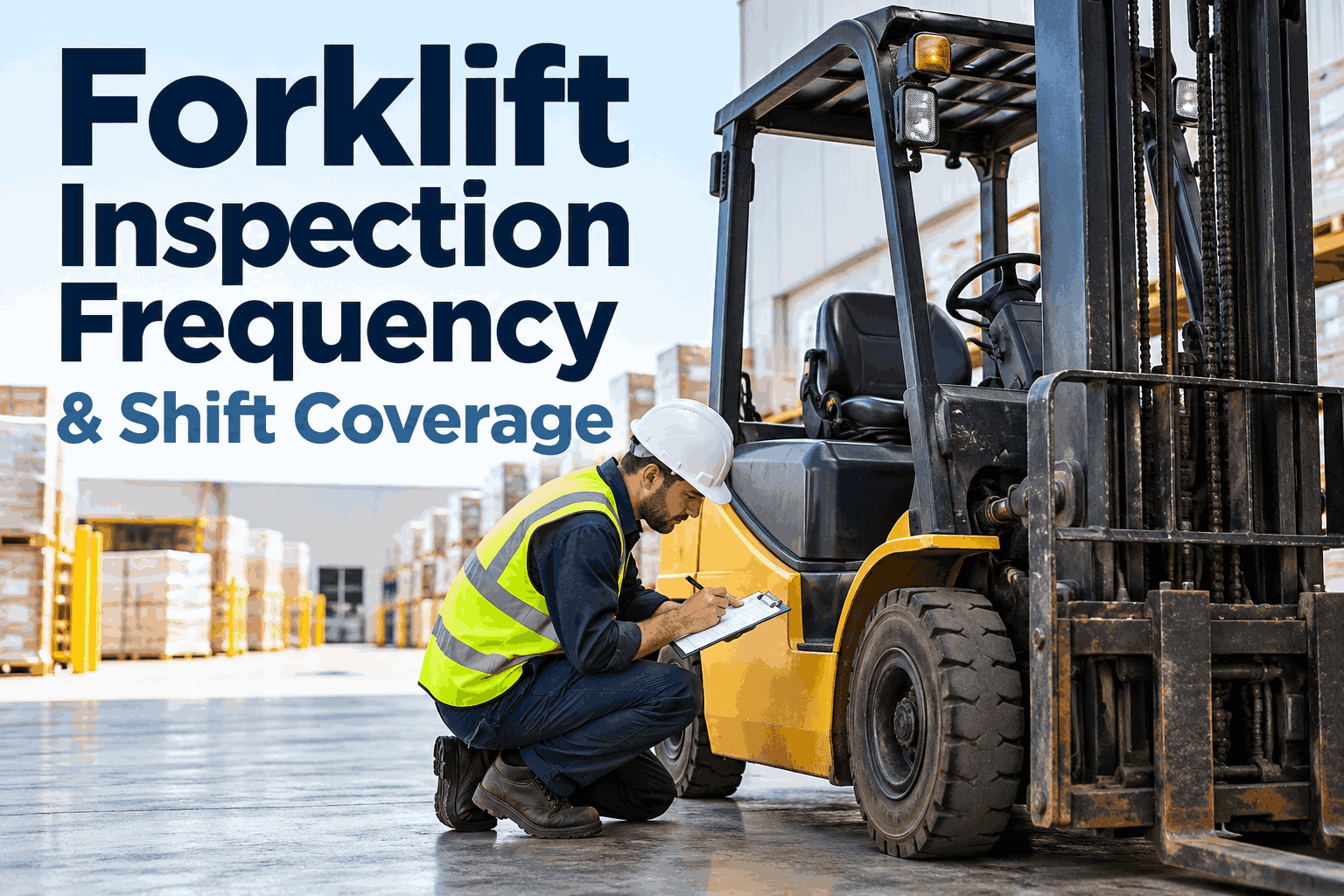
A spotter rarely enters the main shop, so the daily operator inspection is often the only time anyone looks closely. Group it by system — each line is something an operator can actually see or test in two minutes before the shift.
Fifth wheel & coupling
- Hydraulic lift raises and holds — no drift or slow sag
- Locking jaws engage fully on a test coupling
- No fluid pooling under the lift cylinder
- Gladhand seals intact, trailer brakes release cleanly
Brakes & tires
- Service and park brakes hold on a loaded test move
- No air leaks audible at rest
- Tire tread and sidewalls — no cuts from yard debris
- Inflation checked; yard potholes punish under-inflation
Visibility & cameras
- Reversing camera live — a dead one is a blind reversing event
- Mirrors clean, aligned, uncracked
- Windshield and rear window clear; wipers work
- Beacon and work lights function for low light
Yard surface & routes
- No new potholes or heaving on main spotting lanes
- Drainage clear — standing water hides edge damage
- Lighting covers reversing and pedestrian zones
- Lane markings, stop signs and pedestrian paths visible
Logged on a phone, every one of these lines becomes a dated, signed record instead of a memory. A flagged defect routes straight to the shop, and a cleared surface check protects you if an incident is ever reviewed. This is the warehouse yard inspection routine HVI is built around — see the digital inspection templates. For the deeper terminal-tractor PM angle — fifth-wheel, gladhand and brake wear scheduled by engine hours — there's a dedicated yard truck maintenance guide.
Hours, not milespreventive maintenance scheduled the way a yard truck actually wears
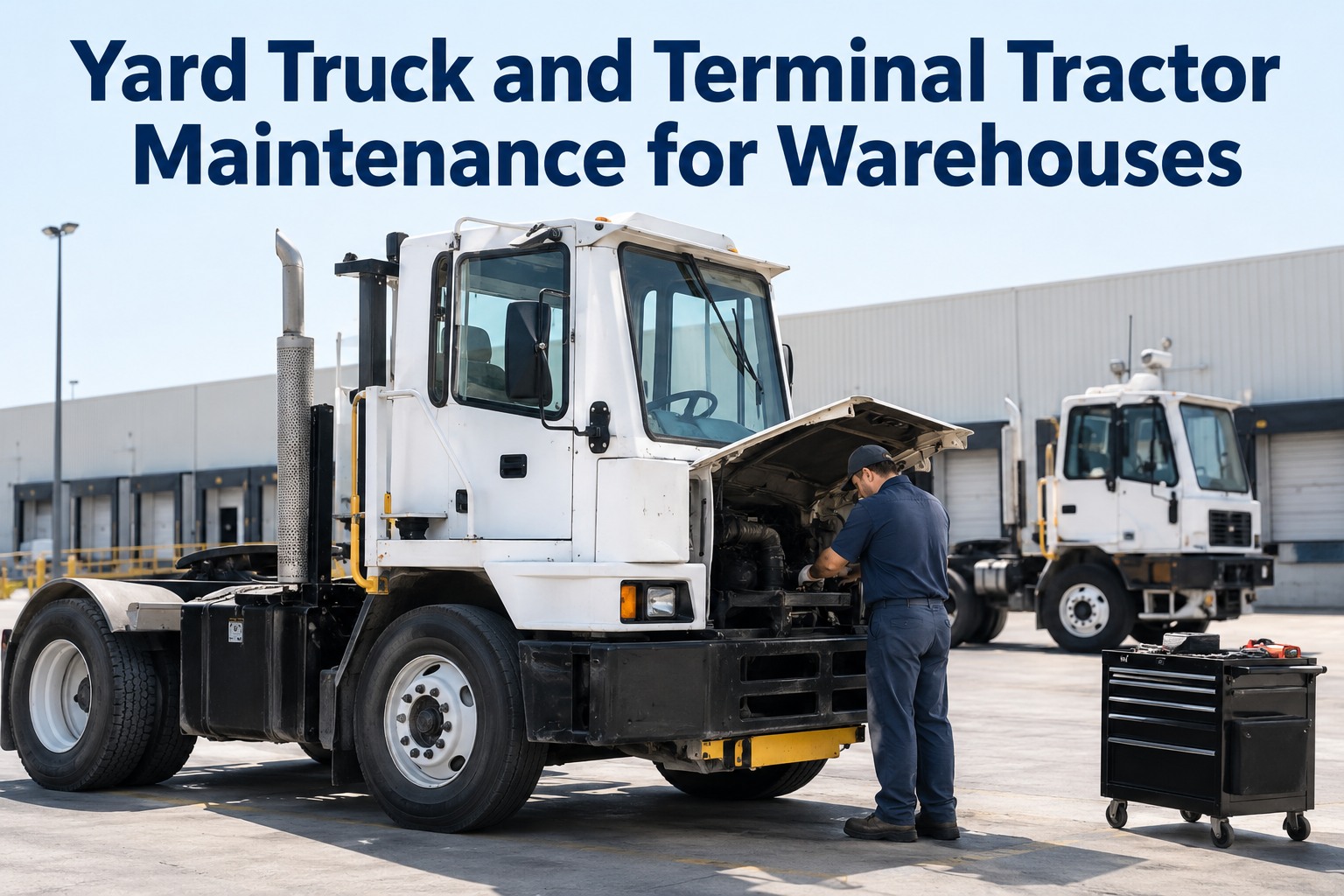
A yard truck may shuttle 10–14 hours a day while racking up almost no road mileage. Schedule its PM on a road-fleet mileage interval and you'll service it far too late. Trigger on engine hours and coupling cycles instead.
Pre-shift inspection, fluid and tire visual, camera and brake function test.
Engine oil and filter on hours, hydraulic fluid condition check, brake adjustment.
Fifth-wheel lift service, transmission check, full brake and air-system inspection.
Availability trend vs. door schedule, repeat-defect review, surface and lighting audit.
HVI triggers these by meter reading, so the right unit surfaces for service at the right hour mark instead of the whole fleet landing in the shop at once. Explore preventive maintenance scheduling built around hours and cycles, not odometer miles.
In practicewhat a caught defect looks like on the yard floor
- Brakes & air — pass
- Reversing camera — pass
- Fifth-wheel lift — slow to raise, won't hold
- Tires & surface lane — pass
The lift fault is caught at 06:04 — before PW-214 is sent to feed a dock, not after it strands a trailer at a door. The operator taps the defect, a work order opens automatically, the unit is held, and the dock planner sees one fewer spotter available in time to re-plan. That's the difference between a planned repair and an 11 a.m. detention invoice. See defect-to-work-order flow in the maintenance platform.
Scoreboardthe yard operations KPIs worth putting on a dashboard
If you can't see these weekly, you're managing the yard by the loudest complaint. Tie the equipment metrics to the dock schedule and the yard stops surprising you.
A 15-minute rise in average dwell time has been linked in DOT-cited research to roughly a 6.2% higher crash rate — yard delay isn't just a cost line, it's a safety signal. Trend these numbers and the yard tells you where it's about to fail. See the analytics and reporting dashboards, or sign up free and build your first yard scoreboard this week.
From the yard office
We always blamed the dock schedule for our morning backups. Then we actually tracked it and found two of our five spotters were going down most weeks on the same fifth-wheel and brake faults — faults a two-minute pre-shift check would've caught. Moving the inspection and PM onto hours instead of a road-truck schedule, and watching availability against the door plan, did more for our turnaround than any dock tweak. The yard stopped surprising us at 6 a.m.
Warehouse yard management FAQs
What is warehouse yard management?
It's the coordination of everything moving in a facility's trailer yard — gate check-in, trailer staging and spotting, dock coordination, equipment health and traffic safety. Done well, trailers reach doors on time and nothing stalls. The equipment and safety side — keeping yard trucks reliable and the surface safe — is the half a maintenance platform like HVI handles.
Is HVI a yard management system (YMS)?
No — and that's an honest line worth drawing. HVI is an inspection, maintenance and safety platform. It covers yard truck inspections, preventive maintenance, defect tracking, equipment availability and safety records. It does not do real-time trailer location or dock appointment scheduling — those are dedicated YMS functions. The two run side by side.
Why can't I service a yard truck like a road tractor?
A yard truck barely accumulates miles but runs 10–14 hours and hundreds of coupling cycles a day. A mileage-based schedule services it far too late. Trigger PM on engine hours and coupling cycles instead, so the fifth wheel, brakes and hydraulics get attention before they fail mid-shift.
How does one yard truck going down cost so much?
The cost shows up downstream. One stalled spotter backs up trailer staging, idles dock doors, and pushes carriers past their free time — where detention runs $50–$100 per truck per hour. The repair itself is often the smallest number in the event; the dock disruption and detention are the real bill.
What belongs on a yard safety inspection?
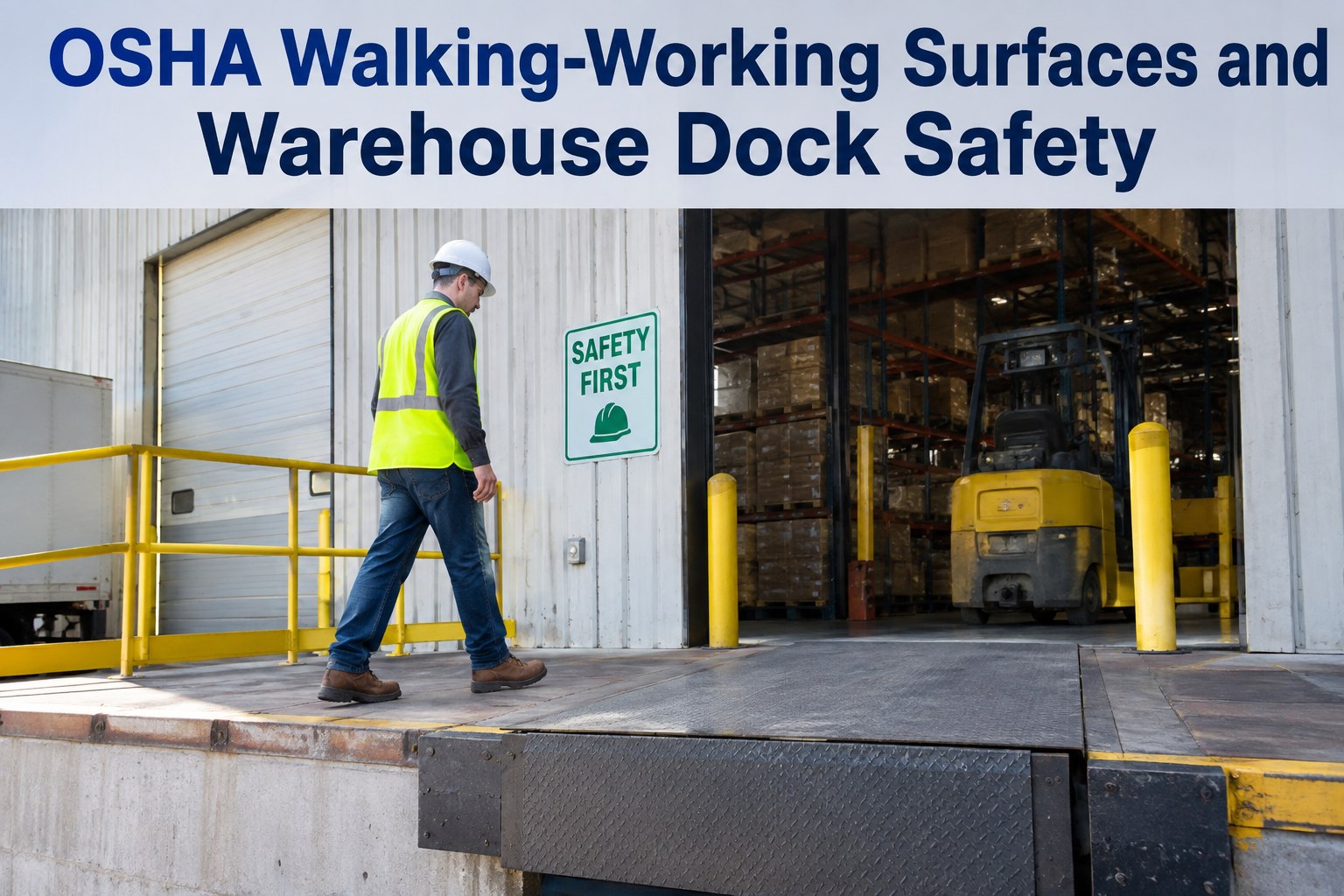
Both equipment and environment: reversing cameras and mirrors, brakes, beacons and work lights on the trucks; and potholes, drainage, lighting, signage and clear pedestrian routes on the yard itself. Logging these as dated, signed records protects you if an incident is ever reviewed — and HVI keeps them in one place.
Stop finding yard truck faults at the dock
HVI gives your yard the equipment and safety layer it's missing: inspection templates built for terminal tractors, PM on engine hours, instant defect-to-work-order, availability against your door schedule, and dated yard safety records. Live in under two weeks — pair it with whatever YMS runs your trailers.
No credit card · Yard truck templates ready on day one