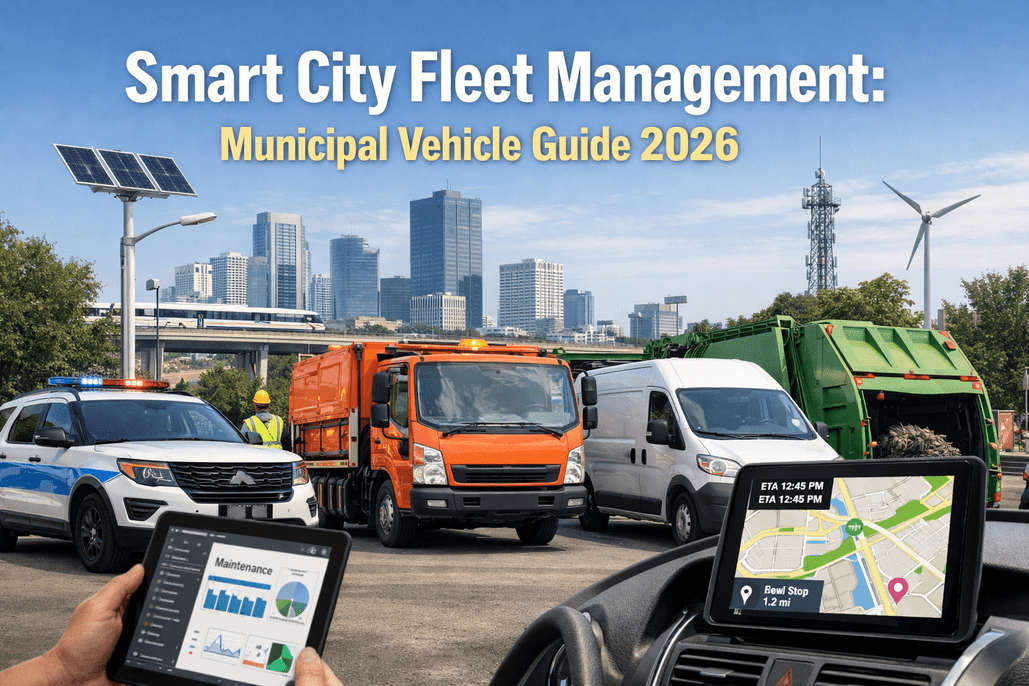
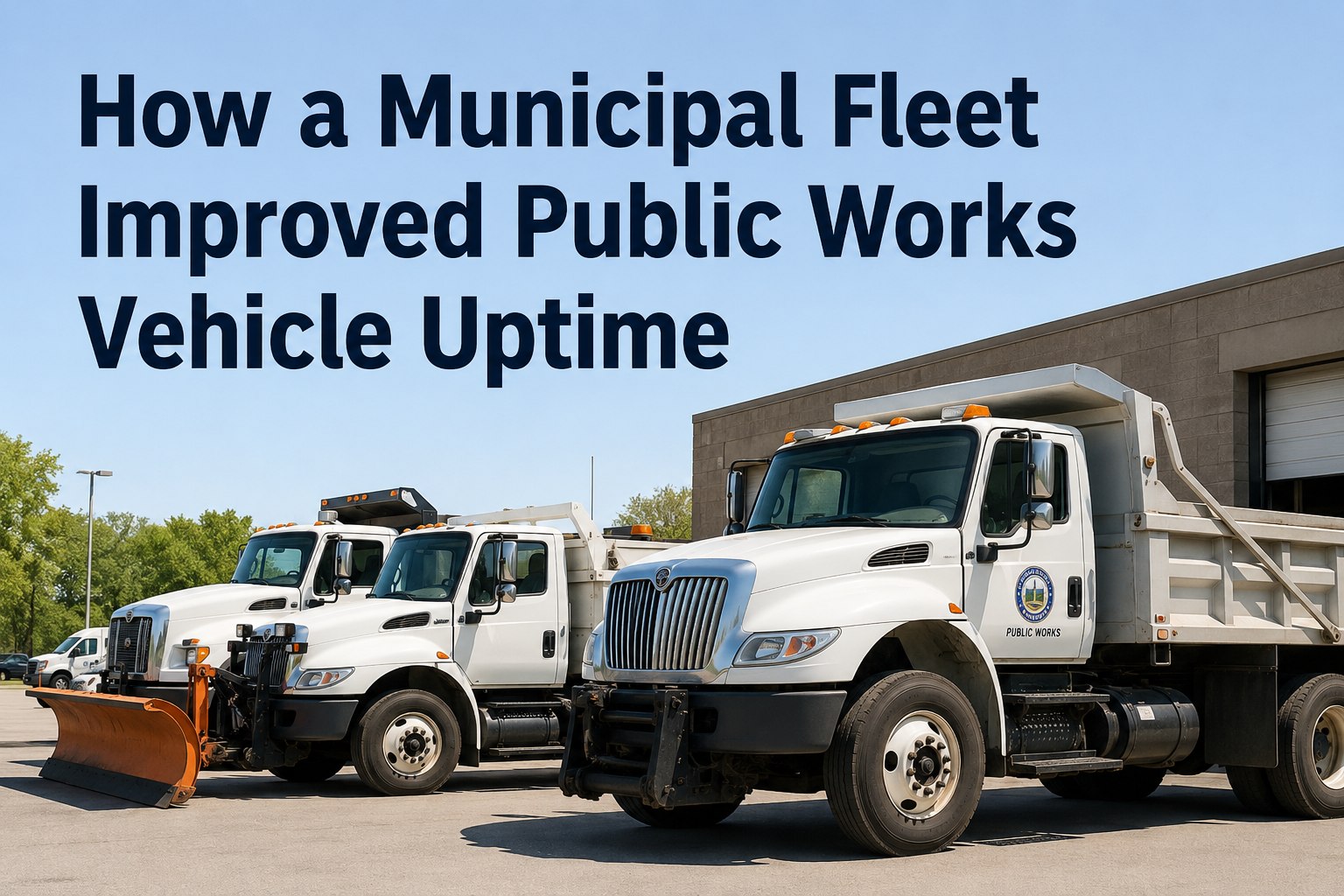
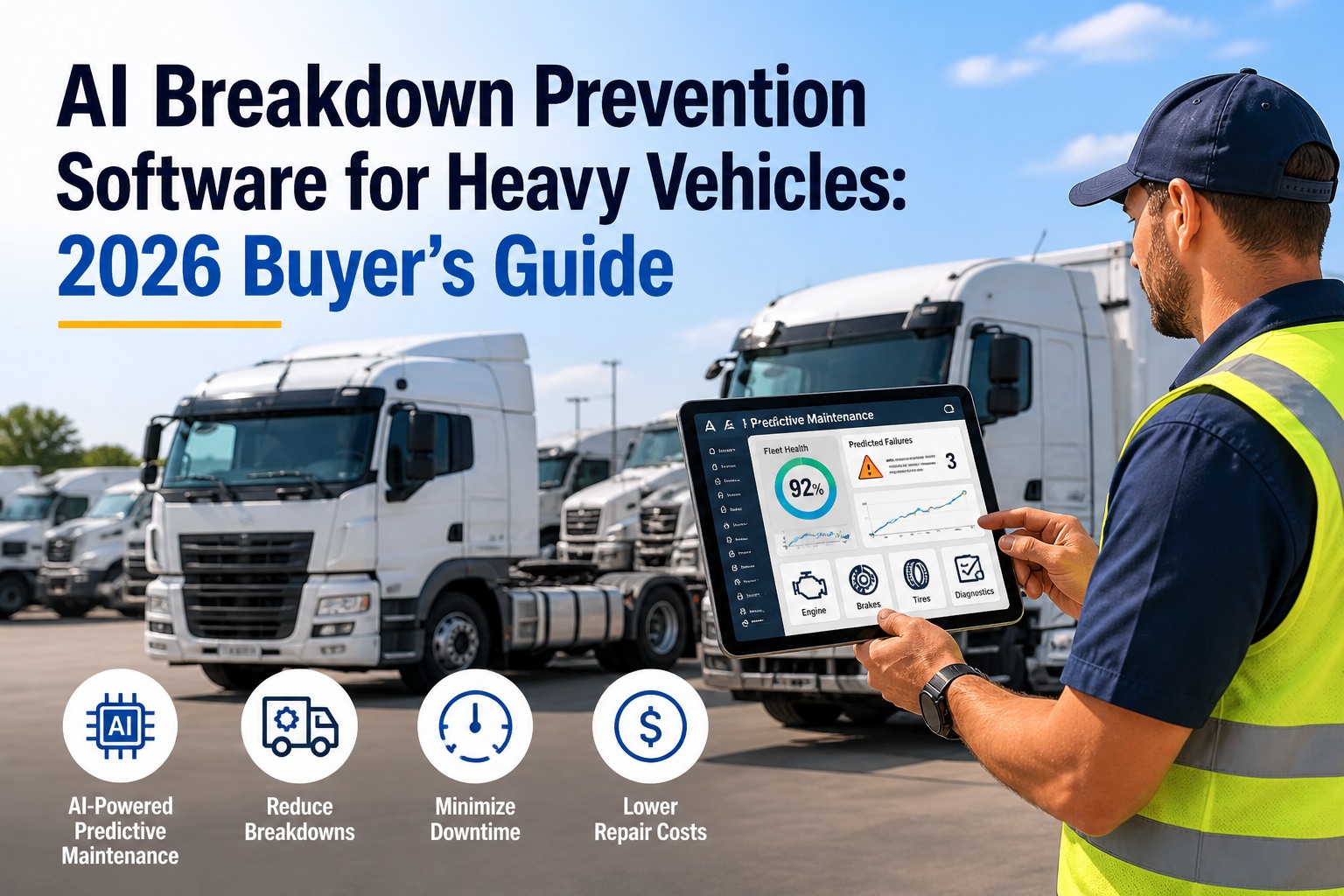
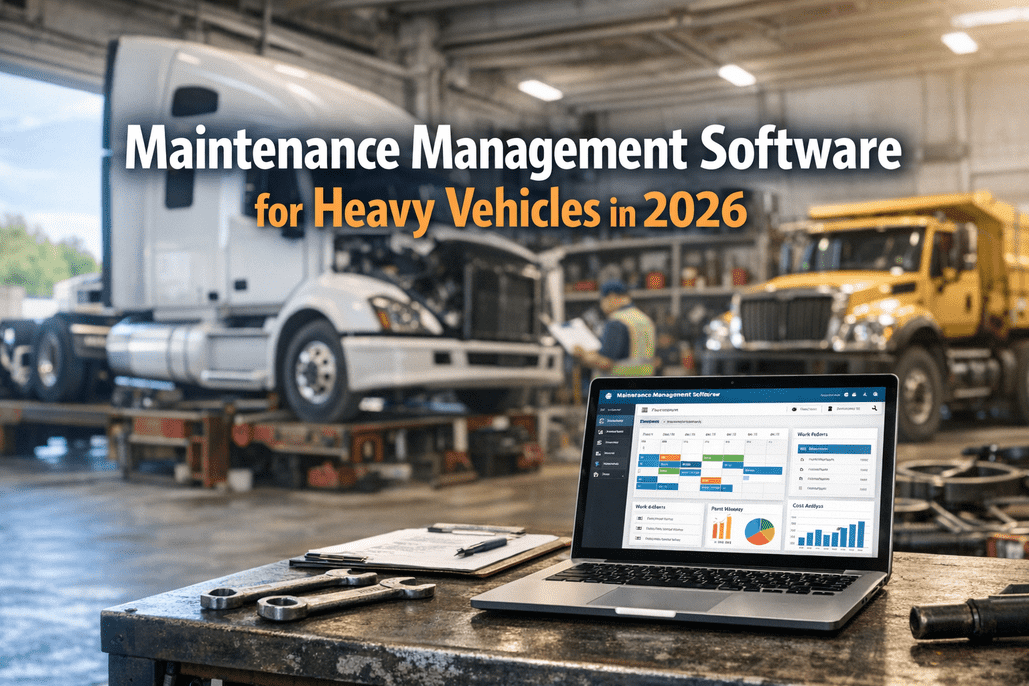
Municipal fleets are the operational backbone of every city service — from snow plows clearing roads at 4 AM to water utility trucks responding to main breaks, from police cruisers patrolling neighborhoods to parks department mowers maintaining public spaces. These vehicles don't generate revenue; they deliver public services that citizens depend on daily. That changes the management equation fundamentally: municipal fleet managers must balance service reliability, taxpayer accountability, regulatory compliance, and increasingly, sustainability mandates — all with constrained budgets and aging vehicle inventories. The US fleet management market reached $9.5 billion in 2024 and is projected to exceed $35 billion by 2030, driven in part by public sector agencies adopting telematics, maintenance automation, and electrification. Smart city fleet management applies connected technologies — GPS tracking, IoT-enabled diagnostics, automated maintenance scheduling, and data analytics — to transform municipal vehicle operations from reactive and paper-based to proactive and data-driven. The result: higher vehicle availability, lower total cost of ownership, better service delivery, and the compliance documentation that auditors and citizens expect. This guide covers the core technologies, department-specific applications, maintenance automation, sustainability integration, and the inspection and compliance requirements that municipal fleets must meet.
Municipal Fleet Landscape: What Makes Government Different
Municipal fleets operate under constraints that commercial fleets don't face. Understanding these differences shapes every technology and management decision.
Budget Cycle
Annual appropriations with multi-year capital planning. Vehicle purchases compete with every other city priority. Replacement deferrals are common when budgets tighten — creating aging fleets that cost more to maintain than replace.
Vehicle Diversity
A single municipal fleet may include sedans, SUVs, pickup trucks, dump trucks, garbage trucks, fire apparatus, ambulances, buses, mowers, loaders, sweepers, and specialized equipment. Each type has different maintenance requirements, inspection schedules, and lifecycle profiles.
Accountability
Every dollar spent is taxpayer money subject to audit, FOIA requests, and public scrutiny. Fleet decisions must be defensible with data, not justified by opinion. Digital documentation creates the transparency that public agencies require.
Compliance Load
CDL vehicles require FMCSA compliance: DVIRs (49 CFR 396.11), annual inspections (49 CFR 396.17), maintenance records (49 CFR 396.3), and driver qualification files. Non-CDL vehicles still need documented inspection and maintenance programs. Emergency vehicles have additional state certification requirements.
Service Criticality
When a snow plow breaks down during a storm, roads don't get cleared. When a water truck fails during a main break, residents lose water. Municipal fleet availability directly equals public service delivery — vehicle downtime is service failure.
Core Technologies: Building the Connected Municipal Fleet
Smart city fleet management integrates four technology layers that work together. Each layer adds capability, but the inspection and maintenance layer is the foundation — without maintained, compliant vehicles, no amount of tracking or routing optimization matters.
Layer 1
Inspection & Maintenance Management
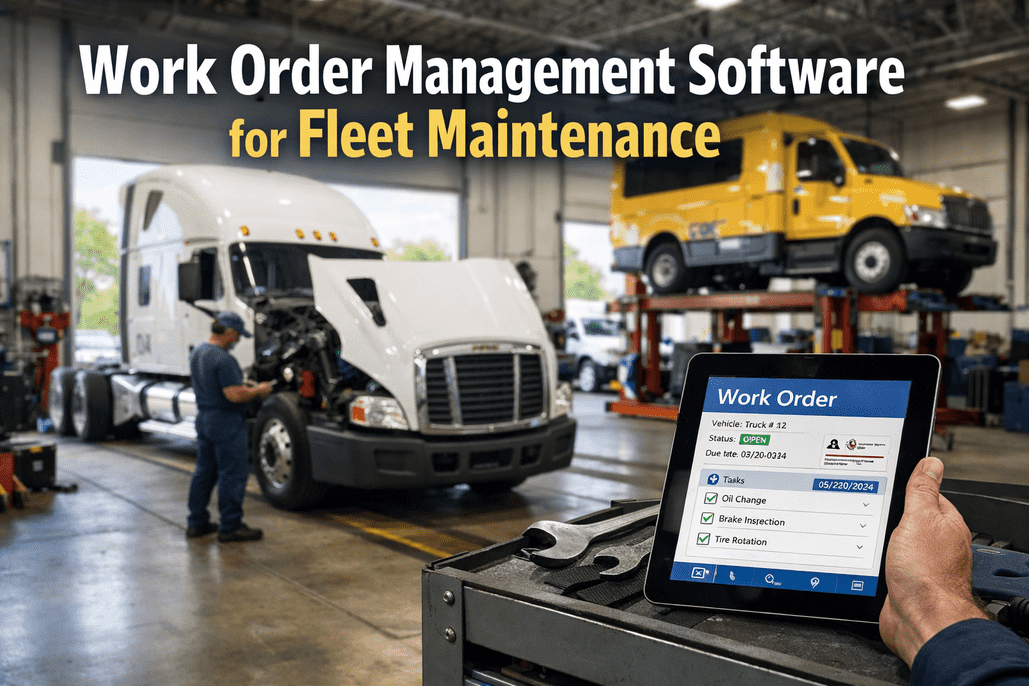
The foundation. Digital inspection forms (DVIRs, PM checklists, annual inspections), automated maintenance scheduling by mileage/hours/calendar, defect-to-work-order workflows, parts inventory, and compliance documentation. Without this layer working, the fleet doesn't run reliably — everything else is optimization of an unreliable system.
HVI digital inspections, CMMS/EAM platforms, work order management
Layer 2
GPS Tracking & Telematics
Real-time vehicle location, engine diagnostics via OBD/CAN bus data, geofencing for service zones, idle time monitoring, and utilization tracking. Telematics data feeds maintenance decisions (DTC codes trigger work orders), accountability reporting, and fleet rightsizing (which vehicles are underutilized).
GPS hardware, telematics providers, fleet tracking dashboards
Layer 3
Route Optimization & Dispatch
Automated route planning for service delivery: garbage collection routes, street sweeping patterns, snow plow zones, utility response dispatch. Optimized routes reduce miles driven, fuel consumed, and response times.
Route optimization software, CAD dispatch, GIS integration
Layer 4
Analytics & Sustainability Reporting
Fleet-wide dashboards tracking KPIs: vehicle availability, maintenance cost per mile, fuel consumption, idle percentage, emissions, and lifecycle replacement timing. Data from all three lower layers feeds analytics for capital planning and ESG reporting.
BI dashboards, emissions tracking, capital planning tools
HVI provides the Layer 1 foundation: digital DVIRs, PM scheduling, annual DOT inspection tracking, defect-to-work-order automation, and compliance documentation for every vehicle type in your municipal fleet.
Book a demo to see municipal fleet management. Or
start free.
Department-Specific Applications
Each municipal department operates different vehicle types with different service demands, inspection requirements, and maintenance profiles. A smart fleet platform must handle all of them with appropriate templates and workflows.
PW
Public Works
Dump trucks, plow trucks, loaders, sweepers, pavement equipment, utility trucks
Seasonal readiness (plows in fall, mowers in spring)
CDL vehicle compliance: DVIRs, annual DOT inspections, driver qualification files
Heavy equipment PM by engine hours, not just mileage
Harsh-duty maintenance intervals (salt exposure, off-road operation)
WS
Water & Sewer
Vacuum trucks, camera inspection vehicles, utility service trucks, backhoes, pump trailers
Emergency response readiness — main break response at any hour
Specialized equipment PM: vacuum systems, camera units, pumps
CDL compliance for heavy vacuum and combination vehicles
Confined space entry equipment inspection and certification
PS
Public Safety
Police cruisers, fire apparatus, ambulances, command vehicles, specialty rescue
24/7 availability — vehicle downtime is response failure
Apparatus-specific PM: pump testing, ladder inspection, SCBA, medical equipment
State certification requirements for fire apparatus and ambulances
High-idle, high-use duty cycles accelerating maintenance intervals
PR
Parks & Recreation
Mowers, tractors, pickup trucks, trailers, utility vehicles, specialized turf equipment
Seasonal fleet activation/deactivation (mowing season, snow season)
Engine-hour-based PM for mowing and turf equipment
Trailer inspection compliance (often overlooked in municipal fleets)
Small equipment tracking and maintenance documentation
TR
Transit & Transportation
Transit buses, paratransit vehicles, school buses, shuttle buses, maintenance vehicles
FMCSA compliance: DVIRs required for every bus every day
90-day emergency exit inspections (49 CFR 396.3 — buses)
Passenger-carrying DVIR: required even when no defects found
EV bus integration: battery health, charging infrastructure, thermal management
AD
Administration
Sedans, SUVs, light-duty pickup trucks, pool vehicles, inspector vehicles
Utilization tracking — identify underused vehicles for rightsizing
Basic PM scheduling by mileage and calendar
Pool vehicle reservation and key management
EV transition candidates — light-duty with predictable daily mileage
Maintenance Automation: From Reactive to Proactive
The biggest operational improvement in municipal fleet management is the shift from reactive maintenance (fix when broken) to proactive maintenance (prevent before failure). Reactive maintenance costs 3-9 times more than planned maintenance and produces unpredictable vehicle availability.
Reactive
Fix when broken. No scheduled PM. Paper records or none. No inspection compliance program. Highest cost, lowest availability, maximum risk.
Availability: <80% | Planned: <30%
Scheduled
Basic PM by mileage or calendar. Paper-based work orders. Annual inspections tracked manually. Some compliance documentation but gaps exist.
Availability: 80-85% | Planned: 40-55%
Automated
Digital PM scheduling with automated alerts. eDVIRs with defect-to-work-order workflow. Compliance tracking with lookahead alerts. Fleet-wide dashboards.
Availability: 90-95% | Planned: 70-80%
Predictive
Telematics-fed condition monitoring. DTC codes trigger maintenance before driver reports. Oil analysis and component trending predict failures. AI-assisted optimization.
Availability: 95%+ | Planned: 80%+
Digital DVIRs for CDL Vehicles
Every CDL vehicle (dump trucks, transit buses, vacuum trucks) requires daily DVIRs under 49 CFR 396.11. Electronic DVIRs with guided checklists, photo capture, and automated 3-signature workflow replace paper forms. Defects route to maintenance instantly instead of sitting in a dispatch tray.
Multi-Trigger PM Scheduling
Different vehicles need different PM triggers: mileage for road vehicles, engine hours for heavy equipment and mowers, calendar for seasonal vehicles. Automated scheduling prevents the "we forgot about that trailer" compliance gap that auditors find.
Annual Inspection Compliance
Every CMV needs annual inspection per 49 CFR 396.17 with reports retained 14 months. Automated 90-day lookahead calendars with inspector qualification verification and digital report storage ensure zero expired inspections fleet-wide.
Fleet Rightsizing via Utilization Data
Telematics utilization reports reveal underused vehicles. Municipal fleets routinely find 10-15% of vehicles can be eliminated or reassigned without affecting service. Every eliminated vehicle saves maintenance, fuel, insurance, and parking costs permanently.
HVI automates DVIRs, PM scheduling, annual inspection tracking, and compliance documentation for every vehicle type in your municipal fleet.
Book a demo. Or
start free.
Sustainability and Electrification
Municipal fleets face growing pressure to reduce emissions, electrify where feasible, and report sustainability metrics. Smart fleet platforms provide the data foundation — tracking fuel, idle time, emissions, and EV performance alongside traditional maintenance.
Electrification Readiness
First-wave candidates: Light-duty admin vehicles with predictable routes under 100 miles and overnight depot parking.
Second-wave candidates: Transit buses on fixed routes — strong EV economics with depot charging.
Charging infrastructure: Coordinate with utility 12-18 months before needed. Level 2 for overnight, DCFC for transit.
Mixed-fleet management: Platform must handle ICE PM, EV battery health, and shared items (brakes, tires) simultaneously.
Sustainability KPIs
Fuel per vehicle/mile: Track by department and vehicle type. Identify high-consumption outliers.
Idle time %: Municipal vehicles often idle excessively. Each 1% reduction saves measurable fuel and emissions.
EV adoption rate: % of fleet converted to electric, tracked against electrification milestones.
Maintenance-related emissions: Vehicles with poor maintenance produce higher emissions. PM compliance supports emissions goals.
US Fleet Management Market: $9.5B (2024), Projected $35B+ by 2030
Growing at ~14% CAGR, driven by telematics adoption, AI maintenance, EV integration, and compliance requirements. Public sector agencies are among the fastest-growing adopters as smart city initiatives move from planning to operational deployment.
AI Moving from Dashboards to Real-Time Decision Support
In 2026, fleet AI recommends actions — not just reports history. Predictive maintenance flags vehicles before drivers report symptoms. Exception-based alerts highlight specific vehicles needing attention. Natural-language queries ("Why did overtime spike last Tuesday?") are becoming standard.
Book a demo.
Sustainability Metrics Now Tied to Operational Levers
In 2026, sustainability data is connected to daily decisions: idle reduction, route efficiency, maintenance health, and fuel/energy mix. Cities with climate action plans require measurable fleet emissions targets — and operational telematics data provides the proof.
Platform Consolidation Replacing Point Solutions
Municipal fleets are consolidating disconnected tools (GPS, maintenance, fuel, compliance) into unified platforms serving as an operating system for safety, uptime, cost control, and compliance. HVI provides the inspection and maintenance foundation that integrates with telematics and analytics — eliminating data silos.
Smart Fleet Management Starts with Maintained, Compliant Vehicles
GPS tracking, route optimization, and analytics dashboards are valuable — but they optimize a fleet that must first be reliable, safe, and compliant. The foundation is systematic inspection and maintenance: daily DVIRs for CDL vehicles, scheduled PM for every asset type, annual DOT inspections tracked with automated alerts, defect-to-work-order workflows, and compliance documentation that survives audits. Build the maintenance foundation first, then layer telematics, routing, and analytics on top. The municipalities that treat fleet management as a data-driven discipline deliver better services at lower cost with the accountability taxpayers expect.
The Inspection Foundation for Your Smart Fleet
HVI provides digital DVIRs, PM scheduling, annual inspection tracking, and compliance documentation for every vehicle type in your municipal fleet — dump trucks, transit buses, mowers, fire apparatus, and everything in between.
Frequently Asked Questions
Q: What makes municipal fleet management different from commercial?
Municipal fleets operate with annual budget cycles, extreme vehicle diversity (sedans to fire trucks to mowers), taxpayer accountability requiring defensible data, multi-department coordination, and service criticality where vehicle downtime equals service failure. Compliance loads include FMCSA requirements for CDL vehicles, state certifications for emergency apparatus, and public records transparency.
Q: Which municipal vehicles require DVIRs and DOT compliance?
All CMVs (GVWR over 10,001 lbs or carrying hazmat) require DVIRs under 49 CFR 396.11 and annual inspections under 49 CFR 396.17. This typically includes dump trucks, transit buses, vacuum trucks, and any CDL-required vehicle. Passenger-carrying vehicles must file DVIRs even when no defects are found.
Start free with HVI.
Q: How does smart fleet management reduce municipal costs?
Four mechanisms: proactive maintenance reduces repair costs 3-9x vs. reactive, fleet rightsizing eliminates 10-15% of underused vehicles, route optimization reduces fuel and miles, and compliance automation prevents fines and litigation. Combined effect: 15-25% reduction in total fleet operating costs for most municipalities.
Q: How should municipalities approach fleet electrification?
Start with light-duty admin vehicles (predictable routes under 100 miles, overnight parking). Transit buses on fixed routes are strong second-wave candidates. Coordinate utility for charging infrastructure 12-18 months ahead. During transition, your platform must manage both ICE and EV — traditional PM alongside battery health and thermal management.
Q: What KPIs should municipal fleet managers track?
Core: vehicle availability (95%+), planned vs. reactive ratio (80:20 target), PM completion rate (95%+), cost per mile by type, DVIR completion (100% CDL), annual inspection compliance (zero expired). Sustainability: fuel reduction trend, idle time %, EV adoption rate, emissions by department.
Q: Can one platform manage all municipal vehicle types?
Yes — with customizable templates per vehicle type. A dump truck DVIR differs from a fire apparatus inspection or transit bus check. HVI provides vehicle-type-specific templates, multi-trigger PM (mileage, hours, calendar), annual DOT tracking, and compliance documentation across your entire fleet.