Spec a truck on horsepower and headline MPG alone and you're reading the cover of a book, not the story. The Detroit vs Cummins vs PACCAR engines decision plays out over 600,000-plus miles, and the engine with the best brochure number rarely wins the total-cost race. Maintenance intervals, parts availability, downtime, overhaul exposure, weight, and resale all move the number — differently depending on how your fleet runs. This guide compares the three the way a spec buyer should: by lifetime cost, not sticker power. Book a demo to compare real engine costs across your own fleet.
Detroit vs Cummins vs PACCAR Engines: Fleet TCO Guide
DD15, X15, and MX-13 compared on the costs that actually decide your bottom line — with a framework instead of a fake universal winner.
Specs and figures reflect 2026 and vary by configuration and rating. Actual results depend on your trucks and operation — confirm current specs, warranty, and intervals with each manufacturer.
There's no universally "best" heavy-duty engine, and any comparison that crowns one is selling something. Detroit's DD15, Cummins' X15, and PACCAR's MX-13 are all proven, capable powerplants — they simply optimize for different priorities. The right question isn't "which engine is best," it's "which produces the lowest total cost of ownership for the way my fleet operates." That answer shifts with your duty cycle, gearing, payload, terrain, driver behavior, fuel prices, and maintenance practices. What follows is a framework, grounded in where each engine genuinely tends to lead.
The three engines at a glance
Each engine was built around a different center of gravity. The meters below show the general shape of each — read them as relative profiles, not precise ratings, since actual figures vary by tune and configuration.
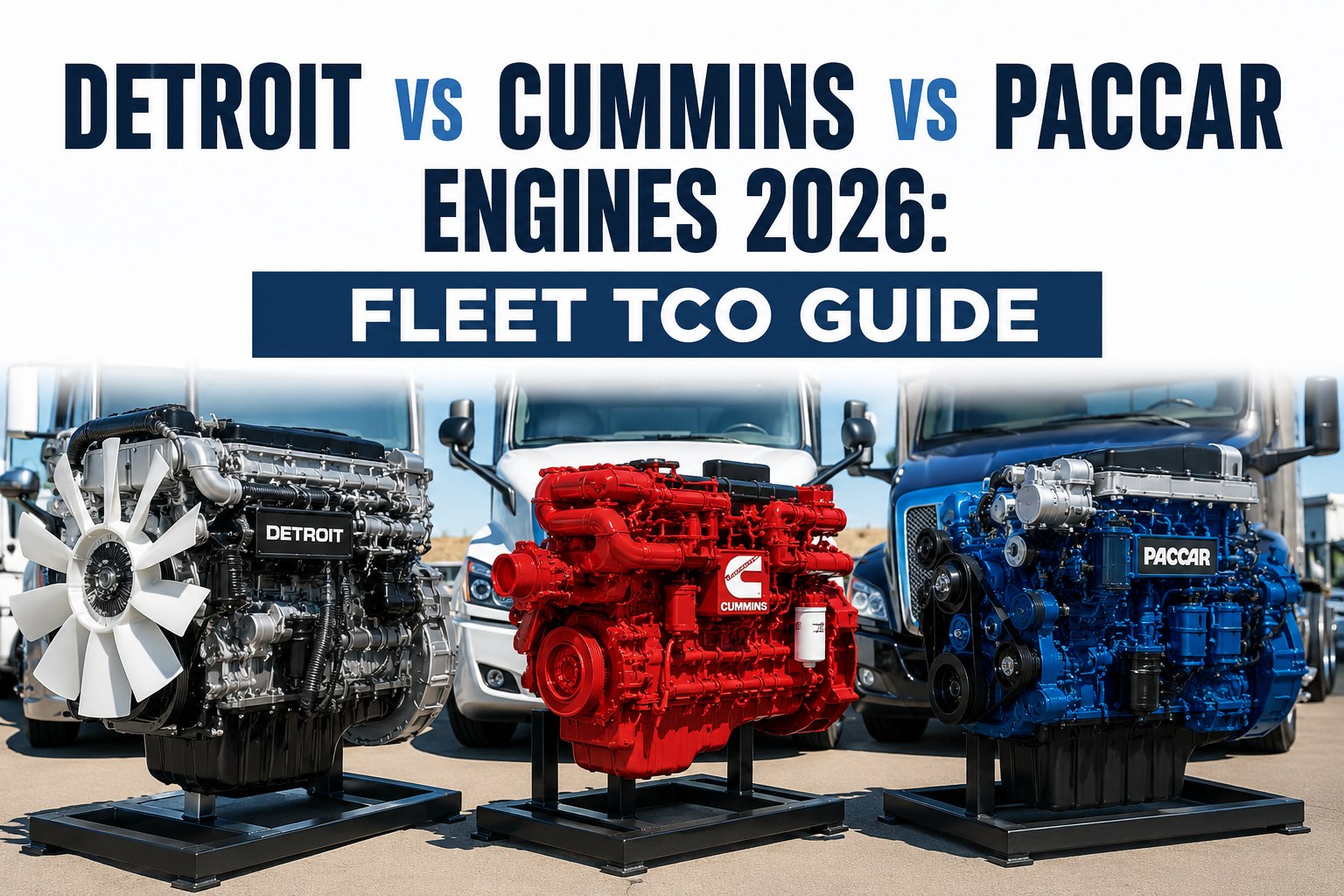
Detroit's flagship line-haul engine in Freightliner and Western Star. Known for a strong fuel-economy reputation and durability, especially with an integrated Detroit powertrain.
The brand-independent powerhouse, available across many truck makes. Noted for top-end power and torque, proven longevity, and the widest parts and service network of the three.
PACCAR's lighter engine in Kenworth and Peterbilt, built with compacted graphite iron for a notably low dry weight. Recognized for efficiency, weight savings, and long oil-change intervals.
None of these is "the best engine" — each is the best engine for a given priority. A weight-sensitive bulk hauler and a heavy-haul construction fleet will rationally reach opposite conclusions from the same three options. Book a demo to see how each engine performs in a fleet like yours
Head-to-head: where each engine tends to lead
How the three compare across the factors that drive total cost of ownership. Treat this as "where each leans," not a scorecard — real results vary widely by configuration and operation.
| Factor | Detroit DD15 | Cummins X15 | PACCAR MX-13 |
|---|---|---|---|
| Displacement | 14.8L | 14.9L | 12.9L |
| Peak power (top tune) | ~505 hp | ~565-605 hp | ~510 hp |
| Peak torque (top tune) | ~1,750 lb-ft | ~2,050 lb-ft | ~1,850 lb-ft |
| Relative weight | Heavier | Heavier | Lightest (CGI) |
| Fuel economy reputation | Strong line-haul | Strong line-haul | Strong, aided by weight |
| Service network | Detroit / Freightliner | Widest, brand-independent | Kenworth / Peterbilt |
| Chassis availability | Freightliner, Western Star | Many makes | Kenworth, Peterbilt |
| Best-fit application | Line-haul, heavier loads | Power-hungry, heavy | Weight-sensitive, payload |
| Overhaul life (well-maintained) | ~500k-600k+ mi | ~500k-600k+ mi | ~500k-600k+ mi |
Two honest caveats: the fuel-economy row is genuinely contested — different sources credit different engines depending on route, gearing, and duty cycle, so no engine "wins MPG" universally. And the overhaul-life row assumes proper maintenance; neglect changes every number. Start free on HVI to replace these general ranges with your fleet's real figures.
Where lifetime cost actually comes from
Purchase price is the number everyone anchors on — and it's one of the smallest slices of lifetime cost. The bar below shows the rough shape of where a heavy-duty engine's total cost of ownership goes over its life. Fuel dominates; the acquisition price you negotiated so hard is a sliver.
Proportions are illustrative and shift with duty cycle, fuel price, and maintenance practices — the point is the ranking, not exact percentages.
The six factors below are what those slices are built from. Which one dominates your number is unique to your operation — and that's exactly why a universal winner is a myth.
Usually the largest lifetime cost by far. Small MPG differences compound over 100,000+ miles a year — but the winner depends on gearing, route, and load.
Oil and filter intervals, aftertreatment service, routine PM. Longer intervals reduce shop visits — but always follow the engine's actual requirements.
The wildcard. Repair frequency, parts and labor, and recurring faults vary by engine, duty cycle, and how well the fleet maintains them.
A cheap repair is expensive if the truck sits for days waiting on parts. Parts availability and dealer reach turn directly into uptime — or lost revenue.
When and how expensively an engine needs major work. All three commonly reach high mileage before overhaul when properly maintained.
A lighter engine can mean more payload per trip; resale demand and warranty terms affect what you recover at trade-in.
A payload-constrained bulk hauler weights the fuel-and-weight lines heavily; a fleet running remote lanes weights service network and downtime. Running this framework against your own historical data beats any generic comparison. Book a demo to build this TCO picture from your real maintenance records
Which engine leans toward which operation
With the framework in mind, here's how the choice tends to break down by operating model. These are leanings, not verdicts — your own numbers should confirm or overrule them.
- Line-haul fleets prioritizing fuel economy and durability
- Operations standardized on Freightliner / Western Star
- Fleets wanting an integrated Detroit powertrain
- Heavier loads needing solid torque at highway speed
- Power-hungry, heavy-haul, or varied-terrain work
- Mixed-brand fleets wanting one engine across chassis
- Operations valuing the widest service and parts network
- Fleets prioritizing chassis and spec flexibility
- Weight-sensitive bulk, fuel, and payload-max operations
- Fleets standardized on Kenworth / Peterbilt
- Efficiency-focused line-haul valuing long oil intervals
- Operations where payload capacity drives revenue
If your operation spans several of these profiles, that's normal — and it's exactly why the decision shouldn't rest on reputation alone. The tiebreaker is your own cost history across the models you already run. Start free and let your fleet's actual data settle the debate.
The 2026 regulatory angle — read it carefully
Emissions regulation is reshaping heavy-duty diesel, and it's easy to over-read what that means for an engine choice. Here's a measured take that separates what's settled from what isn't.
Federal and state emissions standards for heavy-duty engines continue to tighten, with significant upcoming NOx and greenhouse-gas requirements on the horizon, and California operating its own framework. All three manufacturers engineer to meet applicable standards for the model years they build.
Regulatory impact depends on engine model year, vehicle configuration, operating region, and which requirements apply — and some talked-about changes are proposed, not final. No upcoming rule automatically makes one of these engines the right choice for every fleet.
Factor emissions requirements into your spec decision based on your model years, configurations, and where you operate — but don't let a headline about future rules override a TCO analysis grounded in your actual operation. Confirm current and upcoming requirements with authoritative sources and each manufacturer, and distinguish final rules from proposals. Book a demo to keep emissions-system maintenance documented across engine models
From a maintenance director who runs all three
We're a mixed fleet — Cascadias with DD15s, a batch of Kenworths on MX-13s, and some Petes with X15s. For years I'd have told you the Cummins was our most expensive to run because it felt like it was always in the shop. Then we actually pulled the numbers.
Turned out our X15s weren't the problem — a handful of specific units with a bad maintenance history were, spread across all three engines. On a cost-per-mile basis, once we normalized for age and miles, the three were a lot closer than the shop reputation suggested, and the MX-13s' weight savings were quietly earning us payload revenue nobody was crediting. The lesson was blunt: I'd been speccing trucks on gut feel and forum wisdom. Now I spec them on our own repair and downtime data, and the picture is completely different.
The verdict: run the numbers on your own fleet
An honest Detroit vs Cummins vs PACCAR engines comparison ends where it began: there's no universal winner, only a best fit for your operation. The DD15 leans toward line-haul fuel economy and durability within the Detroit ecosystem; the X15 brings top-end power, the widest service network, and cross-brand flexibility; the MX-13 delivers weight savings, efficiency, and long service intervals for payload-focused fleets. All three are proven engines that commonly reach high mileage before overhaul when properly maintained, and all three meet the emissions standards for the model years they're built in. The factor that decides your total cost of ownership isn't the brand on the valve cover — it's how the engine's fuel, maintenance, downtime, weight, and overhaul profile line up against your specific duty cycle, gearing, payload, terrain, drivers, and maintenance discipline. Because those variables differ so much between fleets, a spec sheet can only ever give you an average, not your answer.
That's the real opportunity, and it's where HVI comes in. Instead of choosing your next engine on manufacturer specs or generalized industry claims, you can calculate actual engine-related operating cost from your own history: engine defects, preventive-maintenance events, repair frequency, downtime, recurring faults, maintenance costs, and inspection findings, compared across the engine models already in your fleet. That turns "which engine is best" from a debate into a data question you can answer with confidence. To be clear on the boundaries: the specifications, warranty terms, service intervals, and regulatory details in this guide reflect 2026 and vary by configuration and rating, so confirm current figures with each manufacturer, and treat emissions requirements as dependent on your model years, configurations, and operating region. Spec on evidence, not reputation — and your next engine decision will be the one that actually lowers your cost per mile. Book a demo to analyze engine maintenance and TCO in HVI.
Frequently asked questions
Which is the best engine: Detroit, Cummins, or PACCAR?
There's no universal best engine among the Detroit DD15, Cummins X15, and PACCAR MX-13 — they're all proven, capable heavy-duty engines that optimize for different priorities, and the right choice depends entirely on your operation. The Detroit DD15 is a 14.8-liter engine with a strong reputation for line-haul fuel economy and durability, especially within the Freightliner and Western Star ecosystem and with an integrated Detroit powertrain. The Cummins X15 is a roughly 14.9-liter, brand-independent engine known for top-end power and torque, proven longevity, and the widest parts and service network of the three, available across many truck makes. The PACCAR MX-13 is a lighter 12.9-liter engine built with compacted graphite iron, found in Kenworth and Peterbilt trucks, and recognized for fuel efficiency, notable weight savings that can increase payload, and long oil-change intervals. Which one is best for you comes down to what you're optimizing for: raw power and service reach point toward the X15, line-haul efficiency and durability toward the DD15, and weight savings and payload toward the MX-13. Rather than relying on reputation, the most reliable approach is to compare the actual operating costs of the engines in your own fleet against your specific duty cycle, because a truthful answer is fleet-specific, not universal.
Which engine has the best fuel economy?
Fuel economy among these three engines is genuinely contested, and it's a mistake to declare a universal winner, because the result depends heavily on factors beyond the engine itself. All three — the DD15, X15, and MX-13 — are competitive on fuel economy and are frequently cited in a similar real-world range depending on application, and different sources credit different engines as the leader depending on the test conditions. What actually determines your fuel economy is the combination of engine rating, transmission and gearing, rear axle ratio, aerodynamics, load weight, terrain, route profile, idle time, and driver behavior. The MX-13's lighter weight can aid efficiency, particularly for weight-sensitive or payload-heavy operations; the DD15 has a longstanding fuel-economy reputation especially with an integrated Detroit powertrain; and the X15 Efficiency Series is engineered specifically for line-haul fuel efficiency. Because the same engine can deliver very different MPG in two different operations, the only reliable way to know which engine is most fuel-efficient for you is to measure it in your own fleet under your own conditions. Manufacturer figures and generalized comparisons are a starting point, not a substitute for your actual data, and small MPG differences compound into large dollar figures over a year of high-mileage running, which is exactly why measuring rather than assuming matters.
How long do these engines last before an overhaul?
All three engines — the Detroit DD15, Cummins X15, and PACCAR MX-13 — are commonly cited as reaching roughly 500,000 to 600,000 miles or more before a major overhaul when they're properly maintained, and many run well beyond that with disciplined care. However, that figure comes with a critical qualification: overhaul life is enormously dependent on maintenance practices, duty cycle, and operating conditions, not just the engine brand. An engine run hard in severe-duty conditions with neglected maintenance can require major work far earlier than one in line-haul service with rigorous preventive maintenance, regardless of which of the three it is. Factors that materially affect longevity include adherence to oil and filter intervals, cooling-system and aftertreatment maintenance, how the engine is loaded and driven, idle time, and whether developing problems are caught early through consistent inspections. This is why the published overhaul-life ranges should be read as what's achievable with good maintenance rather than a guarantee. The most meaningful way to understand overhaul exposure for your fleet is to track the actual repair history, recurring faults, and component life you're experiencing across your engines, which reveals your real durability picture rather than an industry average that may not reflect how your trucks are run.
Does the lightest or cheapest engine give the lowest total cost?
Not necessarily, and this is one of the most important points in any engine TCO analysis. The lowest purchase price or the best single headline number — whether that's fuel economy, weight, or acquisition cost — does not reliably produce the lowest lifetime cost, because total cost of ownership is built from many factors that interact. A lighter engine like the MX-13 can increase payload and generate more revenue per trip, which is genuinely valuable for weight-sensitive operations, but weight is only one line in the TCO equation. Similarly, a lower purchase price means little if an engine incurs higher fuel consumption, more frequent repairs, longer downtime, or greater overhaul exposure over hundreds of thousands of miles. The factors that make up TCO — fuel, scheduled maintenance, unscheduled repairs, parts and labor, downtime, aftertreatment maintenance, overhaul exposure, weight-driven payload, warranty, and resale — each carry different weight depending on your operation, and the engine that wins on one factor may lag on another. The only way to know which engine delivers the lowest total cost for your fleet is to model these factors against your own operating reality and, ideally, against your own historical maintenance and cost data, rather than assuming the cheapest, lightest, or most fuel-efficient option on paper will win over the vehicle's life.
How can I calculate real engine costs for my fleet?
The most accurate way to calculate real engine-related costs is to use your own fleet's historical inspection, preventive-maintenance, and repair data rather than relying solely on manufacturer specifications or generalized industry claims — because those published figures are averages that may not reflect how your specific trucks are configured, loaded, driven, and maintained. Practically, this means tracking, for each engine model in your fleet, the metrics that actually add up to operating cost: engine-related defects and how often they occur, preventive-maintenance events and their cost, repair frequency, downtime and its revenue impact, recurring faults that signal a systemic issue, total maintenance costs, and inspection findings over time. When that data is captured consistently and tied to each unit and engine model, you can compare true cost-per-mile across the engines you already run and see which is genuinely cheapest to operate in your conditions — often overturning assumptions based on shop reputation or forum wisdom. This is precisely the capability a dedicated inspection and maintenance platform like HVI provides: it turns the scattered records of defects, PM events, repairs, and downtime into a structured operating-cost picture per engine model, so your next spec decision is grounded in evidence from your own fleet rather than a generic comparison. The result is engine choices that are defensible on data and aligned with how your operation actually runs.
Analyze engine maintenance & TCO in HVI
Detroit, Cummins, or PACCAR — the right answer for your fleet is in your maintenance history, not a spec sheet. HVI lets you track engine-related defects, PM events, repair frequency, downtime, recurring faults, and maintenance costs, then compare actual operating cost across the engine models you already run. Turn your next spec decision into a data decision. Start free, or book a demo to see engine TCO analysis built from your real fleet records.
Free to start · Maintenance analytics · Compare real engine operating cost across your fleet