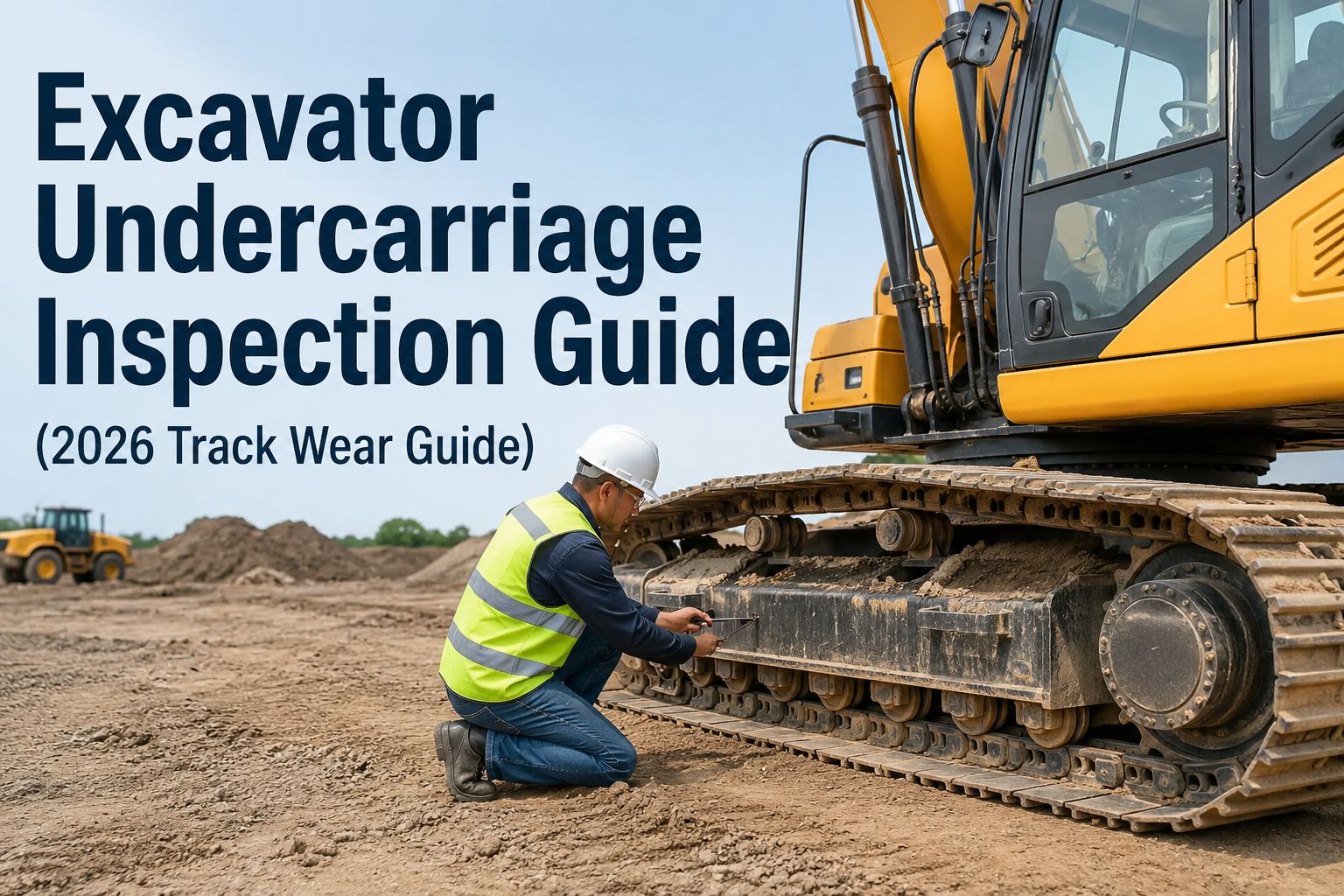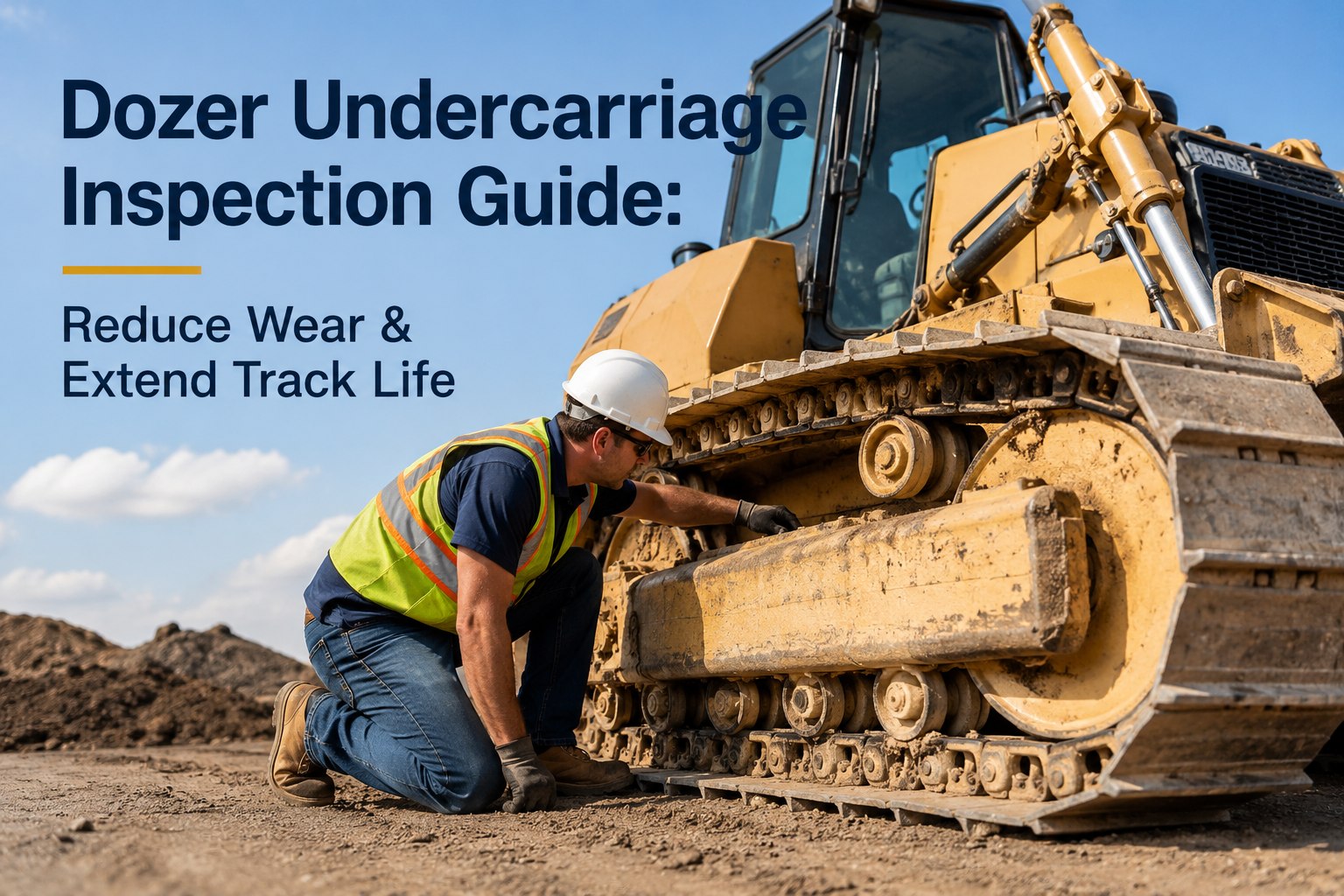
The undercarriage is the most expensive system on a dozer — full stop. It's roughly 20% of the machine's purchase price but up to 50% of its total lifetime owning-and-operating cost, which makes the tracks, rollers, idlers, and sprockets the single highest-value thing an operator can inspect. And the difference between getting full life out of an undercarriage and burning through it early comes down to one discipline: measuring wear accurately and replacing components at the right threshold — not too early, which wastes service life, and not too late, which cascades damage into adjacent parts. Get it wrong and the math is brutal:improper tension or ignored packing can turn a $500 adjustment into a $15,000 rebuild, and a neglected undercarriage rebuild runs $65,000-plus. Get it right — disciplined daily cleaning, correct track tension, and trended wear measurements — and you can roughly double undercarriage life. This guide walks the five wear systems, how to measure each, why track tension is the number-one controllable factor, the wear-percentage thresholds that tell you when to act, and the cascade rule that decides whether you replace one part or a matched set. book a 30-minute walkthrough to see undercarriage wear tracking set up for your fleet.
Half a dozer's lifetime cost rides on the undercarriage. Measurement discipline is how you protect it.
HVI logs undercarriage wear per machine — sprocket, idler, rollers, track pitch, and grouser height — trends each toward its limit, fires the daily cleaning and tension check, flags the wear threshold, and turns a finding into a planned replacement instead of a $65,000 surprise rebuild.
Why the undercarriage dominates the cost
No other system on a dozer carries this much of the lifetime bill — or this much opportunity to extend life through inspection. The numbers frame the whole discipline.
The undercarriage is an integrated system, and that's the key to understanding it: when one component wears excessively, it creates a cascade that accelerates deterioration throughout the whole assembly. A single neglected $400 roller failure can take years off the entire undercarriage. That interdependence is why measurement matters so much — you're not just tracking one part, you're protecting the whole system from the one part that fails first.
The five wear systems
A complete undercarriage inspection measures five systems, each with its own wear signature and measurement method. These are what you're reading on every machine.
Drive sprocket
"The first thing to look at" — the sprocket tells you almost everything. As teeth wear, the profile changes from rounded and symmetrical to a sharp, hooked point. A sharp tooth means it's been wearing; check tooth profile and side wear against OEM specs.
Track chain & link pitch
Measure pitch elongation across a 4–5 pin span and compare to the new spec — the most accurate field method for pin and bushing wear. A "snaky" track moving side to side eventually breaks pins and links.
Track & carrier rollers
Spin them and listen for roughness; check for oil leaks, flat spots, flange wear, and diameter loss. Worn rollers scallop the links and waste fuel — and front/rear rollers wear faster than center, so they can be rotated like tires.
Front idler & recoil
Inspect face wear and cracks, verify alignment, and confirm recoil movement — the idler sets alignment and tension and absorbs impacts. A seized recoil or cocked roller frame loads the entire system.
Shoes & grousers
Measure grouser height for traction life, and inspect shoes for cracks, bent plates, cupped grousers, and loose or missing bolts. Worn grousers lose the bite that gives a dozer its push.
Pins & bushings
Feel under the chain — a little wear and you're fine, but an egg-shaped bushing means it's ready for a turn or it's junk. Worn bushings rotating on pins make the clicking and grinding you hear during travel.
Each system wears differently and needs its own measurement — and a generic walk-around captures none of them as trended numbers. sign up free and log wear measurements per machine, trended over time, or book a demo to see undercarriage wear analytics.
Track tension: the number-one lever
If you do one thing for undercarriage life, get the tension right. Caterpillar names tight track the number-one cause of crawler-tractor downtime, and correct tension prevents an estimated 85% of wear problems.
Too tight
Accelerates roller, idler, bushing, and sprocket wear and wastes horsepower. Over-tight track is the single most common and most damaging mistake — it grinds the whole system against itself.
Too loose
Causes bounce, vibration, and chain "snaking" side to side, risking derailment and breaking pins and links. Slack track is unstable and unsafe on grade.
Just right
Caterpillar's rule of thumb: two dips between sprocket and idler, roughly 2 inches of sag for many crawlers — confirm your model's spec. Measure on level ground after coasting to a stop.
Measure tension by rolling the machine forward and coasting to a stop without braking, then lay a straightedge over the grouser tips from sprocket to idler and read the sag at the lowest point. Soil type, moisture, and the work the dozer is doing all change tension over time, so it's a daily check, not a set-and-forget. HVI makes the two-dip tension check and daily cleaning a required step.
The wear-percentage thresholds
Measurements only matter against limits. Convert each reading to a percentage of wear using the OEM chart, then act on the threshold. This is the decision table.
The pitch-elongation calculation is straightforward: [(measured pitch − new pitch) ÷ new pitch] × 100. The real value isn't any single reading — it's the trend. Logging measurements over time lets you project when each component hits its limit, so you plan and budget the replacement instead of being surprised by a rebuild. HVI runs that trend analysis automatically and reserves parts ahead.
The cascade rule: replace in matched sets
Because the undercarriage is an integrated system, replacing the wrong way wastes money. The matched-set discipline is what protects a new investment from old, worn neighbors.
New tracks need new sprockets
Installing new track on worn sprockets wastes the money — the hooked teeth rapidly damage the new bushings, much like a new chain on worn gears. Replacing tracks without sprockets also voids most warranties.
Coordinate near-limit parts
When several components approach their limits together, coordinated replacement is more economical than chasing them one at a time — and prevents new parts inheriting problems from worn support components.
Match the pitch
Always ensure sprocket pitch matches chain pitch — an incorrect pitch leads to rapid breakage and link failure. Verify fitment to OEM specs before installation.
undercarriage life. Disciplined maintenance and correct operation can roughly double undercarriage life — the difference between replacing components every 2,000 hours and stretching toward 4,000. The levers are simple: daily cleaning so debris doesn't grind components, correct track tension preventing 85% of wear problems, trended measurements catching the threshold, and matched-set replacement avoiding cascade damage. On the most expensive system on the machine, doubling its life is the single biggest cost lever a fleet has. HVI makes that discipline routine and documented.
Daily cleaning & the measurement cadence
Two habits protect the undercarriage between rebuilds: clean it every shift, and measure it on a schedule. Both are cheap; both are routinely skipped.
Clean & check tension
Clear packed material from roller frames, pivot shafts, idlers, and links so components move freely, then confirm the two-dip tension. Packed debris and bad tension are the fastest paths to accelerated wear.
Measure & trend
Record grouser height, link pitch, roller and idler diameter, and sprocket profile against the wear chart. Trend each toward its limit so replacement is planned, not a surprise.
Bushing turn & matched service
At the pin-and-bushing turn point, evaluate sprockets and rollers for matched replacement, and rotate front/rear rollers to center to even out wear — while the machine's already in the shop.
Clean daily, measure on schedule, act on the threshold — the whole discipline fits in a few minutes a shift and a measurement session every few hundred hours. sign up free and make undercarriage cleaning, tension, and measurement a tracked routine.
Paper checklists vs. HVI
Both technically note "undercarriage OK." Only one logs the wear numbers, trends them toward the limit, enforces the daily clean-and-tension, and turns a threshold into a planned matched-set replacement.
Paper / reactive
- "Undercarriage OK" with no measurements
- Wear noticed only when it's visible — damage done
- Tension & daily cleaning skipped under pressure
- No trend to project the replacement point
- New tracks bolted onto worn sprockets
- A $500 fix becomes a $65,000 rebuild
With HVI software
- Wear measurements logged per machine, photo-verified
- Each system trended toward its OEM wear limit
- Daily clean & two-dip tension a required step
- Replacement projected and parts reserved ahead
- Matched-set replacement flagged at threshold
- Every defect auto-creates a tracked work order
rebuild, planned not sprung. The undercarriage rebuild is coming eventually — the only question is whether you see it coming and budget for it, or get surprised mid-job by a cascade failure that also strands the machine. Trended wear measurements turn that rebuild from a surprise into a scheduled, matched-set replacement at the right threshold. On the most expensive system on the dozer, that planning is the whole game. HVI logs the wear, runs the trend, and reserves the parts.
Frequently asked questions
Why is the undercarriage the most important part of dozer maintenance?
Because it dominates the cost. The undercarriage is roughly 20% of a bulldozer's purchase price but up to 50% of its total lifetime owning-and-operating cost, which makes track and roller inspection the single highest-value daily check an operator can perform. It's also an integrated system, so when one component wears excessively it creates a cascade that accelerates deterioration throughout the whole assembly — a single neglected roller failure can take years off the entire undercarriage. The biggest driver of that cost is track tension: Caterpillar names tight track the number-one cause of crawler-tractor downtime, and proper tension prevents an estimated 85% of undercarriage wear problems. Daily cleaning matters too, because packed debris keeps components from moving freely and accelerates wear. The good news is that the lever is daily attention, not deep expertise — disciplined maintenance can roughly double undercarriage life. HVI's inspection and maintenance software makes the cleaning and two-dip tension check a required daily step and trends wear over time. sign up free and protect your highest-cost system.
How do I measure dozer undercarriage wear?
You measure five systems against the OEM wear chart, ideally every 250 to 500 hours. For the track chain, measure pitch elongation across a four-to-five-pin span and calculate it as [(measured pitch − new pitch) ÷ new pitch] × 100 — the most accurate field method for pin and bushing wear. For rollers and idlers, measure diameter at the most worn area with calipers and check for flat spots and flange wear. For the sprocket, read the tooth profile against spec, watching for the rounded shape turning to a sharp, hooked point. For the shoes, measure grouser height for remaining traction life. And for track tension — the most controllable factor — lay a straightedge over the grouser tips from sprocket to idler after coasting to a stop and read the sag, looking for the two-dip, roughly two-inch profile. Convert each to a percentage of wear and, crucially, log it over time, because the trend is what lets you project replacement. HVI's inspection and maintenance software stores the measurements and runs the trend analysis automatically. book a demo to see wear measurement tracking.
When should undercarriage components be replaced?
Act on the wear percentage. Under 50% worn, continue routine monitoring and plan for future replacement. At 50 to 75% worn, schedule replacement in the next planned maintenance window and order parts now. Over 75% worn, replacement is required immediately, and you should inspect the sprockets and rollers at the same time. If wear is asymmetric — more than 15% difference side to side — replace both chains to keep the machine tracking straight. The critical companion rule is matched-set replacement: because the undercarriage is an integrated system, installing new track on worn sprockets wastes the money since the hooked teeth rapidly damage the new bushings, and it voids most warranties. When several components approach their limits together, coordinated replacement is more economical than chasing them one at a time. Buyers on the used market also like to see undercarriage under 50% worn, so staying ahead of wear protects resale value too. HVI's inspection and maintenance software flags the threshold and the matched-set requirement. sign up free and replace at the right threshold.
What is the correct track tension for a dozer?
Caterpillar's rule of thumb is that you want to see two dips between the sprocket and the idler, which works out to roughly two inches of sag for many conventional crawlers — though you should always confirm the exact spec for your model and undercarriage type in the operation and maintenance manual, since machines with and without carrier rollers measure differently. To check it, roll the machine forward slowly and let it coast to a stop on level ground without braking, then lay a straightedge or stretch a string over the grouser tips from sprocket to idler across whichever span sags most, and measure from that line down to the grouser tips at the lowest point. Getting it right matters enormously: too tight accelerates roller, idler, and bushing wear and wastes horsepower, while too loose causes bounce, vibration, and chain snaking that can derail the track and break pins. And because soil type, moisture, and the work change tension over time, it's a daily check rather than set-and-forget. HVI's inspection and maintenance software makes the two-dip tension check a required daily step. book a demo to see the daily tension workflow.
How does HVI help with undercarriage maintenance?
HVI is an inspection and maintenance software platform built to manage the dozer's highest-cost system. Operators run the daily undercarriage check from a phone or tablet — clearing packed debris, confirming the two-dip track tension, and inspecting rollers, idlers, sprocket profile, and shoes — with a photo required on any flagged item, and a critical defect tags the machine out of service and opens a work order automatically. On the measurement side, the platform logs grouser height, link pitch, roller and idler diameter, and sprocket profile per machine every few hundred hours, converts them to percentage of wear against the OEM limits, and runs the trend analysis automatically so it can project when each component reaches its threshold — letting you plan and budget a matched-set replacement and reserve parts ahead instead of being surprised by a $65,000 rebuild. It fires the tiered PM schedule on engine hours and keeps a complete wear and service history per machine for cost analysis and resale. book a demo and we'll map the software onto your fleet on the call.
Protect the most expensive system on the dozer — measure it, trend it, replace it on time.
HVI logs undercarriage wear per machine — sprocket, idler, rollers, track pitch, grouser height — trends each toward its OEM limit, enforces the daily cleaning and two-dip tension check, flags the wear threshold and matched-set requirement, and reserves parts ahead. Turn the $65,000 rebuild from a surprise into a planned replacement and roughly double undercarriage life.
No credit card required · Live in under two weeks · Undercarriage wear logging + trend analysis + daily tension checks + matched-set flags in one platform