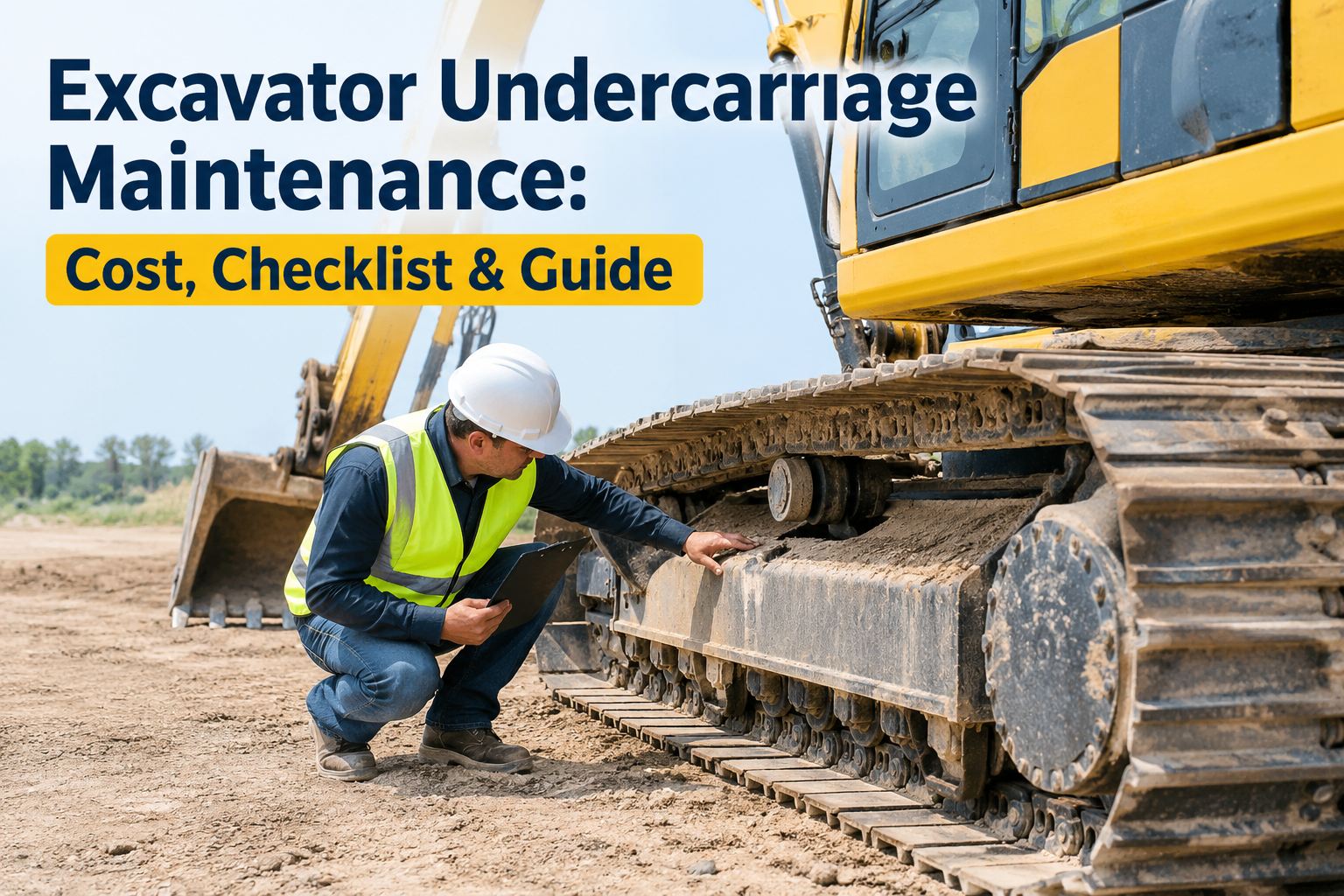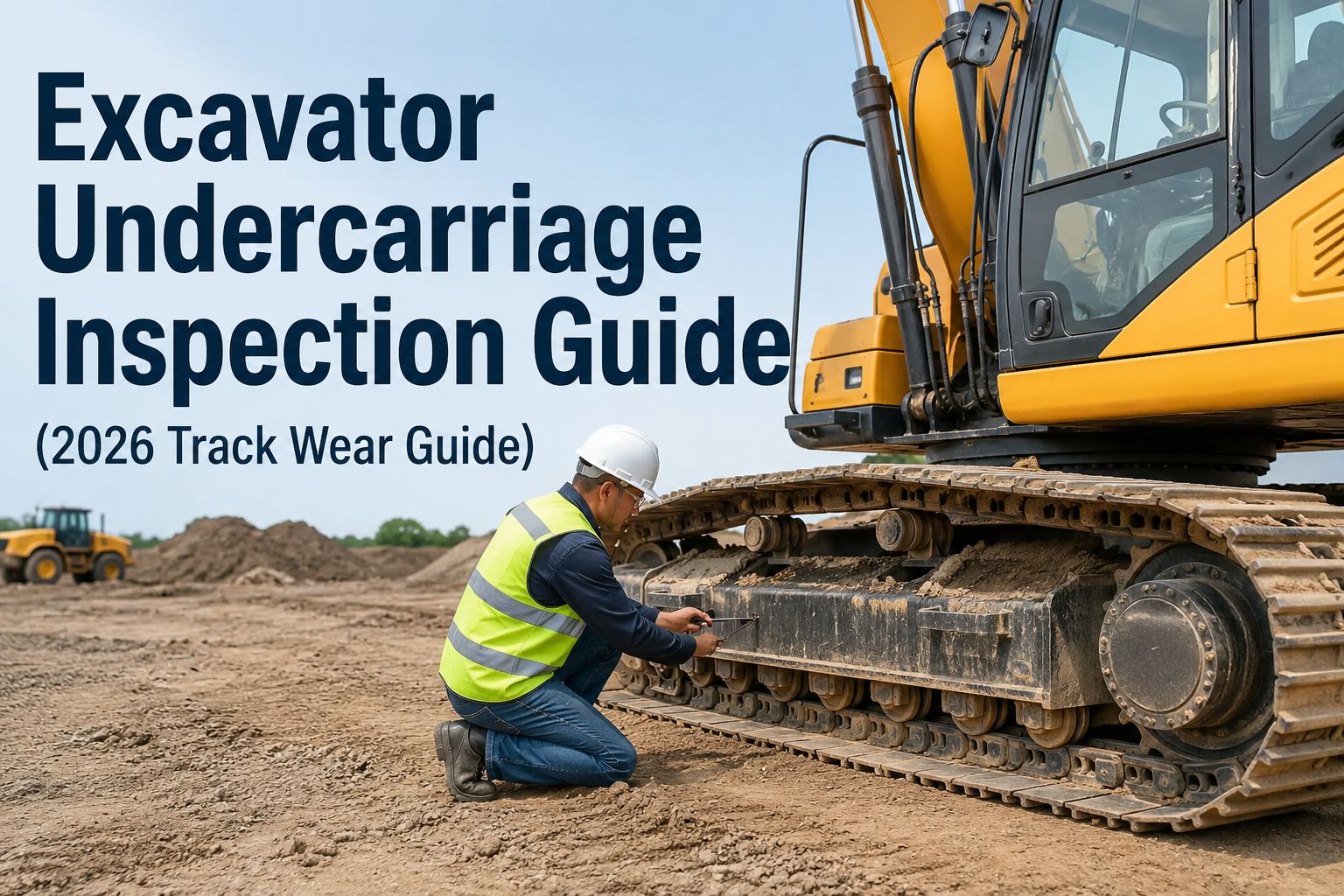
The undercarriage is 50% of an excavator's total lifetime maintenance cost — and the one system most operators under-inspect because the components are underneath the machine, covered in mudand impossible to eyeball from the cab. A full track group replacement on a 30-ton excavator runs $25,000 to $40,000. A planned sprocket swap costs $3,000. The difference between the two is eight measurements, taken at the right intervals, trended over time. This is the complete excavator undercarriage inspection guide for 2026. Book a demo to track wear digitally.
Excavator Undercarriage: The Wear Lifecycle Every Fleet Must Track
Every component follows the same arc. Measure it. Trend it. Replace at the right point — not too early, not too late.
Where the Money Goesundercarriage cost breakdown on a typical 30-ton excavator
Half of every maintenance dollar goes under the tracks. The leverage is enormous: proper measurement and trending can roughly double undercarriage life compared to run-to-failure. That's the difference between a 4,000-hour track group and an 8,000-hour track group — on the same machine, in the same material. Book a demo to see per-machine undercarriage trending in HVI
The 8 Measurement Pointswhat to measure, what the threshold is, and what to do when you hit it
Every OEM (CAT, Komatsu, Hitachi, Volvo, Kobelco, Liebherr) publishes its own undercarriage measurement standard. The eight points below are universal across all makes. Measure at every 250-hour service and trend each toward its OEM limit.
The Cascadewhy one worn component destroys the rest — and why measurement timing is everything
Undercarriage components wear as an integrated system. When one exceeds its limit, it accelerates wear on everything it contacts. The cascade below shows why a $3,000 planned sprocket replacement becomes a $40,000 emergency rebuild when measurement is skipped.
-
1Bushings wear past turn window$0 — missed measurementBushing diameter goes past 50%. Turn window is lost. Chain pitch begins stretching as worn bushings allow pin movement.
-
2Chain pitch stretches beyond limit$5,000 — chain replacementChain no longer seats properly on sprocket teeth. Each revolution forces the teeth to climb the stretched links, hooking them forward.
-
3Sprocket teeth hook$3,000 — sprocket replacementHooked teeth pull the chain unevenly. Track alignment degrades. Uneven forces transfer to rollers and idler.
-
4Rollers and idler take accelerated wear$8,000+ — roller set + idlerMisaligned track loads rollers unevenly. Seals fail from side-loading. Oil leaks. Bearings run dry. Multiple rollers fail together. Book a demo
-
5Full track group rebuild$25K–$40K+ totalChain, sprocket, rollers, idler, bushings — all replaced together because cascading damage made individual replacement pointless. Three weeks of downtime at $300–$500/day lost revenue.
From an equipment manager running 22 excavators across 4 sites
We were replacing undercarriage reactively — waiting until the operator reported a problem, then discovering the chain had already damaged the sprocket, the sprocket had already damaged the rollers, and a $5,000 chain replacement had become a $35,000 full rebuild. We were leaving 30 to 40% of component life on the table because we had no trending data.
Since we started logging wear measurements digitally at every 250-hour service, we can see each component approaching its limit on a curve. We caught three bushing turn windows in the first six months that we would have missed entirely. Turning those bushings instead of replacing them saved roughly $18,000. That's the ROI of measuring instead of guessing.
Frequently asked questions
How often should excavator undercarriage be inspected?
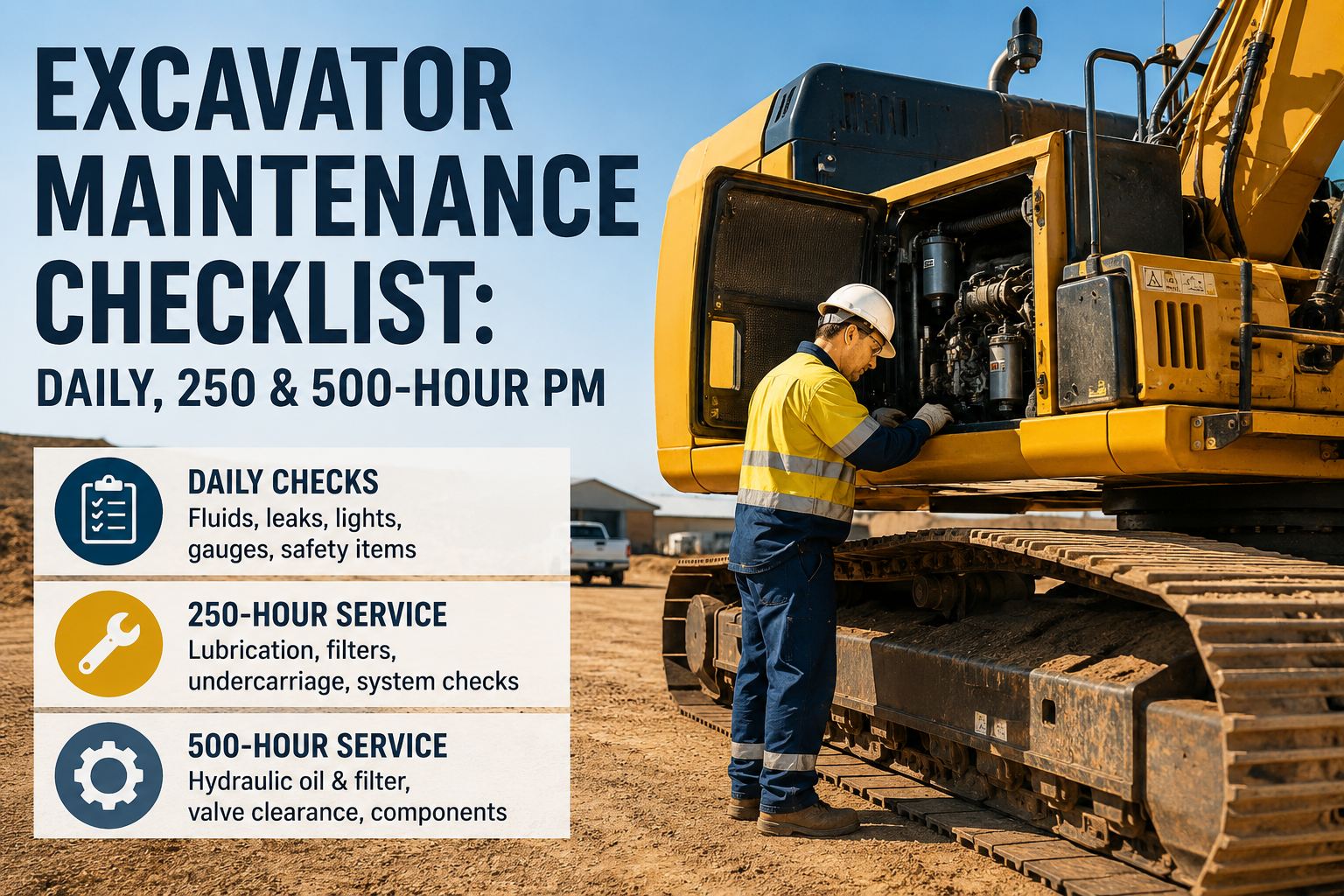
Daily visual checks should cover debris removal, track tension, and a walkaround for oil leaks at roller and idler seals, loose shoe bolts, and obvious damage. Detailed measurement inspections should occur every 250 hours, covering all eight wear points: grouser height, chain pitch elongation, bushing diameter, sprocket tooth height, front idler tread and side play, track roller tread and seal condition, carrier roller condition, and recoil spring tension. Every major OEM publishes its own measurement standards. Trending these measurements over time is what transforms reactive rebuilds into planned replacements.
Why is the undercarriage 50% of excavator maintenance cost?
The undercarriage contains dozens of wear components (track links, pins, bushings, shoes, rollers, idlers, sprockets) all operating in direct contact with abrasive material every hour. Components wear as an integrated system: when one exceeds its wear limit, it accelerates wear on every adjacent part. A full track group on a 30-ton excavator costs $25,000 to $40,000. By contrast, a single planned sprocket replacement costs roughly $3,000. The difference is measurement discipline and trending data. Proper inspection can roughly double undercarriage life, making it the highest-leverage maintenance activity on any tracked machine.
When should track chain bushings be turned?
Bushings should be turned (rotated 180 degrees to present the unworn surface to the sprocket) at approximately 50% of total wear life. This effectively doubles bushing service life by utilizing the full circumference. If you miss the turn window and the bushing wears past 50%, turning is no longer cost-effective because the remaining unworn surface is too thin. The only way to catch the window is to measure bushing diameter at regular intervals (every 250 hours) and trend the measurements. A digital inspection system that trends these measurements fires an alert when the turn window approaches, so maintenance can plan the turn during a scheduled service.
What is the cascade effect in undercarriage wear?
The cascade effect is the sequence of accelerating wear that occurs when one undercarriage component exceeds its limit. Worn bushings cause chain pitch to stretch. A stretched chain doesn't seat properly on the sprocket, causing teeth to hook. Hooked teeth pull the chain unevenly, transferring unbalanced forces to rollers and the idler. Rollers begin wearing unevenly, seals fail from side-loading, and multiple rollers can fail together. What started as a $3,000 sprocket replacement becomes a $25,000 to $40,000 full track group rebuild. The cascade is preventable through measurement: catching any component before it reaches its wear limit stops the sequence from starting.
Can I digitize excavator undercarriage inspections?
Yes. HVI (Heavy Vehicle Inspection) logs undercarriage wear measurements per machine at every service interval. The platform trends grouser height, chain pitch, bushing diameter, sprocket tooth height, roller wear, and idler tread toward OEM limits for each excavator. Bushing turn alerts fire at 50% wear life. Photo capture at each measurement point provides visual evidence of wear progression. The daily cleaning and tension check is a required inspection step. When any component approaches its wear limit, a work order generates automatically. The result is planned replacements at the right threshold instead of emergency rebuilds after cascade damage.
$3,000 planned. $40,000 emergency. Eight measurements decide which one you pay.
Log 8 measurements per excavator. Trend each toward OEM limits. Fire bushing turn alerts at 50%. Forecast rebuild timing. Photos at every measurement. Auto work orders at thresholds. Works with any OEM. 5T minis to 600T mining shovels. Live in under a week.
No credit card · No hardware · OSHA-ready from day one