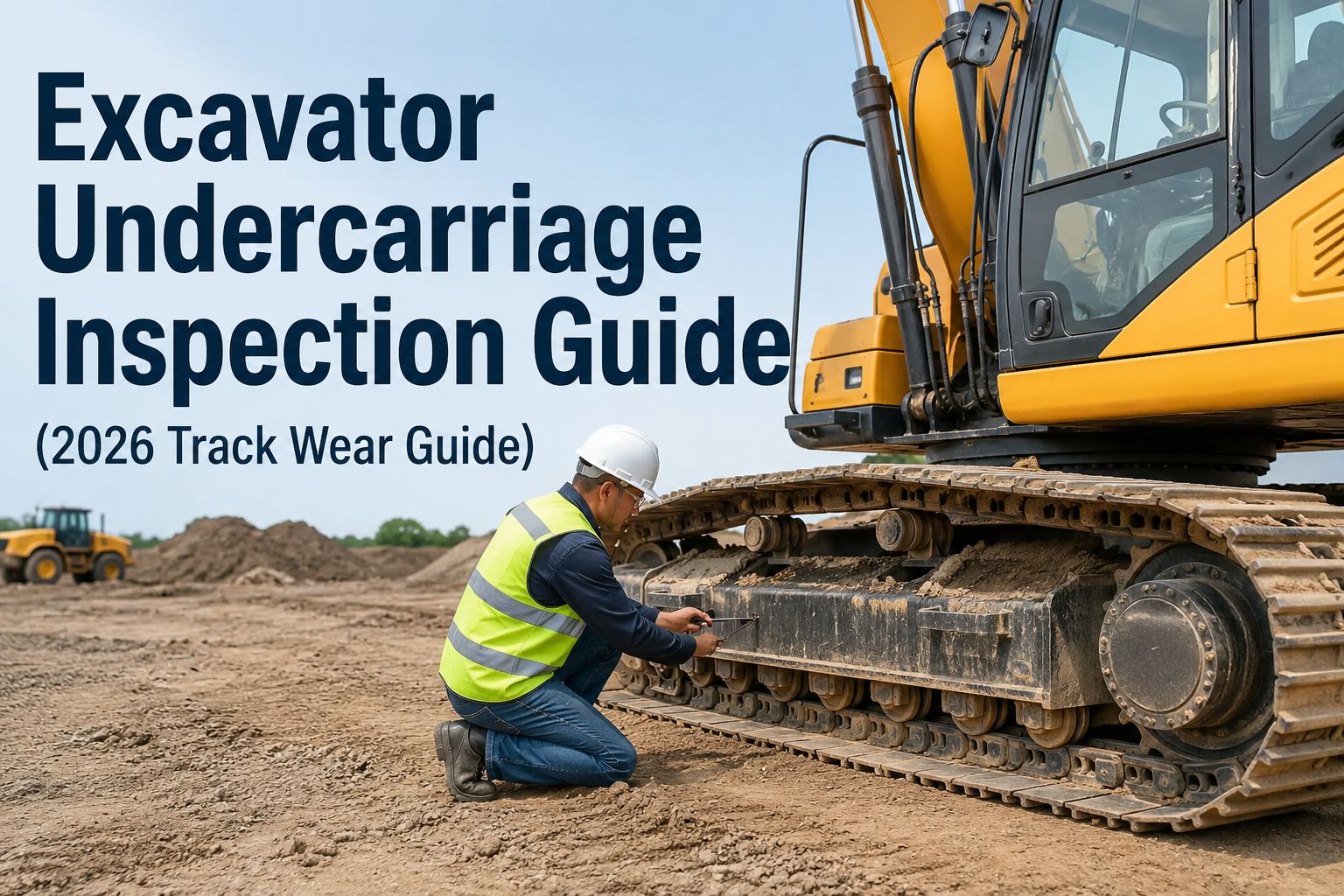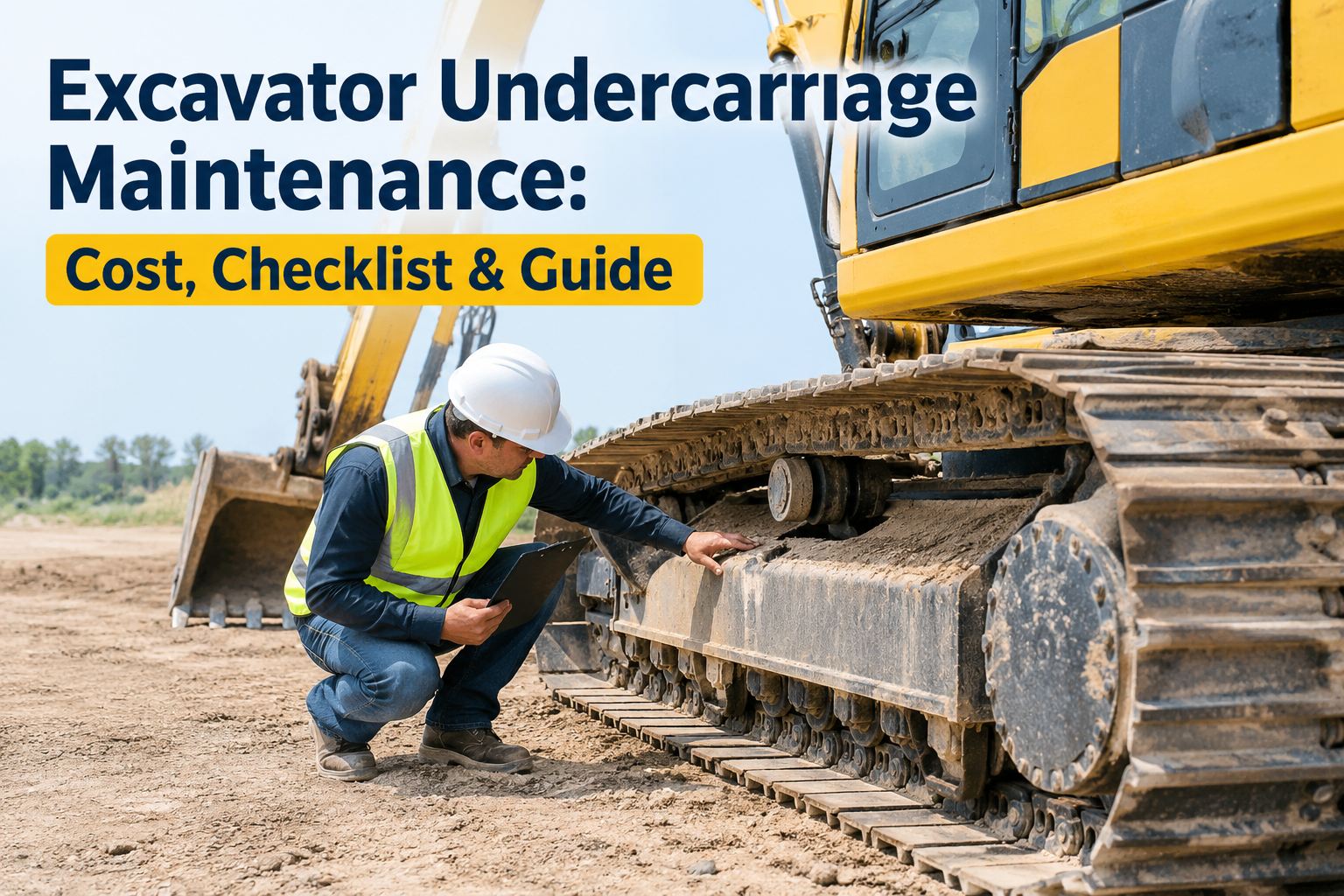
Three identical excavators can burn through undercarriages at wildly different speeds — one at 3,000 hours, one at 8,000 — and the difference is almost never the machine. It's the site, the operator, and the duty. That's the problem with running excavator undercarriage maintenance on one fixed schedule: the undercarriage is up to half of a tracked machine's lifetime cost, every unit is on its own wear clock, and a one-size interval either over-services the easy machine or catches the hard one too late. See undercarriage tracked per asset across your fleet
Why one PM interval can't fit the whole fleet
Pick a machine. Same model, same PM schedule — but its site and duty decide how fast the undercarriage burns and when the cascade hits.
Abrasive rock and constant reversing wear sprockets and bushings up to three times faster. This machine hits its wear limits first — and if it's on the same interval as the others, it's the one that cascades before its next scheduled look.
Typical duty in ordinary ground. This is the machine the "standard" interval was probably written for — so it's the one that looks fine and quietly makes everyone trust an interval that's wrong for the other two.
Soft ground, forward-biased travel, cleaned every shift. On a flat fleet interval this machine gets components pulled with 30–40% of life still in them — money left on the table because it's judged by the calendar, not its actual wear.
Same model, same schedule — three completely different right answers. A fleet undercarriage programme sets the threshold per machine off measured wear, not one interval for all.
The undercarriage is the single most expensive wear system on an excavator — commonly cited at up to 50% of a tracked machine's lifetime owning-and-operating cost, on a part that's only about 20% of the purchase price. That's the whole reason it deserves a programme and not just a line on a checklist: it's where the money is, the wear is measurable and predictable, and the difference between a well-run fleet and a poorly-run one is 30–50% of undercarriage life. Below is what drives the wear clock, where the cascade turns cheap into catastrophic, and how a fleet catches it per machine.
What sets each machine's wear clock
If the undercarriage is half the bill, the wear rate is the dial that controls it — and it's set almost entirely by things outside the service schedule. Knowing the drivers is what lets you predict which machines need attention first.
Ground & abrasion
Rock, sand, and demolition debris cut life hard — abrasive sites can halve chain life versus moderate ground. It's the biggest single reason two machines on the same schedule wear differently, and it's why site assignment is a maintenance decision.
Reverse & travel habits
Operating in reverse can accelerate sprocket and bushing wear up to three times versus forward travel, and high-speed travel on abrasive ground and constant counter-rotation pile on more. Pure operator behaviour — and pure, controllable cost.
Track tension
The most controllable factor in undercarriage life. Too tight wastes horsepower and grinds rollers and idlers; too loose lets the chain bounce, snake, and jump the sprocket. Correct tension — adjusted for the ground — prevents a large share of wear problems.
Daily cleaning & packing
Packed mud and debris make tracks ride high and jump, driving idler and chain failures. Starting every shift with a clean undercarriage is one of the cheapest life extensions there is — and one of the first things that slips when a site runs hot.
None of these live on the machine's spec sheet — they live in how and where it's run. The only way to know a machine's real wear clock is to measure its components over time and watch the rate.
A machine stretching chain pitch fast is telling you something about its site or operator that a fixed interval will never surface. Book a demo to log wear rate per machine and see which are burning fastest
The cascade: where a cheap part becomes a rebuild
Here's why threshold timing is the entire game. The undercarriage is an integrated system, and its components wear in sequence — so one part left too long doesn't just fail itself, it takes the next part with it. Miss the window on the cheapest component and you pay for the most expensive one.
The numbers make the case brutally: a sprocket left too long can turn a few-hundred-dollar fix into a five-figure rebuild, and a neglected undercarriage rebuild runs into tens of thousands per machine plus days of downtime.
That's why the industry guidance is to replace a sprocket at 30–40% wear rather than waiting for the 50% "rule," and to treat track-pitch stretch beyond about 2% as a replace-now signal — thresholds chosen to stop the cascade before it starts. Book a demo to see cascade thresholds flagged before they trigger
Measurement is the input; the programme is the point
A single inspection tells you a machine's condition today. The same eight measurements taken the same way at every service build a wear curve — and a curve is what turns the whole thing from reactive to planned.
The measurement is just the input. Running it as a fleet programme is where the cost actually moves — in three ways:
Log the eight points at every 250-hour service, trend them toward the OEM limit, and read them as rates — so you can predict when each excavator hits its threshold and plan the replacement into a production and parts window.
Turning bushings at the halfway point can double chain life instead of replacing — a saving that gets missed without a trend telling you the window is open.
Sprockets and chains wear in sync, so they're replaced together — and rollers/idlers get bundled in if they're close enough to save a second teardown. Made on data, not a calendar.
Confirm the specific measurement standards and wear limits against the OEM, since every manufacturer publishes its own. Book a demo to see the eight wear points trended per excavator
Turning a fleet of wear clocks into a cost picture
The payoff of a programme shows up when you stop looking at one machine and look at the fleet. When every excavator carries its own undercarriage wear history, cost, and hours, the portfolio tells you things no single inspection can: which machines are burning fastest, which sites are hardest on iron, which operators drive up cost, and where the next big spend is coming from.
That's the difference between an undercarriage that surprises you and one you see coming. The data tells you what to do:
A fleet-level programme doesn't just extend component life — it turns the biggest, most unpredictable line on the maintenance budget into something you plan and control. Start free and rank your excavators by real undercarriage cost per hour
The daily undercarriage walkaround
This is the operator check that catches the acute problem before the wear measurement is even due — the cheapest way to protect the most expensive system on the machine. Use this undercarriage checklist online free, so a find is logged with a photo against that machine's wear record.
From a fleet manager who stopped rebuilding reactively
We ran every excavator on the same undercarriage interval and it burned us both ways. The quarry machines kept cascading — we'd pull one in for a "chain" and leave with a full rebuild because the sprocket had already chewed the rollers. Meanwhile the machines on soft dirt were getting good chains pulled with a third of their life left because the calendar said so.
Once we logged the eight measurements per machine and watched the rates, the picture flipped. Each excavator's on its own clock now. We caught two bushing-turn windows last quarter we'd have blown straight past, bundled a sprocket-and-roller job on the quarry machine before it cascaded, and stopped over-servicing the easy ones. The undercarriage was always half our bill — now it's the half we actually manage.
Excavator undercarriage maintenance FAQs
Why is the undercarriage such a big part of excavator maintenance cost?
It's the single most expensive wear system on a tracked excavator — commonly cited as up to 50% of a machine's lifetime repair cost. Unlike a bolt-on part, the components wear as a linked system, so a worn one accelerates the wear of the next. That's why controlling undercarriage cost is really about catching wear early, not buying parts cheaper.
Why do identical excavators wear undercarriages at different rates?
Because wear is driven far more by how and where a machine works than by the machine itself. Abrasive or rocky ground, heavy side-slope or slewing work, poor track tension, and packed-in debris all speed it up. Two identical excavators on different sites are on completely different wear clocks — which is why one interval for all always fits one of them wrong.
What is the undercarriage cascade and how do you prevent it?
The cascade is the accelerating damage that follows when one worn component is left past its limit, because the parts engage each other. A worn sprocket chews the chain, a stretched chain wears the rollers and idler faster, and a cheap part left too long turns into a full rebuild. You prevent it by measuring wear and replacing at the threshold — before one part takes the others with it.
How often should excavator undercarriage be inspected and measured?
On two layers. Daily: operator visual checks — debris removal, track tension, and obvious damage. Periodically (interval or hours): actual wear measurement of the pins, bushings, links, rollers, idlers, and sprocket against percentage-worn limits. The daily check catches the acute problem; the measurement is what tells you where each component sits on its curve, so you replace at the threshold, not by guess.
Should you replace undercarriage components individually or together?
It depends where each part sits on its wear curve — which is why trending matters. Sprockets and chains wear in sync and often get replaced together; rollers and idlers can be individual if only one is at its limit. Replacing everything on a calendar wastes life; replacing only what's failed ignores the cascade. Measured wear per component is what tells you which call is right.
Run excavator undercarriage maintenance as a fleet programme, not a guess
HVI logs the eight undercarriage wear points per excavator, trends each toward its OEM limit, fires daily cleaning-and-tension checks and threshold alerts before the cascade, and rolls it into a cost-per-asset picture across your whole mixed fleet — on hour-based PM off each machine's real meter, captured offline. Catch the bushing-turn window, bundle the right replacements, and stop paying for rebuilds you could have planned. See it on your own excavators.
No credit card · Per-asset wear trending from day one · Works offline at the pit