A burned-out marker lamp used to be a routine roadside note. Under FMCSA's restructured Safety Measurement System, that same defect now feeds a score built entirely around driver-observed defects CSA data — whether your driver should have caught it on the walk-around. Here is what the new Vehicle Maintenance split means, and how to respond without teaching drivers to look away.
Which Category Does This Defect Score Under?
Pick a defect. See whether it lands in Vehicle Maintenance: Driver Observed or standard Vehicle Maintenance under the restructured SMS — and why the distinction exists.
Visible without tools during a normal walk-around. This is exactly the kind of item the new category was built to isolate.
A leak visible from ground level during a pre-trip walk-around counts as something a competent inspection should catch.
Requires a gauge and access most drivers don't have on a pre-trip — this is a shop-level or Full (Level 1) inspection find.
Only detectable through disassembly or a detailed structural inspection — well beyond what a driver walk-around can reasonably find.
What Counts as a Driver-Observed Defect
A driver-observed defect is a condition a competent driver could reasonably identify during a standard pre-trip walk-around — without tools, disassembly, or shop access, the same scope FMCSA uses for a Walk-Around (Level 2) inspection. It's meaningfully narrower than "anything wrong with the vehicle." A hairline crack inside a brake drum or an internal frame fracture needs access a driver doesn't have on a lot check — those stay in the broader Vehicle Maintenance category.
Lighting
Marker lamps, brake lights, turn signals, headlights — visible at a glance and one of the most common driver-observed citations.
Tire Condition
Visible tread wear, cuts, bulges, or obvious under-inflation — condition a driver can assess without a gauge in hand.
Visible Fluid Leaks
Drips or pooling under the engine, transmission or trailer, visible from ground level during a walk-around.
Coupling Security
Fifth wheel locking, kingpin engagement, safety chains and glad hands — checkable by sight and a hands-on tug.
Cargo Securement
Strap and chain condition, obvious tiedown gaps, where applicable to the driver's pre-trip responsibility for the load.
Obvious Brake Issues
Audible air leaks, visibly worn linings at a glance, or a slack adjuster clearly out of range — distinct from a gauge-measured lining thickness.
Every item above shares one trait: none of it requires special equipment to identify, which is exactly the line FMCSA drew when it separated this category out. See these exact categories built into a guided pre-trip template, with the reasoning behind each check visible to the driver doing it.
What Actually Changed in the SMS Restructuring
FMCSA approved this restructuring in a November 2024 Federal Register notice (Docket FMCSA-2022-0066, 89 Fed. Reg. 91,874) — the most substantial revision to the Safety Measurement System since it launched in 2010. The core change relevant here: the Vehicle Maintenance BASIC, renamed a "compliance category," splits into two separately scored categories. See how the full CSA scoring system works across every compliance category.
Violations that could reasonably be observed by a driver, or detected during a Walk-Around (Level 2) roadside inspection. This is the new, second scored category.
All other vehicle maintenance violations — more commonly identified by a mechanic during routine service or found during a Full (Level 1) roadside inspection.
Both categories are measured against their own intervention threshold, so a fleet once graded once on Vehicle Maintenance is now graded on that scope twice. Alongside the split, FMCSA folded Controlled Substances/Alcohol and Operating-While-Out-of-Service violations into Unsafe Driving, reorganized roadside codes into roughly 116 groups, and raised the Driver Fitness and Hazardous Materials thresholds.
| Compliance category | What changed |
|---|---|
| Unsafe Driving (now includes Controlled Substances/Alcohol & OOS) | Scope expanded |
| Vehicle Maintenance | Split into two categories |
| Vehicle Maintenance: Driver Observed | New category |
| Driver Fitness | Threshold raised |
| Hazardous Materials | Threshold raised |
One important caveat: the exact threshold percentages and the live launch date are set by FMCSA and have been revised more than once through this rulemaking. Treat this as the approved, previewable structure — confirm current thresholds and live status on FMCSA's SMS methodology page or your carrier profile directly. See how HVI tracks both compliance categories side by side, ready either way once the rollout is confirmed.
How This Changes What a "Clean" Inspection Means
Before the split, an out-of-adjustment brake found at a scale house and a marker lamp a driver walked past both landed in the same Vehicle Maintenance bucket — impossible to tell whether a bad score was a shop problem or a driver problem. Now "clean" has two separate meanings.
Your PM program keeps components in spec — brakes adjusted, linings within tolerance, the mechanic-level items a Full inspection checks.
Your drivers actually inspect before rolling — catching the visible items a rushed or rubber-stamped pre-trip would miss.
A fleet can run an excellent PM program and still carry a poor Driver Observed percentile if pre-trips are rushed — and the reverse is just as possible. See both percentiles modeled against your own fleet's inspection data, instead of guessing which side is dragging your score.
The Risk Nobody's Talking About: Under-Reporting
Scoring driver-observed defects creates an incentive problem worth naming directly. If a driver believes reporting a defect reflects badly on them, the safer move — from the driver's seat — is to not look too closely. That's the opposite of what the category should encourage.
Coaching turns punitive the moment a defect shows up, so drivers quietly stop reporting — or note it verbally instead of on the record.
Separate finding-and-reporting a defect from dispatching a truck with one unresolved. Reporting a chafed air line and fixing it should never score a driver worse than saying nothing.
The Practical Response: Inspection Quality, Not Just Completion
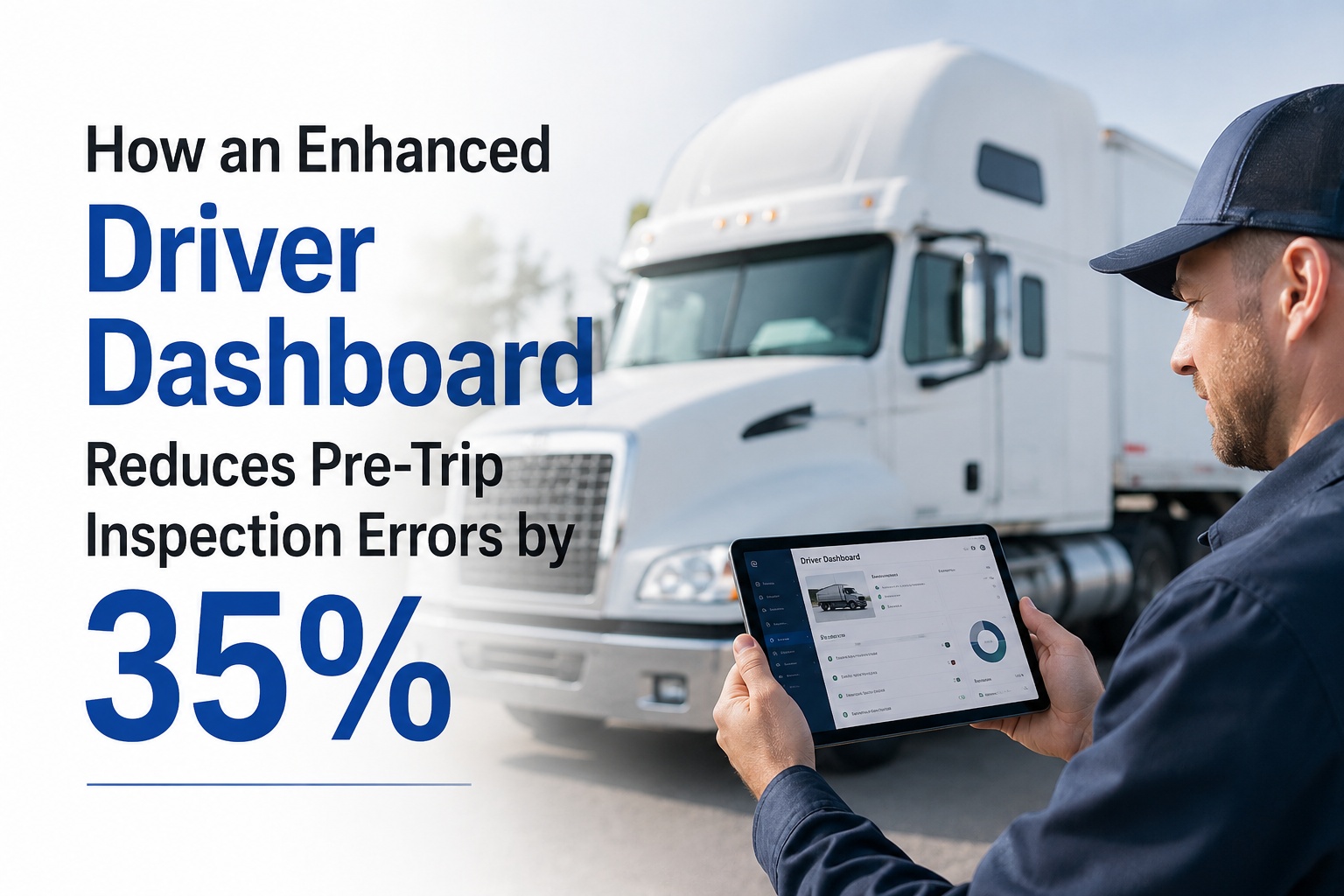
A DVIR marked "complete" has never meant much — a four-minute walk-around and a proper fifteen-minute one produce the same checkbox. The practical response is measuring the quality signals underneath it, then coaching on that data instead of a generic "do a better pre-trip."
Time on inspection
How long the walk-around actually took — the clearest signal of a real inspection versus a rushed checkbox.
Photo on flagged items
Whether photo evidence was captured for each defect — proof of what the driver actually looked at, not just what they ticked.
Defect-find rate
Whether a driver's find rate looks statistically different from the fleet — a low rate often means rushing, not cleaner trucks.
Coaching runs on that data — short, specific yard sessions built around a real example. See inspection duration and defect-find rate tracked per driver, so coaching targets the pattern instead of guessing at it.
A Driver-Observed Pre-Trip Checklist
The whole Driver Observed category comes down to what a competent walk-around should catch. Keep this on the phone in the cab, so the pre-trip is a real inspection with an owner, not a checkbox ticked from the seat.
- All marker, brake, turn, and headlamps working
- Tires free of visible cuts, bulges, or low pressure
- No fresh fluid drips or pooling under the unit
- No audible air leaks; slack adjusters in range
- Fifth wheel locked, kingpin fully engaged
- Safety chains and glad hands secure
- Cargo straps and chains sound, no obvious gaps
- Any flagged defect photographed and logged, not just noted verbally
Eight visible checks — the exact scope the Driver Observed category scores you on. Use this driver-observed checklist online free, with a timestamp and photo on every item.
What a Safety Manager Actually Watches For
When we first heard "driver-observed" was becoming its own score, my worry was drivers getting cagey about reporting anything. What actually worked was flipping the message: catching it and flagging it is the win, not a mark against you. We started showing drivers their own find rate next to the fleet average, framed as a good thing. Reports went up, not down, and our roadside driver-observed citations dropped because the stuff was already fixed before the truck left the yard.
The Takeaway
Driver-observed defects CSA scoring turns a driver's pre-trip from an internal discipline question into a measured, public compliance category. The fleets that come out ahead won't be the ones with the fastest walk-arounds — they'll be the ones that can show a real inspection happened, catch what's visible, and fix it before dispatch without punishing the driver who found it. See the evidence trail built on every pre-trip before the next SMS data pull.
Frequently Asked Questions
What is a driver-observed defect under the new CSA methodology?
A driver-observed defect is a vehicle condition that could reasonably be identified by a driver during a standard pre-trip or post-trip walk-around, or that would be detected during a Walk-Around (Level 2) roadside inspection — without tools, disassembly, or shop access. FMCSA created the "Vehicle Maintenance: Driver Observed" compliance category specifically to score these violations separately from defects more commonly found by a mechanic or during a Full (Level 1) inspection.
How is the Vehicle Maintenance BASIC changing?
FMCSA approved splitting the Vehicle Maintenance BASIC into two separate compliance categories in a November 2024 Federal Register notice (Docket FMCSA-2022-0066): "Vehicle Maintenance," covering violations more commonly identified by a mechanic or during a Full (Level 1) inspection, and "Vehicle Maintenance: Driver Observed," covering violations reasonably observable by a driver or detected during a Walk-Around (Level 2) inspection. Each category is measured against its own intervention threshold. Because FMCSA has revised the specific threshold percentages more than once through this rulemaking, confirm the current values on the agency's SMS methodology page rather than assuming a fixed number.
What kinds of defects fall into the driver-observed category?
Typical examples include inoperative lighting (marker lamps, brake lights, turn signals), visible tire wear or damage, visible fluid leaks, coupling device security issues, obvious brake problems like audible air leaks, and cargo securement gaps where applicable. These are all conditions identifiable by sight or a hands-on check without special equipment — the same scope covered by a driver's pre-trip inspection under 49 CFR 396.13.
Has the new SMS methodology fully gone live?
FMCSA approved the enhanced methodology, including the Vehicle Maintenance split, in its November 2024 notice, and the agency has stated a separate announcement will confirm the launch date for the enhanced SMS as the live public scoring system. Carriers can preview how the new methodology would affect their own data through FMCSA's Prioritization Preview tool, but fleets should verify the current live status directly on FMCSA's SMS methodology page or their own carrier profile rather than assuming a specific date is already in effect.
How should a fleet respond to driver-observed defects being scored separately?
The practical response is measuring inspection quality, not just DVIR completion — tracking inspection duration, photo evidence on flagged items, and defect-find-rate patterns by driver, then coaching based on that data rather than a generic reminder. It's equally important to avoid creating an incentive for drivers to under-report: a driver who flags a defect and gets it fixed before dispatch should never be treated worse than one who said nothing and was caught at roadside.
Turn Every Pre-Trip Into Evidence, Not Just a Checkbox
HVI captures timestamps, driver identity, photo evidence and defect severity on every inspection, tracks completion patterns per driver, and locks dispatch until flagged defects are resolved — so both sides of the Vehicle Maintenance split are backed by a real, auditable record.
No credit card · No hardware required · Live before your next SMS data pull