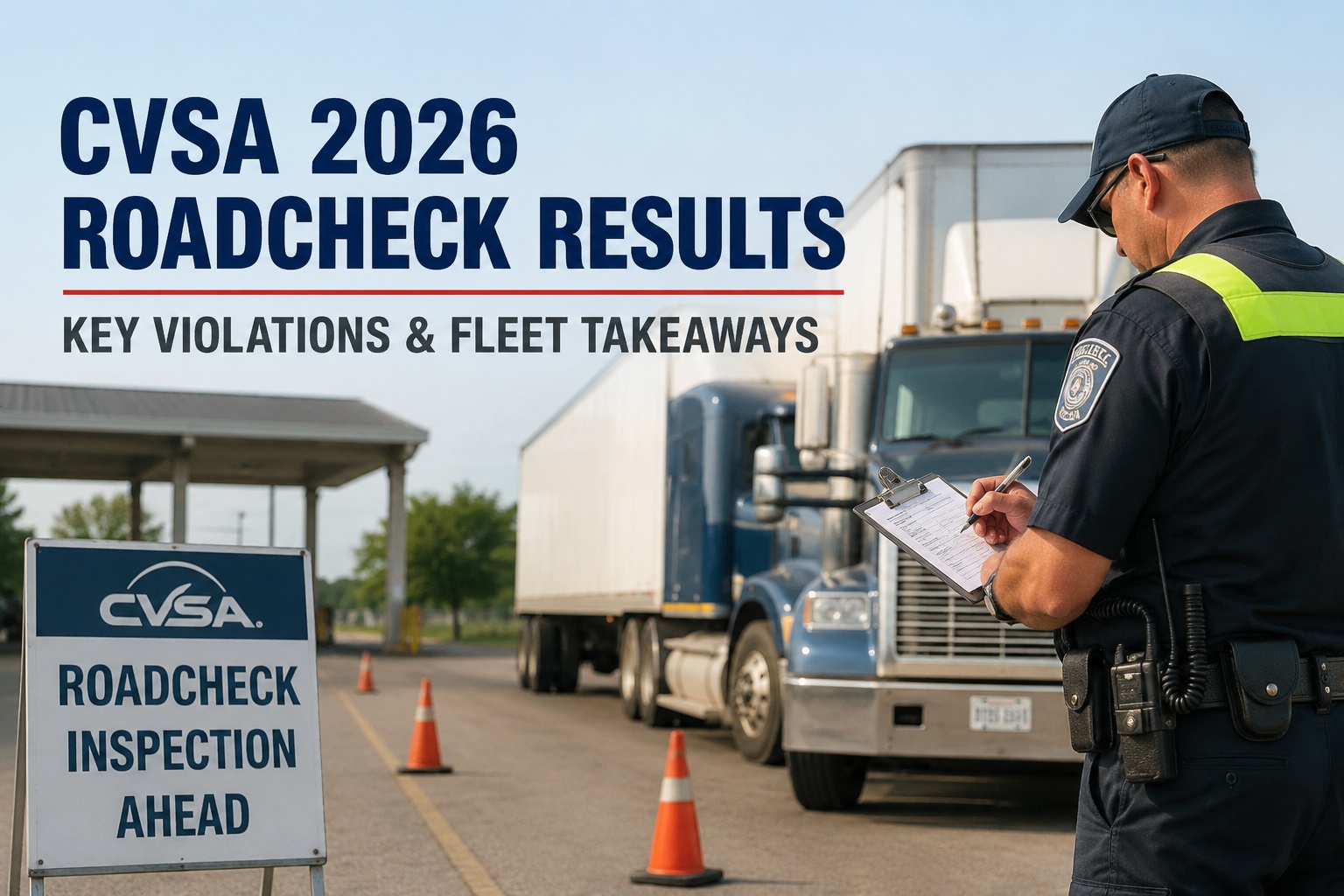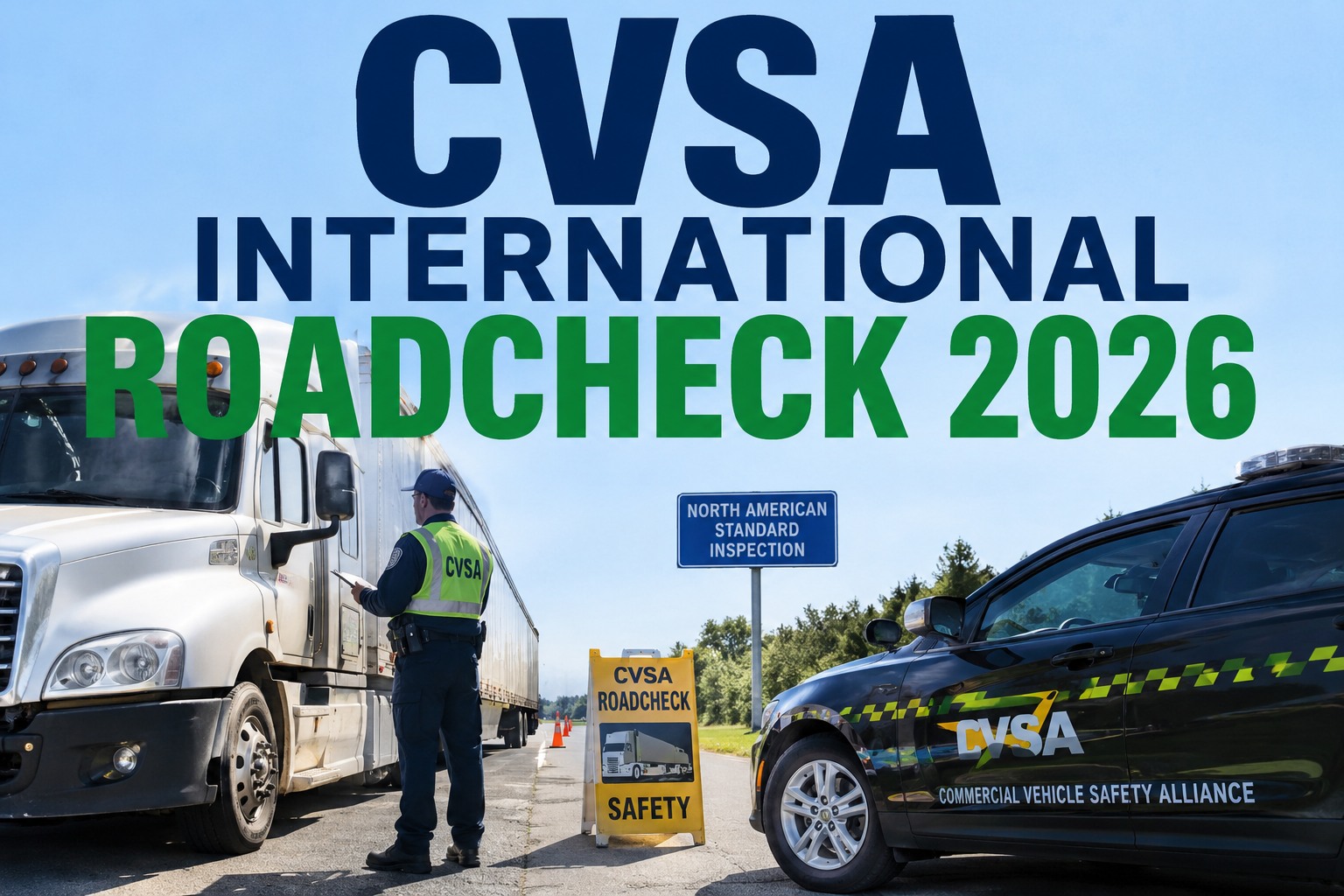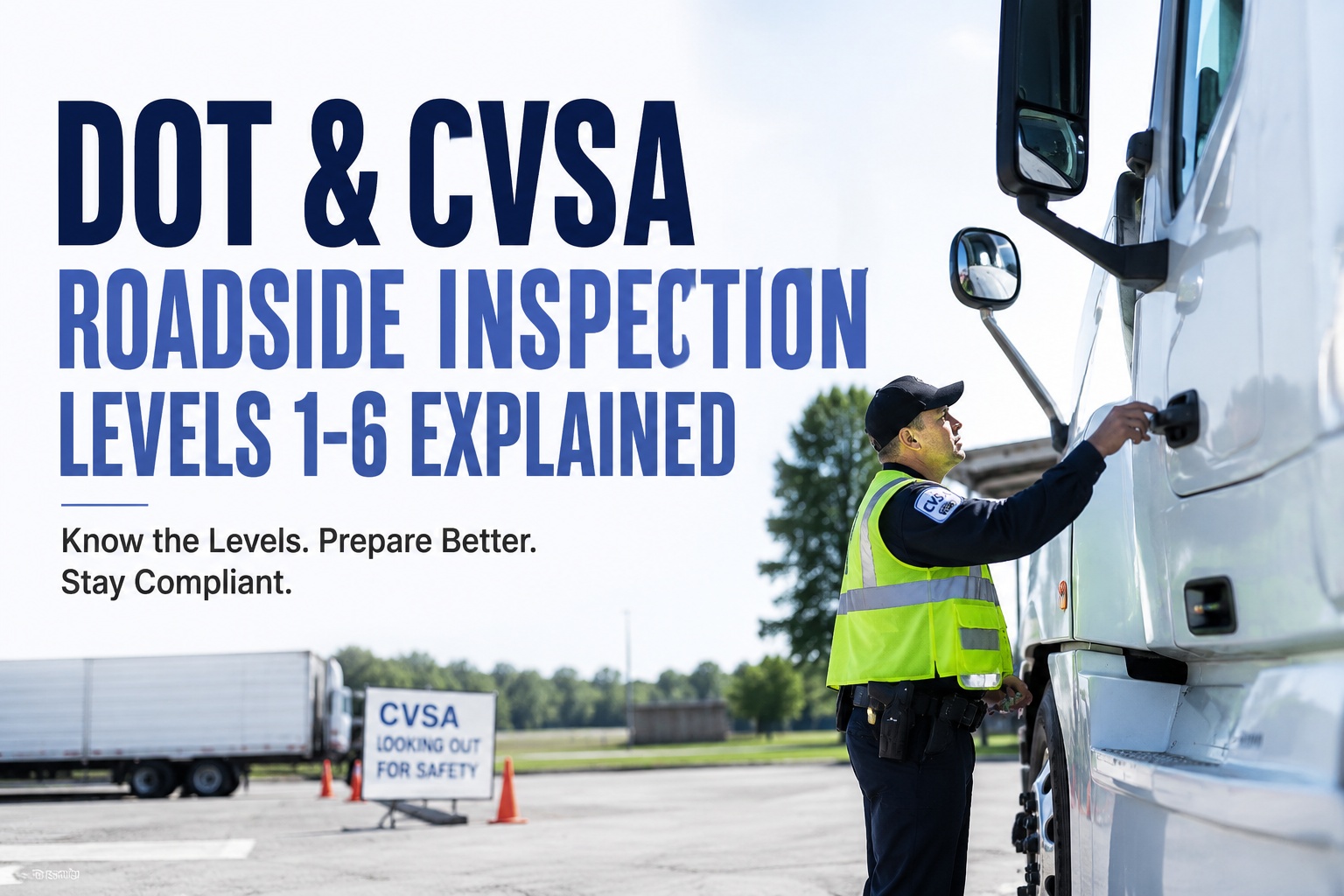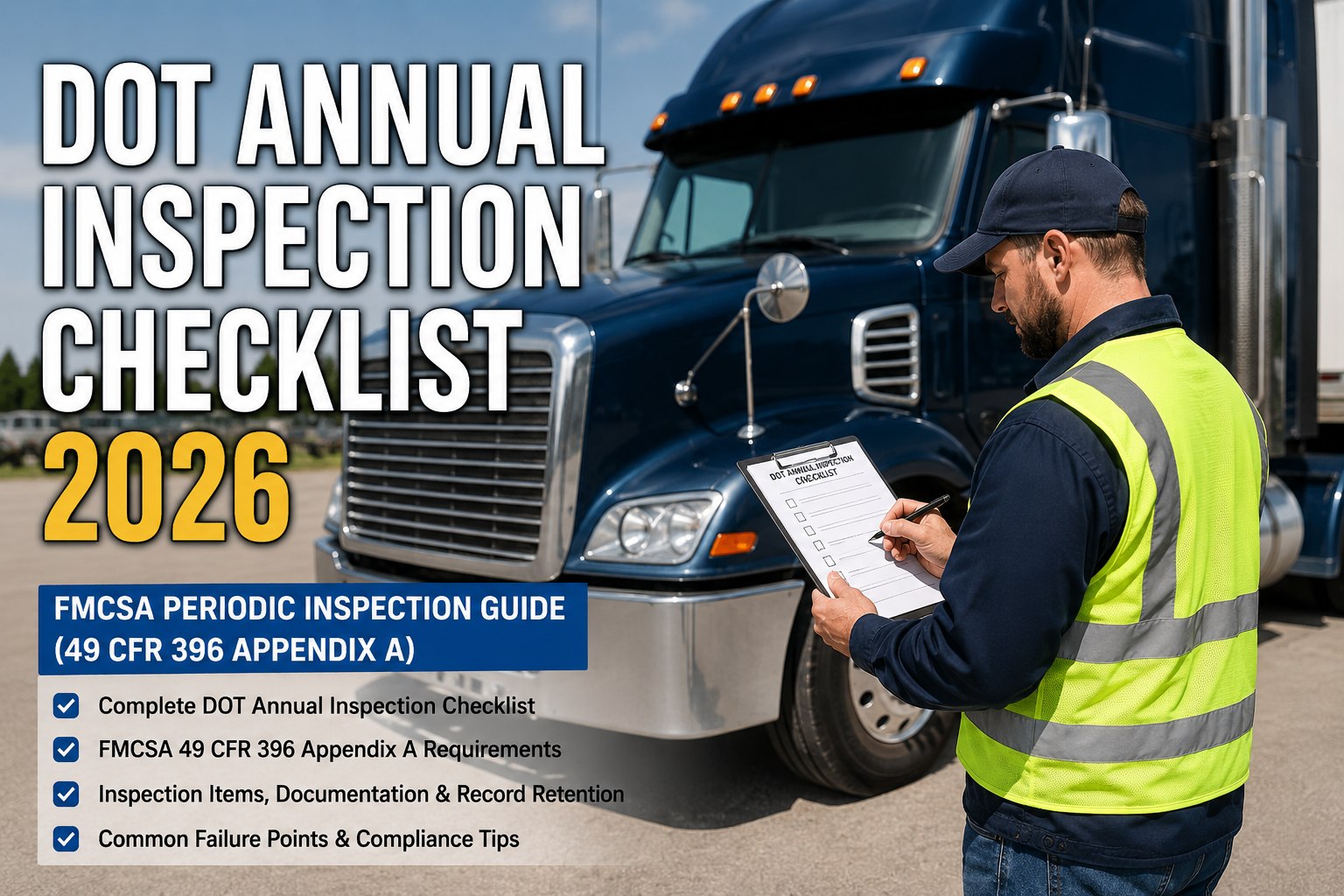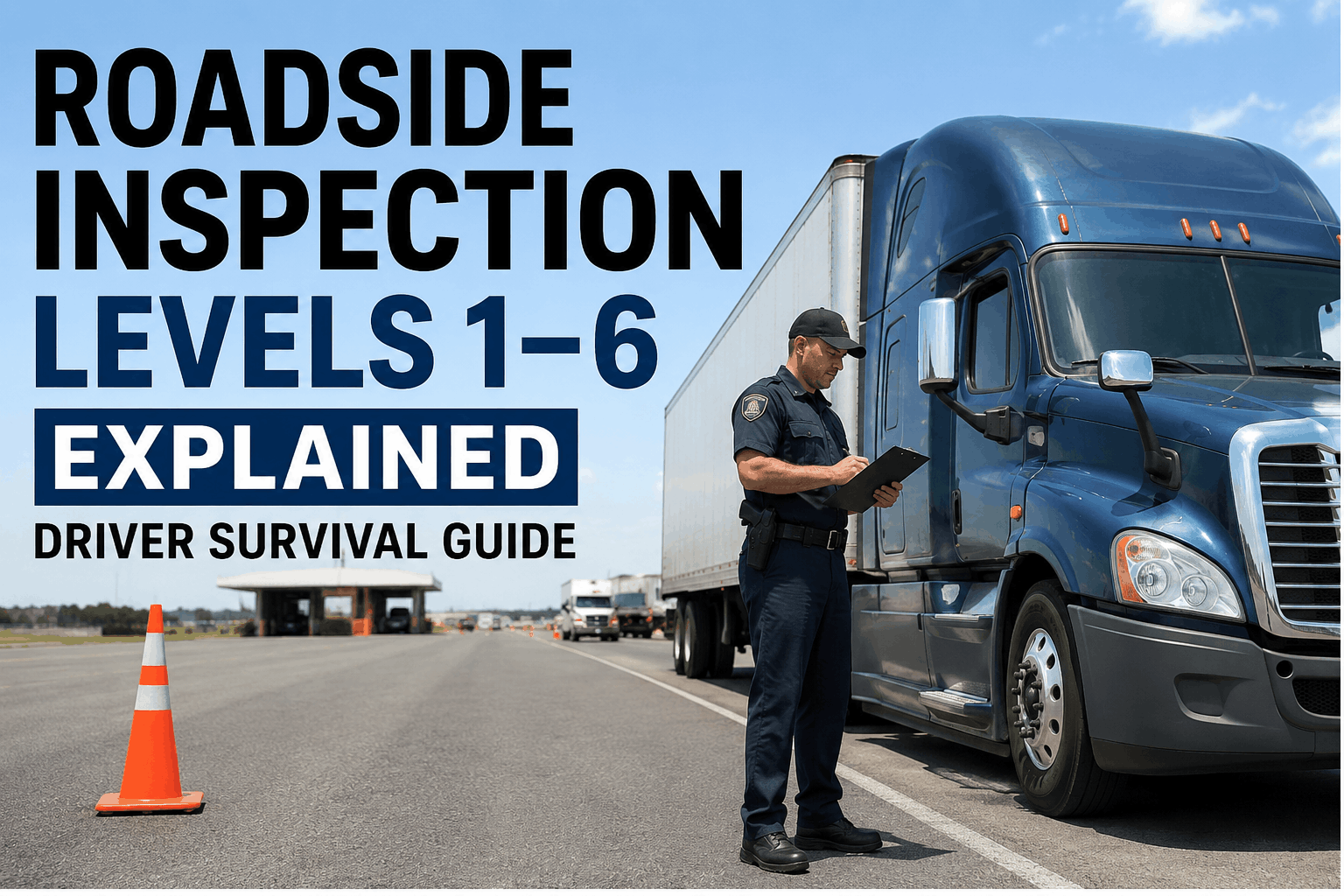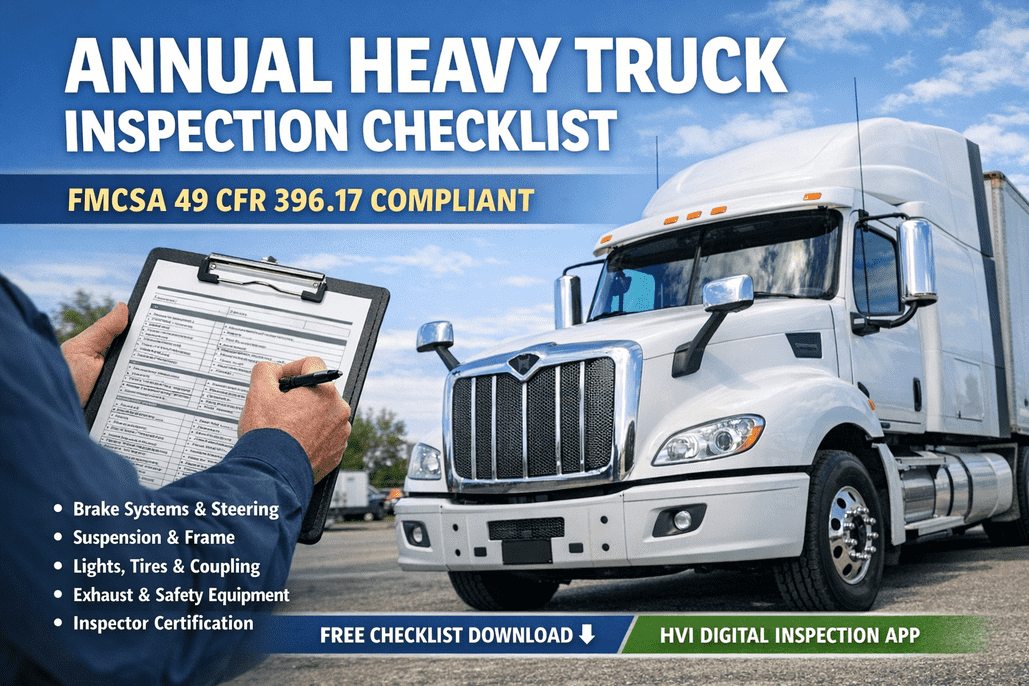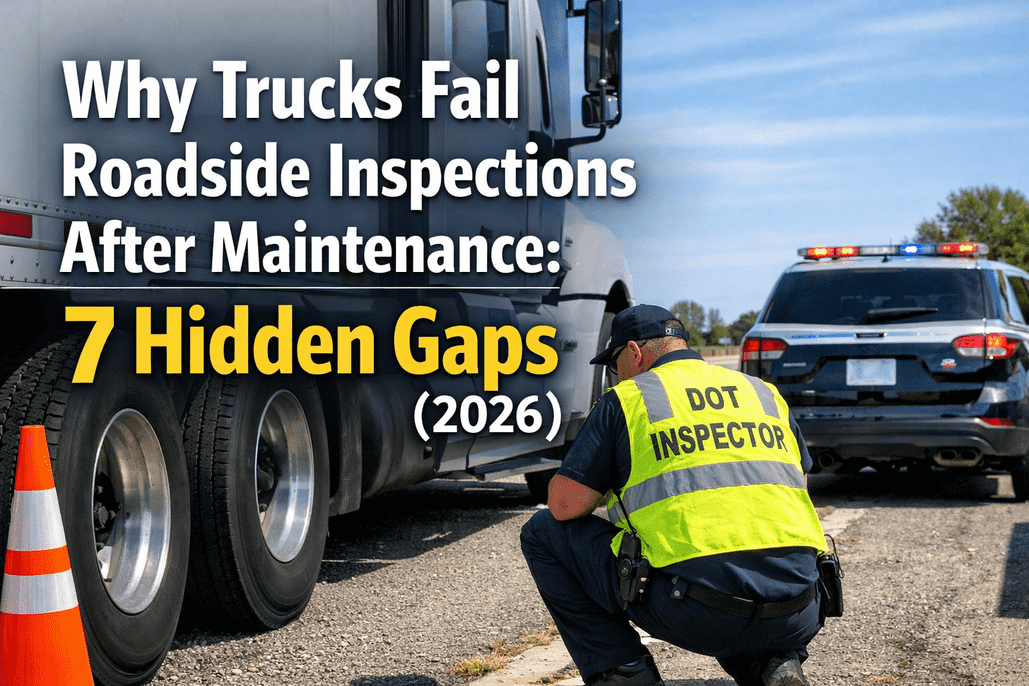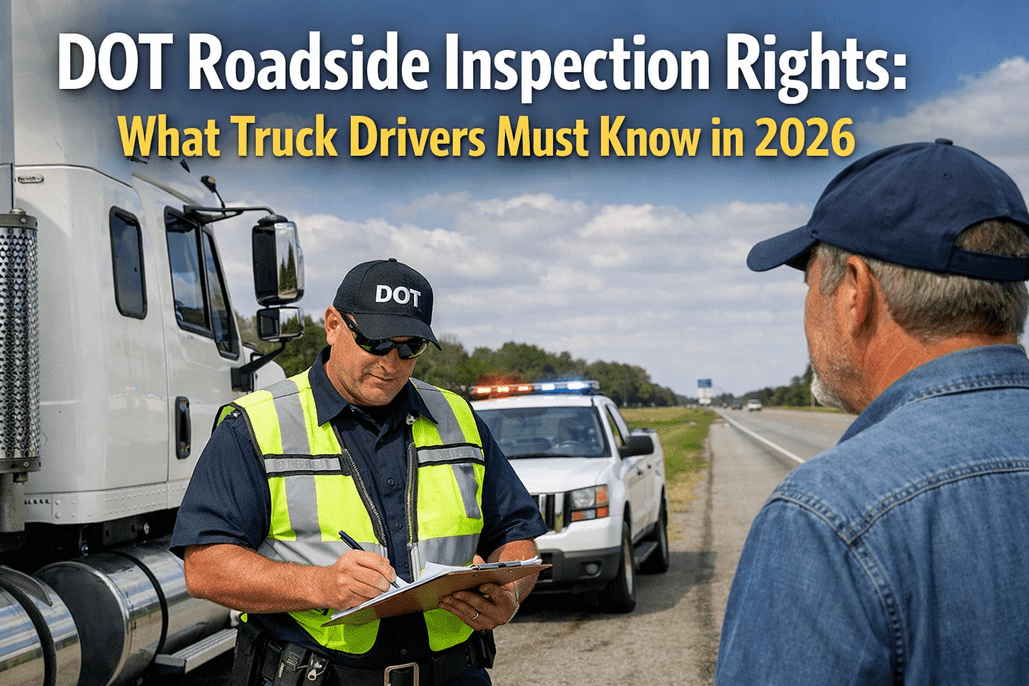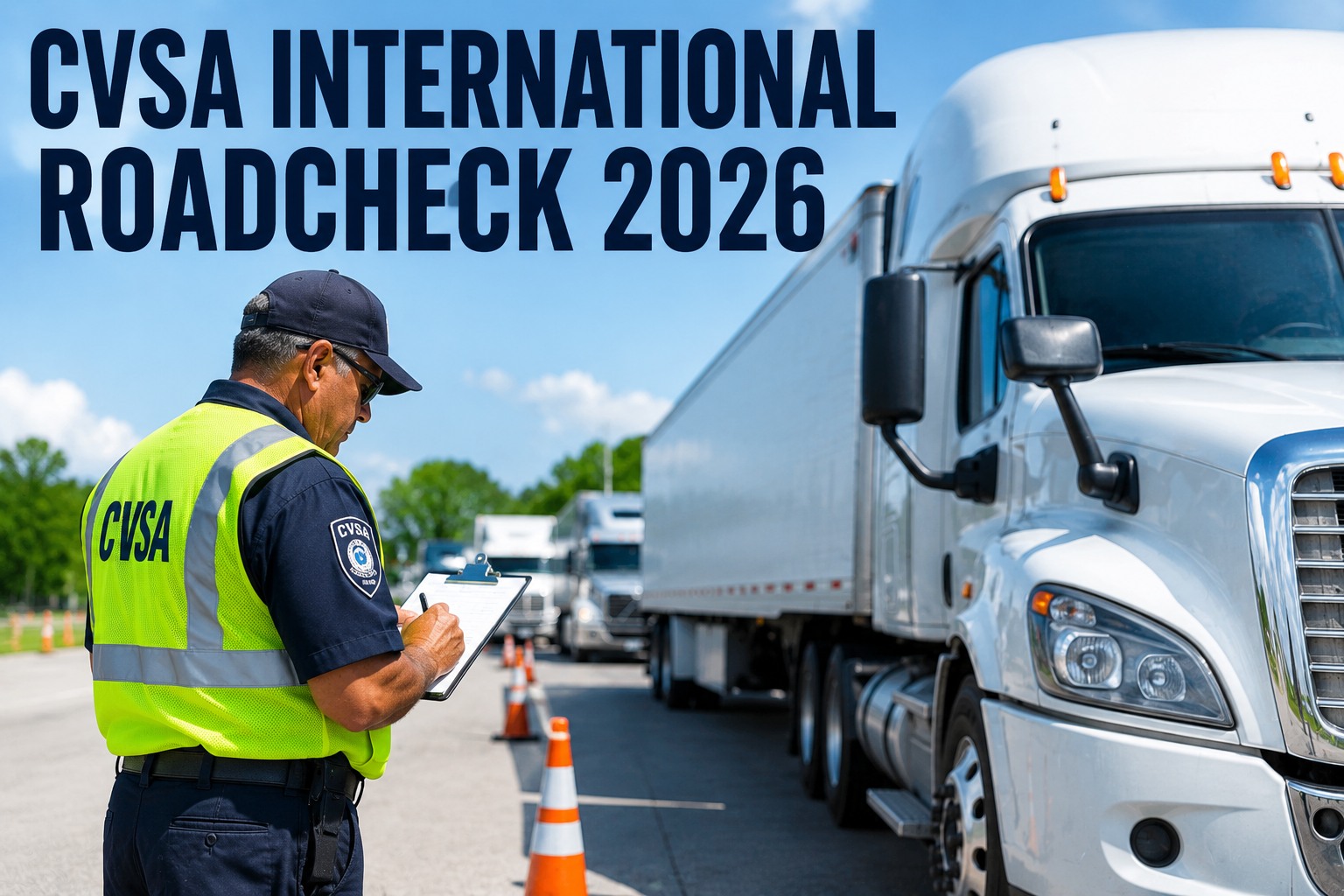
It usually isn't the engine. Your driver rolls into a weigh station on a random Tuesday in May, gets waved into the lane, and forty minutes later the truck is sitting behind a cone with a sticker on the windshield. The load doesn't move, the customer calls, and the cause turns out to be a slack adjuster a hair past limit and a trailer strap nobody wrote down. That is the reality of the CVSA International Roadcheck 2026, the largest commercial vehicle inspection blitz in the world, running May 12 to 14 across the United States, Canada and Mexico. This guide walks through the top out-of-service defects, the full Level I inspection checklist, and how to get your fleet ready before an inspector ever waves you over.
What the Roadcheck actually is
The CVSA International Roadcheck is a 72-hour, high-visibility enforcement sweep run by the Commercial Vehicle Safety Alliance, and the 2026 event runs May 12 through 14. Over those three days, certified inspectors at weigh stations, fixed sites, and pop-up checkpoints across North America examine nearly 15 trucks and motorcoaches every minute. Since 1988 the program has logged more than 1.8 million roadside inspections — it is the biggest targeted enforcement event of its kind anywhere in the world.
Most trucks pulled in get a North American Standard Level I inspection: a 37-step check split between the driver's credentials and the vehicle's mechanical fitness. Find a defect that meets CVSA's Out-of-Service Criteria and the truck is parked on the spot — no driving to the nearest shop, no "I'll fix it Monday." Pass a Level I or V clean, though, and you earn a decal that generally keeps you out of the inspection lane for up to three months. That decal is the whole reason to build inspection discipline into your daily routine rather than scrambling every May.
The 2026 focus areas
Each year CVSA spotlights one driver issue and one vehicle issue for extra scrutiny — on top of the full inspection, never instead of it. For 2026, these two are where inspectors are looking hardest.
ELD tampering & falsified logs
Inspectors review your record of duty status as always, but this year they are hunting for false or manipulated entries, edited driving time with no audit trail, and signs the logging device itself has been altered. Some errors are honest confusion about exemptions; others deliberately hide hours-of-service violations. Either way it is a driver out-of-service placement under FMCSA Part 395.
Cargo securement
When a few thousand pounds of steel, lumber, or gravel shifts mid-turn, the whole truck's balance and braking change. Inspectors check that loads are contained, immobilized, and secured so nothing can leak, spill, blow off, or fall — and that tarps, chains, and dunnage are locked down too. Degraded straps and too-few tiedowns for the working load limit under Part 393 are prime triggers.
If you run flatbeds, tankers, or anything hauling loose or heavy freight, this is your year to tighten securement — book a demo to see how drivers log tiedown counts and strap condition on every trip instead of eyeballing it.
Where trucks actually get parked
Cargo securement and ELDs are the named focus, but they are not what grounds the most trucks. Year after year the same three mechanical categories dominate. Hover or tap any card below to see the detail behind the number — this is the 2025 Roadcheck breakdown, the clearest picture of what your fleet faces in 2026.
3,304 out-of-service violations — the single largest category. Out-of-adjustment pushrods, worn linings, cracked drums, leaking chambers. One bad wheel-end fails the whole vehicle.
2,899 violations. Flats, insufficient tread, cuts exposing cord ply, bulges, improper repairs, or tires not rated for the load. A single defective tire parks the truck instantly.
Inoperative required lamps and reflectors. The fastest and cheapest violation to prevent — and one of the most common, because it is the easiest thing to miss on a rushed walkaround.
The 2026 vehicle focus. Loose loads, degraded straps, too few tiedowns for the working load limit, unsecured dunnage. Expect this share to climb with the added scrutiny this year.
Add the "20% defective brakes" category and brakes drive roughly 41% of all vehicle out-of-service orders — a share that has held above 40% every recent year, regardless of the named focus. The failures that ground trucks are rarely dramatic; they are small, measurable, overlooked defects. A lining a thirty-second under spec, a steer tire one groove short, a lamp that quietly died last week. Every one is catchable on a proper pre-trip if someone is actually measuring. See how HVI captures each brake and tire position with a measurement field and a photo, not just a checkmark.
The Level I inspection, both sides
A Level I is 37 steps across driver and vehicle. Switch between the two panels below to see exactly what an inspector examines — so you prep the right things instead of guessing.
- Brake systems — adjustment, linings, chambers, air loss
- Tires, wheels, rims, and fasteners
- Steering mechanism and suspension
- Coupling devices and fifth wheel
- Frame, fuel, and exhaust systems
- Lighting devices and reflectors
- Cargo securement — heavy 2026 focus
- Windshield, wipers, mirrors, and horn
- Commercial driver's license and endorsements
- Medical examiner's certificate and any waivers
- Record of duty status / ELD logs — heavy 2026 focus
- Hours-of-service compliance
- Seat belt usage
- Drug & Alcohol Clearinghouse status (US)
- Skill Performance Evaluation certificate, if applicable
- Signs of alcohol or drug impairment
Every item has its own rejection criteria under CVSA's Out-of-Service Criteria, which update each April 1. The measured items — brake pushrod stroke, lining thickness, and tire tread depth — are where most fleets get caught, because a checkmark on paper never proves a number was taken. Loading the full inspection onto a digital inspection app forces the number to be recorded at every position, so "looks fine" can't quietly become "out of service" two weeks later.
Your 30-day prep countdown
Fleets that roll through Roadcheck clean start early and work backward from May 12. Here is a practical countdown any fleet or maintenance manager can run.
-
30days
Full brake & tire audit
Measure pushrod stroke and lining at each wheel-end; check tread against 4/32" steer, 2/32" all others. Flag anything marginal now, while parts still have time to arrive.
-
21days
Audit ELD records & credentials
Review duty logs for unassigned driving, unexplained edits, and transfer readiness. Confirm every CDL, medical card, and Clearinghouse status is current — the 2026 driver focus.
-
14days
Retrain on cargo securement
Walk drivers through Part 393 working load limits and tiedown ratios. Replace frayed straps and chains. Make securement a logged pre-trip step, not an afterthought.
-
3days
Lighting check & mock inspection
Walk every unit for dead lamps and reflectors — the quickest, most preventable violation. Run a practice Level I so nothing is a surprise when a driver gets waved in.
Roadcheck week should be a formality, not a fire drill. Fleets feeding daily driver findings into the shop catch these defects weeks ahead; those that prep the morning of get sidelined. Book a 30-minute demo to see DVIRs flow straight into a maintenance queue so problems surface early.
Reactive vs. always-ready
Same trucks, same inspectors, wildly different outcomes. The difference is whether defects get caught in daily operations or discovered at the scale house.
Digital DVIRs feed the shop daily. Brakes, tires, and lights tracked between inspections. Defects fixed weeks early. Roadcheck is just another clean pass and a fresh decal.
Defects discovered roadside, trucks parked mid-route, revenue frozen while a mobile unit is dispatched. An out-of-service order can't even move to the nearest truck stop under its own power.
Most Roadcheck failures are visible weeks ahead if someone is tracking them. That is the entire case for a connected inspection and maintenance system, and why fleets using preventive maintenance scheduling tied to real inspection data pass at far higher rates.
From the shop floor
The units that get parked during Roadcheck are almost never the ones we worry about. It's the "good" truck — a lamp that died on Tuesday, a strap the driver eyeballed and figured was fine, a brake that drifted out of adjustment since the last PM. Nobody wrote any of it down, so nobody caught it.
Since we put the checklist on every driver's phone, they can't sign off a walkaround without recording the actual tread and stroke numbers, and a bad lamp throws a work order to the shop the same day. Our first-pass rate stopped being a coin flip.
Paper walkaround vs. HVI
Paper walkaround
- A checkmark with no measurement behind it
- Easy to skip a system and still "complete" the form
- No photo of the defect that was found
- Driver-reported issues never reach the shop
- No trail to prove a defect was fixed before Roadcheck
HVI digital inspection
- Measurement field per position — stroke, tread depth
- Pass/fail gates that block a partial inspection
- Mandatory defect photos and auto work orders
- Driver DVIRs flow straight into the maintenance queue
- Full audit-ready history for every unit on demand
Roadcheck lasts 72 hours, but inspectors can stop you any day of the year — and every inspection feeds your CSA BASIC scores. Building the check into daily operations is what keeps you inspection-ready in May and every other month. Sign up free with HVI and put the Level I checklist on every driver's phone.
Frequently asked questions
When is the CVSA International Roadcheck 2026?
The CVSA International Roadcheck 2026 runs May 12–14, 2026, across the United States, Canada, and Mexico. It is a 72-hour enforcement and data-gathering blitz where certified inspectors examine nearly 15 trucks and motorcoaches every minute at weigh stations, fixed sites, and pop-up checkpoints. Aggregate results are published later in the year. Inspectors can stop a commercial vehicle any day — Roadcheck is simply the largest, most concentrated event.
What are the 2026 Roadcheck focus areas?
For 2026, the driver focus is electronic logging device (ELD) tampering, falsification, or manipulation, and the vehicle focus is cargo securement. Inspectors review records of duty status for false or edited entries and check that loads are contained, immobilized, and secured with adequate tiedowns under FMCSA Part 393. These areas get extra scrutiny on top of the standard full inspection — brakes, tires, and lights are still checked as thoroughly as ever.
What is the most common out-of-service violation?
Brake systems are consistently the number one vehicle out-of-service violation. In the 2025 Roadcheck, brake system violations accounted for 24.4% of all vehicle OOS orders, and combined with the "20% defective brakes" category, brake-related issues made up roughly 41% of the total. Tires were second at 21.4%, followed by lighting near 14% and cargo securement around 11%. These categories dominate year after year, regardless of the named focus.
What is a North American Standard Level I inspection?
A Level I inspection is the most thorough roadside inspection — a 37-step procedure covering both the driver and the vehicle. The driver portion checks license, medical certificate, records of duty status, seat belt, and Drug & Alcohol Clearinghouse status. The vehicle portion checks brakes, tires, steering, suspension, coupling devices, frame, lighting, and cargo securement against CVSA's Out-of-Service Criteria. A vehicle that passes a Level I or V without critical violations earns a decal valid for up to three months.
What happens if my truck fails a CVSA inspection?
If an inspector finds a defect that meets the Out-of-Service Criteria, the vehicle is placed out of service and cannot be operated — not even driven to the nearest shop — until the violation is corrected and cleared. A mobile repair service must come to the truck. Beyond the downtime and lost revenue, the violation feeds your CSA BASIC scores, with out-of-service findings carrying higher severity weights and multiple violations in one inspection compounding the impact. Preventing defects through daily digital inspections is far cheaper than reacting roadside.
Put the full Level I checklist on every driver's phone
HVI runs your inspections as guided pass/fail gates — measurement fields for every brake and tire position, mandatory defect photos, one-click work orders, digital DVIRs that feed the shop, and a clean audit history for every unit. Stop letting a missed number or a dead lamp turn a good truck into an out-of-service order this May.
No credit card · No hardware · Live on your fleet in under two weeks