Choosing between McLeod and TMW Suite isn't really a software decision — it's a bet on how your operation will run for the next decade. Both are serious enterprise transportation management systems that large asset-based carriers trust to move freight, bill it, and settle it. But they're built around different philosophies, and the "better" one depends on your dispatch model, integrations, and technology ecosystem. This mcleod vs tmw suite comparison walks the capabilities that matter at enterprise scale, then hands you a winner-by-use-case framework. Book a demo to see how HVI's inspection data plugs into either one.
McLeod vs TMW Suite: Enterprise TMS Comparison
Two established platforms, two different philosophies. Here's how they compare on the capabilities that matter to large trucking operations — and how to tell which one fits yours.
Vendor details, product names, and availability reflect 2026 and can change. Confirm current capabilities, modules, and pricing directly with each vendor before deciding.
McLeod and TMW Suite have anchored the enterprise TMS market for years, and for good reason: both handle the full order-to-cash lifecycle — dispatch, order management, load planning, driver and asset workflows, billing, settlements, and accounting connectivity — at a depth most cloud-native newcomers can't match. The differences aren't about which has "more features." They're about design philosophy, integration strategy, and where each one's strengths line up against how your fleet actually operates. Get that match right and the platform becomes an operational backbone; get it wrong and you pay for complexity you'll never use.
Who each platform is really built for
Before comparing features line by line, it helps to understand each platform's center of gravity — the operating model it was designed around and does best.
An independent vendor with a carrier product (LoadMaster) and a brokerage product (PowerBroker), serving truckload carriers, private fleets, LTL, and 3PLs. Its reputation rests on exceptionally deep revenue and accessorial billing, sophisticated driver-pay handling, complex multi-stop routing, and strong business-intelligence reporting.
Part of Trimble's broader transportation portfolio, TMW Suite serves midsize-to-enterprise asset-based carriers with dispatch, load planning, maintenance, settlements, and accounting. Its distinguishing strength is the single-vendor ecosystem: TMS bundled with Trimble telematics, ELD, and maintenance lines under one relationship.
That single distinction — McLeod's billing-and-operations depth versus Trimble's one-vendor ecosystem — drives most of the decision. Neither is objectively better; they optimize for different priorities. Book a demo to see where inspection and compliance data fits into either model
Capability-by-capability comparison
Here's how the two platforms line up across the areas enterprise fleets weigh most. Both are strong across the board — the notes highlight where each tends to lead or differ, not pass/fail scoring.
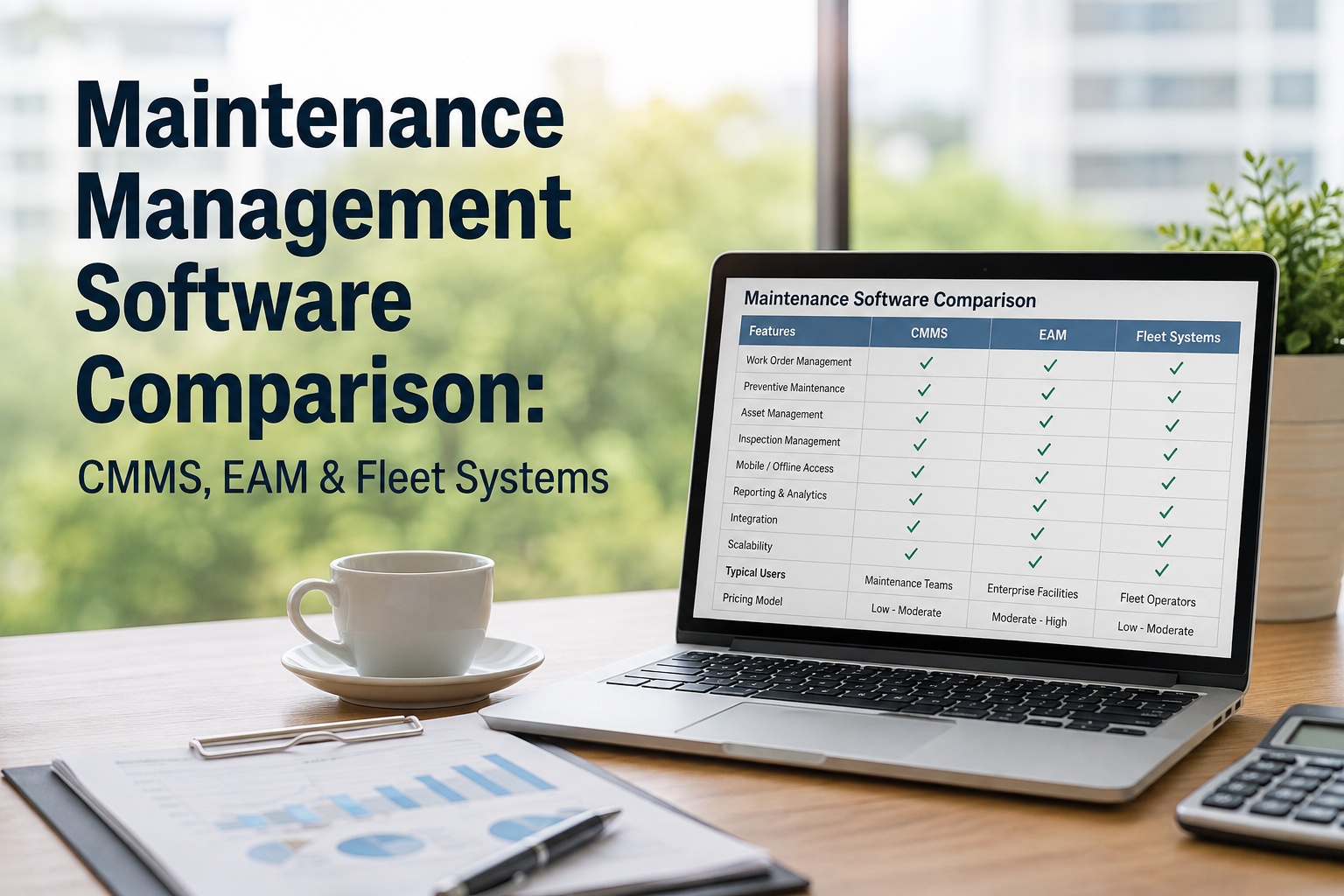
| Capability | McLeod (LoadMaster) | TMW Suite (Trimble) |
|---|---|---|
| Dispatch & order management | Deep, highly configurable; strong for complex TL workflows | Deep; visual planning with strong route optimization |
| Load planning | Sophisticated multi-stop & complex lane handling | Robust planning with optimization tooling |
| Billing & accessorials | A standout strength — very deep accessorial/revenue detail | Solid order-to-cash billing & settlements |
| Driver & asset workflows | Complex driver-pay structures handled natively | Strong asset management & driver workflows |
| Accounting connectivity | Integrated accounting with full GL activity | Integrated accounting & settlements |
| Maintenance data | Maintenance modules; integrates external data | Bundled maintenance line within Trimble stack |
| Telematics ecosystem | Integrates leading external telematics providers | Native Trimble telematics/ELD — single vendor |
| Analytics & reporting | Strong BI & profitability reporting | Lane analytics, profitability, driver scorecards |
| APIs & integrations | Broad partner integrations & EDI | Broad integrations; deep within Trimble products |
| Deployment | Enterprise deployment via integrators | Cloud & on-premise options |
| Implementation | Typically a multi-month project w/ dedicated IT | Typically a multi-month project w/ dedicated IT |
Read this as "where each leans," not a scorecard. Both cover the enterprise essentials; the meaningful splits are McLeod's billing depth and TMW Suite's native Trimble ecosystem. Start free on HVI to add inspection and defect data as a layer either platform can consume.
Winner by use case — not a universal verdict
There's no single winner here, and anyone who declares one is selling something. The right answer depends on your operating model. Here's how the choice tends to break down by what you're optimizing for.
- Billing and accessorial complexity is central to your revenue
- You run intricate driver-pay and settlement structures
- You want the deepest native operations and BI reporting
- You prefer an independent vendor and best-of-breed telematics choice
- You want telematics, ELD, maintenance, and TMS from one vendor
- You're already invested in the Trimble hardware ecosystem
- You value a single relationship and unified data across the stack
- You need flexible cloud or on-premise deployment options
- You run 500+ trucks with dedicated IT and complex operations
- You need full order-to-cash depth and enterprise-grade scale
- You expect a multi-month implementation with integrator support
- The deciding factor becomes ecosystem fit, not raw capability
Notice the third column: for many large carriers, both platforms will technically do the job, and the decision comes down to whether you value billing depth and vendor independence (McLeod) or a unified single-vendor ecosystem (TMW Suite). The honest answer is "it depends on your operating model" — and that's not a cop-out, it's the whole point of a real evaluation. Book a demo to factor inspection and compliance data into your evaluation
The integration layer both platforms benefit from
Here's the part most TMS comparisons skip. Whichever platform wins your evaluation, it runs on the assumption that your vehicles are ready to work. But dispatch quality depends on knowing the real, current state of each asset — and that's inspection and compliance territory, not core TMS territory.
Driver and technician inspections surface open defects and vehicle condition in real time.
Maintenance status, DVIRs, out-of-service conditions, and inspection currency become visible.
Dispatch and planning teams assign loads using current vehicle health, not assumptions.
When inspection findings, vehicle availability, defects, maintenance status, and compliance events feed into operational workflows, a dispatcher isn't guessing whether a unit is roadworthy — they're seeing it. That's the role HVI plays: a dedicated inspection and compliance platform that complements your TMS rather than competing with it, so the operational decisions your McLeod or TMW Suite environment drives are made on current vehicle data. It's the difference between a TMS that assumes your fleet is ready and one that knows. Book a demo to explore HVI plus your TMS integration
From a VP of operations who evaluated both
We ran a genuine bake-off between McLeod and TMW Suite for our regional fleet, and honestly, both could have run our operation. McLeod's billing depth was unreal — we do a lot of accessorial-heavy freight and it handled things our old system needed workarounds for. But we were already deep in Trimble telematics, and the one-vendor story for TMW carried real weight with our IT team.
What surprised me was how much the decision came down to the surrounding ecosystem rather than the TMS itself. The thing neither platform solved out of the box was giving dispatch a live read on which trucks were actually inspection-ready and defect-free. We ended up feeding that in from a dedicated inspection system, and that's when the dispatch decisions got genuinely reliable — the TMS was only as good as the vehicle data going into it.
The verdict: fit beats features
The honest conclusion to any real mcleod vs tmw suite comparison is that there's no universal winner — there's a better fit for your operation. McLeod's LoadMaster brings exceptional billing and accessorial depth, sophisticated driver-pay handling, and strong native operations and reporting, with the flexibility of an independent vendor and best-of-breed telematics choices. TMW Suite, as a Trimble platform, brings a unified single-vendor ecosystem where TMS, telematics, ELD, and maintenance live under one relationship, with flexible cloud or on-premise deployment. If billing complexity and vendor independence define your priorities, McLeod leans your way; if a one-vendor stack and existing Trimble investment define them, TMW Suite does. For many large carriers with dedicated IT, either will do the job, and the deciding factor becomes ecosystem fit rather than raw capability — alongside the shared realities of multi-month implementations, real total cost of ownership, and careful data migration.
Whichever you choose, one thing stays constant: the platform's operational decisions are only as good as the vehicle data behind them, and that's where a dedicated inspection and compliance layer earns its place. HVI complements either TMS — not as a competitor, but as the source of current inspection findings, open defects, maintenance status, vehicle availability, and compliance events that flow into dispatch and planning so your teams decide on real vehicle health rather than assumption. To be clear about the boundary: HVI is an inspection and compliance platform, not a TMS, and the product names, features, and availability described here reflect 2026 and can change — confirm current capabilities and pricing directly with McLeod and Trimble before you decide. Evaluate both against your actual operating model, plan for the ecosystem around the TMS, and you'll choose the platform that fits rather than just the one with the longest feature list. Book a demo to see HVI's inspection and compliance data working alongside your TMS.
Frequently asked questions
What's the main difference between McLeod and TMW Suite?
The core difference is philosophy rather than feature count, because both are deep enterprise transportation management systems that handle the full order-to-cash lifecycle. McLeod is an independent vendor whose LoadMaster (for carriers) and PowerBroker (for brokers) products are known especially for exceptionally deep revenue and accessorial billing, sophisticated driver-pay and settlement handling, complex multi-stop routing, and strong business-intelligence reporting — its center of gravity is operational and financial depth, with the flexibility to integrate best-of-breed telematics from various providers. TMW Suite is a Trimble platform, and its defining strength is the single-vendor ecosystem: it bundles TMS with Trimble's own telematics, ELD, and maintenance lines, so a fleet can run much of its technology stack under one vendor relationship with unified data across those systems. So the practical question isn't "which has more features" — both cover the enterprise essentials — but "which philosophy fits your operation": McLeod's billing depth and vendor independence, or TMW Suite's unified one-vendor stack. Fleets already invested in Trimble hardware often lean toward TMW Suite for the integration story, while those prioritizing billing complexity and independent telematics choice often lean toward McLeod. Both product lines and their capabilities reflect 2026 and can evolve, so confirm current details with each vendor.
Which is better for large enterprise fleets?
For large enterprise fleets — commonly cited as those running several hundred to a thousand-plus trucks with dedicated IT teams and complex, multi-division operations — both McLeod and TMW Suite are genuinely capable, and neither is universally "better." Both deliver the enterprise-grade depth such fleets need across dispatch, load planning, billing, settlements, accounting, maintenance data, analytics, and integrations, and both typically involve significant multi-month implementations supported by certified integrators. Because both clear the capability bar at this scale, the decision usually comes down to ecosystem fit rather than raw functionality. A fleet that runs accessorial-heavy freight with intricate driver-pay structures and wants the deepest native billing may find McLeod's LoadMaster the stronger match, while a fleet already invested in Trimble telematics and hardware that wants everything under a single vendor relationship may find TMW Suite the more natural fit. Other factors that tip the balance include deployment preferences (TMW Suite offers cloud and on-premise options), the value placed on vendor independence versus a unified stack, and how existing systems will integrate. The most reliable approach is to run a structured evaluation against your specific operating model rather than relying on a general "which is best" verdict, since the right answer is fleet-specific.
How much do McLeod and TMW Suite cost?
Neither vendor uses simple published pricing, because enterprise TMS cost is inherently variable and configured to each fleet. Rather than a single sticker price, the cost of either McLeod or TMW Suite depends on a range of factors: fleet size, the specific modules you license, the number of users, the integrations required, the implementation and professional services involved, the degree of customization, and the overall contract structure. A consistent theme with both platforms is that the software subscription is often a relatively small part of total cost of ownership — implementation, customization, data migration, integration work, and ongoing support frequently represent a larger share, and both are commonly deployed through certified system integrators whose professional-services costs factor heavily into the total. This is why a meaningful cost comparison can't be reduced to a per-truck or per-user number pulled from a third-party summary; the same platform can cost very differently for two fleets depending on scope and complexity. The right way to understand cost is to get a scoped quote from each vendor based on your actual requirements — fleet size, modules, users, integrations, and services — and to budget realistically for implementation and migration alongside the subscription itself, rather than relying on any universal figure.
Can a TMS handle vehicle inspections and compliance?
A transportation management system and a vehicle inspection and compliance platform solve different problems, and it's worth understanding the distinction when planning your technology stack. A TMS like McLeod or TMW Suite excels at the commercial and operational side of freight: dispatch, order management, load planning, billing, settlements, accounting connectivity, and the analytics around those workflows. While enterprise TMS platforms include maintenance-related modules and can integrate maintenance data, their primary purpose is managing the movement and monetization of freight, not conducting and documenting driver and technician inspections, tracking open defects through repair and verification, or maintaining the detailed inspection and compliance record that fleets rely on for roadworthiness and audit readiness. That's the domain of a dedicated inspection and compliance platform. The strongest setup is complementary rather than either-or: the TMS runs operations, while an inspection platform like HVI captures current inspection findings, defects, maintenance status, vehicle availability, and compliance events, then feeds that data into operational workflows so dispatch and planning decisions reflect real vehicle health. In that model, the inspection platform isn't competing with the TMS — it's supplying the current vehicle data the TMS assumes but doesn't itself generate, making the operational decisions the TMS drives more reliable.
How does inspection data improve TMS dispatch decisions?
Dispatch decisions are only as good as the assumptions behind them, and one of the biggest assumptions a TMS makes is that the vehicles it's assigning are actually ready to work. In practice, a truck might have an open defect, be due for maintenance, have a lapsed inspection, or be under an out-of-service condition — and if that information isn't visible in the operational workflow, a dispatcher can unknowingly assign a load to a unit that shouldn't be moving. Feeding inspection and compliance data into the TMS environment closes that gap. When inspection findings, vehicle availability, open defects, maintenance status, and compliance events flow into operational workflows, dispatch and fleet teams can make assignment decisions using current vehicle data rather than guesswork. The practical benefits are concrete: fewer loads assigned to trucks that aren't roadworthy, earlier visibility into defects before they escalate into breakdowns or violations, and a defensible record that a vehicle's condition was known and accounted for. This is exactly the integration angle where a dedicated inspection and compliance platform such as HVI adds value to either McLeod or TMW Suite — not by replacing the TMS, but by supplying the real-time vehicle-health picture that turns operational decisions from assumptions into informed choices, which at enterprise scale can meaningfully reduce downtime, compliance risk, and the cost of dispatching the wrong unit.
See how HVI's inspection data works with your TMS
McLeod or TMW Suite will run your operations — HVI makes sure those operations are built on current vehicle data. Feed inspection findings, open defects, maintenance status, vehicle availability, and compliance events into your dispatch and planning workflows, so your teams decide on real vehicle health instead of assumptions. HVI is a complementary inspection and compliance layer, not a competing TMS. Start free, or book a demo to explore the integration with your enterprise platform.
Free to start · Complements any enterprise TMS · Inspection, defect & compliance data on day one