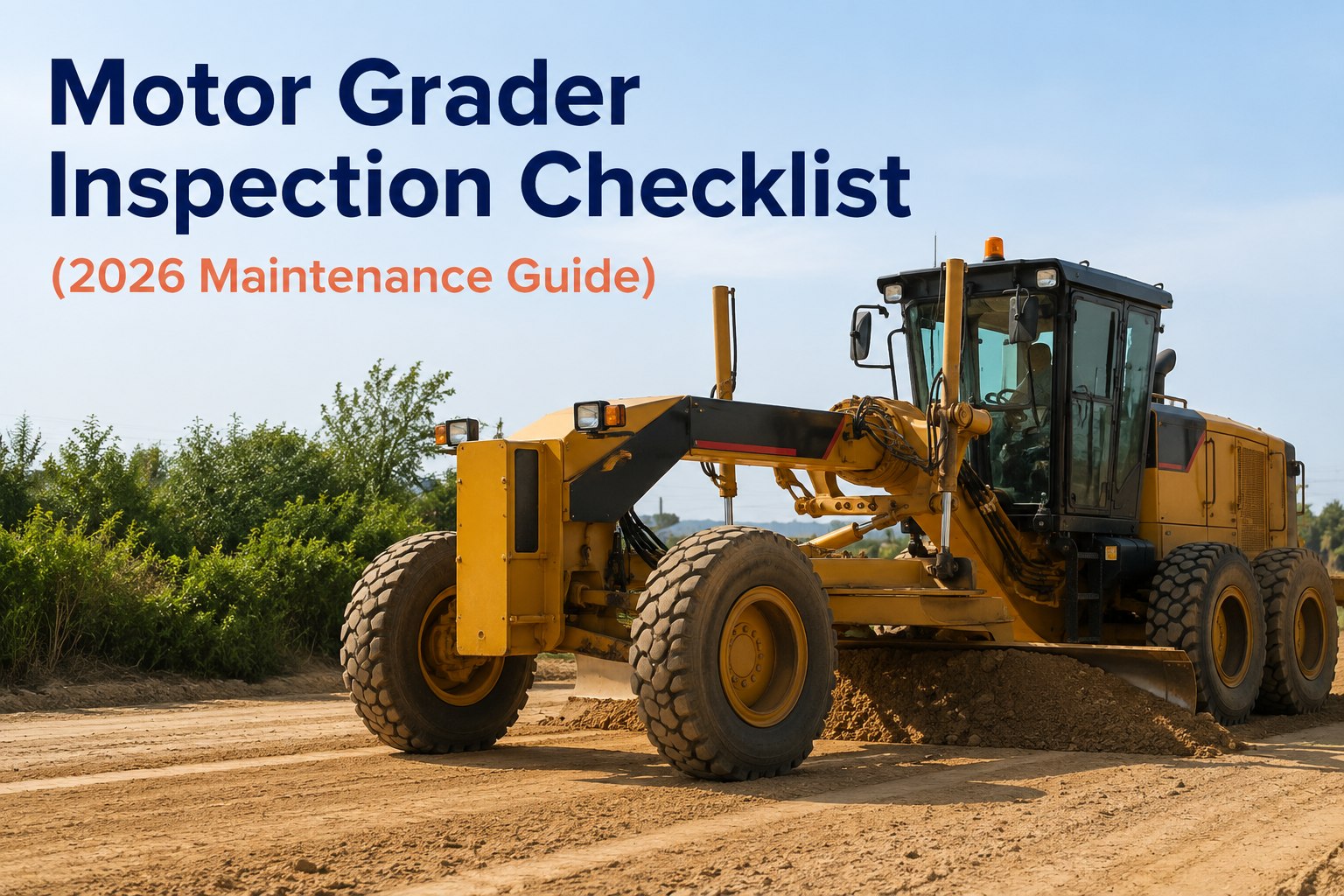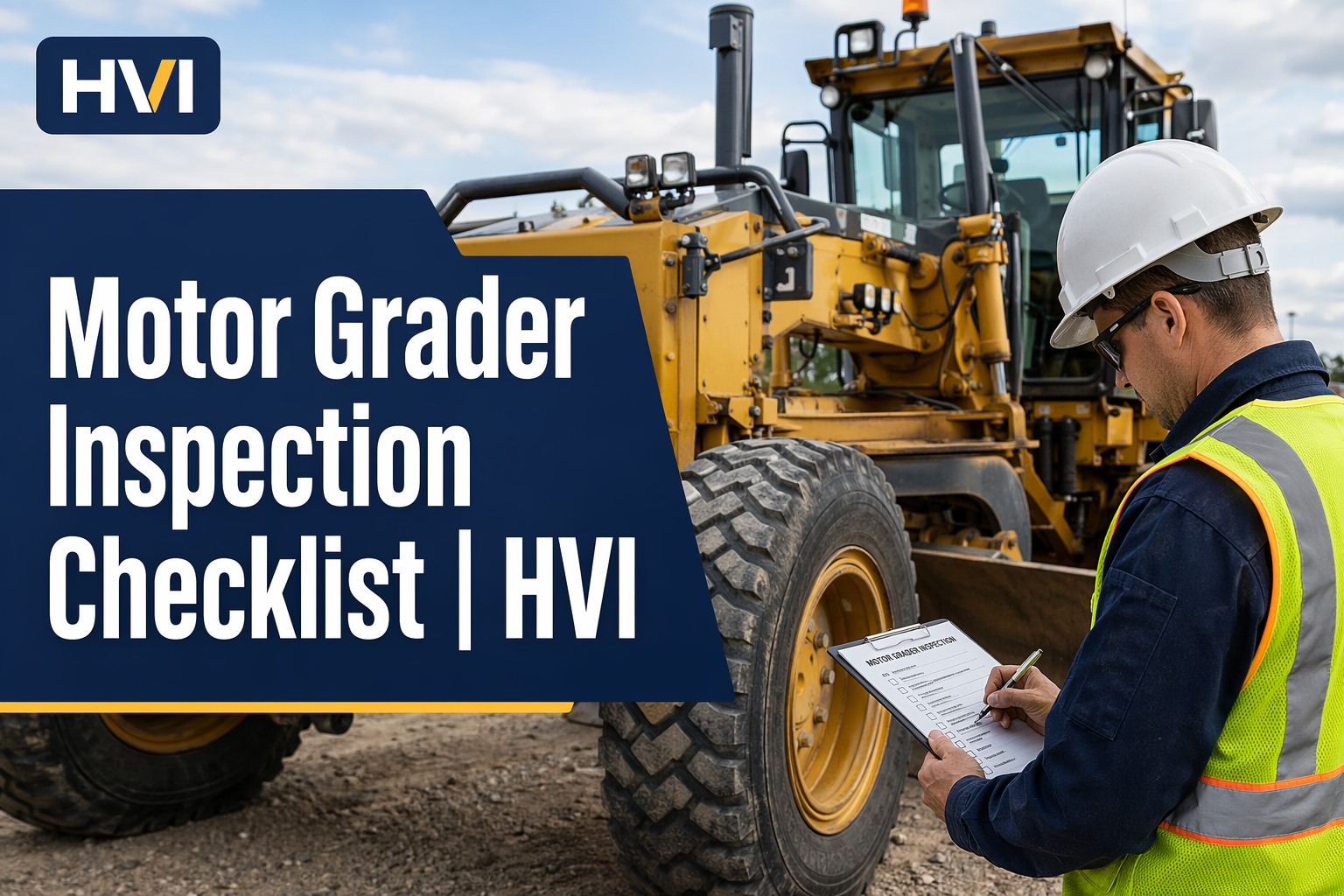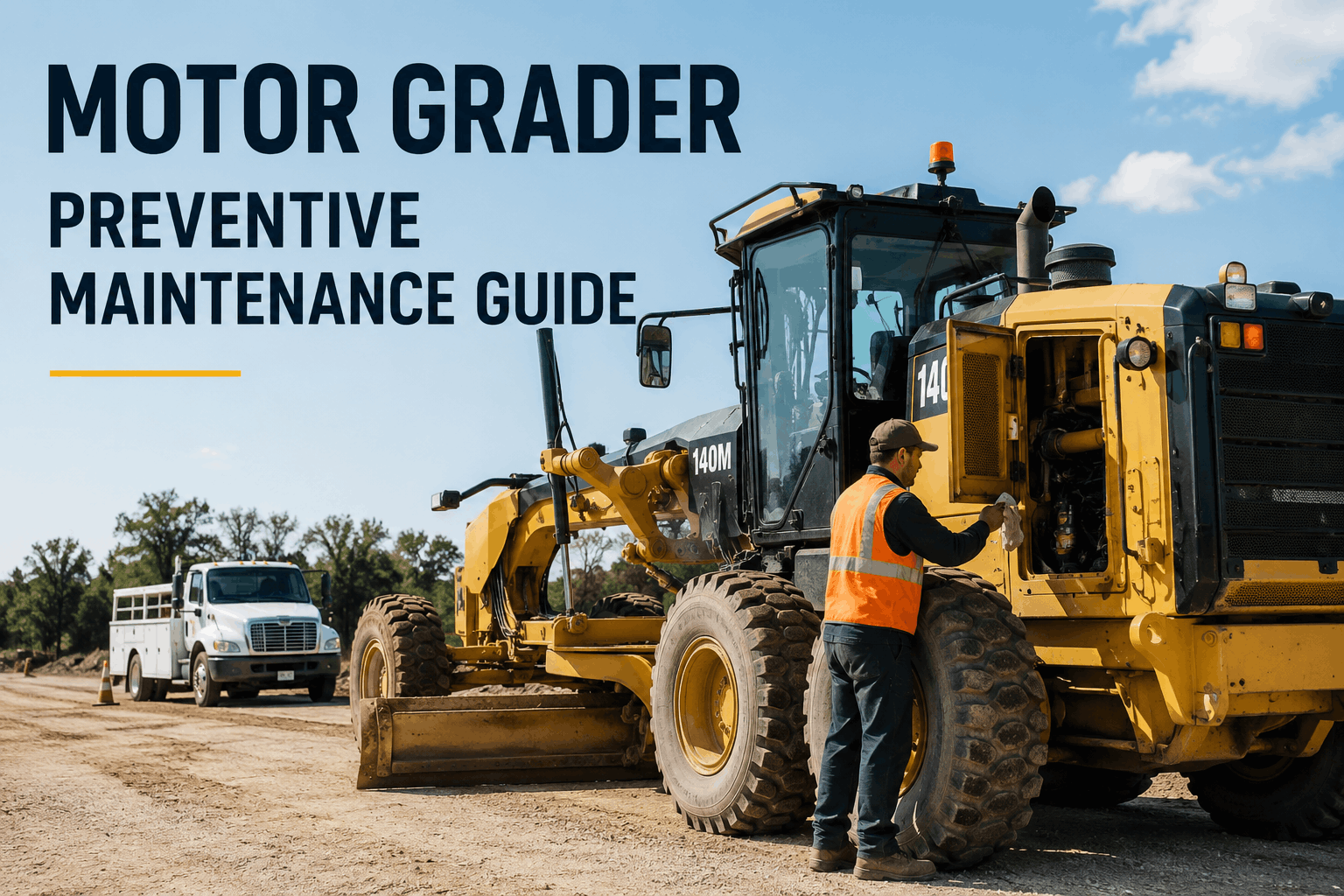
A motor grader is the most precision-dependent machine in the earthmoving fleet — and the most punishing to neglect. Unlike a dozer or loader that just moves dirt, a grader lives or dies on the condition of four hard-working systems most checklists barely mention: the blade and moldboard, the circle drive, the articulation hitch, and the tandem drive. Get those right and a grader holds grade pass after pass; let them slide and you get blade chatter, sloppy cuts, and the kind of breakdown that idles a paving crew. The economics are stark: on a Cat-style grader, the circle drive and hydraulics absorb roughly 35% of total maintenance cost and the blade and moldboard another 25% — and skipping scheduled service doesn't save money, it just converts predictable $500–$2,000 PM jobs into unpredictable $15,000–$125,000 emergency repairs. Proper PM, by contrast, extends equipment life 40–60% and cuts unplanned downtime by up to 75%. HVI's grader inspection and maintenance software turns the daily walkaround, the grease-heavy circle service, and every PM tier into one tracked, alert-driven workflow. This guide breaks down the four systems, the daily checks, and the PM rhythm that keeps a grader on grade. schedule a 30-minute walkthrough with our team to see it set up for your Cat 140 and John Deere machines.
Four systems decide whether a grader holds grade — or holds up the whole crew.
HVI schedules blade, circle, articulation, and tandem-drive service by engine hours across every grader in your fleet — with daily walkarounds on the operator's phone and defects routed straight to a work order.
Where a grader's maintenance money actually goes
Knowing where the cost and risk concentrate tells you where to focus inspection effort. On a typical motor grader, four systems dominate the maintenance budget.
Skipping intervals doesn't save money — it shifts cost from predictable $500–$2,000 PM services to unpredictable $15,000–$125,000 emergency repairs. Done right, PM extends grader life 40–60% and cuts unplanned downtime by up to 75%.
The 4 systems that make or break a grader
These are the components that separate a grader from every other machine on site. Each needs its own attention — and in HVI, its own checklist section and service schedule.
Blade & moldboard
Takes the most stress of any component. Inspect the cutting edge and end bits weekly — they wear fast and directly affect grading precision. Check blade bolts to torque, watch for chatter (a sign of loose wear strips), and keep spare cutting edges on hand to minimize downtime.
Check: weekly + daily wearCircle drive
The single biggest maintenance line, and the most grease-hungry. The slip clutch protects the drawbar and moldboard from shock loads. Keep wear strips shimmed and aligned to prevent blade chatter; measure circle gear teeth at service. Daily greasing is essential unless the machine has a circle-saver feature.
Check: daily grease + gear wearArticulation hitch
A large tapered roller bearing carries the load between front and rear frames. Clear dirt and debris from the articulation area — buildup restricts movement and causes breakdowns. Lubricate the joint and pins on schedule, and engage the locking pin during any service or transport.
Check: clean + lube jointTandem drive
The tandem housings transfer power to the rear wheels and run in oil. Check tandem drive oil level and condition at every service — dark, contaminated oil signals internal wear. Inspect walkways, grab rails, and the housings for leaks or damage during the daily walkaround.
Check: oil level + conditionThe circle and blade alone are 60% of a grader's maintenance cost — and both are caught early on a disciplined walkaround. sign up for a free HVI account and build a grader checklist that screens all four systems, or schedule a live demo to see a worn cutting edge flagged into a work order before it ruins a grade.
The daily walkaround
Before each shift, work the grader from the engine bay, around the ground, and into the cab. In HVI, each stage is a checklist section completed on a phone, with a photo required on any flagged item.
Engine bay
- Engine oil and coolant levels; top up as needed
- Air filter restriction indicator — a choked filter cuts power and fuel economy
- All hoses and belts for cracks or wear
- Radiator clean; no leaks in the compartment
Ground level
- Tires and lug nuts; tandem housings for leaks
- Articulation area clear of dirt and debris
- Circle drive, blade linkage, blade and end bits for wear
- Hydraulic cylinders, tubes, and fittings for leaks
In the cab
- ROPS, seat belt, and mounting secure
- Horn, backup alarm, lights, and gauges working
- Mirrors and windows clean and undamaged
- Fire extinguisher present and charged
Critical defects — low oil or coolant, hydraulic leaks, brake failure, ROPS damage, missing fire extinguisher, inoperative backup alarm or lights, blade linkage wear — take the grader out of service until repaired. In HVI, flagging one as critical tags the machine out automatically — sign up free and build your grader critical-defect list in minutes.
The PM tier schedule
Graders follow a tiered PM rhythm in engine hours. Service on whichever comes first — hours or calendar time — and tighten intervals in dusty or heavy-load road work. HVI fires each tier automatically by engine hours.
Walkaround & grease
Run the engine-bay, ground, and cab walkaround; check all fluids and leaks; grease the circle and articulation points per the lube chart. Clear the articulation area of debris.
Basic PM service
Engine oil and filter change, full grease, fluid checks, blade and circle inspection, tire checks, tandem-drive inspection, and electrical and safety review. The road-work PM baseline.
Intermediate service
All 250-hour tasks plus fuel, air, and hydraulic filter changes, transmission and tandem-drive oil, steering and full brake inspection, circle gear measurement, wheel-nut torque, and hydraulic oil sampling. Plan a full day of downtime.
Major service & SOS
Deeper hydraulic, transmission, and final-drive service per OEM spec. Oil-analysis sampling (e.g. Cat SOS) is essential to safely extend intervals toward 1,000 hours and to catch internal wear early.
From clipboard to one tracked system with HVI
A grader checklist only protects your schedule if it's actually done, logged, and acted on — every machine, every shift. That's the gap paper leaves open and HVI closes.
Paper checklists
- Circle greasing skipped under deadline pressure
- Operator notices blade chatter, mentions it, it's forgotten
- 250 and 500-hour services tracked on a yard whiteboard
- Tandem-drive oil condition never trended
- No proof of inspection when an auditor asks
- Circle or blade failure discovered mid-grade, crew idled
With HVI software
- Daily grease and walkaround logged with photos and hour reading
- A worn cutting edge becomes a photo-backed work order instantly
- Every PM tier fires automatically by engine hours per model
- Fluid and wear findings trended over time per machine
- Full inspection and service history exports in seconds
- Wear caught at service, not as a breakdown on the paving job
the cost of skipping a PM — a predictable $500–$2,000 service becomes a $15,000–$125,000 emergency repair. Proper PM extends grader life 40–60% and cuts unplanned downtime up to 75%. HVI makes sure every tier and every grease point happens, on every machine, every shift.
Frequently asked questions
What are the most important systems to maintain on a motor grader?
Four grader-specific systems dominate both cost and risk. The circle drive and hydraulics account for roughly 35% of total maintenance cost — it's the most grease-hungry system and needs daily lubrication plus gear-wear checks. The blade and moldboard are another 25%; the cutting edge and end bits wear fast and directly affect grading precision, so inspect them weekly. The articulation hitch needs its area kept clear of debris and its joint lubricated on schedule. And the tandem drive runs in oil that must be checked for level and condition at every service. Engine and powertrain make up most of the rest. HVI tracks all four with their own checklist sections and service schedules.
How often should a motor grader be serviced?
Graders follow a tiered PM schedule by engine hours, serviced on whichever comes first — hours or calendar time. A daily walkaround and greasing comes first. The 250-hour basic service covers engine oil and filter, full grease, fluid checks, and blade, circle, and tandem inspection. The 500-hour intermediate service adds fuel, air, and hydraulic filters, transmission and tandem-drive oil, steering and brake inspection, circle gear measurement, and oil sampling — roughly every 8 to 12 weeks for a full-time grader, and a full day of downtime. Major services at 1,000 hours and beyond go deeper. Severe dust, heat, or heavy loading can pull the 500-hour interval in to 250–300 hours.
Why does the circle drive need so much attention?
Because it's the single largest maintenance line on a grader — the circle drive and hydraulics together are about 35% of total maintenance cost — and it's the most grease-dependent system on the machine. The circle rotates the blade and holds it on grade, with a slip clutch that protects the drawbar and moldboard from shock loads when the blade hits something immovable. Wear strips between the moldboard and blade mount need to stay shimmed and aligned, or you get blade chatter and imprecise cuts. Daily greasing is essential unless the machine has a circle-saver feature that reduces it. Measuring circle gear teeth at each service catches wear before it becomes an expensive repair.
Is preventive maintenance on a grader really worth the downtime?
The math is decisive. Skipping intervals doesn't save money — it converts predictable $500–$2,000 PM services into unpredictable $15,000–$125,000 emergency repairs, and can void your warranty. Proper PM extends equipment life by 40–60% and reduces unplanned downtime by up to 75%. On a grader, a neglected circle drive or contaminated tandem-drive oil leads to failures that idle not just the machine but the whole paving or grading crew waiting on it. A planned 500-hour service is a known day of downtime; a circle failure mid-project is an unknown week. The predictable cost always wins.
How does HVI help with motor grader maintenance?
HVI brings the whole program into one place. Operators run the daily engine-bay, ground, and cab walkaround from a phone, with photos required on flagged items and hour-meter logging built in. Critical defects — hydraulic leaks, blade linkage wear, brake failure, ROPS damage — automatically tag the machine out of service and create a work order. All PM tiers (daily, 250, 500, 1,000-hour) fire automatically by engine hours for each model, and fluid and wear findings trend over time so you can see a circle or tandem-drive issue developing. The full inspection and service history exports in seconds for audits or warranty. It works the same across Cat, John Deere, Komatsu, and mixed grader fleets. schedule a demo and we will set it up around your specific graders and intervals on the call.
Keep every grader on grade and out of the repair bay.
HVI runs your daily walkaround, circle and blade wear tracking, tiered PM scheduling, and defect work orders in one platform built for construction fleets. Catch the worn cutting edge and the contaminated tandem oil at service — not as a breakdown that idles the crew. Sign up free and turn predictable PM into protected uptime.
No credit card required · Live in under two weeks · Walkaround + circle/blade tracking + tiered PM + work orders in one platform