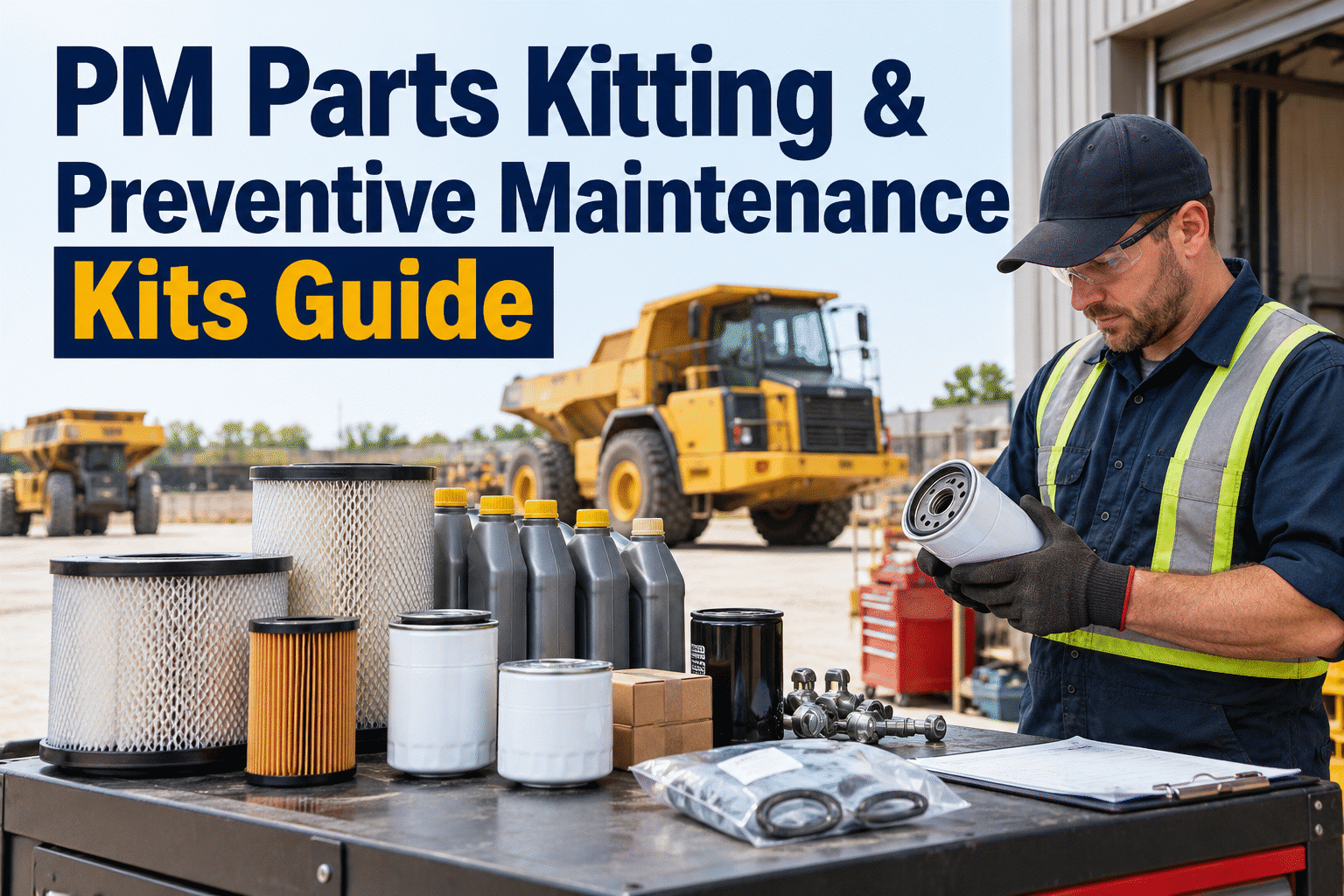
PM parts kitting keeps scheduled fleet maintenance from turning into a parts search. When filters, fluids, seals and consumables are checked and staged before a vehicle enters the bay, technicians can focus on service instead of waiting at the parts counter. This guide explains how to build reliable preventive maintenance kits, handle shortages and track parts usage with HVI's fleet maintenance tools.
The fastest PM job starts before the vehicle reaches the bay.
Turn a scheduled service into a prepared job: right parts, right quantities, clear handoff and accurate consumption records.
Illustrative kit — always use equipment-specific service requirements.
What is PM parts kitting?One complete, verified set of materials for one planned service
PM parts kitting is the process of selecting, verifying and staging the components needed for a preventive maintenance task before work begins. A kit may be a physical bin, tote or shelf location with a paper or digital picking list. The goal is not to pack every possible replacement part; it is to make the planned service predictable while keeping substitutions and unexpected repairs under control.
Plan the service
Use the asset, PM interval, manufacturer requirements and expected work scope.
Verify and stage
Confirm part numbers, stock, quantities and labeled kit location.
Issue and reconcile
Record what was actually used, return unused stock and resolve differences.
A consistent process works best when PM dates and work orders are visible ahead of time. Book a demo to see HVI maintenance planning.
Build the kit from the job, not from memoryFive decisions that prevent the wrong part reaching the bay
Confirm the exact asset
Match unit ID, model, engine variant, serial range and current service interval. Similar machines may use different filters or fluid specifications.
Create a standard parts list
Separate mandatory service items from condition-based parts. Include quantities, approved equivalents and relevant technical notes.
Check physical availability
Verify stock in the correct location, inspect packaging and shelf-life where relevant, and identify shortages before the appointment.
Pick, label and stage
Use a dedicated bin labeled with asset, service type, scheduled date and work order reference. Keep fluids safely stored as required.
Close the inventory loop
Record issued quantities and actual use, document substitutions, return unopened extras and update reorder needs.
A practical preventive maintenance kit exampleIllustrative 500-hour service — not a universal parts specification
| Kit component | Verification before picking | Typical action |
|---|---|---|
| Engine oil filter | Correct engine and filter cross-reference | Pick required quantity |
| Fuel filter elements | Primary/secondary specification | Confirm both positions |
| Lubricants | OEM-approved grade and service quantity | Stage safely |
| Drain seals / washers | Correct plug and sealing material | Include consumables |
| Grease and shop consumables | Approved type and estimated demand | Issue as needed |
| Inspection materials | Task checklist and service instructions | Attach to work order |
A standard kit should also include a clear exception process. If a technician discovers a worn hose or damaged belt during inspection, that unplanned repair should be added to the work order rather than silently changing the PM kit definition.
What happens when one part is missing?A shortage decision should happen before the service bay is blocked
Complete pick verification → label kit → release for scheduled service.
Check approved substitute, alternate stock or supplier lead time. Escalate to planner if service must move.
Do not treat every shortage alike. A missing mandatory filter may stop the service; a nonessential consumable may have an approved alternative. Use manufacturer guidance and shop policy to make that distinction. Book an HVI demo for parts and work order visibility.
How to track kit cost without distorting inventoryRecord what the job consumed—not merely what the tote contained
Three records to reconcile
Parts moved to the staged kit.
Parts installed or consumed on the work order.
Unused materials returned to usable stock.
Review variances by asset and PM type to improve future kit lists and cost estimates.
Where HVI supports the parts-kitting processMaintenance and inventory records that make manual kitting easier to manage
Parts & Inventory
Organize part information and stock records that planners reference while building picking lists.
PM Scheduling
See upcoming service needs early enough to prepare and source parts.
Maintenance Work Orders
Keep planned tasks, defects and service completion tied to the correct equipment.
Service History
Review previous repairs and recurring service requirements when refining standard kits.
Parts Usage Records
Document parts associated with maintenance activity and reconcile actual consumption.
Maintenance Cost Tracking
Review parts-related costs alongside work order history to spot repeat spending.
HVI helps organize the underlying maintenance records; physical picking, kit assembly, inventory reservation and automatic kit generation should not be assumed. Book a demo to review the available HVI workflow.
PM parts kitting checklistUse this before marking a kit ready
Planning & picking
- Correct equipment and service interval confirmed
- Current OEM parts list reviewed
- Part numbers and quantities verified
- Stock checked in physical location
- Approved substitutions documented
Handoff & closeout
- Kit labeled with asset and work order
- Fluids and hazardous items stored correctly
- Shortages resolved or escalated
- Actual usage recorded on completion
- Unused parts returned and counts updated
Roll out kitting without overcomplicating the shopStart with one repeatable PM job and improve from actual results
Choose the pilot
Select a common PM service and validate the asset-specific parts list.
Stage and label
Set a dedicated picking location, label format and shortage rule.
Track variances
Compare planned, picked, used and returned materials.
Standardize
Correct the list, assign ownership and expand to the next service type.
Useful measures include kit completeness at handoff, service delays caused by missing parts, parts count accuracy and actual parts cost per PM. Review them as trends rather than assuming one fixed target suits every fleet.
PM parts kitting — frequently asked questions
What is PM parts kitting in fleet maintenance?
It is the preparation of the parts, fluids and consumables required for a planned preventive maintenance job before service begins. The kit is matched to a specific asset or service specification and reconciled after the work is complete.
What should be included in a preventive maintenance kit?
Include items required by the applicable service procedure, such as approved filters, lubricants, seals and consumables. Use the machine's exact model, engine and service interval to determine the correct list rather than relying on a universal kit.
How does parts kitting reduce maintenance delays?
Early stock checks reveal shortages while there is still time to source approved components or reschedule. Clearly labeled kits also reduce the time technicians spend searching for parts during the service appointment.
How should unused parts and substitutions be handled?
Document approved substitutions against the work order. Return unused, serviceable materials to their correct stock locations and reconcile the issued quantity against actual consumption to protect inventory accuracy.
Does HVI automatically create or reserve PM parts kits?
Do not assume automatic kit generation or inventory reservations. HVI supports maintenance schedules, parts and inventory records, work orders and service history that teams can use when managing their own parts-kitting process. Confirm specific functionality during a product demo.
Fewer parts surprises. Better-planned PM service.
Bring maintenance schedules, parts records and work orders into a clearer workflow—then build a repeatable kitting process around your fleet.