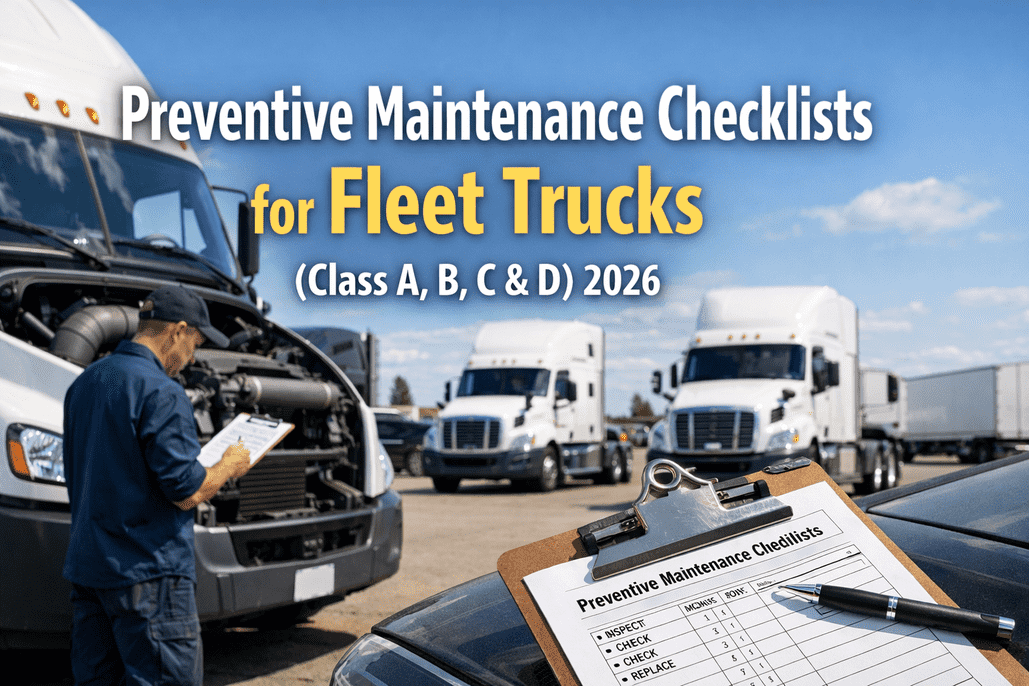
Three technicians pull three "B service" tickets on three different trucks this week, and you get three different sets of work back — one checked pushrod stroke, one didn't, and none of them wrote down an actual measurement. That is what happens without a real PM service sheet template: the tier name is on the ticket, but what it actually means lives in each tech's head.
What actually separates an A, B, and C service?
Switch tiers below. Watch the task list, the measurement fields, and the parts grow — each level absorbing everything in the one before it.
Fluids, filters, lubrication, and a structured visual inspection. Engine and chassis lubrication points, fluid levels and condition, filter replacement on schedule, and a walk-around inspection template with defined checkpoints — not a driver's memory of what usually gets checked.
Every Level A task, plus quantified measurement fields. Brake lining thickness in millimetres, pushrod stroke in inches per chamber, wheel-end play and torque values, all recorded as numbers against the vehicle's history — not a pass/fail box that erases what the technician actually saw.
Every Level A and B task, plus the deep-service items. Transmission service and fluid analysis, differential service, cooling system flush and pressure test, and a full re-measurement of every Level B checkpoint — the tier that closes out a major mileage or hour interval.
Nothing here is a fixed industry standard — it's the shape most fleets converge on once they write it down. The exact contents of your A, B, and C should reflect your own equipment, application, and OEM guidance.
A PM service sheet template only does its job when it removes judgment calls from the technician performing the work. The tier name on the ticket should fully determine the task list, the fields to fill in, and the parts to have staged — not leave any of that to whoever happens to be holding the wrench that day.
The Escalation Principle: Each Tier Absorbs the One Below Itnobody should have to remember what "also includes Level A" means
The single most common breakdown in a tiered PM programme is treating each level as a standalone list instead of a nested one. A Level C service that doesn't automatically include every Level A and B task isn't a bigger service — it's a different, incomplete one that happens to share a letter.
Configuring the tiers this way isn't a formatting preference — it's what guarantees a Level C ticket can never quietly skip a fluid check because it "felt like" a transmission-only job. Build nested tiers online free
Why Every Fleet Needs a Real PM Service Sheet Template, Not Tribal Knowledgemeasurement fields are what make a checklist worth trusting
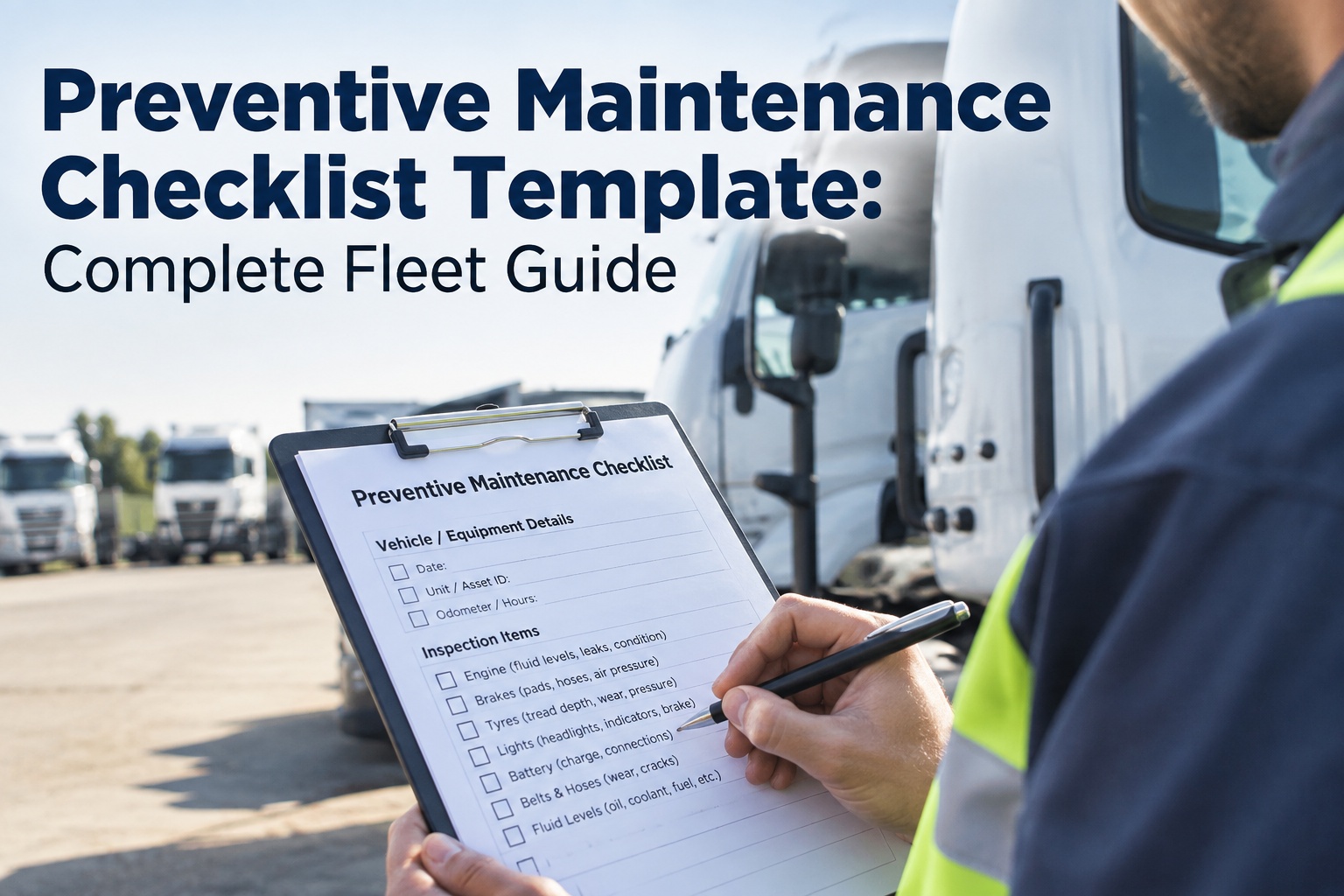
A tick box records that someone looked. A measurement field records what they actually found. That difference matters enormously the second time a component is checked, because a single reading is just a data point — two or three readings over time is a trend, and a trend is what catches a wheel-end bearing or a brake lining wearing toward a limit weeks before it becomes a roadside issue.
The tick-box sheet
- "Brakes: OK" — no lining thickness, no pushrod stroke recorded anywhere
- No way to tell if a component is stable or trending toward a limit
- Same box gets checked whether the tech spent 5 seconds or 5 minutes
- A borderline finding either passes silently or gets flagged with no context
The measurement-field sheet
- Lining thickness in mm, pushrod stroke in inches, per chamber, per axle
- Each new reading compares automatically against the last one on record
- A number can't be filled in without actually taking the measurement
- A reading approaching a limit shows up as a trend, not a surprise
This is also where a tiered structure earns its keep on compliance-adjacent checks — a brake system under CVSA's out-of-service criteria can be shut down on a specific threshold of defective brakes, and a measurement field is the only format that actually proves what was checked and what it read. See measurement fields trended per component
Parts, Labor, and Staging Before the Truck Even Arrivesa tier should tell you what to pull from the shelf, not just what to check
Once a tier's task list is locked, the parts it typically consumes and the labor it typically takes become predictable too. That predictability is what lets a shop stage filters and gaskets before the truck rolls in, and schedule a bay for the right number of hours instead of guessing.
| Tier | Typical parts to stage | Typical labor estimate |
|---|---|---|
| Level A | Oil, oil filter, fuel filter, grease | 1–1.5 hrs |
| Level B | All Level A parts, plus brake adjustment hardware as needed | 2.5–3.5 hrs |
| Level C | All Level B parts, plus transmission & differential fluid, coolant, cooling system seals | 5–7 hrs |
Those figures will vary by fleet, application, and equipment — the point isn't the exact hours, it's that a tiered template makes the numbers knowable and repeatable at all. See parts and labor staged per tier
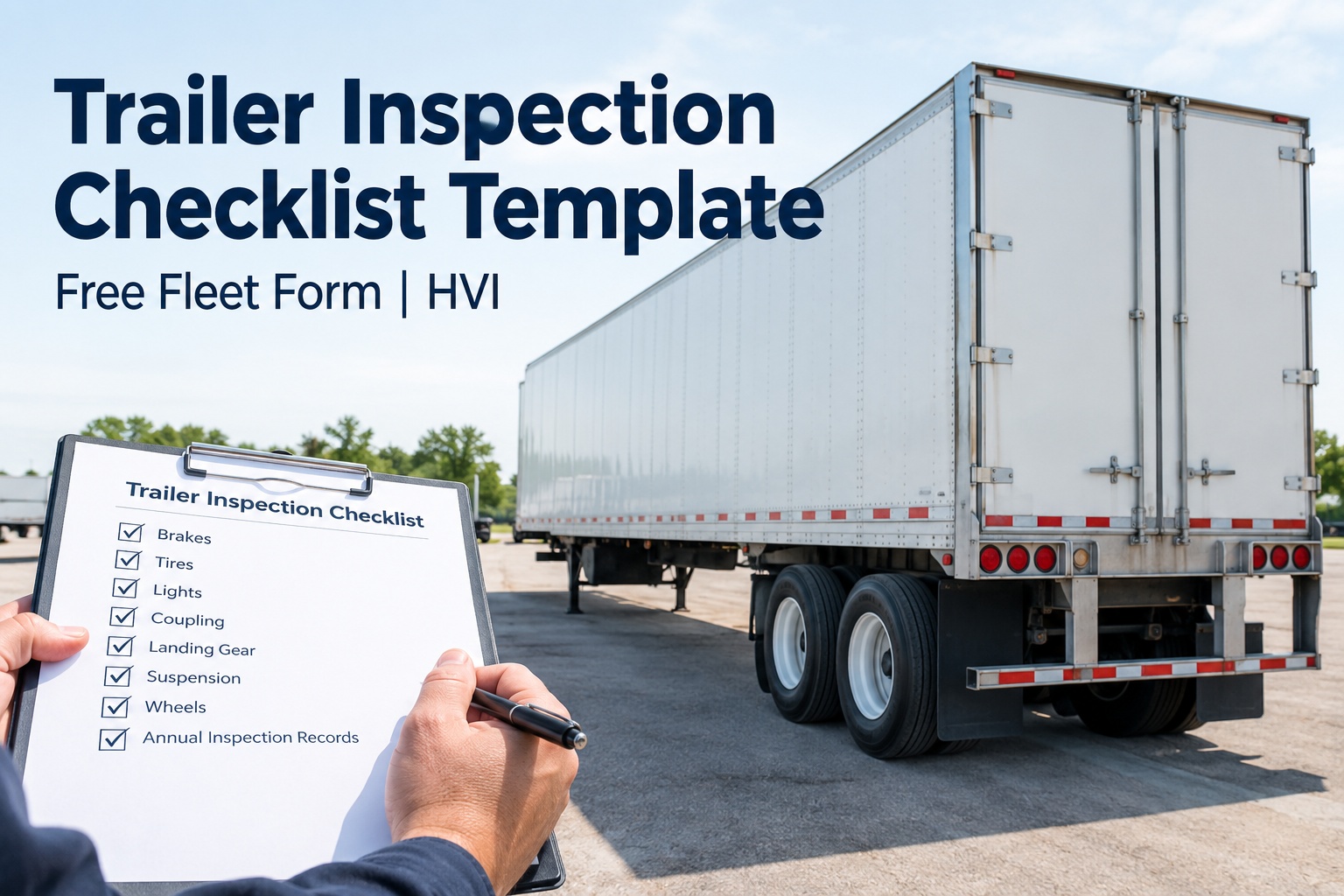
The Annual Inspection Runs on Its Own Clocka PM tier and a compliance inspection are not the same document
One Size Doesn't Fit a Tractor, a Trailer, and a Vocational Truckthe same tier letter should mean different work on different asset classes
A tractor's Level C isn't a trailer's Level C. Building one universal A/B/C template and forcing every asset class through it either bloats the trailer's paperwork with irrelevant engine checks or lets a vocational unit's attachment-specific wear go unchecked. The same tier letter should mean different work on different equipment.
Tractor
Engine, transmission, and driveline service dominate — oil analysis, cooling, aftertreatment, and the deepest re-measurement work at Level C.
Trailer
No engine or transmission — the tiers weight toward suspension, brakes, wheel ends, and lighting circuits a tractor's template covers more lightly.
Vocational
A PTO-driven attachment adds its own branch entirely — hydraulics, wear points, and duty-cycle checks no on-highway template accounts for.
The fix isn't more tiers — it's the same tier structure, configured separately per asset class, so "Level B" means the right thing whether it's stamped on a tractor, a trailer, or a vocational body. See tiers configured per asset class
Building a PM Service Sheet Template Your Techs Will Actually Followa template that never gets reviewed slowly drifts out of date
A PM service sheet template isn't a document you write once and forget. It drifts out of date through informal changes — one shop's version quietly diverging from another's — unless the contents change deliberately, on a review cycle. Three things should trigger a review of a tier's contents.
Repair history reveals a gap
A component failing early enough, often enough, justifies a new checkpoint the current template doesn't catch.
OEM guidance changes
A service bulletin or revised interval since the template was last touched means the tier is now out of step with the manufacturer.
Parts & labor drift
Estimates that no longer reflect reality throw off staging and bay scheduling until they're re-based against current numbers.
Locking that review to a set interval — annually, at minimum — keeps every location on the same current version, not last year's printout. HVI's preventive maintenance scheduling keeps each tier's due dates and history in one place, so you can see repair history flagged against the current template
From a maintenance manager who standardized the tiers
We had four shops all technically running "the same" A/B/C schedule, and when I actually compared their paper forms side by side, no two were identical. One shop's Level B didn't even include a brake measurement, which meant that shop's trucks were only getting a real brake check once a year.
Rebuilding the tiers as nested templates, with actual measurement fields instead of check boxes, fixed that instantly — every shop opens the same Level B now and gets the same list, the same fields, and the same parts staged. Comparing service history across locations finally means something.
Frequently asked questions
What should be included in an A, B, and C PM service sheet template?
A common structure has Level A cover fluids, filters, lubrication, and a structured visual inspection; Level B include everything in Level A plus measurement-based checks such as brake lining thickness, pushrod stroke, and wheel-end assessment; and Level C include everything in Levels A and B plus deeper systems work such as transmission service, differential service, and cooling system service. The exact contents should reflect your specific equipment, application, and manufacturer guidance rather than a generic list.
Why do measurement fields matter more than pass/fail checkboxes on a PM sheet?
A pass/fail checkbox only records that a check happened, not what was actually found. A measurement field records an actual value — lining thickness, pushrod stroke, torque — which can be compared against the previous reading on that same component. That comparison is what reveals a slow trend toward a wear limit, something a single pass/fail check can never show, since "pass" looks identical whether a component has plenty of life left or is one measurement away from a limit.
Does a Level C service replace the annual DOT or compliance inspection?
No. A required periodic or annual compliance inspection operates on its own regulatory schedule and defined scope, separate from an internal PM tier structure. Even if a Level C service happens to fall near the compliance inspection's due date, it should not be treated as satisfying that requirement unless the inspection itself was actually performed and documented as such. Keeping the two tracked as separate events avoids a fleet mistakenly assuming compliance coverage it doesn't actually have.
Should a tractor, trailer, and vocational truck use the same PM template?
Not the same content, though they can share the same tier structure. A tractor's services need to cover engine, transmission, and driveline items a trailer doesn't have, while a trailer's services focus more heavily on suspension, brakes, and lighting. A vocational unit with a PTO-driven attachment needs its own additional checkpoints entirely. Configuring the A/B/C tiers separately per asset class keeps the same letter meaning the right thing across different equipment types.
How often should a PM service sheet template be reviewed and updated?
At minimum, an annual review is a reasonable baseline, checking whether recent repair history reveals a gap the current template doesn't catch, whether the manufacturer has issued updated service guidance since the last review, and whether parts and labor estimates still reflect current reality. Fleets running unusual duty cycles, new equipment, or components with a known history of early failure may benefit from reviewing the relevant tier sooner rather than waiting for the full annual cycle.
Build a PM Service Sheet Template That Means the Same Thing Every Time
HVI's configurable templates nest Level A into B into C per asset class, measurement fields replace tick boxes on every quantifiable check, and bulk import brings your existing parts lists and labor estimates in at once. Live in under two weeks.
No credit card · Configurable per asset class · Bulk import ready on day one