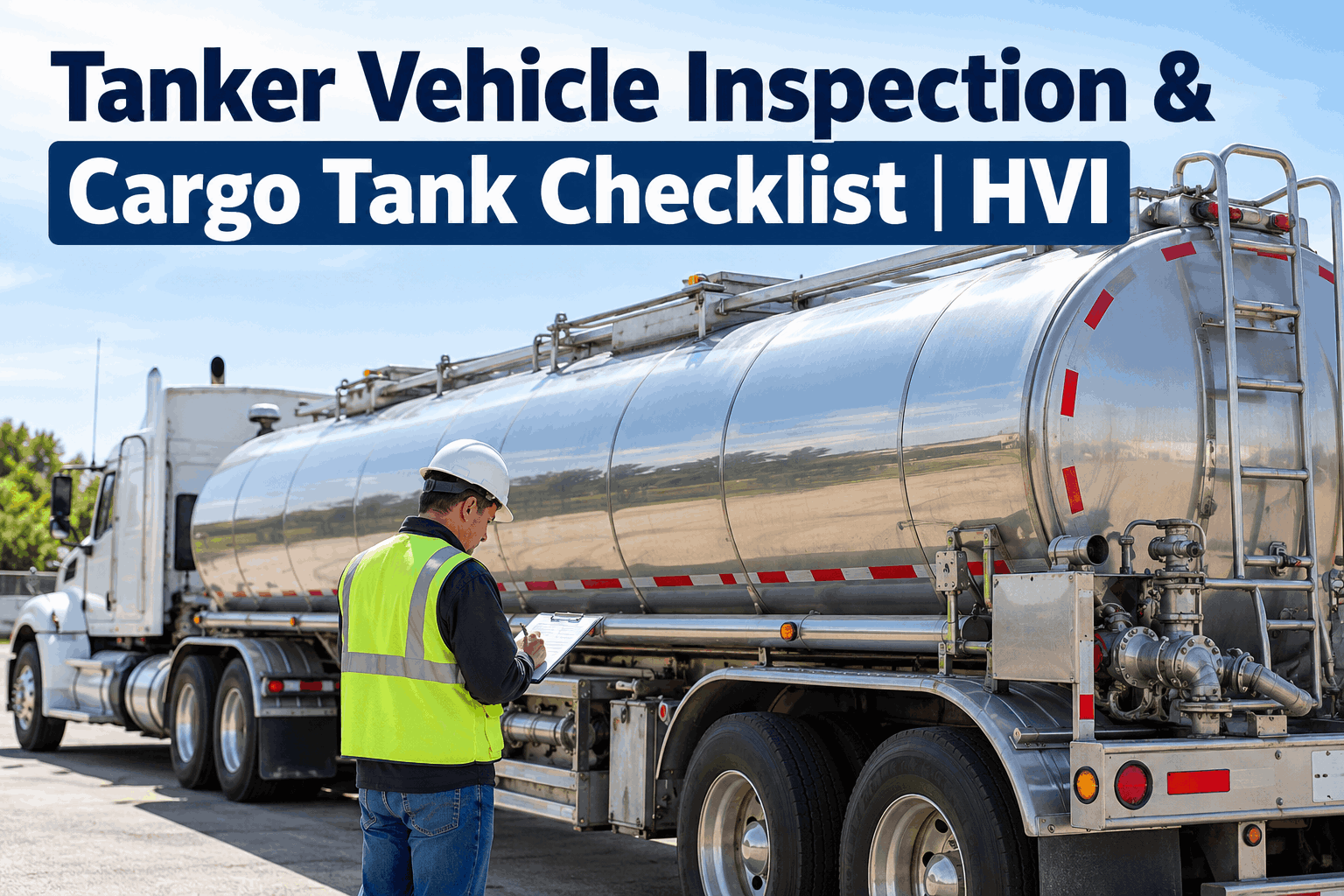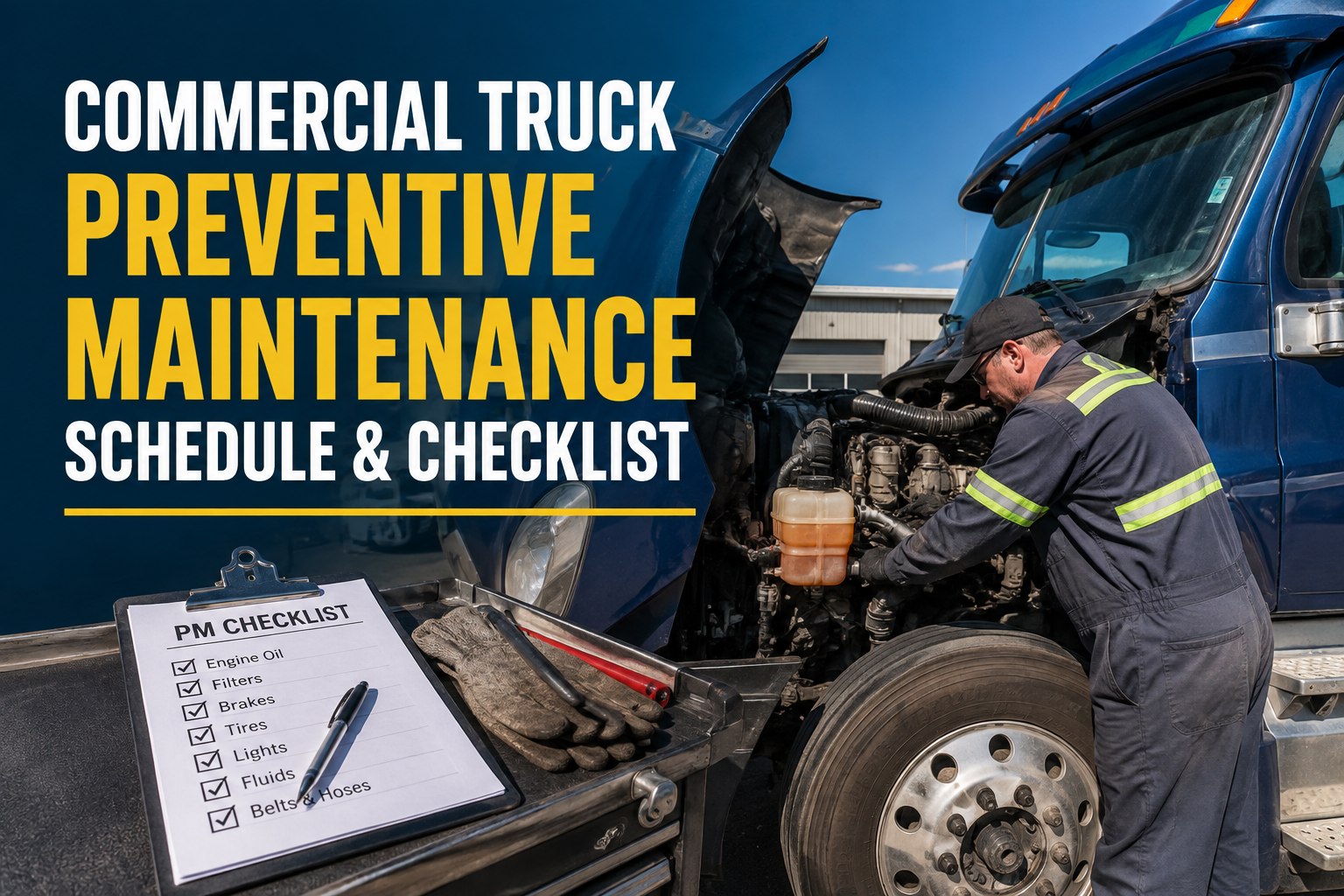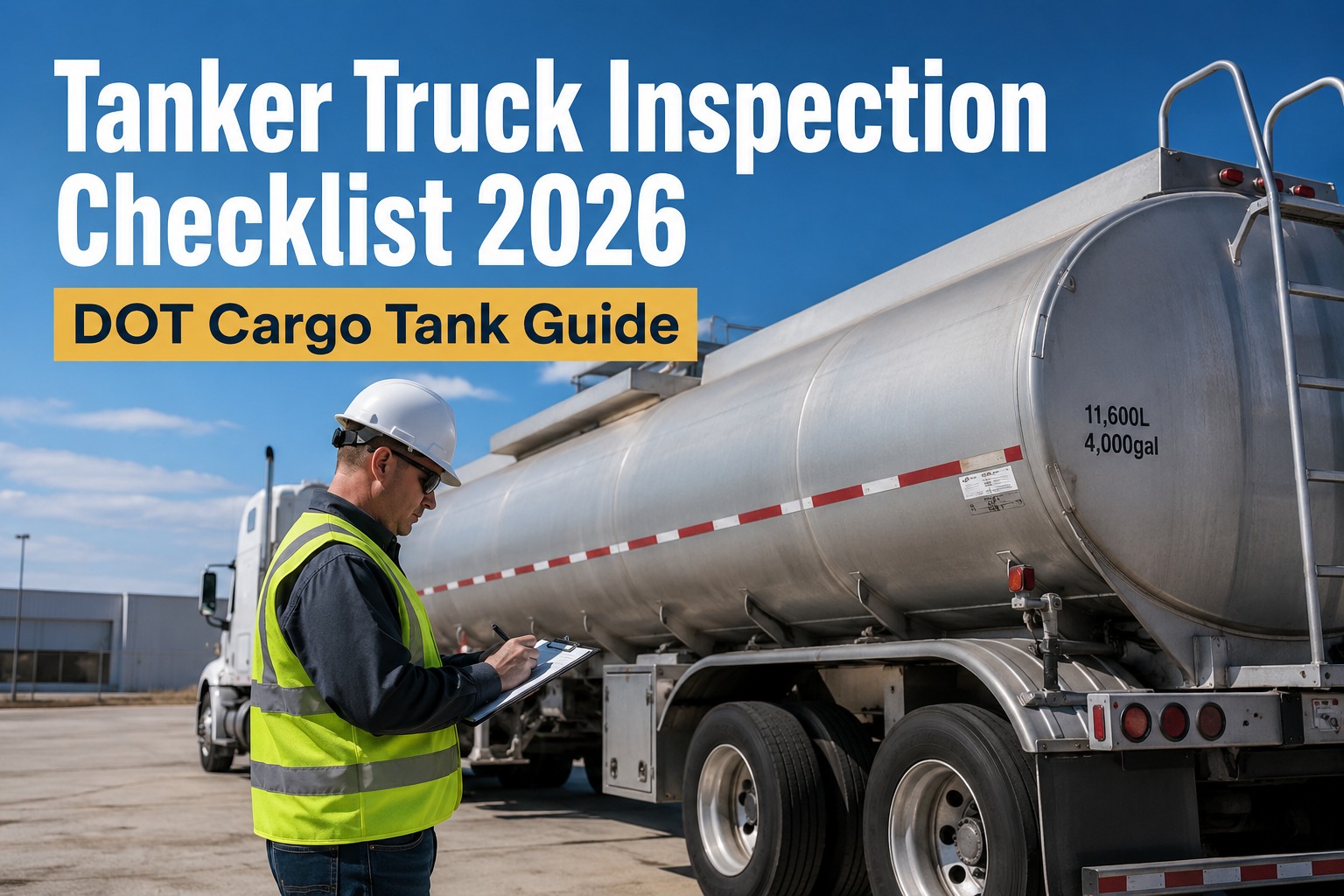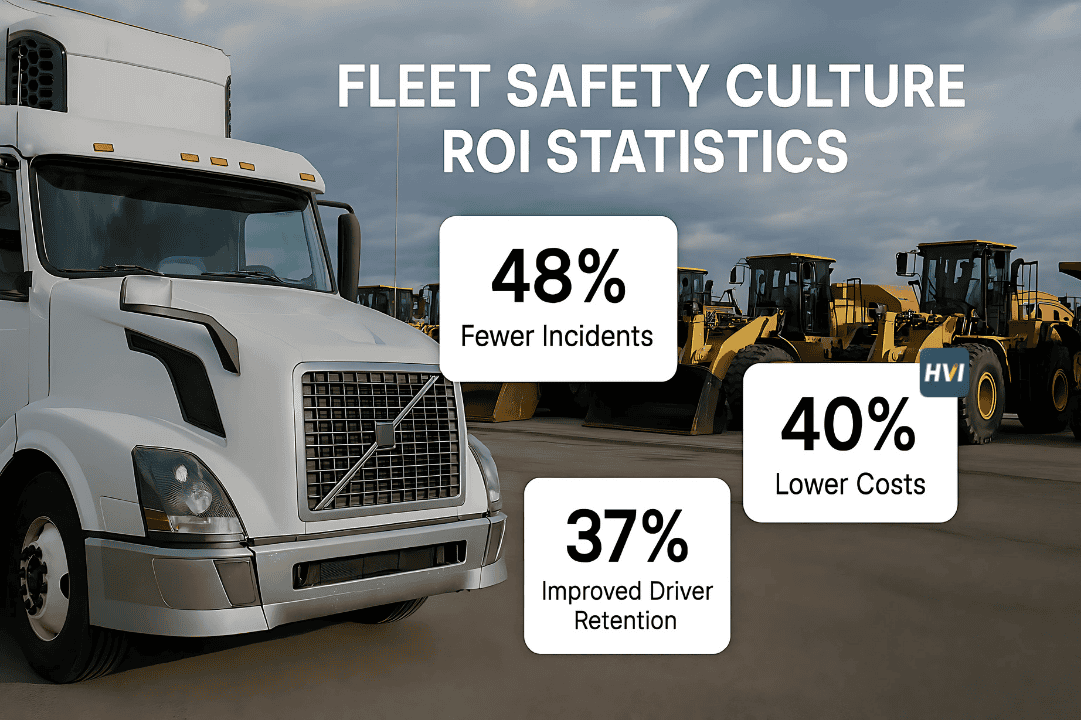
A propane delivery fleet doesn't run on one inspection — it runs on five overlapping clocks, and a DOT auditor only has to find one that's lapsed. The daily DVIR, the monthly meter and discharge checks, the annual tank visual and leakage test, the five-year pressure test: miss one on a single bobtail and that truck's cargo-tank spec no longer holds. If keeping all of that current on paper is the job nobody enjoys, book a demo to see every clock tracked in one place.
A Propane Delivery Fleet Runs on Five Compliance Clocks at Once
Every bobtail carries daily, monthly, annual and five-year obligations that each produce their own record. When they all stay current, the tank's DOT spec holds. When one slips, the truck is out of service — whether or not anyone noticed.
A bobtail isn't a regular truck
Why a propane delivery fleet carries obligations a dry-freight fleet never seesThe chassis is the easy part. What makes a propane delivery fleet different is the pressurized cargo tank bolted to it and the flammable gas inside — and the rulebook follows the tank, not the truck.
Propane rides in a pressurized MC-331 cargo tank with its own build spec, data plate and test history. The tank's certification — not just the plates — is what keeps the truck legal to load.
Propane is a flammable gas, so the driver needs tank and hazmat CDL endorsements, the truck runs placarded, and fill limits under §173.315 govern how much actually goes in.
Hoses, the meter, emergency discharge controls and excess-flow valves are all inspection items in their own right — the parts a dry van simply doesn't have.
If you also run liquid-fuel tankers, the mixed-spec side is its own job — covered in the petroleum distribution fleet guide — but a pure propane operation only has to master one tank spec, done well.
The daily bobtail check, in one pass
The pre-trip DVIR your propane drivers run every morning — grouped so nothing gets skippedThis is the walk-around every driver should do before the first delivery. In HVI it's a single tap-through on a phone, grouped exactly like this, and any item that fails becomes a work order on the spot. You can book a demo to see this checklist running on a bobtail.
Truck & chassis
- Tires, wheels and lug condition
- Brakes, air lines and parking brake
- Lights, reflectors and markings
- Steering, mirrors and horn
- No leaks or damage underneath
Cargo tank & plates
- MC-331 data plate legible
- Tank shell and heads undamaged
- Piping, valves and fittings sound
- Placards and markings correct
- Test dates current on record
Delivery equipment
- Delivery hose and couplings
- Meter and register, no creep
- Pump, bypass and controls
- Excess-flow and back-check valves
- Bonding cable and clamp
Safety & emergency
- Emergency discharge controls
- Fire extinguisher charged
- Wheel chocks on board
- PPE and spill kit stocked
- Shipping papers and emergency info
The three checks fleets miss most
Where a propane fleet compliance gap usually opens upViolations rarely come from the big five-year test everyone circles on a calendar. They come from the routine checks that live in someone's memory — and memory is where propane fleet compliance quietly fails.
Monthly meter creep & discharge checks
The propane-specific monthly checks are the most skipped of all — industry guidance has flagged them as the ones fleets miss or fudge most often. No reminder, no record, and the gap only surfaces in an audit.
The daily DVIR that never got filed
A driver eyeballs the truck but the report doesn't get completed or stored. On paper the inspection happened; on record it didn't, and a defect that was spotted never became a work order.
A tank test that crept past due
The annual leakage test or five-year pressure test slips a few weeks because nobody was counting down to it. The moment it lapses, that tank's DOT spec is no longer valid — even if the truck runs fine.
Stop finding compliance gaps on audit day
HVI puts a digital DVIR on every bobtail, counts down every tank-test and monthly-check due date, and turns a flagged defect into a work order — so the gap gets closed before an inspector finds it.
One record for every clock
What a propane delivery fleet inspection looks like when it's tracked, not rememberedThis is the difference a digital fleet inspection makes: every bobtail shows its DVIR, its monthly checks and each cargo-tank test with a live due date, and the overdue one is impossible to miss. You can book a demo to see this on your own fleet.
The same record is the one you hand an auditor — dated, complete and already in order, instead of a binder you hope is current. You can sign up free and put your first bobtail on it today.
Our trucks were fine. What kept me up was the paperwork behind them. With bobtails spread across three bulk plants, I was trusting spreadsheets and good intentions to tell me which tank test was coming due and whether the monthly meter checks actually got done. The one that scared me was a pressure test we almost ran past — the truck looked perfect, but the second it lapsed we'd have been loading on an invalid spec. Now every bobtail counts itself down, a missed check flags before the truck loads, and when the DOT shows up I open a screen instead of a filing cabinet.
Bringing it together
Make every clock count itself downRunning a propane delivery fleet safely and legally comes down to never letting one of the five clocks fall out of sight. Put the daily DVIR on a phone, give every tank test and monthly check a live due date, and keep the records audit-ready, and compliance stops being a scramble and becomes something you can simply show. For the full cargo-tank picture across every spec, the tanker inspection checklist maps all six tests, and you can book a demo to see it run on your bobtails.
The propane operations that never sweat an audit aren't the ones with the newest trucks — they're the ones where not a single inspection lives only in someone's memory.
Give your propane delivery fleet one place for every inspection
Digital bobtail DVIRs, tracked cargo-tank and monthly-check due dates, defect-to-work-order flow and audit-ready records — so no clock ever runs out unseen.
Questions propane fleets ask
Propane delivery fleet inspection and compliance, answeredWhat inspections does a propane delivery fleet need?
In the US, a daily driver DVIR before and after each trip, monthly propane delivery-system checks such as meter creep and the discharge system, an annual DOT vehicle inspection plus the cargo tank's external visual and leakage test, and a five-year internal visual and pressure test — with thickness or lining checks when the tank requires them. Each is its own record under 49 CFR 396 and 180.407.
What is an MC-331 cargo tank?
It's the pressurized cargo tank specification used for propane and other liquefied gases like anhydrous ammonia. An MC-331 tank has its own build spec, data plate and periodic test schedule, and that certification is what keeps a bobtail legal to load. Propane service can qualify for extended pressure-test intervals under specific dedicated-service conditions.
How often does a propane cargo tank need testing?
As a general guide under 49 CFR 180.407: the external visual and leakage tests are annual, and the internal visual and pressure test are on a five-year cycle, with a ten-year pressure-test option available under qualifying dedicated-service conditions. Thickness and lining checks apply when the tank's condition or spec calls for them. Always confirm against the current regulations and your tank's data plate.
Why do propane fleets fail DOT audits?
Usually not because the trucks are unsafe, but because a record is missing or a check lapsed. The monthly meter and discharge checks get skipped, a daily DVIR never gets filed, or a tank test creeps past its due date. When any required inspection lapses, the cargo tank's spec is no longer valid, which is exactly what an auditor looks for.
How does HVI help manage propane fleet compliance?
HVI gives each bobtail a mobile DVIR, tracks every cargo-tank test and monthly check with live due dates and reminders, and turns a flagged defect into a work order with full history — so nothing lives only in a spreadsheet. It supports inspection, scheduling and record-keeping; it doesn't replace your DOT obligations, a qualified cargo-tank inspector, or the current 49 CFR requirements.