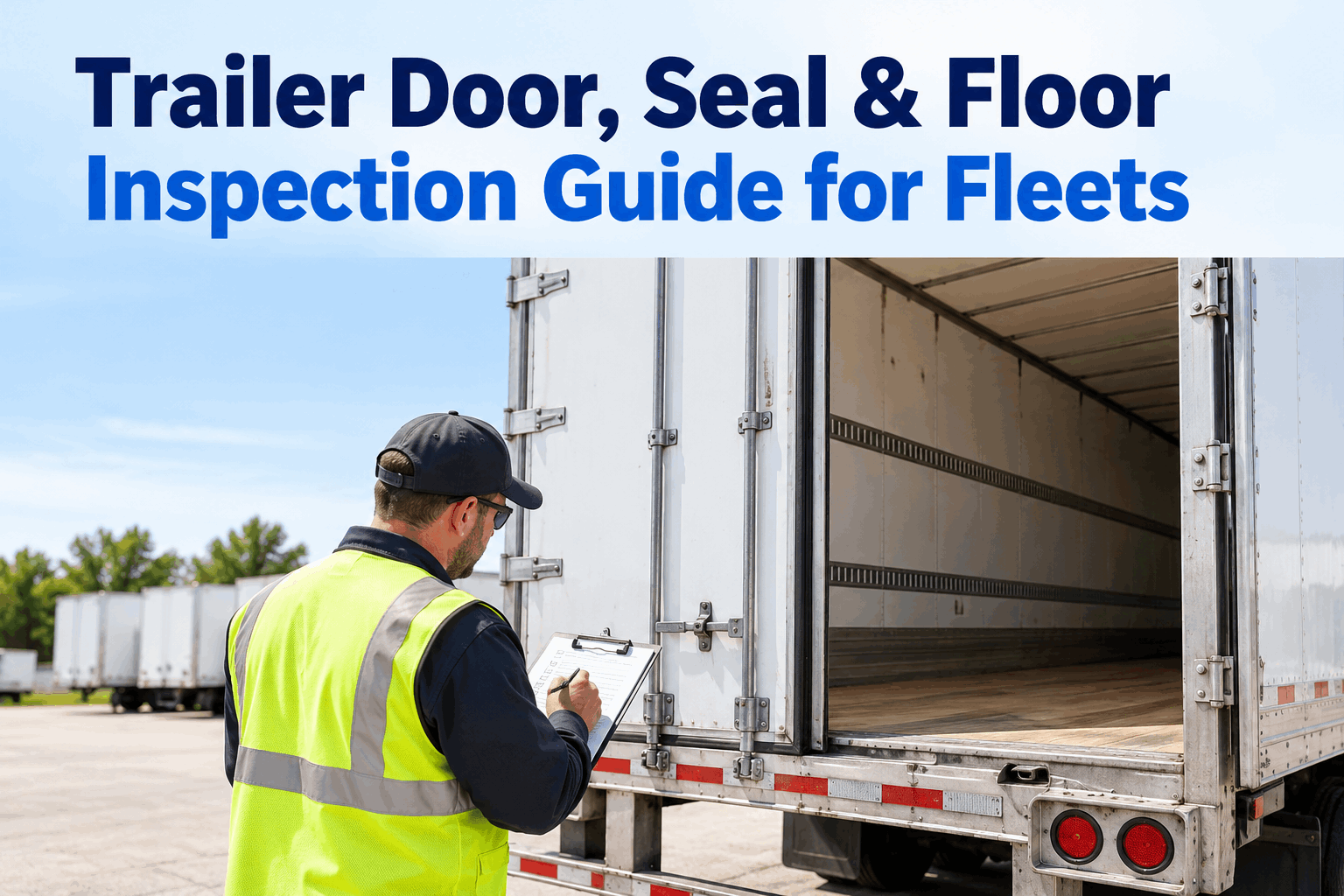
A tractor warns you when something's wrong — a trailer doesn't. It rolls for months with a cracked roof panel, a hardened door seal or a soft floorboard and never complains, until a driver opens the doors to a water-stained load. A trailer door inspection, with the seal, floor and roof around it, finds that silent damage before it becomes a cargo claim. Book a demo to see trailer bodies inspected on their own schedule.
A trailer has no warning lights. The inspection is the warning.
Doors, seals, floors and roofs fail silently while the trailer keeps rolling. Here's the leak map — the four places water and wear get into a dry van, and where a real trailer door inspection starts.
A dry van is a weatherproof box on wheels — until it isn't. Because it carries no sensors and throws no codes, body damage stays invisible until the cargo pays for it. Industry reporting is blunt about the stakes: a single weak floorboard can cost thousands in claims and downtime, water-stained paper rolls run $500 to $2,000 in loss, and a full wood-floor replacement lands between $4,000 and $6,000 and up. None of it shows on a tractor's dashboard, which is why a disciplined trailer door inspection — with the seal, floor and roof — is the only early-warning system a trailer has.
What one silent leak actually costs
A trailer body defect never sends an invoice — until it does, all at once. Here's the tab that a two-minute inspection would have voided.
Every line on that receipt starts with one unseen crack or seal. Catch it on the walkaround and the whole tab disappears. Book a demo to void the bill before it's run up.
The four zones a trailer body inspection covers
Each callout on the leak map is a zone that fails quietly. Walk them top to bottom — roof, doors, seals, floor — and you've covered where nearly every trailer problem begins.
Roof & seams
A trailer roof inspection looks for cracked translucent panels, failing seam sealant and loose rivets — the pinholes that drip in a rainstorm without ever showing from the ground. Check inside for daylight and water streaks along the roof bows.
Doors & hardware
A trailer door inspection checks latches, hinges, cables and alignment. A door that won't close square, a seized hinge or a worn latch lets weather in and makes loads a hassle to secure. The doors are the single most-worked part of the body — they take the most abuse.
Door seals & gaskets
A trailer seal inspection confirms the perimeter gasket is soft, continuous and sealing. Old seals harden, crack and separate — the number-one way water and road dust get into dry freight. If you can see daylight around a closed door, the seal has already failed.
Floor & frame
A trailer floor inspection probes for soft or rotted boards, delamination and cross-member rust. A single weak board can cost thousands in cargo claims and downtime once it lets go under a loaded pallet jack. Walk the whole deck — soft spots hide between the boards you can see.
Every one of these is a photo in HVI — a tech flags a cracked seal, snaps it, and it's on that trailer's record before the next load goes in. Start free and build the leak-map template.
Why trailer maintenance can't ride on tractor mileage
A trailer is a separate asset that gets dropped, swapped and parked across many tractors. Tie its upkeep to any one tractor's odometer and the body checks fall through the cracks.
Engine, drivetrain and brakes track with distance and get serviced on a mileage schedule.
Roofs, seals and floors degrade with UV, rain and forklift wear — whether the trailer moved 500 miles or sat in a yard all month.
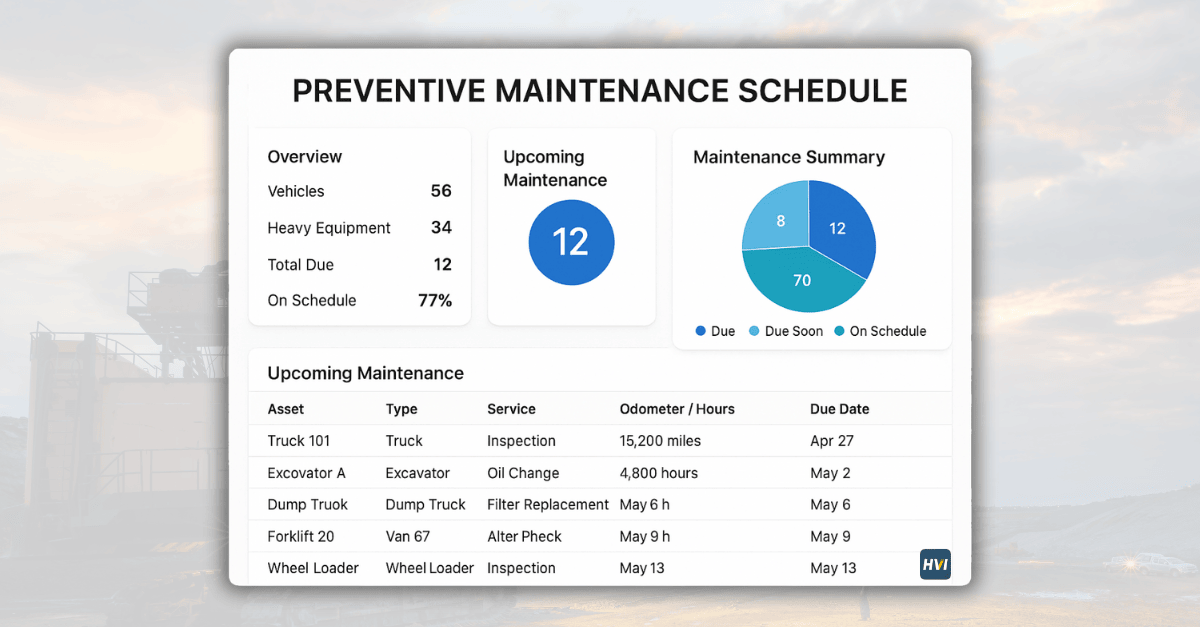
HVI schedules preventive maintenance per trailer on its own interval, so a unit baking in the sun still gets its roof and seal check. See how it tracks alongside your dry van trailer maintenance. Book a demo to track trailers as their own assets.
Trailer inspection checklist
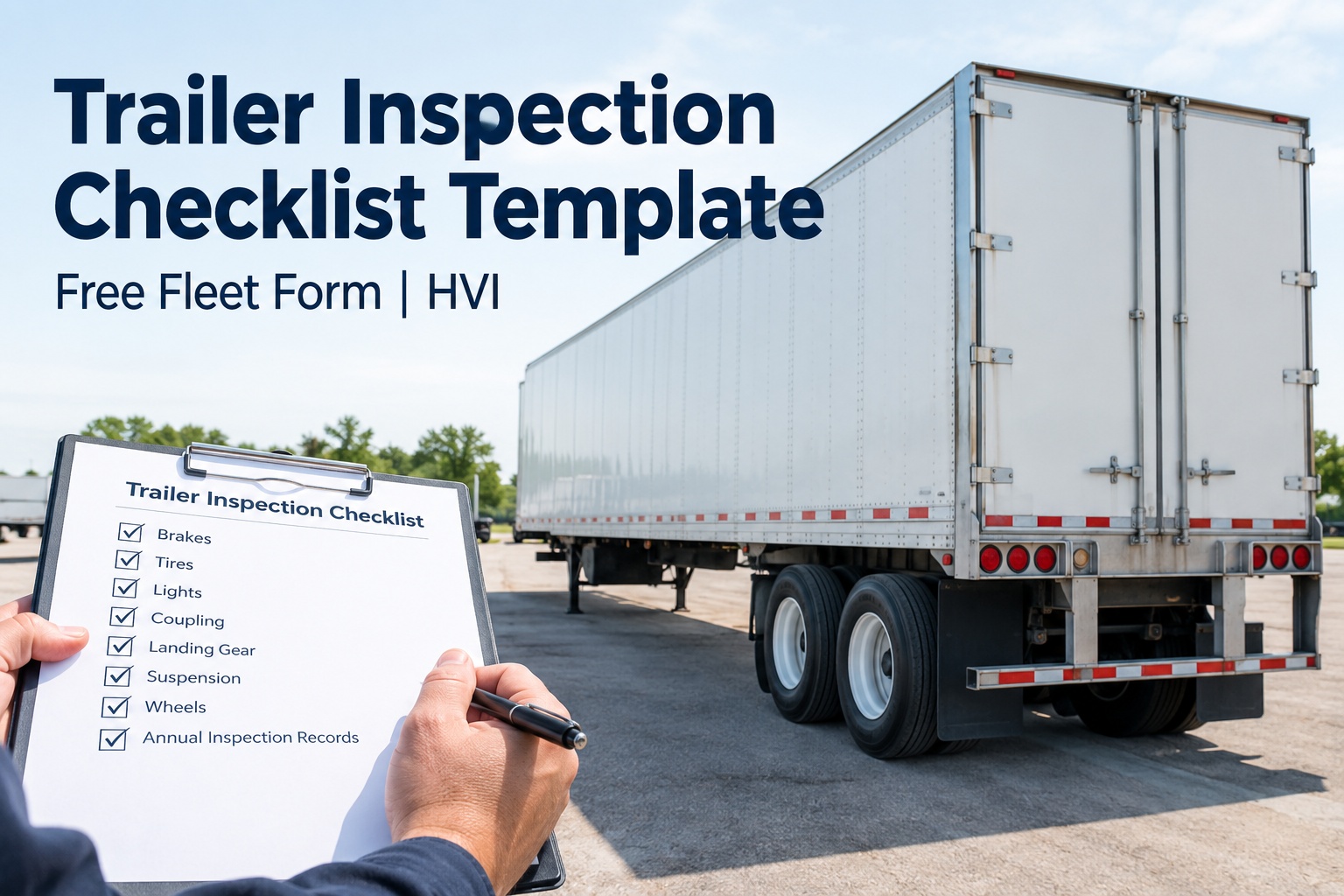
The body walkaround as a pass/fail report sheet. Run it per trailer on the drop or pre-load and log it on the daily operator report so every defect ties to that unit's number.
On paper this gets a tick and nobody ties it to a specific trailer. In HVI each FLAG is a dated work order with a photo, logged against that unit — and a trailer with an open leak can't quietly keep loading. Book a demo to see the report sheet on a device.
Why the photo is your cargo-claim defense
With trailer damage, the photo isn't just a repair note — it's your evidence when a shipper disputes who caused the loss. The inspection record decides whether you absorb a claim or defeat it.
- No proof the trailer was sound
- Claim lands on you by default
- Shipper remembers it at renewal
- Nothing to show the adjuster
- Dated inspection and repair history
- Photo evidence per trailer, per defect
- Proof the leak was found and fixed
- A record the adjuster can't argue with
When a receiver blames your trailer for a wet load, a dated inspection-and-repair trail is the difference between absorbing the claim and defending it. Book a demo to build claim-proof trailer records.
A trailer preventive maintenance rhythm
Build it around exposure, not tractor miles. These are typical US rhythms — the pre-trip feeds the DVIR, the deeper checks line up with the FMCSA annual periodic inspection. Confirm against the OEM manual.
Doors latch and seal, no obvious damage, no daylight or staining inside — logged on the DVIR.
Roof, seals, floor and hardware gone over closely, per trailer, with photos on anything flagged.
Check seals and seams for leaks and reseal before the wet season does the testing for you.
Full professional inspection with the FMCSA annual periodic inspection, documented and retained.
Note for non-US fleets: some regions set their own scheduled trailer examination requirements. Always follow your local regulation and the manufacturer's guidance.
HVI's multi-interval preventive maintenance runs each of these per trailer, so a unit that's been sitting in the sun still gets its roof check on time.
A fleet manager on the claim that changed things
We ate a five-figure cargo claim on a load of water-stained product, and when the shipper asked for proof the trailer was sound, we had nothing — no record, no photos, no history. That was the wake-up call. Now every trailer gets a body check logged against its own number, with a photo on every flag. The next time a receiver blamed our trailer, we pulled the record and it wasn't us — and we had the pictures to prove it.
Ray T.Fleet Manager · Dry van & LTL carrier · 140 trailers
Run the whole trailer program on HVI
Configurable trailer templates
Build a trailer-specific body inspection template — roof, doors, seals, floor — not a tractor form that skips the box.
Photo evidence for claims
A dated picture of every defect attaches to the trailer's record — your defense when a cargo claim arrives.
PM per trailer
Schedule body maintenance on each trailer's own clock, independent of whichever tractor pulls it.
Defects routed to work orders
A flagged leak or soft floor becomes a tracked repair in maintenance management — nothing lost.
One connected record per trailer, built on a walkaround your team already does — so the box on the back is never the forgotten asset. Start free and put your trailers on a program.
Trailer inspection questions
Q1What does a trailer door inspection cover?
It covers the door panels, latches, hinges, cables and alignment, plus the perimeter seals and gaskets. You're checking that the doors close square and lock, that hardware isn't seized or worn, and that the seal is soft and continuous with no gaps — because a door that won't seal is the fastest way for water and road dust to reach your freight.
Q2How do you inspect a trailer floor and roof?
For the floor, walk the deck for soft or springy boards, probe for rot and delamination, and check cross-members for rust. For the roof, look for cracked translucent panels, failing seam sealant and loose rivets, and check inside for daylight or water staining. Both fail silently, so a close monthly look matters more than a quick glance.
Q3Why do trailer body defects go unnoticed?
Because a trailer has no warning lights or sensors. A cracked roof panel, a hardened door seal or a soft floorboard doesn't stop the trailer from rolling, so it stays invisible from the cab until a driver opens the doors to a water-stained or damaged load. The inspection is the only early-warning system a trailer has.
Q4How often should trailers be inspected?
A quick visual on the pre-trip, an in-depth body check monthly, a seal and water check quarterly, and a full shop inspection annually alongside the FMCSA periodic inspection. Trailers that sit in the sun or get swapped across tractors need their own schedule rather than riding on any one tractor's mileage. Confirm intervals against the OEM manual.
Q5How does HVI help with trailer inspection?
HVI lets you build a configurable trailer body inspection template, attach photo evidence to every defect, route failures to work orders, and schedule trailer preventive maintenance per unit, separate from tractor mileage. The photo trail is especially valuable for defending against cargo claims. It's an inspection and maintenance layer, not a replacement for the OEM manual or a required inspection.
Put your trailer inspections and PM on HVI
Build the leak-map template, capture photo evidence on every defect, route repairs as work orders, and schedule trailer PM per unit — independent of the tractor. Catch the leak in the yard, not at the dock.
No credit card · Per-trailer records · Photo proof for cargo claims