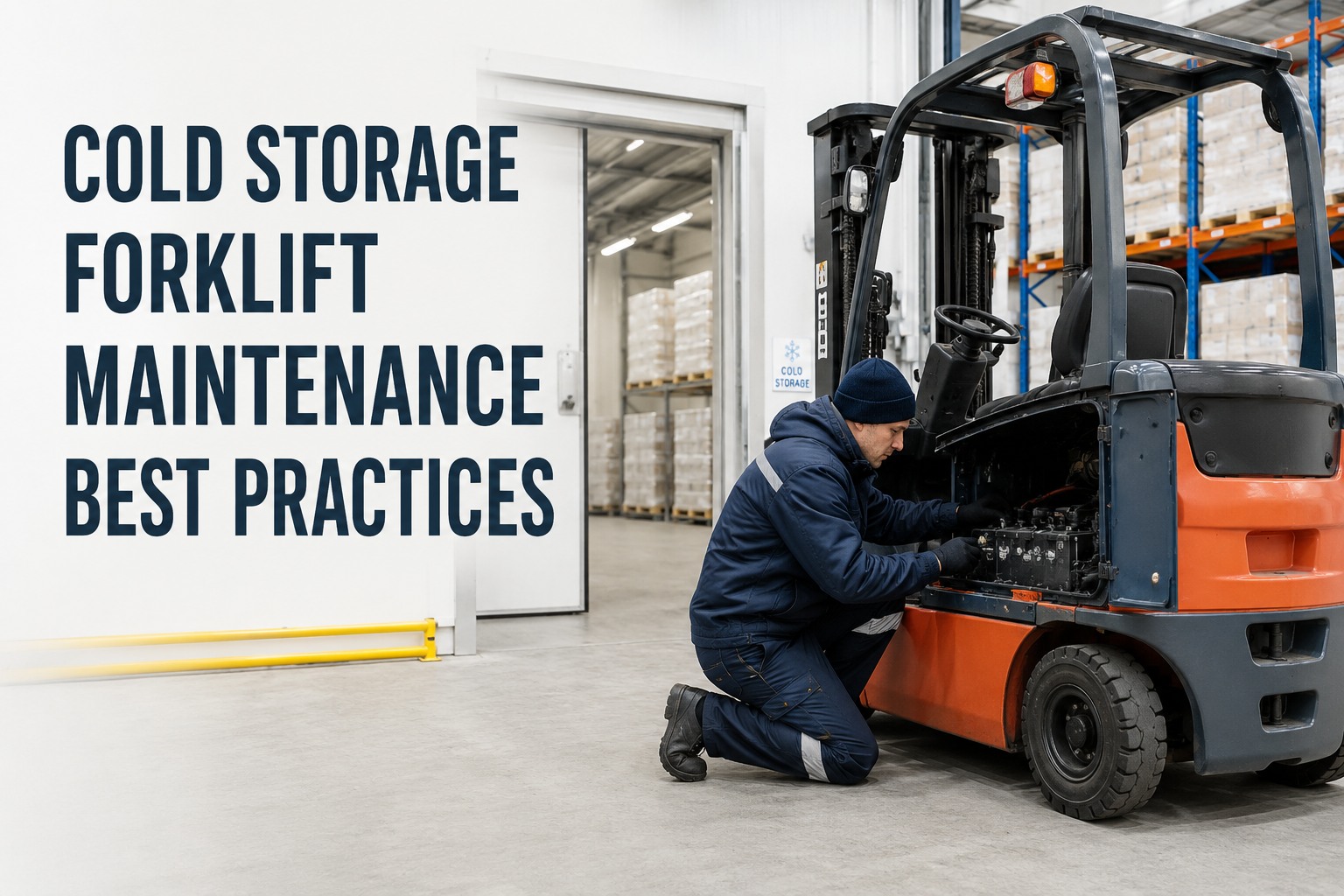
A forklift that runs flawlessly on a loading dock can become a maintenance problem the moment it crosses into a -20°F freezer. Cold storage is one of the harshest environments material handling equipment faces, and it attacks a forklift on four fronts at once: the battery loses a third or more of its capacity, hydraulic oil thickens and slows every lift, rubber seals and hoses turn brittle, and — the quiet killer behind most of it — condensation. Every time a truck travels between a warm dock and a frozen aisle, moisture condenses on the machine and then freezes, working its way into electronics, hydraulic lines, connectors, and bearings where it corrodes and short-circuits. A standard forklift in a freezer doesn't fail dramatically; it degrades steadily until an electrical fault or a seized hydraulic catches everyone off guard. The fix is partly the right equipment — sealed electronics, cold-rated fluids, freezer-rated batteries — and partly a maintenance program built for the cold, with tighter intervals and condensation discipline. A cold-storage maintenance program tracks the things that matter in the freezer and catches them before they strand a reach truck in a narrow aisle. This guide covers the four systems the cold attacks, the condensation problem, and cold-rated PM best practices.
The Forklift Doesn't Fail in the Freezer. It Fails From the Trip In and Out.
HVI keeps every cold-storage forklift on a freezer-rated inspection and PM schedule — battery health, hydraulic oil, seals, and condensation checks — flagging a defect with a photo and routing the work order before moisture, brittle seals, or a dead battery strands a reach truck mid-shift.
What the Cold Attacks: Four Systems
Freezing temperatures don't wear a forklift evenly — they hit four specific systems hardest. Knowing each one's failure mode is how you build a maintenance routine that actually protects the machine.
The problem: standard lead-acid batteries lose 20–50% of capacity in freezing temperatures, cutting run time and stranding trucks mid-shift.
Best practice: use freezer-rated or lithium-ion batteries (which hold charge far better), keep them in a heated battery room, use opportunity charging, and never drain to zero in the cold.
The problem: standard hydraulic oil thickens in the cold, slowing lift speeds and dulling responsiveness — and stressing pumps and seals.
Best practice: switch to low-viscosity, cold-rated hydraulic oil and freezer-grade grease so the system flows smoothly at temperature; check cylinders and hoses for cold-induced leaks.
The problem: cold makes rubber seals, hoses, and gaskets brittle, raising the risk of cracks, leaks, and sudden breakage under load.
Best practice: inspect seals and hoses more frequently than in ambient service, replace brittle or cracked components early, and specify cold-resistant rubber where available.
The problem: condensation corrodes wiring and connectors and shorts controls; tires lose pressure and traction, and can grow brittle.
Best practice: specify sealed connectors and anti-condensation heaters, check electrical systems and tire pressure frequently, and use high-traction cold-rated tires.
The Real Enemy: Condensation From Transitions
The single most damaging factor in cold storage isn't the cold itself — it's the temperature swing. Every trip between a warm dock and a frozen aisle creates moisture that freezes inside the machine. Understanding the cycle is how you stop it.
WARM ZONE
The forklift sits at the ambient loading dock. Surfaces, electronics, and components are at warm-air temperature, dry.
TRANSITION
Moving into the freezer, warm moist air hits cold surfaces and condenses — water forms on and inside the machine.
FREEZE
That condensation freezes on electronics, hydraulic lines, connectors, and bearings — corroding, shorting, and seizing over time.
Mitigate it on both fronts: equip machines with anti-condensation kits, sealed connectors, and heaters; and operationally, design routes to minimize warm-cold transitions, wipe machines down regularly, and never charge a battery immediately after exiting deep-freeze — the thermal stress damages it. Fewer transitions means less moisture, means fewer failures.
Cold-Rated PM: Tighter Intervals, Freezer-Specific Checks
Cold storage accelerates wear, so the PM program runs tighter than ambient service and adds checks a normal forklift never needs. Here's the freezer-adapted schedule.
Interval
Focus
Cold-Specific Tasks
Daily / Pre-Shift
Operator check
Battery charge, ice & condensation buildup, hydraulic responsiveness, seal/hose condition, tire pressure, wipe-down
Weekly
Detailed check
Connector & terminal corrosion, anti-condensation heater function, brittle-seal inspection, grease points
Tighter than ambient
Light service
Cold-rated hydraulic oil & filter check, freezer-grade re-grease, electrical-system inspection, tire condition
Major / Annual
Comprehensive
Hydraulic fluid change to cold-spec, battery capacity test, seal & hose replacement, corrosion treatment, heater service
Cold accelerates wear, so service intervals run shorter than the manufacturer's ambient baseline — plan more frequent checks of seals, tires, brakes, and electrical components. Follow your model's freezer-rated guidance (Crown ESR, Linde, and others publish cold-storage packages).
Cold Storage Best Practices at a Glance
The habits that separate a freezer fleet that runs reliably from one that's always down. Equipment, fluids, and operating discipline working together.
Use cold-rated everything — low-viscosity hydraulic oil, freezer-grade grease, sealed electronics, cold-resistant seals.
Manage batteries for the cold — lithium or freezer-rated, heated battery room, opportunity charging, never drain to zero.
Minimize transitions — design routes to reduce warm-cold crossings; install anti-condensation kits and heaters.
Inspect more often — tighter PM intervals; frequent checks of seals, hoses, tires, brakes, and electrical systems.
Wipe down & de-ice daily — remove condensation and ice buildup every shift to stop corrosion before it starts.
Track it digitally — log the freezer-specific checks per truck so wear trends surface before they become failures.
Cold-rated equipment and fluids only pay off if the maintenance discipline backs them up — tighter intervals, daily condensation checks, and battery care, tracked per truck. HVI makes each one a required, documented step.
schedule a live demo to see freezer-rated PM scheduling.
Keep Every Freezer Forklift Running, Not Frozen
Freezer-rated daily inspections for battery health, hydraulic oil, seals, and condensation; tighter cold-adapted PM scheduling; defect-to-work-order routing; and per-truck records — built for cold storage and cold-chain warehouse fleets running reach trucks, pallet trucks, and forklifts. Catch the moisture and the brittle seal before they strand a truck. Trusted by 25,000+ users worldwide.
Frequently Asked Questions
Why do forklift batteries struggle in cold storage?
Cold temperatures sap battery performance — standard lead-acid batteries can lose 20–50% of their capacity in freezing environments, which cuts run time and strands trucks mid-shift. The best practices are to use freezer-rated or lithium-ion batteries (lithium retains charge far better in the cold and supports opportunity charging), keep batteries in a heated battery room, top up with opportunity charging through the shift rather than running them down, never drain to zero in freezing temperatures, and avoid charging a battery immediately after it exits a deep-freeze, since the thermal stress damages it.
Sign up for a free HVI trial to track battery health.
What hydraulic oil should a cold storage forklift use?
Low-viscosity, cold-rated hydraulic oil, paired with freezer-grade grease. Standard hydraulic fluid thickens in sub-zero temperatures, which slows lift speeds, dulls responsiveness, and stresses the pump and seals. Cold-rated fluids stay stable and flow smoothly at low temperatures so lift and tilt functions operate consistently. Alongside the oil change, inspect cylinders and hoses regularly for cold-induced leaks, because the same low temperatures that thicken the oil also make seals and hoses brittle.
Schedule a demo to schedule cold-spec fluid service.
What causes condensation damage in cold storage forklifts?
Temperature transitions. Every time a forklift moves between a warm loading dock and a frozen aisle, warm moist air hits cold surfaces and condenses into water on and inside the machine, which then freezes — working into electronics, hydraulic lines, connectors, and bearings where it corrodes and short-circuits over time. It's the single most damaging factor in cold storage, more than the steady cold itself. Mitigate it with anti-condensation kits, sealed connectors, and heaters on the equipment side, and by designing routes to minimize transitions, wiping machines down regularly, and de-icing daily.
Sign up for a free HVI trial to check for condensation daily.
Do cold storage forklifts need more frequent maintenance?
Yes. Freezing conditions accelerate wear and deterioration, so cold storage forklifts require tighter maintenance intervals than the manufacturer's ambient baseline, plus checks a normal forklift never needs. Plan more frequent inspection of seals, hoses, tires, brakes, and electrical components, daily checks for ice and condensation buildup, regular battery terminal and connector corrosion checks, and verification that anti-condensation heaters are working. The tailored schedule accounts for the temperature-related stress on batteries, hydraulics, and seals that standard PM intervals don't anticipate.
Schedule a demo to set up freezer-rated PM.
Can a standard forklift be used in a freezer?
It can operate short-term, but it will degrade faster and fail more often than a cold-rated unit, because standard forklifts experience electrical condensation, hydraulic oil thickening, battery capacity loss, brittle tires and seals, and corrosion in freezing environments. If a standard truck must be used in the cold, the best practices are to minimize temperature transitions, switch to cold-weather lubricants and hydraulic fluids, invest in high-performance batteries, use high-traction tires, inspect electrical and hydraulic systems frequently, and train operators on cold-environment driving. A purpose-built cold-storage forklift with sealed electronics and freezer-rated components is the more reliable long-term choice.
Sign up for a free HVI trial to manage either.