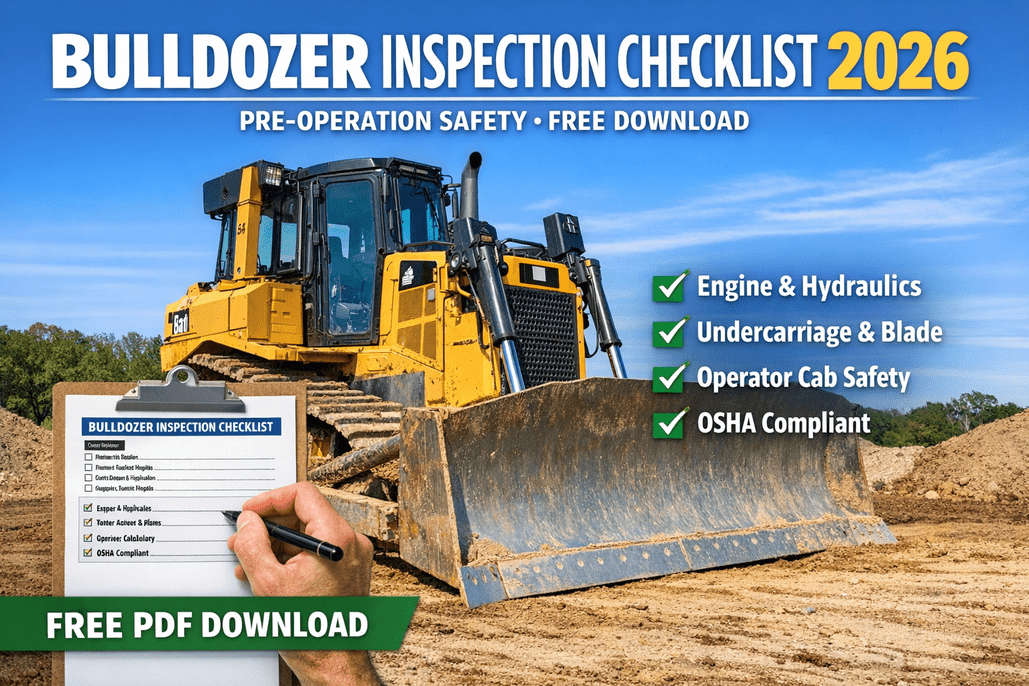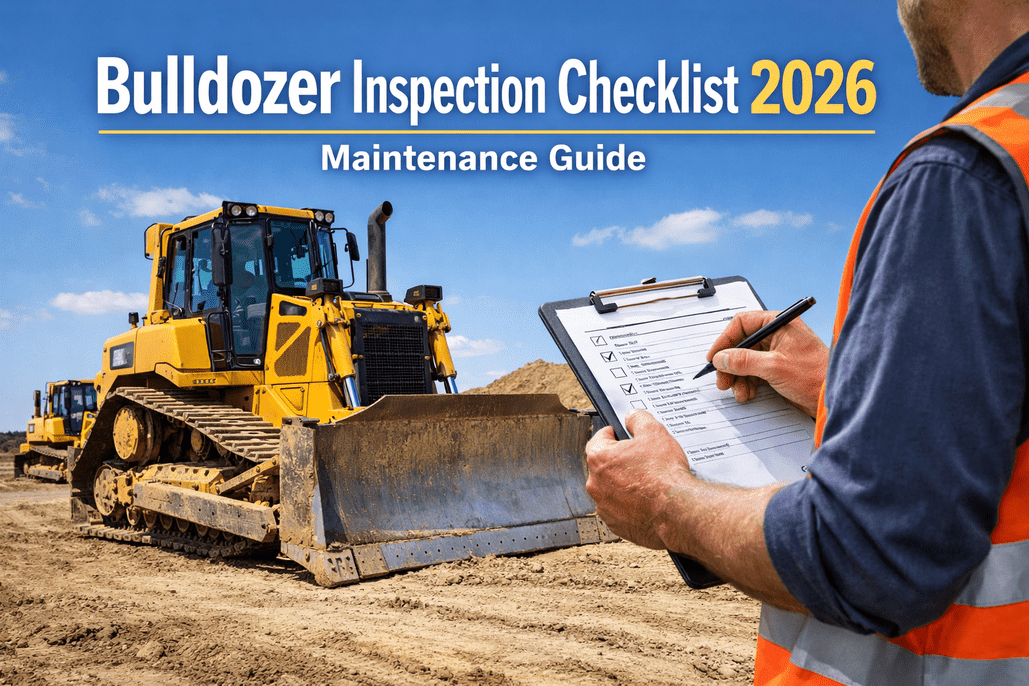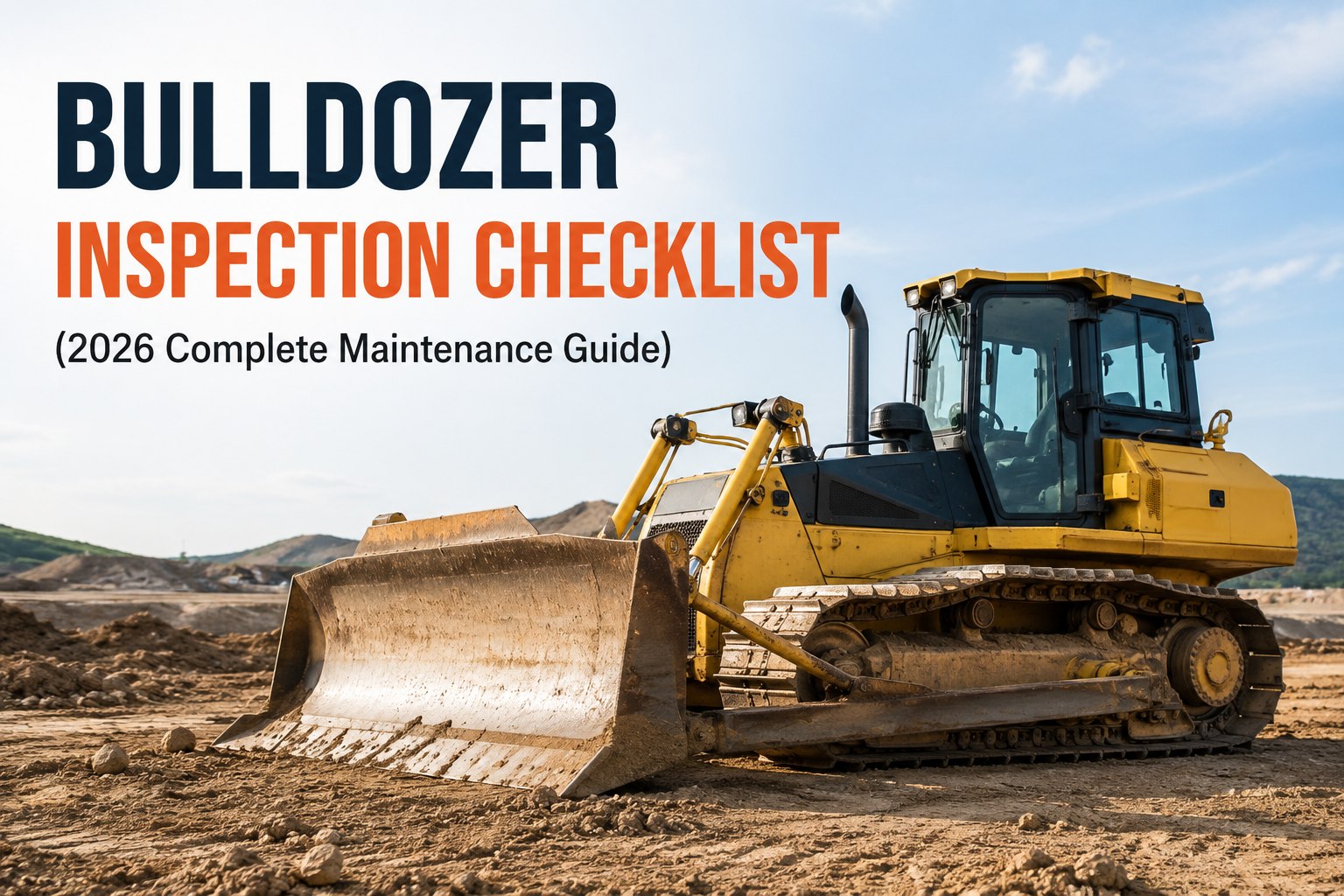
The undercarriage alone is 50% of a bulldozer's total lifetime maintenance cost. A single neglected undercarriage rebuild runs $65,000 or more, and the average unplanned dozer breakdown costs $150,000 when you add emergency repairs, project delays, and a rented replacement. Caterpillar identifies tight track as the number-one cause of crawler-tractor downtime, estimating that proper tension prevents 85% of undercarriage wear. All of it starts with a 10 to 15 minute daily inspection. This is the complete bulldozer inspection checklist for 2026. Book a demo to digitize your dozer inspections.
Bulldozer Inspection: Where 50% of Your Maintenance Budget Lives — Under the Tracks
Three systems own the cost. Your daily check decides whether it's planned maintenance or emergency repair.
System 1: Undercarriagethe 50% cost zone — daily cleaning and tension prevent most failures
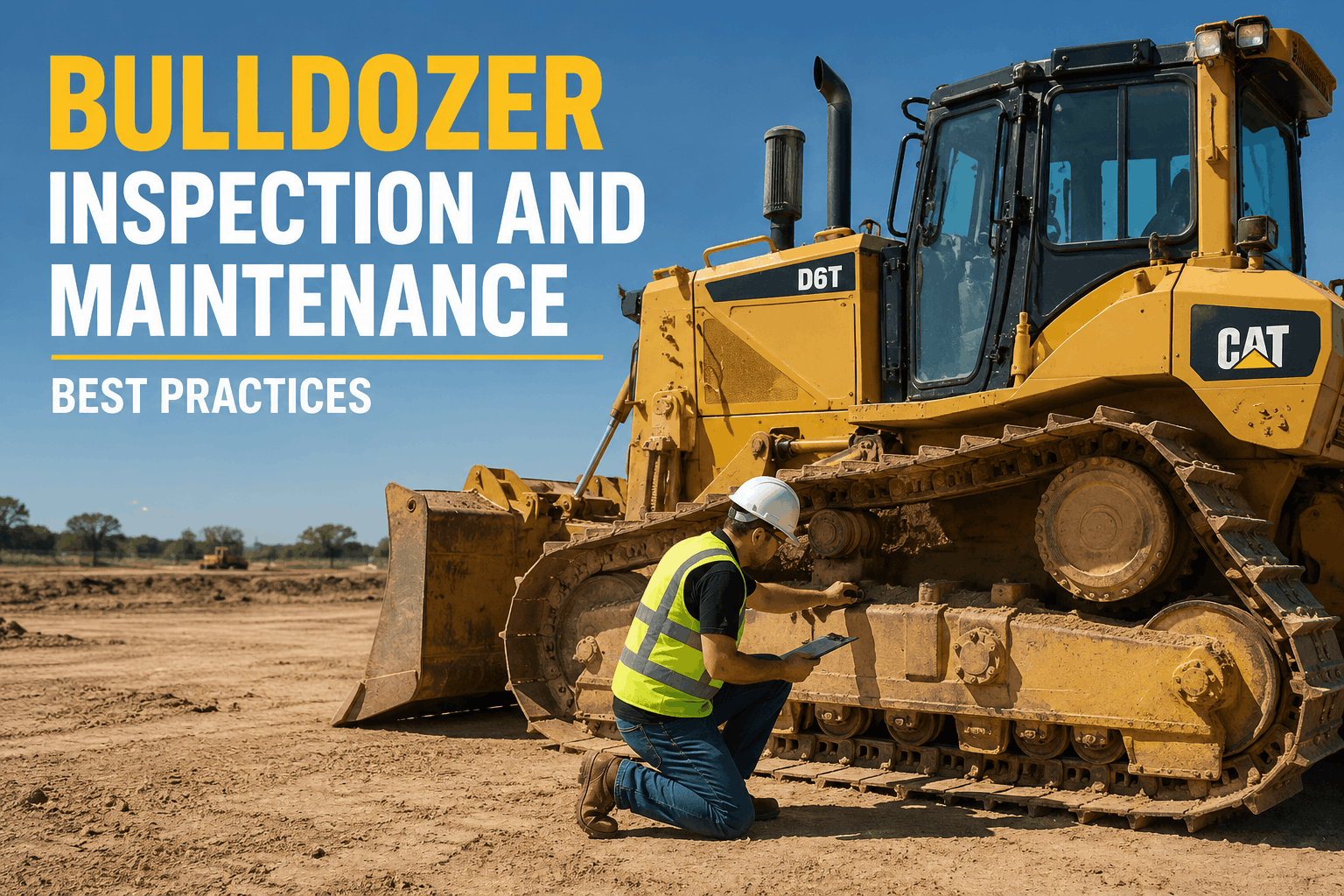
The undercarriage is roughly 20% of the purchase price but 50% of total lifetime maintenance. Track tension is the single most impactful daily check — Caterpillar's rule of thumb is that you want two dips of sag between the sprocket and the front idler. Too tight accelerates bushing and sprocket wear; too loose causes track derailment and accelerates roller wear.
Check sag between sprocket and idler. Two dips of sag is the CAT benchmark. Adjust daily if needed. Tight track is the #1 cause of crawler downtime — it accelerates bushing wear, sprocket tooth wear, and roller seal failure simultaneously.
Clean packed mud, rocks, and material from between track links, rollers, and idlers daily. Packed debris locks components in place, prevents proper movement, and accelerates wear. In clay or mud, debris can double undercarriage wear rates.
Inspect track rollers for flat spots, oil leaks (indicating failed seals), and wear. Check front idler for side play. Inspect sprocket teeth for wear pattern, hooking, and chipping. Book a demo — track undercarriage wear over time in HVI
Check for cracked or broken links, worn pins, and loose master pins. Measure track shoe wear if gauge is available. Worn links and pins cause track stretch that throws off tension and can lead to derailment.
System 2: Blade + Ripperthe work tools that take the highest impact forces on the machine
System 3: Hydraulics, Engine + Cabthe power systems and the operator's safety zone
From a construction fleet manager running 8 dozers across 3 sites
We lost a D6 for 11 weeks to an undercarriage rebuild that should have been a track adjustment. The operator reported "track seems loose" on a paper checklist three times over two weeks. Nobody in maintenance saw the reports until the track came off during a push, damaged two rollers, and sheared the sprocket teeth. Total repair: $72,000 plus 11 weeks of a rented D6 at $4,500/week.
Digital inspections solved it. Now when an operator flags track tension, a work order hits the shop foreman's phone before the dozer leaves the cut. We went 14 months without an unplanned undercarriage failure after the switch. The photo tracking is what changed behavior — operators photograph the track sag every morning, and maintenance can see the trend before it becomes a failure.
Frequently asked questions
How often should a bulldozer be inspected?
Bulldozers should be inspected daily before the first operating shift, covering all primary systems: undercarriage (tracks, rollers, idlers, sprockets), blade (cutting edge, end bits, push arms), ripper (shanks, tips, cylinders, frame), hydraulics (fluid, hoses, cylinders), engine and cooling system, transmission and final drives, and cab safety (ROPS, seatbelt, controls). OSHA requires pre-shift inspections under 29 CFR 1926.20 and 1926.602. Beyond daily checks, dozers need 250-hour service (engine oil, filters, greasing, detailed undercarriage visual), 500-hour service (fuel filters, hydraulic return filter, undercarriage wear measurement), 1,000-hour service (hydraulic oil change, coolant service, transmission service), and 2,000-hour major assessment. A daily inspection takes 10 to 15 minutes.
Why is the undercarriage the most expensive part of a bulldozer?
The undercarriage represents roughly 20% of a bulldozer's purchase price but up to 50% of its total lifetime maintenance cost because it contains dozens of wear components (track links, pins, bushings, rollers, idlers, sprockets, track shoes) all operating in direct contact with abrasive soil, rock, and mud. Every component wears every hour the dozer operates, and wear rates accelerate dramatically when track tension is wrong or debris isn't cleaned daily. A full undercarriage rebuild costs $65,000 or more. Caterpillar identifies tight track as the number-one cause of crawler-tractor downtime, estimating proper tension prevents 85% of undercarriage wear problems. The daily inspection that checks tension and clears debris is the single highest-value maintenance activity on a bulldozer.
How do I check bulldozer track tension?
Track tension is checked by looking at the amount of sag in the track between the drive sprocket and the front idler. Caterpillar's benchmark is two dips of sag, meaning you should see the track droop slightly at two points between the sprocket and idler. Too little sag (tight track) accelerates bushing and sprocket wear and is the number-one cause of crawler-tractor downtime. Too much sag (loose track) increases the risk of derailment and accelerates roller wear. Track tension should be checked daily and adjusted as needed using the track adjuster mechanism. Always check tension on level ground with the dozer warmed up, as cold track material can give a false reading.
Is ROPS mandatory on bulldozers?
Yes. OSHA 29 CFR 1926.1000 mandates rollover protective structures (ROPS) on bulldozers manufactured after 1972. The seatbelt must be worn whenever ROPS is installed, because the ROPS is designed to create a survivable space during a rollover only when the operator is restrained within the cab. The daily inspection must verify the ROPS structure has no cracks, deformation, or loose mounting bolts. Any modification to the ROPS (drilling holes, welding brackets, removing components) voids its certification and violates the OSHA standard. The ROPS check, along with seatbelt function verification, is a mandatory daily pre-start inspection item on every bulldozer.
Can I digitize bulldozer inspections?
Yes. HVI (Heavy Vehicle Inspection) lets construction, mining, and municipal fleets build per-model bulldozer inspection templates covering all systems in one digital flow. Operators complete the inspection on a phone or tablet with required photo capture at track sag, cutting edges, hydraulic connections, and ROPS structure. Undercarriage wear is tracked over time through photo comparisons, so maintenance can predict rebuild timing instead of reacting to failures. Defects auto-generate work orders that reach the shop before the dozer leaves the site. OSHA 2025-2026 enforcement favors digital documentation: digital systems achieve 96% audit pass rates compared to 73% for paper. Every inspection is timestamped, GPS-tagged, and signed digitally.
$150,000 breakdown or a 12-minute daily inspection. The math isn't complicated.
Build per-model templates for any dozer make. Track undercarriage wear daily. Require photos at track tension, cutting edges, and ROPS. Auto-generate work orders. GPS and timestamp every record. 96% audit pass rate vs. 73% for paper. Live in under a week.
No credit card · No hardware · Works with any dozer make or model