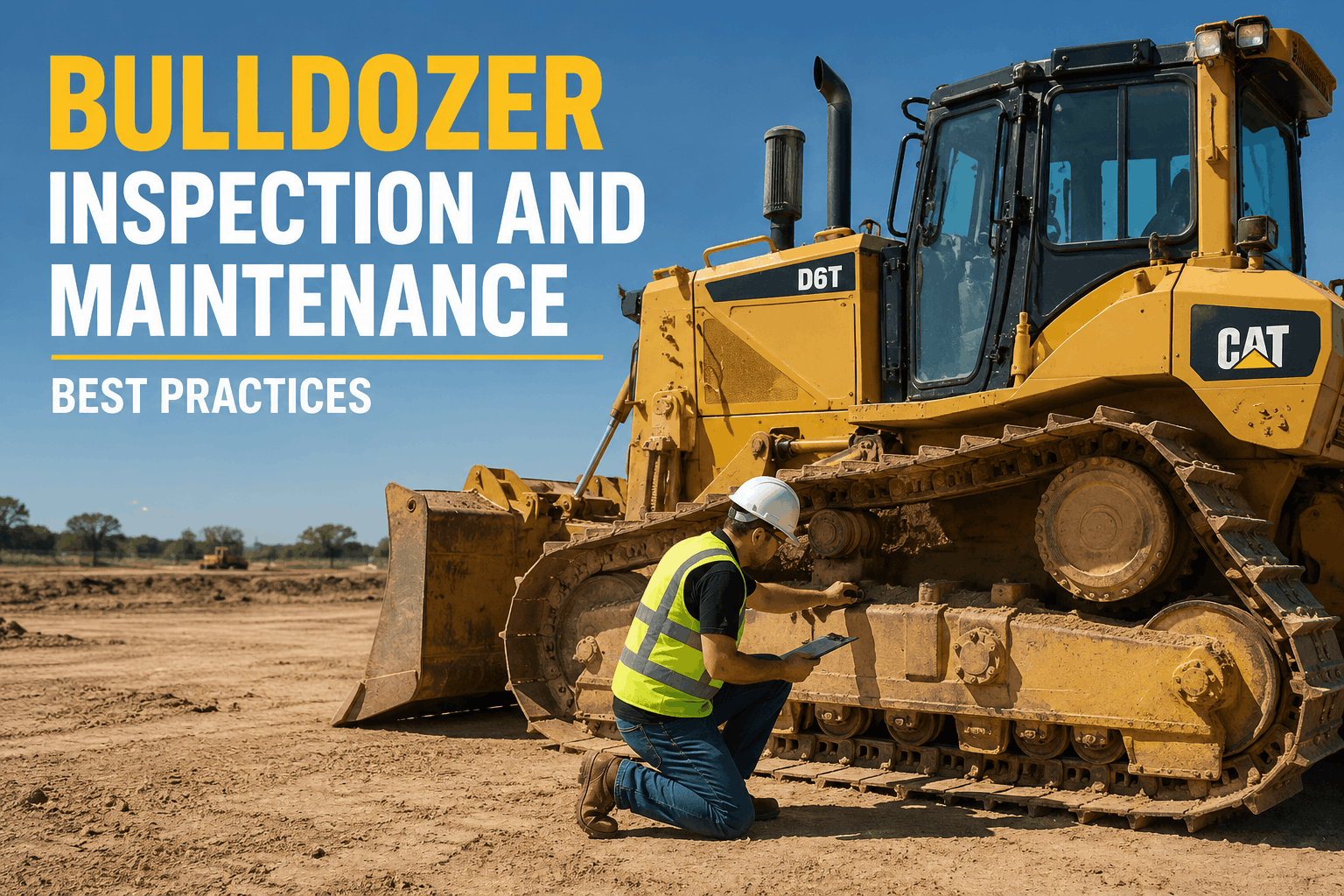
Not every part of a bulldozer inspection matters equally. The undercarriage — tracks, rollers, idlers, sprockets, bushings — costs roughly 20% of the machine to buy and about 50% of the machine to keep running over its life. Hydraulic contamination causes three out of every four hydraulic failures. Everything else on the daily bulldozer inspection checklist matters, but those two systems decide whether the machine sees 8,000 hours or 20,000. This guide walks the pre-shift inspection in the order the money actually flows: undercarriage first, hydraulics second, everything else third. Plus the two-dip track tension rule Caterpillar names as the number-one lever, the wear-percentage decision matrix, and what "tag out of service" looks like on a dozer. Book a demo to see the priority triage as a mobile DVIR.
The Daily Bulldozer Inspection Checklist
Where the money actually goes on a dozer — and how a twelve-minute pre-shift check protects the two systems that decide the maintenance budget.
- 50%Undercarriage
- 20%Hydraulics
- 15%Engine & drive
- 15%Blade, cab, other
Every bulldozer inspection checklist in circulation covers roughly the same items. What separates a useful one from a generic one is the order of attention. The reason the order matters is arithmetic: the same twelve minutes of walk-around time spent proportionally on undercarriage, hydraulics, and everything else produces a wildly different outcome than twelve minutes spread evenly across a dozen sections of a paper form. Here is the priority triage that follows the actual cost curve of a dozer — and the specific checks that catch failure early in each tier.
The numbers that shape the priority
Four figures decide why the triage below is structured the way it is. Any one of them alone is worth reordering your walk-around.
- 50% of lifetime dozer maintenance cost is the undercarriage alone
- 85% of undercarriage wear is preventable with correct track tension — per Caterpillar
- 75% of hydraulic failures come from contaminated fluid, not worn parts
- $65K+ Average cost of a neglected mid-size dozer undercarriage rebuild
The daily walk-around exists to catch the wear that leads to those numbers before it becomes a rebuild. Twelve minutes cold, done in priority order — that's it. See wear trending built into the mobile inspection
Tier 1: Undercarriage — the 50% system
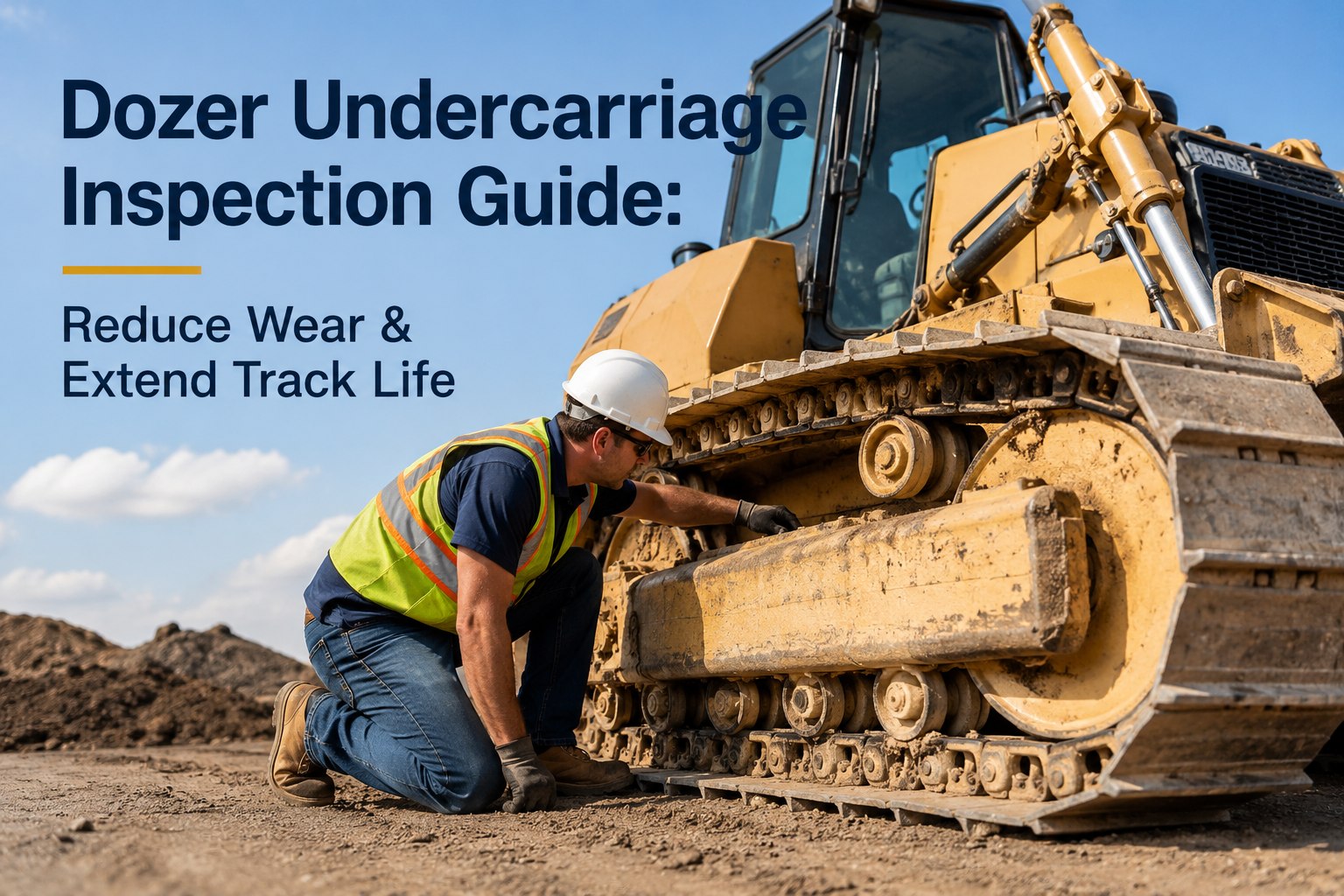
Start here. Every day. Before anything else. Undercarriage inspection dominates the cost equation, and the daily lever with the biggest impact is track tension. Caterpillar's own guidance names tight track as the number-one cause of crawler-tractor downtime.
Undercarriage — 5 minutes
50% of lifetime costThe daily undercarriage check is not deep expertise — it's discipline. Clean, tension, look, listen. Wear measurement at 500-hour intervals turns the surprise rebuild into a planned one. Start free and log wear measurements per machine
The two-dip rule, illustrated
The single check that decides 85% of undercarriage wear is track sag. Get it right and the whole system lasts. Get it wrong — either too tight or too loose — and the wear compounds every hour of operation.
Soil moisture and ground conditions change tension throughout the shift, which is why it's a daily check, not a monthly one. Re-verify after rain or after a change in ground type. Book a demo — see two-dip verification prompted every shift
Tier 2: Hydraulics — the contamination system
Hydraulics move the blade, ripper, and steering. Three out of four hydraulic failures come from contaminated fluid — not worn parts. Which means the daily check is about keeping dirt out and catching leaks before they become injectors.
Hydraulics — 3 minutes
75% of failures from contaminationA dozer's hydraulic system is where the productivity lives. Keep it clean, catch leaks cold, and it lasts. Ignore fluid clarity for a month and rebuild costs land in five figures. Start free and get hydraulic-check prompts on every DVIR
Tier 3: Everything else — engine, blade, cab, safety
Fast walk. All of it required by OSHA 29 CFR 1926.20 and 1926.602, all of it real, none of it as expensive to catch as the first two tiers. Four minutes covers the whole thing when the two big systems are already handled.
- Oil, coolant, fuel levels at spec
- Belts — no cracks, glazing, or fraying
- Radiator screen clear of debris
- Battery terminals clean, cables tight
- Cutting edge wear against original profile
- Bolt torque on cutting edge & end bits
- Blade & C-frame welds — no cracks
- Ripper shanks, teeth, and pin retention
- No weeping around final-drive seals
- Steering response smooth, no dead zone
- Service & parking brakes hold on grade
- Ground beneath dry, no fluid pooling
- ROPS intact, mounts un-modified
- Seat belt intact and functional
- Horn and backup alarm audible
- All lights, mirrors, gauges operational
None of these are hard. All of them are things OSHA expects you to have documented on a pre-shift check — and every one is a citation risk if the audit finds it undone.
The wear-percentage decision matrix
The point of measuring undercarriage wear at 500-hour intervals isn't a single number. It's the trend that projects when each component hits its limit — so you budget the rebuild instead of being ambushed by it. Every reading feeds this matrix.
-
< 50%
Monitor Keep logging. Compare against the last 3 readings and calculate wear velocity. Nothing to plan yet.
-
50–75%
Schedule Plan replacement in the next PM window. Order parts now, don't wait for stock-out. Trend is the budget line.
-
75–100%
Replace now At-limit or past. Cascading damage begins here — a worn sprocket destroys new track. Don't defer.
The trend is what matters, not the reading. Two consecutive readings give you a rate; three give you a forecast. That's the difference between a $6K planned replacement and a $65K surprise rebuild. Start free and let HVI trend the wear for you
The dozer tag-out-of-service list
Some defects are tomorrow-PM. These are today-park-it. Each of these means the dozer gets tagged, the ignition locked out, and maintenance notified before the machine moves.
- Thrown or severely loose trackDerailment risk. Fix tension & alignment before dispatch.
- ROPS damage or modified mountingStructural integrity is the difference between rollover and fatality.
- Blade or C-frame structural crackFailure at load is catastrophic. Weld and inspect before return.
- Hydraulic hose burst or active leakFluid injection injury risk plus $2K/day of downtime.
- Brake failure or dragging brakeLoaded stopping on grade is where brake weakness turns fatal.
- Steering malfunctionLoss of directional control with a full blade is not survivable on a slope.
- Non-functional horn or backup alarm29 CFR 1926.602 requires audible warning on bidirectional equipment.
- Critical engine warning — low oil, high temp, fault codeContinue and small problem becomes catastrophic failure.
Digital DVIR platforms enforce this structurally — flagging one of these blocks dispatch until maintenance signs off the repair. No "we'll watch it," no "one more shift." Book a demo to see tag-out-of-service enforcement
From a shop foreman running a mixed dozer fleet
We had a D8 come off the trailer with tracks tighter than a piano wire. Six months later the sprockets and half the rollers were toast — $34,000 rebuild. That's when I actually read what Cat says about tension. Two dips. That's the whole thing.
What changed for us was making the operator take a photo of the sag between sprocket and idler before he could check the box. Two months in, the second-year mechanic caught the same thing on a D6 — only that one was still fixable. The paper form wasn't catching any of it because "checked" and "actually looked" aren't the same thing.
Frequently asked questions
What should a daily bulldozer inspection cover?
The most cost-effective daily bulldozer inspection is organized by system priority rather than a flat walk-around, because the undercarriage alone represents roughly 50% of a dozer's total lifetime maintenance cost. Tier 1 is the undercarriage: clean out packed debris, check track tension using Caterpillar's two-dip rule between sprocket and idler, and inspect rollers, idlers, sprocket tooth profile, track shoes, and grouser height. Tier 2 is the hydraulic system: fluid level and clarity, cylinder rods for scoring or weeping, hoses for chafing and bulges, and a blade-response test to confirm no drift or delay. Tier 3 covers everything else with quick pass checks: engine fluids and belts, cooling system radiator screens, blade cutting edge and welds, ripper attachments, final drives and steering, service and parking brakes, and the OSHA-required cab safety items — ROPS, seat belt, horn, backup alarm, and lighting. The whole triage takes about 12 minutes on a cold machine.
Why is the undercarriage 50% of dozer maintenance cost?
Because it's the system doing all the work. Every push, grade, and pivot transfers force from the engine through the final drive to the sprocket, then through the track chain, bushings, pins, rollers, idlers, and shoes. All of those components wear simultaneously and interact — a worn sprocket destroys new track, a misaligned idler cascades wear into the rollers, and packed debris accelerates wear across the entire assembly. On top of the mechanical stress, dozers work in the harshest ground conditions of any earthmoving equipment: mud, rock, gravel, and packed clay all abrade the undercarriage constantly. Caterpillar and John Deere both put the figure at approximately 50% of lifetime owning-and-operating cost for the undercarriage, which is why a few minutes of daily inspection focused on this system produces disproportionate savings compared to any other check on the checklist.
What is the two-dip track tension rule?
The two-dip rule is Caterpillar's field standard for correct track tension on conventional crawler dozers. The check is performed by rolling the machine forward on level ground, letting it coast to a stop without braking, and then laying a straightedge across the grouser tips from sprocket to idler. Correct sag shows two visible dips in the top track run — roughly two inches on many mid-size crawlers, though the exact spec varies by model and undercarriage type, so verify against the operation and maintenance manual for the specific machine. Correct tension prevents an estimated 85% of undercarriage wear problems per Caterpillar's own guidance. Too tight accelerates roller, idler, bushing, and sprocket wear and wastes horsepower and fuel. Too loose causes bounce, vibration, and chain snaking that can derail the track. Because soil moisture and ground type change tension throughout a shift, it's a daily check rather than a set-and-forget adjustment.
When should a bulldozer be tagged out of service?
Any defect that could cause loss of control, injury, or fatal incident triggers immediate tag-out. On a dozer specifically, that means: a thrown or severely loose track that risks derailment; ROPS structural damage or unauthorized mount modification; a blade or C-frame structural crack that could fail under load; any hydraulic hose burst or active leak (fluid injection injuries are catastrophic and downtime is expensive); brake failure or dragging brakes; steering malfunction; non-functional horn or backup alarm as required by 29 CFR 1926.602; and any critical engine warning such as low oil pressure, high coolant temperature, or a fault code indicating imminent failure. Each requires photo documentation, notification to maintenance, and a physical lockout tag on the machine's ignition or controls. The dozer must not return to service until repair is completed, signed off by a qualified person, and the record shows the sign-off. Digital DVIR platforms enforce this structurally by blocking dispatch until the tag-out condition is cleared.
How often should formal undercarriage wear measurement happen?
Formal wear measurement — link pitch across a 4-pin span, bushing outer diameter, roller and idler tread diameter, grouser height, and sprocket tooth profile — belongs on a 500-hour interval or at each major PM service, not on the daily inspection. The daily walk-around catches visual failures and confirms tension; the 500-hour measurement produces the trended numbers that project replacement timing. The real value isn't a single reading. It's the trend across three or four readings that projects when each component hits the OEM wear limit — under 50% worn means monitor, 50 to 75% means schedule replacement in the next PM window, and over 75% means replace before the next shift because cascading damage begins at that threshold. Caterpillar's Undercarriage Management System (UMS) and Komatsu's KOWA wear analysis both provide standardized measurement methods. Logging these measurements digitally lets the trend do the forecasting for you — turning a surprise $65,000-plus rebuild into a planned line item on the maintenance budget.
Run the dozer inspection where the money actually is
HVI turns the three-tier dozer walk-around into a guided mobile DVIR: undercarriage prompts with two-dip tension verification, hydraulic-fluid clarity capture, wear measurement logging that trends automatically, tier-3 walk that covers OSHA-required safety items, and the tag-out-of-service list built in structurally. Every asset in the yard on one dashboard.
No credit card · No hardware · Live on your fleet in under two weeks