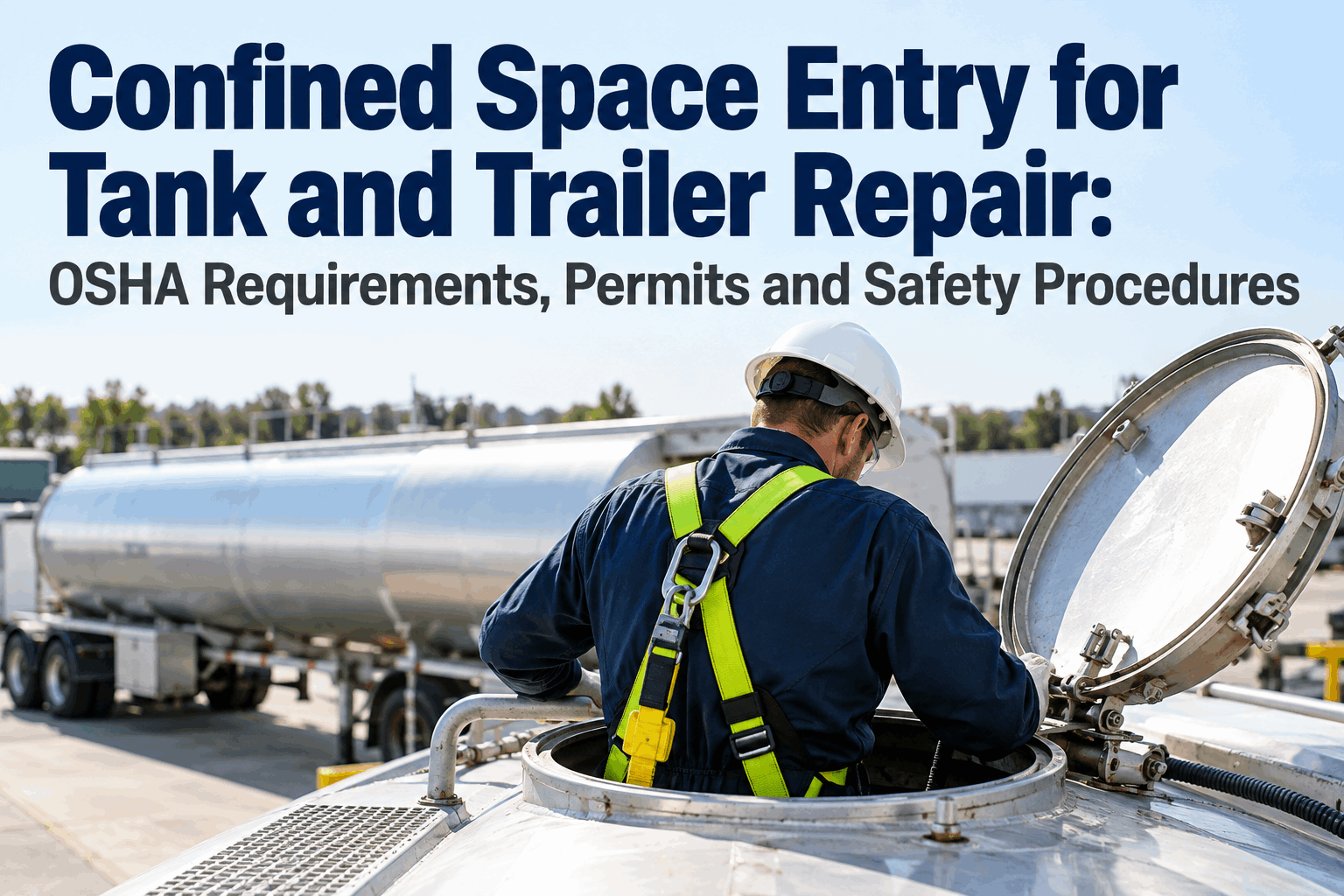
A tank trailer may look empty after unloading, but its interior can still contain hazardous vapors, oxygen-deficient air or residues that make entry dangerous. Confined space entry for tanks requires more than opening a manway: crews need a documented hazard evaluation, the correct entry controls and an effective rescue plan. This guide explains how fleet shops can prepare, authorize and record tank-entry work safely.
Confined Space Entry for Tank & Trailer Repair
Understand permit-space hazards, atmospheric testing, isolation, attendants and rescue readiness before a technician enters a tank.
Why an Empty Tank Can Still Be a Permit Space
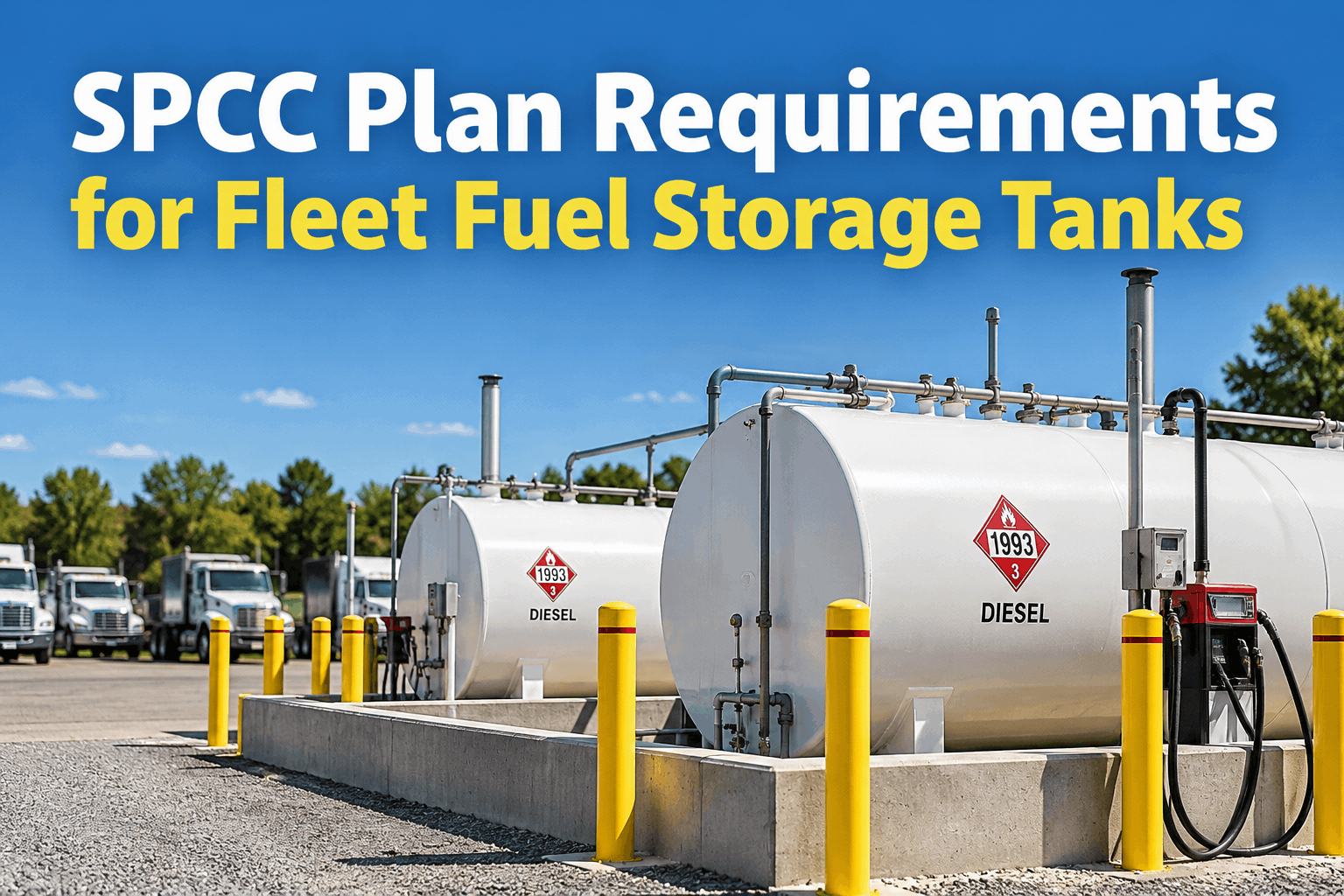
Tank and trailer interiors often have limited entry openings and are not designed for continuous occupancy. They may also contain atmospheric or physical hazards that trigger permit-required confined-space controls.
Oxygen deficiency or enrichment, flammable vapors and toxic contaminants can be invisible.
Liquid, sludge or product residue may create additional hazards during cleaning and repair.
Connected piping, moving components and pressure sources require appropriate isolation.
A digital record can help teams document preparatory inspections. Book a Demo to See HVI Tank Safety Inspection Checklists.
Determine Whether a Permit-Required Entry Program Applies
Under OSHA's general-industry standard, 29 CFR 1910.146, employers must evaluate workplaces for permit spaces. A confined space is permit-required when it has specified serious hazards, including hazardous atmospheres or other recognized serious safety or health hazards.
Apply other relevant controls
Use the hazard assessment and task-specific procedures appropriate to the work.
Evaluate permit-space hazards
Assess atmosphere, engulfment, configuration and other serious hazards before selecting the entry method.
The Tank Entry Sequence: Prepare, Test, Authorize
A safe entry plan is built before the first technician approaches the manway. The steps below summarize core controls; the employer's written program and competent entry personnel determine the complete procedure.
Identify & isolate
Review prior cargo and cleaning information. Control connected lines, pressure and hazardous energy using the required isolation methods.
Prepare atmosphere
Use suitable cleaning and ventilation methods. Avoid introducing ignition sources or incompatible equipment.
Test & monitor
Use calibrated direct-reading instruments as required. For permit spaces, test oxygen, then flammables, then toxic contaminants.
Authorize & enter
Confirm the permit, entry supervisor, attendant, entrants, communications and rescue arrangements before entry.
Make Tank Repair Safety Checks Easier to Document
Use HVI to organize inspection checklists, findings and corrective maintenance follow-up alongside your existing entry program.
Confined Space Entry Checklist for Tank Trailer Repairs
Use this as a planning reference, not as a substitute for an employer-approved permit or a site-specific hazard assessment.
Before Entry
During & After Entry
For recurring shop checks, Sign Up Free to Organize Tank Repair Safety Inspections with HVI.
Rescue Planning Must Exist Before Entry
Confined-space emergencies can incapacitate entrants rapidly. A plan that depends on an untrained coworker entering the tank creates another victim.
Never improvise an entry rescue
The attendant must follow the emergency procedure, summon the designated rescue service and avoid unauthorized entry.
Evaluate rescue services for timely response, proficiency and equipment suited to the space.
Provide retrieval systems where required, unless their use would increase risk or not contribute to rescue.
Address access, communication, rescue practice and any site-specific limitations before authorizing entry.
Connect Tank Safety Inspections to Maintenance Action
Permit documentation and equipment inspection records serve different purposes. HVI can support routine safety inspections and maintenance follow-up; required entry permits must still be completed, controlled and retained under the applicable program.
Book a Demo to See HVI Safety Findings and Maintenance Follow-Up.
Tank Trailer • TT-208
FOLLOW-UP REQUIREDDamaged access fitting identified. Trailer held for assessment and repair.
Confined Space Entry for Tanks: FAQs
Is every tank trailer a permit-required confined space?
Not automatically. Employers must evaluate whether the space meets the confined-space definition and whether permit-space hazards exist. Prior contents, atmosphere, connected systems and the planned task all matter.
What atmospheric testing is required before permit-space entry?
Under the general-industry permit-space standard, atmospheric testing is performed using calibrated direct-reading instruments, in the order oxygen, flammable gases and vapors, then potential toxic contaminants. The exact monitoring program depends on identified hazards and the entry procedure.
Can ventilation eliminate the need for an entry permit?
Not by itself. OSHA provides specific conditions for alternate procedures and reclassification. Employers must document that those conditions are met before using them.
Who must be involved in a permit-required tank entry?
The entry program assigns trained authorized entrants, an attendant, an entry supervisor and appropriate rescue arrangements. Specific staffing and responsibilities depend on the entry and applicable standard.
How can HVI help with tank trailer safety documentation?
HVI can help organize digital safety inspections, record equipment defects and support maintenance follow-up. It does not perform atmospheric testing, authorize entry, replace rescue services or independently certify OSHA compliance.
Keep Tank Repair Safety Findings Visible Beyond the Shift
Give fleet and shop teams a consistent way to record equipment checks and track corrective work—while keeping permit-space decisions with trained personnel.