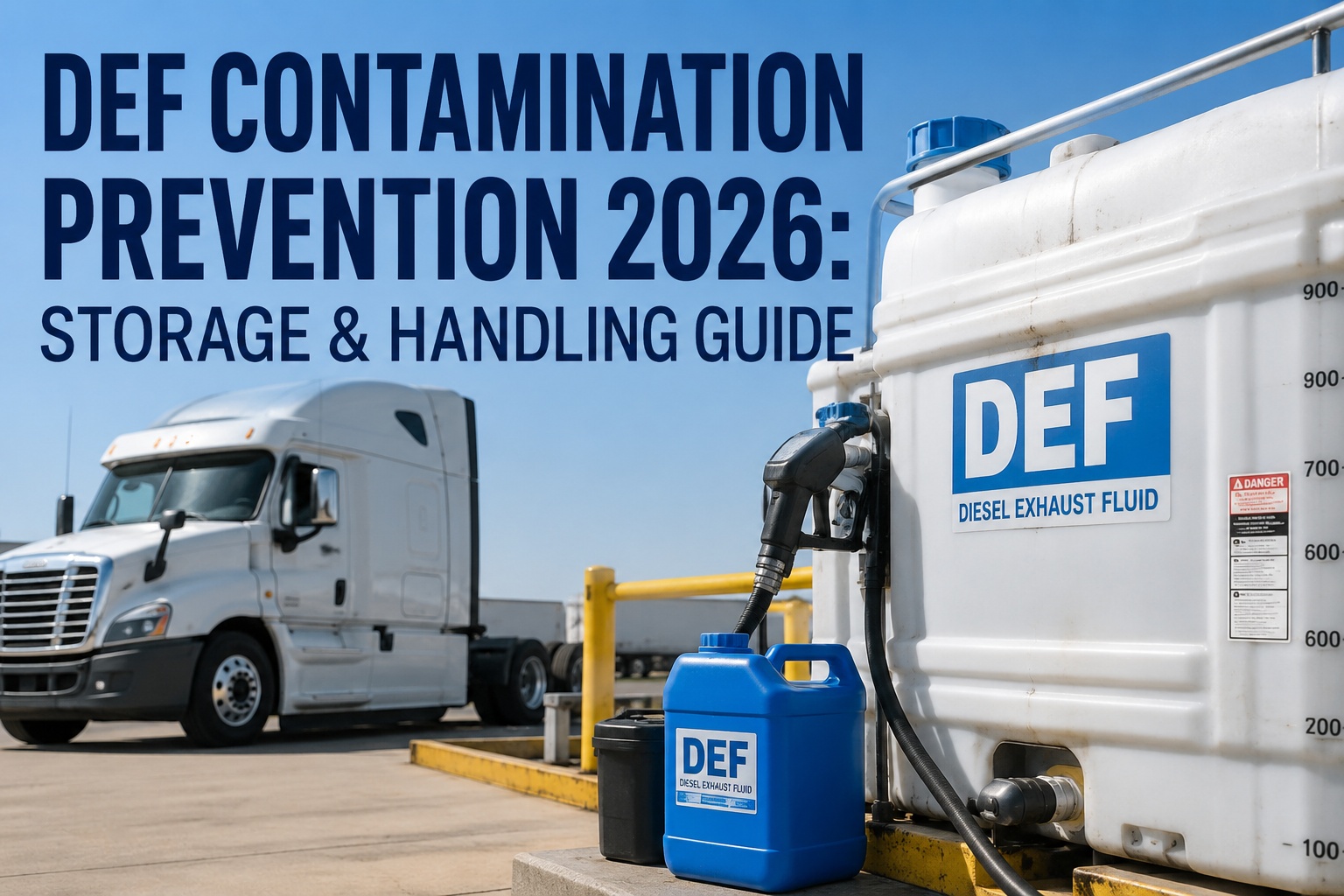
DEF storage is really a race against heat. Diesel exhaust fluid is a precise 32.5% urea solution, and the hotter it sits, the faster it degrades — a jug good for three years in a cool store can be spent in three months in a hot yard, triggering SCR faults long after the fluid still looks fine. Book a demo to see it tracked.
DEF Has a Clock — and Heat Speeds It Up
Shelf life isn't a date on the jug. It's a countdown that runs faster the warmer DEF is stored — and degraded DEF is how a clean fleet ends up with SCR faults.
Below is what "good DEF" actually means, why heat is the real enemy, what contaminates it, the freeze myth worth clearing up, and how HVI keeps a fleet's DEF quality on the record instead of in the dark.
What "good DEF" actually isthe spec that keeps SCR happy
DEF isn't just "the blue fluid." It's a tightly specified solution, and the SCR system is built around it being exactly right. The truck sprays DEF into the hot exhaust, where it breaks down to ammonia and converts NOx into harmless nitrogen and water.
If the concentration is off, that reaction doesn't complete, the system logs it, and the truck can derate. So the spec below isn't a nicety — it's exactly what the emissions system is calibrated to expect.
Urea concentration
32.5% urea, 67.5% deionized water — the exact ratio with the lowest freeze point. Dilute or off-spec and SCR reads it as a fault.
Storage window
Store between 12°F and 86°F, out of direct sunlight. The cooler and steadier, the longer it holds spec.
The quality standard
Genuine DEF meets ISO 22241 for purity. Only dedicated, clean equipment should ever touch it.
Everything else on this page is about keeping DEF at that spec from delivery to the truck's tank. Book a demo to see DEF quality checks logged against each delivery
Heat is the enemy, not the calendarwhy the same DEF lasts years or months
The shelf life on a DEF drum assumes reasonable storage. Let it bake and that number collapses — because at higher temperatures the urea slowly breaks down toward ammonia and the fluid drifts off spec. The chart in the hero says it plainly: cool storage buys years, a hot yard buys months.
Steady temperature under 77°F, out of sun — DEF holds spec for a year or more and reaches the truck exactly as intended.
Drums in a sunbaked yard swing past 86°F — shelf life drops to months and the urea starts drifting off concentration.
The catch is that degraded DEF looks identical to fresh — same clear fluid, same jug. There's no smell or color change to warn a technician at the pump, so the only defenses are storage discipline and a quick concentration check. A fleet that buys DEF in bulk and lets it sit through a hot summer can be dosing off-spec fluid into every truck without a single visual clue.
The fix isn't complicated: climate-shelter the store, keep drums and totes out of direct sun, rotate stock oldest-first, and buy volumes you'll actually use before the season turns. Start free and log storage conditions so old, heat-aged DEF gets used or pulled first
What actually ruins DEFit takes shockingly little to contaminate it
DEF is fussy. Because SCR meters it so precisely, even a trace of the wrong thing pushes it out of spec — and the fluid gives no obvious warning until the truck throws a code. These are the five ways good DEF goes bad.
Dedicated, DEF-only equipment kept clean and out of the sun handles four of the five. We go deeper on the handling side in our DEF contamination prevention guide. Book a demo to see contamination checks built into the DEF workflow
The freeze myth, cleared upwhat actually matters in the cold
Plenty of crews worry about DEF freezing in winter and toss fluid that froze in storage. That's the wrong worry — freezing is the one thing DEF shrugs off. Here's what's true and what isn't.
"DEF that froze is ruined and has to be thrown out."
Frozen 32.5% DEF thaws with no solids left behind and no loss of effectiveness — the urea and water freeze and thaw together. Trucks are built with heated tanks and lines for exactly this. Heat, not cold, is what degrades DEF.
The one winter caution is not to force-thaw a drum with direct heat or an open flame — that spikes the temperature and can degrade it, the exact harm freezing doesn't cause. Let it come back up slowly at room temperature instead. So in winter, store DEF where it can thaw gently and don't panic about a frozen drum; save the real worry for the hot months. Start free and keep storage notes on every DEF batch
Test it in 30 secondsa refractometer settles "is this DEF still good?"
When you're not sure a batch is still on spec, you don't guess — you check the concentration. A DEF refractometer reads urea percentage in seconds, and it's the single most useful tool for confirming quality before it reaches a tank. A cheap handheld unit pays for itself the first time it catches a bad drum before it doses a truck.
A 30-second reading beats a tow and an SCR diagnosis every time. Book a demo to see refractometer results captured on the batch record
From a fleet maintenance manager
We had a run of SCR faults one summer we couldn't pin down — kept swapping sensors. It was the DEF. Drums had sat in the yard all season and cooked past spec, and we were pumping degraded fluid into good trucks. Now every batch is dated and spot-checked with a refractometer, and old stock gets used first. The "sensor" problem disappeared the day we started treating DEF like it had an expiry.
How HVI keeps DEF quality on the recordbatch age, consumption trends and SCR codes
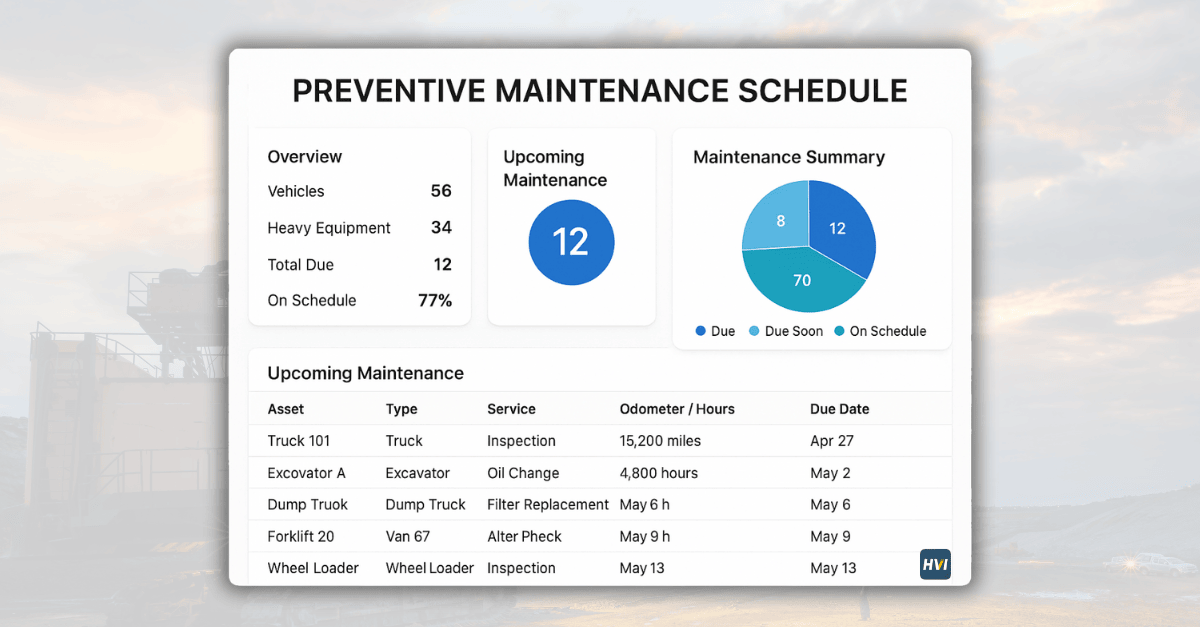
Good DEF handling is really a documentation problem — knowing which batch is oldest, whether it was tested, and which trucks are burning too much. HVI's PM scheduling, records and telematics fault codes turn that into a system.
Date & test every batch
Log each DEF delivery with its date and refractometer reading, so heat-aged stock is used first and quality is proven.
Trend DEF consumption
Track dosing per truck; a sudden jump flags an SCR problem or a bad batch before it becomes a derate.
Catch SCR fault codes
DEF-quality and SCR fault codes flow in from telematics and attach to the unit, so patterns surface fast.
See how DEF batches, quality checks and SCR codes live on one screen inside HVI's DEF storage and quality tools, and cross-check the DEF system fault codes a truck reports. Line it up in a quick demo
DEF storage & quality: quick answers
How long does DEF last in storage?
It depends almost entirely on temperature. Stored cool (around 54°F) DEF lasts three years or more; at 77°F it's about six months, and at 86°F only about three months, per ISO 22241. In most temperate storage you can expect at least a year. Heat, not the calendar, is what shortens it.
What temperature should DEF be stored at?
Between 12°F and 86°F, out of direct sunlight, in as steady a temperature as you can manage. The cooler and more stable the store, the longer DEF holds its 32.5% concentration. Brief excursions are tolerable; sustained heat is what degrades it.
Does DEF go bad if it freezes?
No. Frozen 32.5% DEF thaws with no solids left behind and no loss of effectiveness — the urea and water freeze and thaw together. Trucks have heated DEF tanks and lines for winter use. Freezing is not the concern; prolonged heat is.
How do you test DEF quality?
With a DEF refractometer, which reads urea concentration in seconds. Sample the fluid, read the concentration, and compare against the 32.5% spec — on target is good, drifted off means retire the batch. Recording the reading against the batch proves quality rather than assuming it.
How does HVI help manage DEF quality?
HVI dates and logs every DEF batch with its quality check so heat-aged stock is used first, trends DEF consumption per truck to flag problems early, and pulls SCR and DEF-quality fault codes from telematics into each unit's record. It turns DEF handling from trust into a documented, auditable workflow.
Stop guessing whether your DEF is still good
HVI turns DEF handling from trust into a documented workflow — every batch dated, every check logged, every SCR code on the record. Degraded fluid gets caught at the pump, not diagnosed as a phantom sensor a week later.
No credit card · DEF batch & quality tracking on day one
- Batch date & shelf-life countdown
- Refractometer quality checks
- Storage temperature & conditions
- DEF consumption per truck
- SCR & DEF-quality fault codes