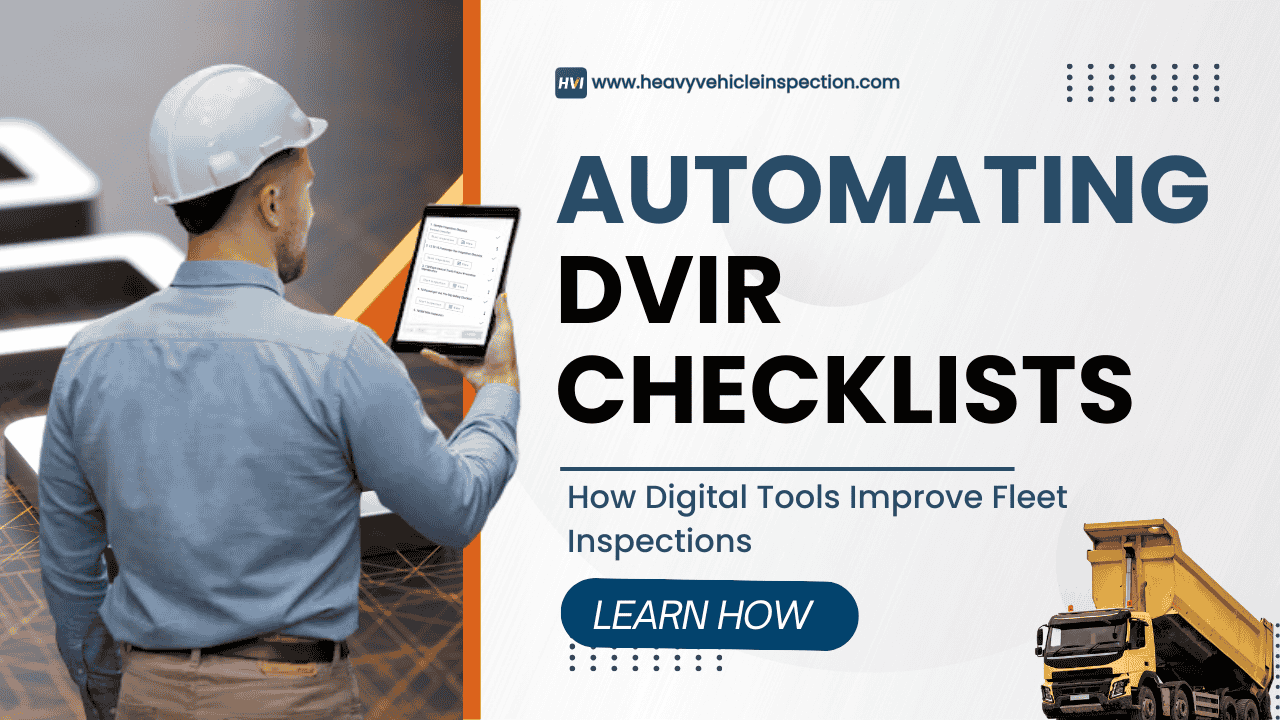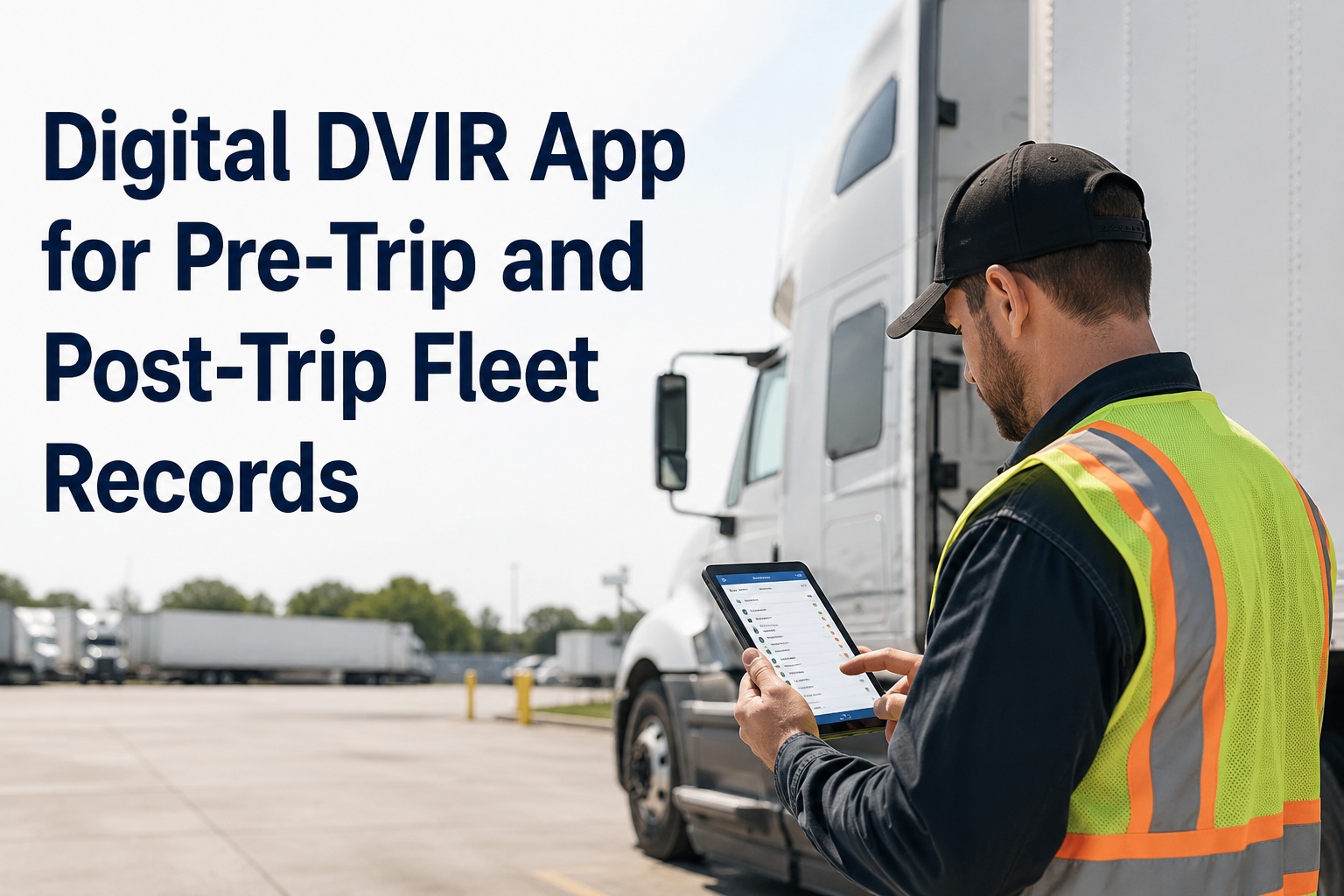
The digital DVIR app is no longer a "nice to have" — it's now a structural advantage that paper-based fleets can no longer match. FMCSA published the final eDVIR rule (Docket FMCSA-2025-0115) on February 19, 2026, with an effective date of March 23, 2026 — explicitly authorizing electronic creation, maintenance, and digital signatures for Driver Vehicle Inspection Reports under 49 CFR 396.11 and 396.13. The rule eliminated any remaining ambiguity about digital DVIRs, while the February 2026 CSA methodology overhaul created a new "Driver Observed" Vehicle Maintenance category that scores DVIR quality directly — making the difference between paper and digital workflows measurable in audit outcomes, insurance premiums, and CSA scores. Yet violations remain expensive: civil penalties run up to $16,000 per occurrence, and only 7% of motor carriers pass focused compliance reviews without a DVIR citation. This guide covers exactly how a modern digital DVIR app handles both pre-trip inspections (under 49 CFR 392.7) and post-trip DVIRs (under 49 CFR 396.11), the differences between paper and digital workflows, the 3-signature chain enforcement, and how HVI's digital DVIR app delivers each capability. Start your free HVI trial or book a 30-minute demo to digitize your pre-trip and post-trip workflow today.
The eDVIR rule is now in effect — is your fleet ready?
HVI's digital DVIR app handles both pre-trip (49 CFR 392.7) and post-trip (49 CFR 396.11) inspections with photo evidence, electronic signatures, automatic 3-signature chain enforcement, and audit-ready cloud storage. Live in 2-4 weeks.
What is a digital DVIR app?
FMCSA's March 23, 2026 final rule (Docket FMCSA-2025-0115) explicitly added electronic DVIR language to both 49 CFR 396.11(a)(6) and 396.13(d), confirming digital signatures, cloud storage, and mobile submission as fully compliant. Paper DVIRs remain legal but are now at a measurable disadvantage in CSA scoring, audit outcomes, insurance underwriting, and litigation defense.
Why fleets are switching to digital DVIR apps in 2026
Six 2026 developments turned digital DVIRs from a productivity upgrade into a structural compliance requirement. Fleets still running paper are operating with a quantifiable disadvantage in every dimension that matters to underwriters and auditors.
Maximum civil penalty per missing or non-compliant DVIR violation. Compounds across audit cycles.
Of motor carriers pass focused compliance reviews without DVIR-related violations. The other 93% face fines and follow-up audits.
FMCSA estimate of accidents prevented annually by proper DVIRs through early defect identification.
Documented reduction in pre-trip inspection errors when fleets switch from paper to digital DVIR apps.
Minimum DVIR retention under 49 CFR 396.11(a)(4). Insurance and litigation needs typically require longer.
February 2026 CSA methodology added "Driver Observed" Vehicle Maintenance category — paper DVIRs cannot satisfy.
Pre-trip inspection vs post-trip DVIR — the regulatory distinction
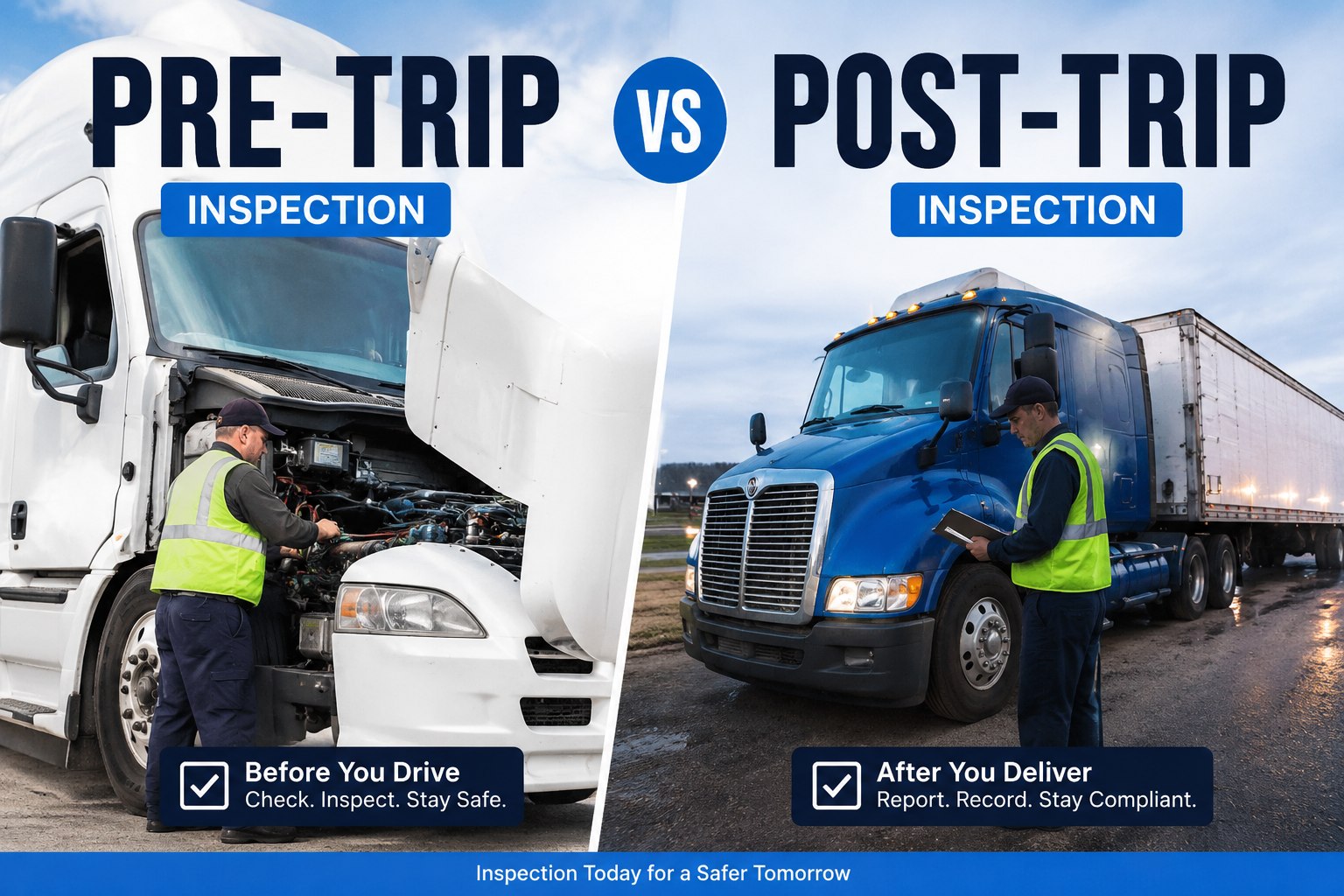
Pre-trip and post-trip inspections are different regulatory events governed by different sections of 49 CFR. Many fleets confuse them, leading to compliance gaps that auditors cite. The digital DVIR app must handle both correctly.
Driver Inspection of Motor Vehicles
49 CFR 392.7- When: Before driving begins each day
- Who reviews: Driver performs and verifies satisfactory condition
- Paperwork required: No formal report required — but recommended
- Components: All 11 FMCSA-required component categories
- Prior DVIR check: Must review last vehicle inspection report (per 49 CFR 396.13)
- Signature requirement: Acknowledgment of prior DVIR repair certification
Driver Vehicle Inspection Reports (DVIR)
49 CFR 396.11- When: At end of each driving day
- Who reviews: Driver signs; carrier/mechanic certifies; next driver acknowledges
- Paperwork required: Yes — formal report (property: when defects found; passenger: every day)
- Components: All 11 FMCSA-required component categories
- Retention: 3 months minimum under 49 CFR 396.11(a)(4)
- Signature requirement: Full 3-signature chain (driver-mechanic-next driver)
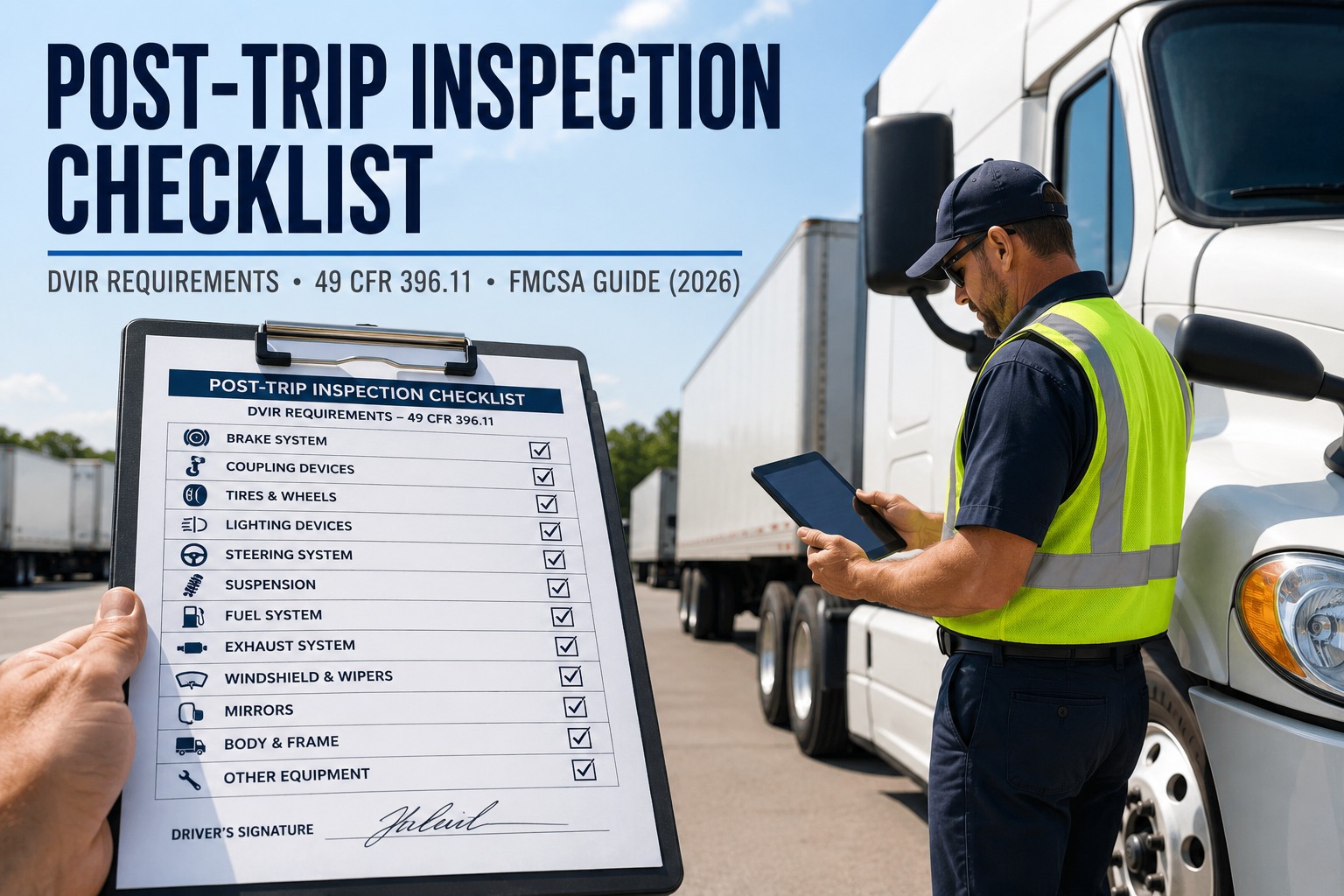
The 11 FMCSA-required component categories
Both pre-trip and post-trip inspections cover the same 11 component categories under 49 CFR 396.11. HVI's digital DVIR app loads the right checklist for each vehicle type and tracks completion across all 11 — with photo verification at safety-critical checkpoints.
Service brakes (incl. trailer brake connections)
Brake function, air/hydraulic pressure, lining condition, adjustment, no leaks. 30% of OOS violations are brake-related.
Parking (hand) brake
Parking brake holds vehicle on maximum operating grade. Independent of service brake function.
Steering mechanism
Steering wheel free play, no binding, returns to center, no loss of power assist.
Lighting devices and reflectors
Headlights, brake lights, turn signals, marker lights, reflective tape all functional and clean.
Tires
Tread depth, pressure, sidewall condition, no damage or exposed cord. 21.4% of OOS violations in 2025.
Horn
Audible warning device functional. Required for highway operations.
Windshield wipers
Wipers and washers functional, blades intact, washer fluid present.
Rear vision mirrors
Mirrors intact, clean, properly adjusted, securely mounted.
Coupling devices
Fifth wheel, kingpin, safety chains, glad hands, electrical connections all secure.
Wheels and rims
Wheels intact, no cracks, lug nuts present and torqued, no bent or damaged rims.
Emergency equipment
Fire extinguisher (charged + tagged), spare fuses, reflective triangles or flares. Required by 49 CFR 393.95.
How HVI's digital DVIR workflow actually works
The shift from paper to HVI's digital DVIR app isn't just digitization — it's a fundamentally redesigned workflow. Here's the complete end-to-end process for both pre-trip and post-trip records.
Driver opens HVI app, scans vehicle QR (pre-trip)
Authenticates via biometric or PIN. Vehicle identified from QR code. Prior DVIR loads automatically if defects exist — pre-trip workflow blocked until acknowledged.
Guided walk-around with photo checkpoints
App walks driver through all 11 FMCSA components in fixed sequence. Critical components require photo evidence (brakes, tires, lights, coupling). GPS-tagged at vehicle location.
Defect documentation if needed
Found defect = tap "report defect." Severity classification (critical/major/minor). Photo evidence attached. Voice-to-text notes. Submitted in seconds.
Auto-work-order generation
Critical defects auto-block dispatch and route work orders to maintenance with photo evidence. Driver sees repair status in real time.
Mechanic certification (signature 2)
Mechanic completes repair, certifies in HVI app with electronic signature and photo of repair. Defect status moves to "certified."
Next driver acknowledges (signature 3)
Next driver's pre-trip cannot begin until prior DVIR is reviewed and repair certification acknowledged. The 3-signature chain is enforced structurally, not procedurally.
End-of-day post-trip DVIR
Driver submits post-trip DVIR per 49 CFR 396.11. Property carriers: only when defects found. Passenger carriers: every day regardless. Digital signature applied.
Cloud storage & audit export
All records stored indefinitely per 49 CFR 390.32. One-click MSHA/FMCSA audit export by date, vehicle, or driver. Audit-ready by default.
Paper vs digital DVIR — what's actually different?
The performance gap between paper and digital DVIRs is now documented across every dimension that matters to fleet operations and compliance teams.
Frequently asked questions
QAre digital DVIRs legal in 2026?
Yes — fully compliant. FMCSA's final rule (Docket FMCSA-2025-0115), effective March 23, 2026, explicitly added eDVIR authorization to 49 CFR 396.11 and 396.13. Electronic DVIRs were already permissible since 2018 under 49 CFR 390.32, but the 2026 rule eliminates any remaining ambiguity. Digital signatures, cloud storage, and mobile submission are all explicitly authorized. Paper DVIRs remain legal but are now at a measurable disadvantage in CSA scoring, audit retrieval, and insurance underwriting.
QDoes HVI handle both pre-trip and post-trip inspections?
Yes — HVI's digital DVIR app handles pre-trip inspections under 49 CFR 392.7 (with prior DVIR review under 396.13) and post-trip DVIRs under 49 CFR 396.11 in a single mobile workflow. Drivers complete pre-trip in 5-10 minutes; post-trip DVIRs in 2-5 minutes when no defects. The 3-signature chain (driver-mechanic-next driver) is enforced structurally — next driver's pre-trip cannot begin until prior DVIR is reviewed and acknowledged.
QHow long must I retain DVIRs?
The minimum retention period under 49 CFR 396.11(a)(4) is 3 months (90 days) from the inspection date. This covers three separate documents per DVIR: the original driver-signed report, the mechanic's repair certification, and the next driver's review acknowledgment. Most fleets retain DVIRs indefinitely in HVI's cloud storage because digital storage is essentially free, and insurance/litigation needs typically extend well beyond the regulatory minimum. HVI's one-click audit export produces records for any vehicle, driver, or date range in seconds.
QHow does the 2026 CSA "Driver Observed" category affect my DVIR program?
The February 2026 CSA methodology overhaul split Vehicle Maintenance into "Driver Observed" and "Standard" categories. The Driver Observed category specifically scores defects that should have been identified during a driver's walk-around inspection. Paper DVIRs cannot document driver-level defect detection — leaving fleets invisible to the new scoring even when drivers are catching defects. HVI's photo-evidenced, GPS-stamped DVIRs provide the documentation the new system requires, directly supporting CSA score improvement in the Driver Observed category.
QHow quickly can I deploy HVI's digital DVIR app?
Most fleets are running their first digital DVIR within 24 hours of HVI signup. Full deployment — vehicles imported, drivers onboarded to the mobile app, custom checklists configured, integration with existing maintenance workflows — typically completes within 2-4 weeks. Driver training is brief because the app is intuitive. First measurable inspection error reduction appears within 30 days, with 95%+ driver adoption typical within the first month.
Turn pre-trip and post-trip inspections into structural compliance.
HVI's digital DVIR app delivers everything covered in this guide on one mobile-first platform — vehicle-specific guided checklists for both pre-trip and post-trip, photo-required checkpoints, GPS verification, automatic 3-signature chain enforcement, defect-to-work-order automation, and one-click audit export. Stop running paper DVIRs at compliance risk; start running digital DVIRs at scale.
No credit card required · Live in 2-4 weeks · 95% driver adoption in 30 days