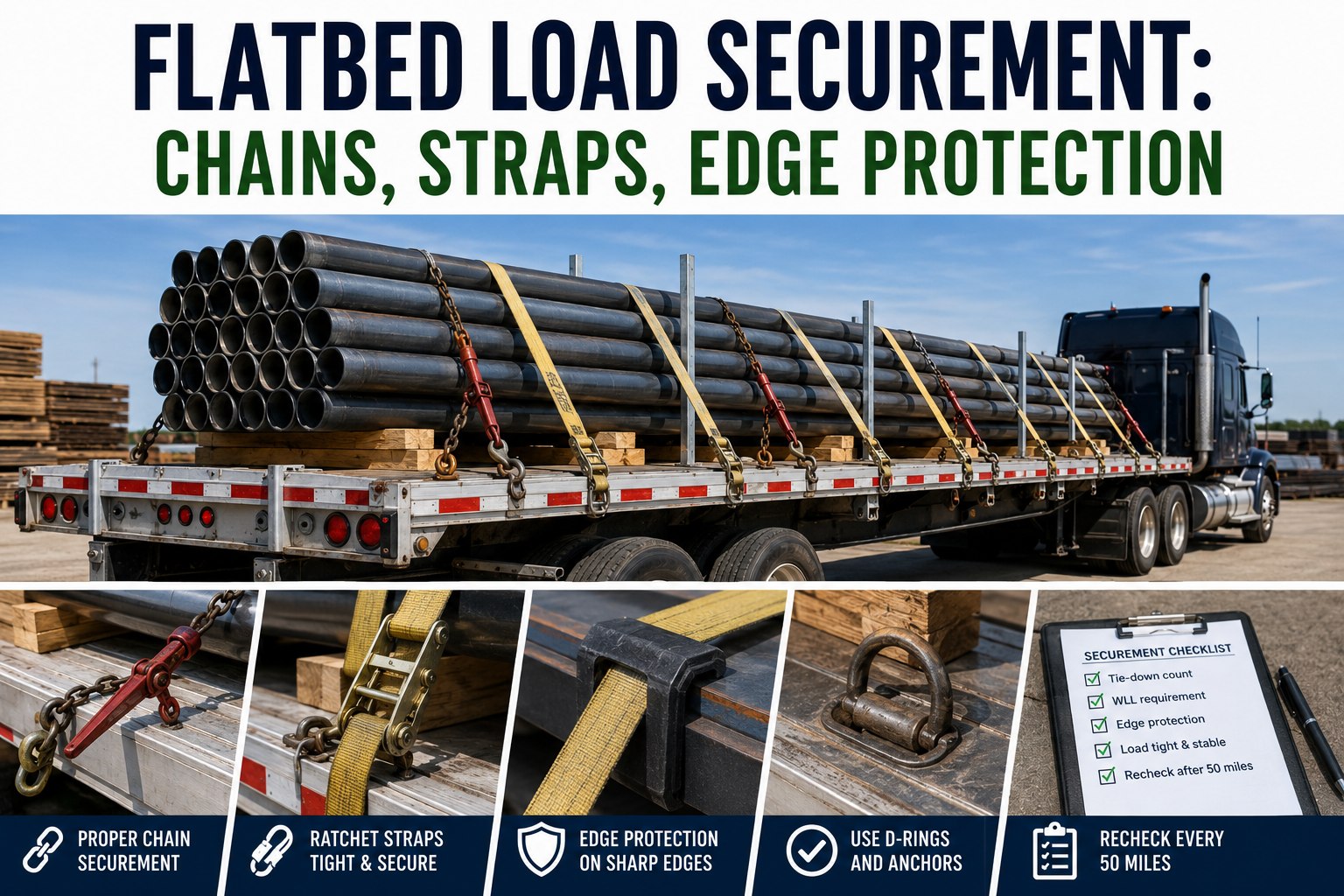
A flatbed load has nowhere to hide. Unlike an enclosed van trailer that keeps its freight tucked out of sight, a flatbed puts every chain, strap, and binder on full display for every DOT inspector, scale house officer, and trooper who walks past. That visibility is exactly why flatbed securement draws disproportionate roadside attention and why small errors—like a faded working load limit tag or a missing piece of edge protection—turn into massive compliance headaches. Under the 2026 securement rules, proving you did the job right is just as critical as doing it. Start free with HVI to digitize your flatbed securement checks and keep your drivers moving.
Flatbed Load Securement: Chains, Straps & Edge Protection
The exact tiedown math, WLL tagging rules, and edge-protection requirements every open-deck driver and fleet manager must follow to pass roadside inspections.
- WLL Rule50% of cargo weight
- Direct Tie1 per 10 ft length
- Initial RecheckFirst 50 miles
- Ongoing CheckEvery 150 mi / 3 hr
- ~20%
of all commercial vehicle crashes involve a driver losing control due to cargo shifting, spilling, or falling from the trailer
FMCSA Large Truck Crash Causation Study - 1 in 5
Level I inspections results in an out-of-service order for cargo securement failures, specifically tiedowns and load blocking
CVSA Roadcheck historical data - 393.106
is the core federal regulation dictating aggregate working load limits, edge protection, and tiedown placement
49 CFR Federal Motor Carrier Safety Regs - 50 mi
the maximum distance a driver can travel before performing the mandatory first post-loading securement recheck
49 CFR 393.100
The Math of Flatbed Tie Down Compliance
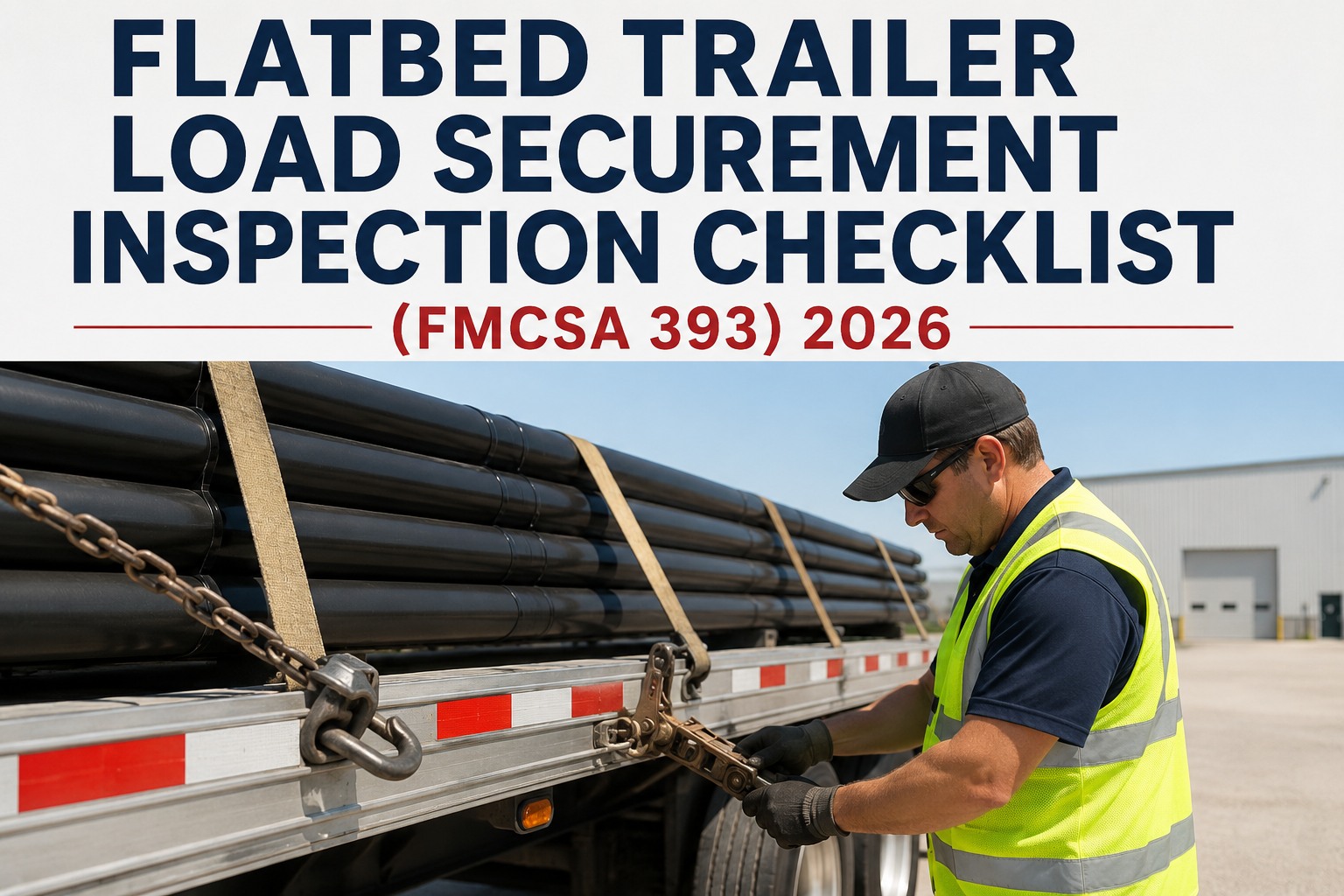
Securement math hasn't fundamentally changed since the U.S.-Canada-Mexico harmonization in 2002, but it remains one of the most misunderstood elements of flatbed compliance. Under 49 CFR 393.106, the rules run on two parallel tracks: weight and length. First, the aggregate working load limit (WLL) of all tiedowns securing a load must equal at least half the weight of the cargo. Second, the number of tiedowns is dictated by the length of the cargo—one tiedown for cargo 5 feet or shorter, two for anything from 5 up to 10 feet, and one additional tiedown for every extra 10 feet (or fraction of it) beyond that.
Both rules apply simultaneously. Meeting the tiedown count without meeting the WLL threshold is still a violation, and vice versa. A 40,000 lb steel coil might require four heavy chains based on the length rule, but if those chains only yield an aggregate WLL of 15,000 lbs, you are illegally under-secured. Book a demo with HVI to see how automated securement calculators can do this math for your drivers right on their mobile devices, ensuring every load meets both criteria before the truck leaves the yard.
Aggregate WLL Calculation
The combined working load limit of all tiedowns must be ≥ 50% of cargo weight.
Result: Non-compliant. Requires a 5th chain or upgrading to higher WLL gear.
Tiedown Count by Length
Mandatory minimum tiedowns based purely on cargo dimensions.
- 0 – 5 ft1 tiedown
- 5 – 10 ft2 tiedowns
- 10 – 20 ft3 tiedowns
- +10 ft (or fraction)+1 tiedown
Note: Length and WLL rules are evaluated concurrently. You must satisfy both.
Chains vs. Straps: When to Use What
Choosing between chains and synthetic web straps isn't just about what's closest to the headache rack. It's about matching the friction, weight, and edge profile of the cargo to the correct securement device. Chains handle high-tension, heavy, and abrasive loads like steel coils, machinery, and lumber. Straps are lighter, easier to handle, and ideal for delicate or painted surfaces, but they degrade silently under UV light and abrasion.
The most critical distinction is the WLL tag. WLL is not the same as breaking strength—it's the manufacturer-rated safe working force for that specific tiedown. A chain, strap, or binder with a faded or missing WLL tag is treated as non-compliant by default at roadside. Inspectors are not required to guess in your favor. Gear that is mechanically fine but tagged illegibly is one of the most common and easily avoidable flatbed violations. Start your free trial with HVI to track tiedown inventory and flag aging straps before they hit the road.
Edge Protection & the 50-Mile Recheck Rule
Edge protection is mandatory wherever a strap, chain, or wire rope contacts a cargo edge with less than a half-inch radius. In practice, that covers almost every flatbed load involving lumber, steel, pipe, or palletized freight. Sharp edges abrade and cut synthetic webbing under the sudden kinetic load of hard braking. A strap that looks perfectly fine in the yard can snap on the highway if it has been silently sawing against an unprotected corner for 200 miles. Cardboard or old fire hose is not compliant edge protection—use purpose-built metal, plastic, or heavy rubber corner guards.
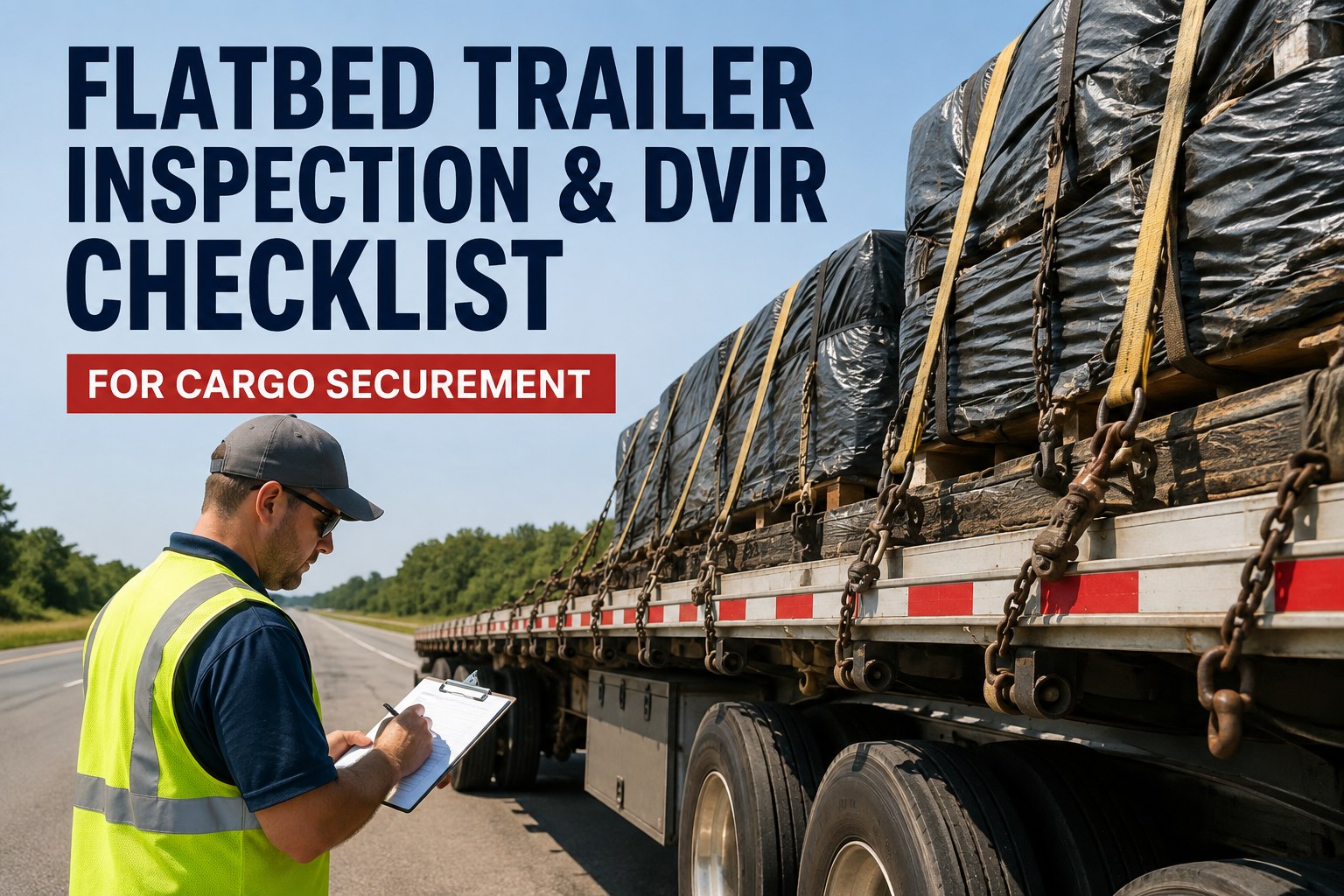
Securement isn't a one-time check at loading. Federal rule requires a driver to recheck their tiedowns within the first 50 miles of the trip, then again every 150 miles or 3 hours (whichever comes first) for the rest of the route. This catches tiedowns that loosened from vibration, load settling, or temperature change. Skipping this recheck removes a driver's legal defense if a load shifts later. See how HVI handles securement tracking with enforced, timestamped digital checkpoints that prove exactly when and where a driver pulled over to inspect their load.
Pre-Trip Yard Check
Verify WLL math, confirm legible tags, apply edge protection, and ensure all binders are locked. Document with timestamped photos.
First 50 Miles
Mandatory initial recheck. Pull off in a safe location, re-tension all chains and straps, inspect for webbing cuts from load settling.
Every 150 Miles / 3 Hours
Ongoing route rechecks. Vibration and temperature flex cause tiedowns to relax. Log the GPS location and time of each stop.
Pre-Unloading Inspection
Assess load integrity before releasing tension. Note any damaged gear for immediate removal from service before the next load.
Commodity-Specific Flatbed Securement Rules
Treating every commodity with the same generic tiedown count is a guaranteed way to under-secure at least one load type. Certain commodities carry their own specific rules on top of the general 393.106 requirements. Steel coils, logs, and heavy machinery all behave differently under braking and cornering forces. A fleet manager who understands these nuances can prevent catastrophic load shifts and the resulting CSA penalties. Book a demo with our team to build commodity-specific inspection templates for your fleet.
Steel Coils (393.120)
Requires specialized blocking depending on orientation. Eye-vertical coils need cradles and blocking to prevent rolling; eye-horizontal coils require forward/rearward blocking plus at least four tiedowns. A sudden stop will cause an unblocked coil to roll violently through the trailer bulkhead.
Logs & Poles
Log stacks require an aggregate WLL of at least one-sixth the stack's weight—well below the general 50% rule—because the logs are expected to interlock and support each other. However, stakes and bunks must be heavily scrutinized, and tiedowns must cross the load diagonally to bind the stack.
Heavy Machinery
Machinery requires direct tiedowns to specific anchor points on the equipment, not just friction matting. Wheels must be blocked, and parking brakes engaged. Chain tensioners must be oriented so vibration doesn't back them off during transit.
Lumber & Building Materials
Requires full-length edge protection to prevent strap abrasion. Loads over 10 feet need dunnage between tiers to distribute tension. Straps must be checked for splinter damage, which dramatically reduces the webbing's breaking strength.
The 2026 Shift: Digital DVIRs & CSA Scoring
The tiedown math hasn't moved, but 2026 brought a real operational shift for flatbed fleets. FMCSA's final rule effective this year formally authorized electronic Driver Vehicle Inspection Reports (DVIRs) under 49 CFR 396.11 and 396.13, allowing digital signatures to fully replace wet-ink sign-off. Paired with the CSA methodology update that now scores 'Driver Observed' and 'Inspector Detected' maintenance issues separately, the burden of proof has shifted.
A flatbed fleet running paper checklists has a much harder time proving a securement check actually happened at the stated mile marker than a fleet with timestamped, photo-backed digital records. If a strap breaks and a trooper investigates, a soggy paper DVIR that says "checked straps at 50 miles" doesn't hold up against a system that logs the driver's GPS location, time, and a photo of the tensioned chain at that exact stop. Start free with HVI to bring your flatbed compliance into the digital age and protect your CSA score.
The Old Way
- Wet-ink signatures easily smudged or lost
- No proof of GPS location during rechecks
- Blanket "checked and okay" checkboxes
- Impossible to audit against fuel/HOS records
- Vulnerable to CSA "Driver Observed" penalties
The HVI Way
- Cryptographically signed and timestamped
- Automatic GPS tagging at every securement stop
- Photo evidence of tiedowns and edge protection
- Instantly auditable alongside maintenance history
- Clear defense against roadside disputes
Expert view from the shop floor
"The straps that kill you aren't the ones that look torn up in the yard. It's the brand-new strap that sits on a sharp steel edge without protection, sawing back and forth for 200 miles until the driver hits the brakes. I've seen a 4,000-pound WLL strap snap like thread because they skipped the edge protection. The 2026 digital DVIR rule is the best thing to happen to us—now when a driver says they checked the load at 50 miles, I have a photo and a timestamp to prove it.
-- Marcus S., Flatbed Fleet Maintenance Manager
Frequently asked questions
What is the working load limit (WLL) rule for flatbed securement?
Under 49 CFR 393.106, the aggregate working load limit (WLL) of all tiedowns securing a load must equal at least 50% of the weight of the cargo. The WLL is the manufacturer-rated safe working force for that specific tiedown, not its breaking strength. You must also meet the minimum tiedown count based on cargo length.
How often must a driver check flatbed securement during a trip?
A driver must perform an initial securement recheck within the first 50 miles of the trip. After that, the driver must recheck the load every 150 miles or every 3 hours of driving, whichever comes first. This catches tiedowns that have loosened due to vibration, load settling, or temperature changes.
When is edge protection required on a flatbed load?
Edge protection is mandatory wherever a strap, chain, or wire rope contacts a cargo edge with a radius of less than half an inch. This applies to almost all lumber, steel, and pipe loads. The protection prevents sharp edges from abrading or cutting synthetic webbing under the sudden load of hard braking.
Can a DOT inspector fail a strap if the WLL tag is missing or unreadable?
Yes. A chain, strap, or binder with a faded, illegible, or missing WLL tag is treated as non-compliant by default at roadside, regardless of what it is actually rated for. Inspectors are not required to guess the WLL in your favor. Gear must have a legible, durable tag showing its working load limit.
How do the 2026 securement rules affect flatbed fleets?
The 2026 FMCSA final rule formally authorizes electronic DVIRs under 49 CFR 396.11 and 396.13, allowing digital signatures to replace wet-ink sign-off. Combined with CSA methodology updates that separate 'Driver Observed' and 'Inspector Detected' issues, fleets now need timestamped, photo-backed digital records to effectively defend their securement practices during roadside inspections.
Put the full flatbed securement checklist on every driver's phone
HVI runs complete digital DVIRs with timestamped GPS checkpoints, photo-backed edge protection verification, and automated WLL calculators. Stop guessing at compliance and start proving it.
No credit card · No hardware · Live on your fleet in under two weeks
.png)