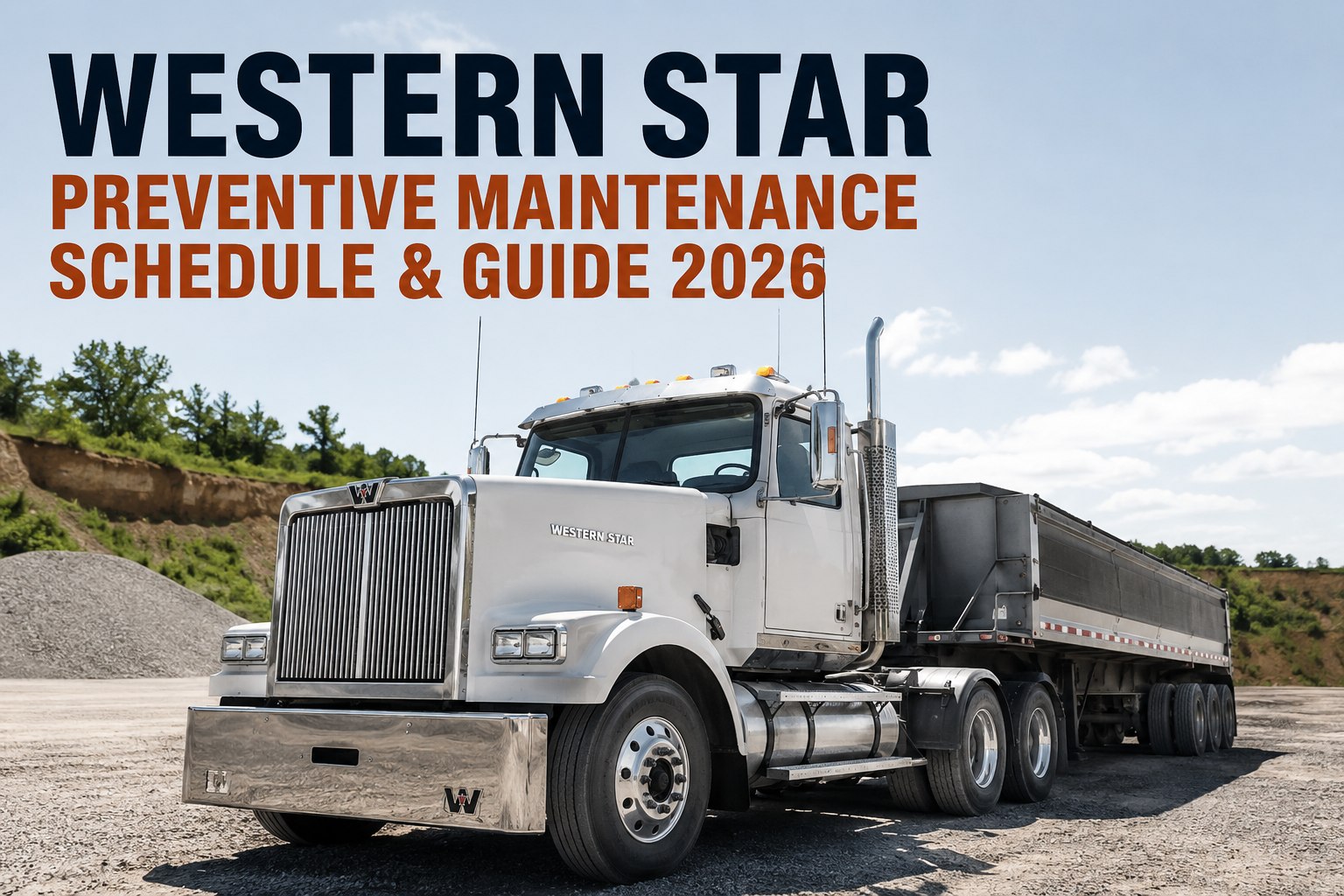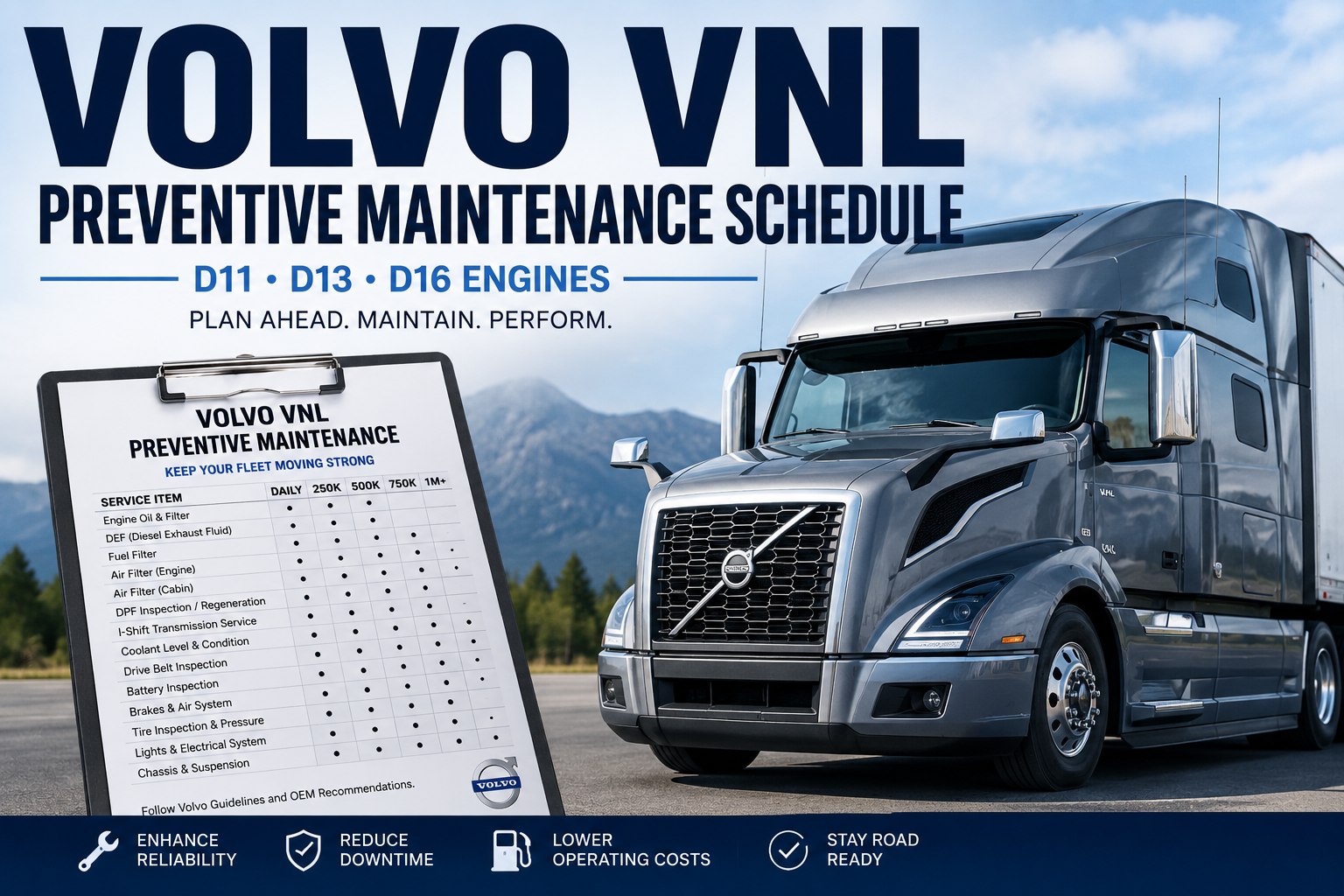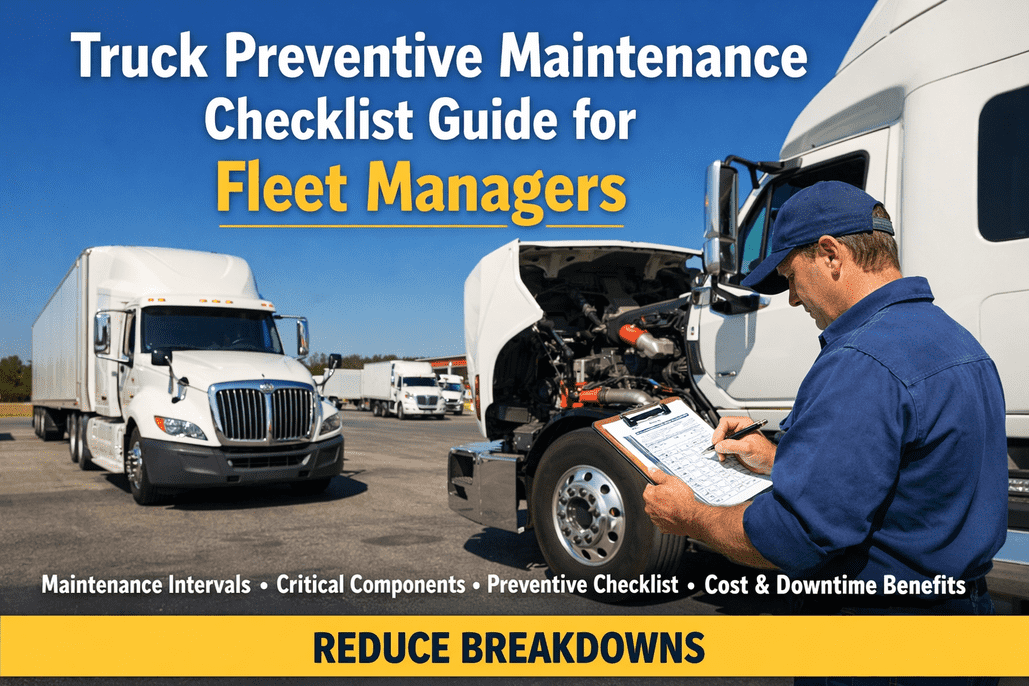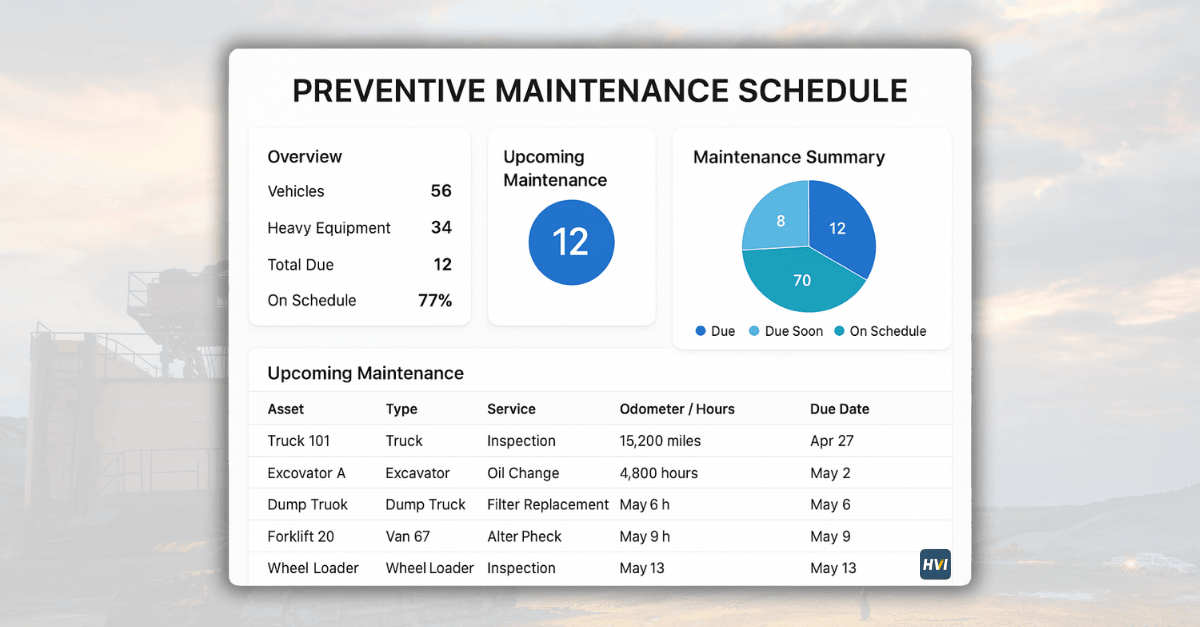
The cheapest repair you'll ever make is the one you do before anything breaks. That's the whole idea behind a fleet preventive maintenance schedule built on PM-A, PM-B, PM-C, and PM-D service intervals — four escalating tiers of service that catch wear early, when it's a filter and not a failure. PM-A is the quick, frequent touchpoint; each tier above it goes deeper, until PM-D handles the major component work. Done right, it's the difference between a truck that gets serviced in the bay on your schedule and one that dies on the shoulder on its own. Here's exactly what each tier covers, when it's due, and how the four fit together into one continuous safety net. Book a demo to see PM-A through PM-D scheduled automatically across your fleet.
The Fleet PM Schedule: Four Tiers, One Safety Net
A tiered preventive maintenance schedule services each vehicle at escalating depth — light and frequent at PM-A, deep and major at PM-D. Each tier builds on the one below it, so nothing gets over-serviced and nothing slips through.
- Reactive repair cost
- 3–5× planned
- Downtime per truck
- $500+/day
- Failures cut by PM
- up to ~85%
Planned beats reactive, every time
Here's the mental model before the details: the four PM tiers aren't four separate services — they're nested. PM-B includes everything in PM-A. PM-C includes everything in A and B. PM-D includes it all. So the deeper the tier, the less often it comes around, but the more it covers when it does. Think of it as layers of protection: PM-A catches the daily wear, PM-D looks after the deep mechanical health of the truck, and the tiers in between bridge the two.
The four tiers, from light to major
This is the escalation at a glance. Each step down the ladder is deeper, less frequent, and inherits everything above it. The mileage figures are industry-typical baselines — your exact intervals depend on your trucks and how hard they work.
-
PM-Amost frequent
Basic service & safety
~10,000–15,000 miThe quick, frequent touchpoint — oil and filter, fluid levels, brakes, tires, lights, belts, hoses. Catches small issues before they escalate. Most fleets target a 1–2 hour bay time.
-
PM-B+ PM-A
Intermediate service
~25,000–30,000 miEverything in PM-A, plus deeper engine, fuel-system, driveline, and electrical checks. This is the tier where things get measured, not just looked at — and where air and fuel filters get replaced.
-
PM-C+ A & B
Comprehensive + DOT annual
~50,000–60,000 mi / yearlyAll of A and B, plus alignments, major fluid services, component-wear evaluation, and the DOT annual inspection under 49 CFR 396.17. The most-skipped tier — and the most expensive to skip.
-
PM-D+ A, B & C
Major component service
~100,000 mi / as neededThe deep work — scheduled rebuilds or replacement of major components like the engine, transmission, or axle, plus special services such as winterization. The least frequent, most involved tier.
Because each tier absorbs the ones below it, a vehicle cycles through all four continuously as the miles add up — a PM-A most often, a PM-B less so, and a PM-C or PM-D at the big milestones. See the full tier-by-tier task lists in a live demo
How the tiers nest into one program
The nesting is the elegant part. You never build four unrelated checklists — you build one, and each tier adds to it. That's what keeps a low-mileage van from being over-serviced and a hard-working long-haul tractor from being under-serviced.
Read down any column: PM-A covers the top row only, and each tier to the right fills in one more row while keeping all the ones above it. PM-D is the only tier with every box checked — it does everything the others do, plus the major component work. Get that top row right and consistent, and the whole program holds. Start free and build one nested PM template per vehicle type
What actually triggers a PM: miles, hours, or the calendar
The single most common PM mistake is triggering every vehicle the same way. A long-haul tractor and a yard spotter don't wear at the same rate — so the right trigger depends on how the vehicle earns its keep. The best programs use whichever comes first.
Mileage
The natural trigger for over-the-road and regional trucks that rack up consistent road miles. Service fires at set odometer points — PM-A at 10,000, and so on.
Best for: highway & regionalEngine hours
The right trigger for yard trucks, construction equipment, and anything with heavy idle time — where the engine wears without adding miles. Miss this and high-idle units get dangerously under-served.
Best for: yard, construction, idleCalendar
Fluids and seals degrade with time regardless of use, so a time trigger is the safety net for low-mileage vehicles that rarely hit their odometer marks. It's also how PM-C stays aligned to the DOT annual.
Best for: low-use & time-based wearThe rule that ties it together: schedule each service at mileage OR hours OR calendar date, whichever arrives first — for example, PM-A at 10,000 miles or 250 engine hours or 30 days. That way no vehicle ever slips past an interval just because it drove less than expected. See multi-trigger PM scheduling handle this automatically
Why PM-C should land at 11 months, not 12
One detail catches more fleets than any other, and it's worth its own section. PM-C carries the DOT annual inspection required under 49 CFR 396.17 — and that annual has no grace period. It must happen no later than the anniversary of the last one.
Scheduling PM-C at an 11-month interval gives you a 30-day cushion for shop time, parts availability, and the unexpected — so a truck never drifts past its inspection anniversary. Combining the DOT annual with the PM-C service also means one shop visit instead of two. Book a demo to track PM-C against the DOT annual automatically
The numbers that make PM pay for itself
Preventive maintenance can feel like money spent on trucks that seem fine. The data says otherwise — and once you see the ratio, a reactive program is hard to defend.
- $4–$8 saved in emergency repairs, towing, and downtime for every $1 spent on PM
- 3–5× what reactive repairs cost versus the same work done as planned service
- ~85% reduction in unexpected failures reported by fleets using standardized PM checklists
- $500+ average cost of a single truck sitting down for a day — before the repair bill
Preventing even one breakdown a month can save thousands per truck a year. The catch is consistency: the savings only show up if the schedule is actually followed, which is exactly where a spreadsheet quietly fails and automation wins. Start free and put the ratio to work on your fleet
From the shop
Before we tiered our PM, everything was basically one big service done whenever someone remembered — which meant trucks either got babied or got ignored. Neither was cheap.
Splitting it into A through D changed the math. The quick PM-A catches the little stuff every few weeks, and by the time a truck's due for a PM-D we already know its history cold. Our breakdowns dropped hard, and honestly the shop's just calmer. We're fixing things on a Tuesday in the bay instead of at midnight on the interstate.
Frequently asked questions
What are PM-A, PM-B, PM-C, and PM-D services?
They're the four tiers of a fleet preventive maintenance schedule, each more comprehensive and less frequent than the last, and each building on the one below it. PM-A is the basic, most frequent service — oil and filters, fluids, brakes, tires, lights, and safety checks — typically every 10,000 to 15,000 miles. PM-B adds deeper engine, fuel-system, driveline, and electrical checks plus filter replacements, usually every 25,000 to 30,000 miles. PM-C includes everything in A and B plus alignments, major fluid services, component-wear evaluation, and the DOT annual inspection, typically every 50,000 to 60,000 miles or annually. PM-D is the deepest tier — scheduled rebuilds or replacement of major components like the engine, transmission, or axle, along with special services — often around 100,000 miles or as the vehicle's condition requires. Because each tier contains the ones below it, a vehicle cycles through all four continuously as it accumulates use.
How often should each PM service be performed?
The common industry baselines are PM-A every 10,000 to 15,000 miles, PM-B every 25,000 to 30,000 miles, PM-C every 50,000 to 60,000 miles or annually, and PM-D around 100,000 miles or as needed for major component work. However, these are starting points, not fixed rules. Actual intervals vary by manufacturer — for example, Peterbilt and Kenworth often specify PM-A around 12,500 miles while Volvo may extend to 20,000 — and by duty cycle. Severe applications like construction, heavy haul, mountain routes, or stop-and-go delivery should shorten intervals, while consistent highway running may extend them. The best practice is to use OEM recommendations as your baseline, then adjust based on your own oil analysis and inspection findings, and to trigger services by mileage, engine hours, or calendar date — whichever comes first.
What's the difference between mileage, engine-hour, and calendar triggers?
They're three different ways to decide when a vehicle is due, suited to different types of use. Mileage triggers work best for over-the-road and regional trucks that accumulate consistent road miles. Engine-hour triggers are better for yard trucks, construction equipment, and any vehicle with heavy idle time, because the engine wears from running even when the odometer isn't moving — a mileage-only trigger would dangerously under-serve those units. Calendar triggers cover fluids and seals that degrade with time regardless of use, and act as a safety net for low-mileage vehicles that rarely reach their mileage marks. The most effective programs combine all three and service the vehicle at whichever threshold arrives first, so nothing slips past an interval because a truck happened to drive less than expected that month.
Why schedule PM-C at 11 months instead of 12?
Because PM-C typically carries the DOT annual inspection required under 49 CFR 396.17, and that inspection has no grace period — it must be completed no later than the anniversary date of the previous year's inspection. If you schedule PM-C at a full 12 months, any delay for shop availability, parts, or an unexpected problem can push the truck past its deadline and out of compliance. Scheduling PM-C at an 11-month interval builds in a 30-day buffer, giving you room to handle those real-world delays without ever letting the annual lapse. It also lets you combine the DOT annual inspection with the comprehensive PM-C service in a single shop visit, reducing downtime. Missing the annual is one of the most avoidable compliance failures in fleet operations, and an 11-month PM-C cadence is the simplest way to prevent it.
Is a preventive maintenance schedule really worth the cost?
The economics are strongly in its favor. Industry data consistently shows that every dollar spent on preventive maintenance saves roughly four to eight dollars in emergency repairs, towing, and downtime, and that reactive repairs cost three to five times more than the same work performed as planned service. Fleets using standardized PM checklists commonly report unexpected failures dropping by as much as 85 percent and maintenance costs falling significantly. With a single truck's downtime often exceeding $500 a day before the repair bill, preventing even one breakdown a month can save thousands per vehicle per year. The important caveat is that these savings depend entirely on consistency — a schedule that's skipped or forgotten delivers none of them. That's why fleets increasingly move PM tracking off spreadsheets and onto software that automatically schedules services, sends reminders, and documents every completed task.
Automate PM-A through PM-D across your whole fleet
HVI schedules every tier by mileage, engine hours, or calendar — whichever comes first — alerts you before each truck is due, turns PM defects into work orders instantly, and keeps every service timestamped and DOT-ready. Stop chasing intervals on paper and let the schedule run itself.
No credit card · No hardware · Live on your fleet in under two weeks