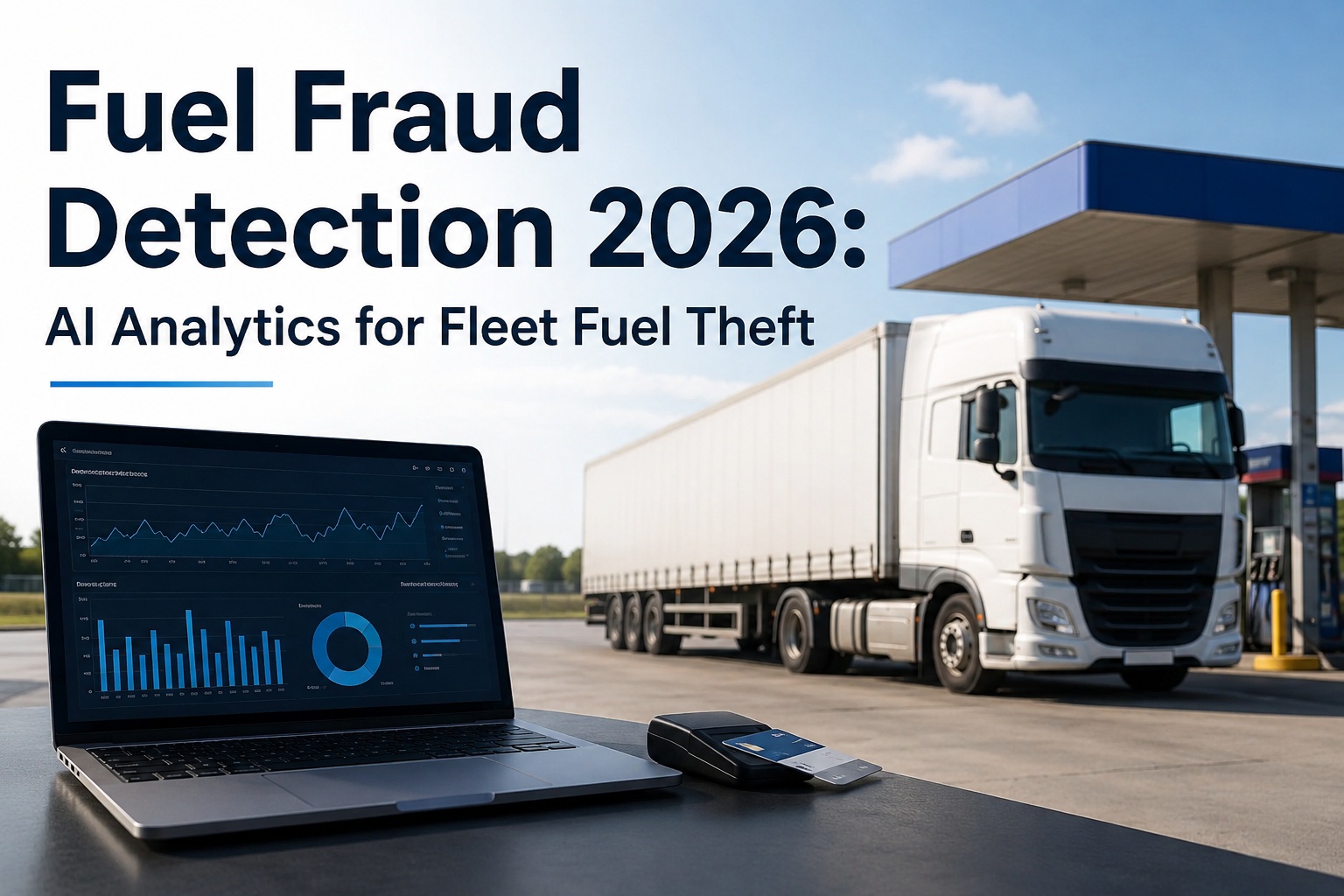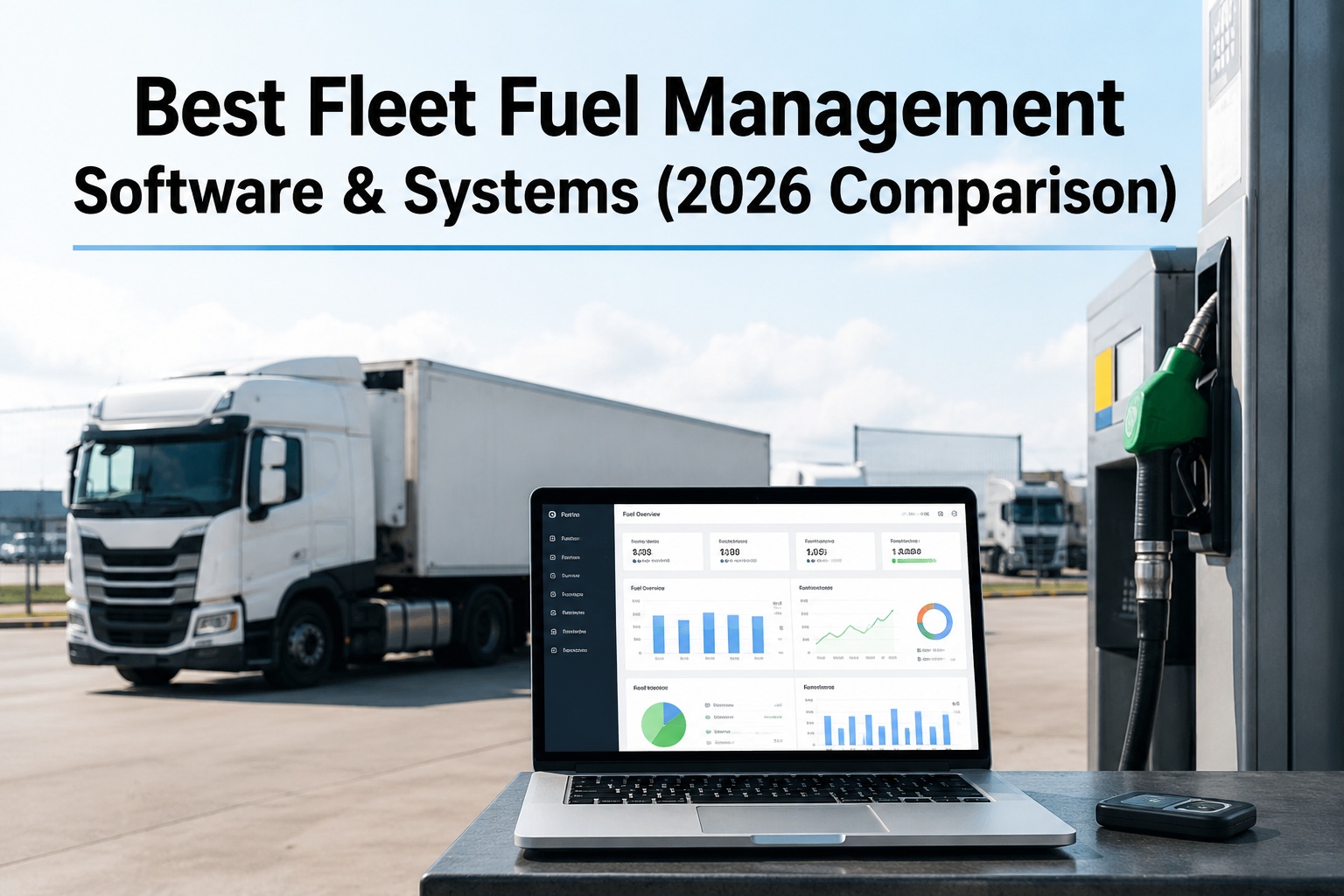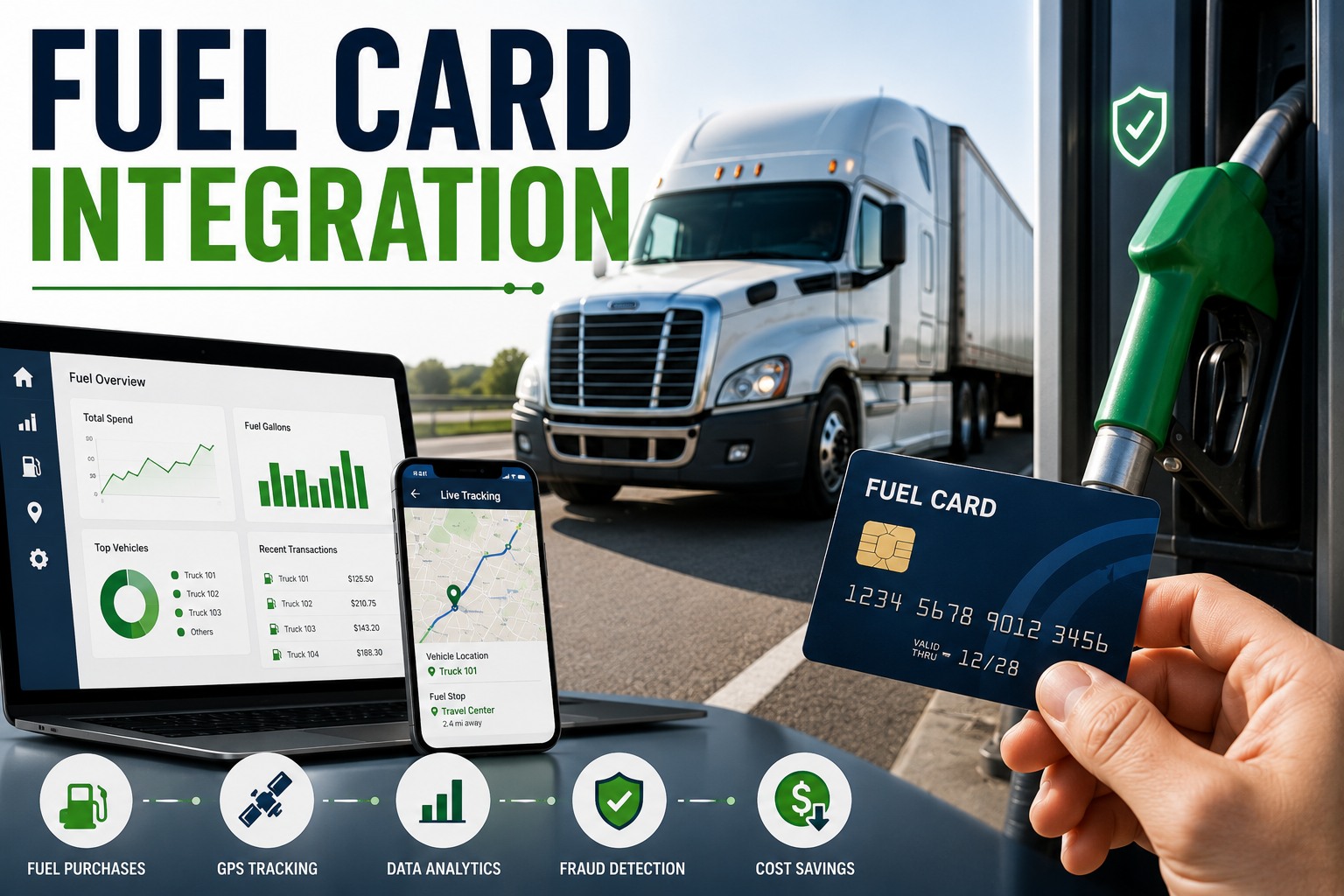
A fuel card on its own tells you a truck was fueled somewhere for a certain amount. What it can't tell you is whether the truck was actually there, whether the gallons matched the tank, or whether the driver assigned to that card was anywhere near the pump. That gap — between a swipe and a verified purchase — is exactly where fraud lives, and it's why fleets running fuel cards without integration commonly lose around 19–22% of fuel spend to theft and misuse. This fuel card integration guide covers what the integration actually does, how GPS matching and fraud detection work in real time, and how the six standard checks catch anomalies at the pump instead of on the monthly statement. Book a demo to see fuel-card transactions matched to your GPS live.
Fuel Card Integration: GPS Verification & Fraud Detection
How fuel-card transactions match to GPS, odometer, and tank capacity in real time — the six checks that separate a legitimate fill from a fraudulent one, and how integration turns fuel from a monthly cost blind spot into a live-verified expense.
~$70/vehicle/month lost to unverified fuel spend
Fuel is 30 to 60 percent of what it costs to run a fleet, and the fuel card is where that money leaves the company. The card by itself is a payment credential — it authorizes the purchase but can't prove the purchase was legitimate. Integration is the layer that connects each transaction to the vehicle it was supposed to fuel, the driver who was supposed to be there, and the tank that was supposed to receive it. That match, or the failure to match, is the whole story.
How fuel card integration actually works
The mechanics are simpler than most vendors make it sound. A driver swipes the card, the fuel-card network processes the transaction, and integration pulls that data into your fleet system in near real time to cross-check it against what your GPS and vehicle data say was happening at that exact moment.
-
1
Card swiped at the pump
Driver uses the fleet card. The fuel-card network (WEX, Comdata, Fleetcor, Fuelman, EFS, and similar) captures the full transaction: driver ID, station, fuel grade, gallons, cost, and timestamp — the Level III data that makes verification possible.
-
2
Transaction pulled via API
The integration receives the transaction within seconds of processing, not on a nightly batch. Real-time API sync is what makes catching fraud at the pump possible; a CSV upload the next morning only tells you what happened.
-
3
Matched against vehicle data
The system cross-checks the transaction against the assigned vehicle's GPS position, odometer, tank capacity, driver assignment, and route or schedule. Everything the card says has to line up with everything the truck was doing.
-
4
Verified or flagged
Clean transactions auto-clear and post to the vehicle's fuel record. Anything that fails a check raises an alert on the spot — and on some card programs, the transaction can be declined at the pump before the fuel is dispensed.
Four steps, seconds apart. That's the whole loop — and it's the difference between finding fraud on next month's statement and stopping it while the pump is still running. Book a demo to see the flow end-to-end
The six fraud checks that run on every transaction
Every match is a set of parallel checks against different pieces of data. Any single one failing is worth flagging; several failing at once is a card that needs to be shut off. These six catch the overwhelming majority of common fuel fraud patterns.
-
GPS location match
The vehicle's GPS position at the transaction time must be at the station. A truck 40 miles away when its card was swiped is the classic fraud signal, and the one integration was built for.
-
Over-tank volume
Gallons pumped can't exceed the vehicle's tank capacity. A 100-gallon truck taking on 140 gallons is fuel going into a second container — a common resale pattern.
-
Off-hours purchase
A transaction outside the driver's approved operating window — a card used at 2 a.m. on a route that ended at 6 p.m. — is worth a look regardless of amount.
-
Velocity check
Multiple fills on the same card in a short window — two full tanks in ten minutes — either points to a cloned card or a driver splitting one purchase across cards.
-
Fuel-type mismatch
A diesel-only card ringing up premium unleaded, or a truck's card at a station that doesn't sell its fuel grade, is almost always a personal vehicle on a company account.
-
Route deviation
A fill far off the assigned route or outside the approved geofence gets flagged so a supervisor can decide whether the detour was legitimate or worth a conversation.
Any one of these on its own is a soft signal; two or three together is a hard one. The point of running them in parallel is that the answer is available instantly, not two weeks later. Start free and turn these checks on for every card
Why the numbers add up so fast
Fuel fraud sounds like small money per swipe, and it is. It's also relentless. Multiply a modest loss per vehicle by a fleet size, thirty days a month, twelve months a year, and the same "invisible" leak that seemed too small to chase becomes an obvious line item.
- 30–60% of total fleet operating cost is fuel — the biggest single line item to lose control of
- 19–22% of fleet fuel spend lost to fraud and misuse without transaction verification
- ~$70 industry-average monthly loss per vehicle attributed to unverified fuel spend
- 10–15 hrs a week saved on manual reconciliation when transactions post automatically to the right vehicle
Even the low end of that per-vehicle number, across a hundred trucks, is roughly $84,000 a year quietly leaving the business. The reconciliation-time savings are the quieter win — hours a week your ops or accounting team gets back to actually manage the fleet. See the per-vehicle cost view in a live demo
The IFTA payoff, quietly the biggest one
Interstate carriers know the pain of quarterly IFTA filings — matching fuel purchases to miles driven in each jurisdiction, chasing receipts, hoping the math holds up under audit. Fuel-card integration with GPS solves this almost accidentally.
Manual IFTA
- Download card statements and mileage separately
- Split miles by state from driver logs
- Match each purchase to a jurisdiction by hand
- 20–30 hours a quarter for a mid-size fleet
Integrated IFTA
- Miles by jurisdiction pulled from GPS automatically
- Every fuel purchase already tagged to its state
- Quarterly report generated in minutes
- Audit-defensible trail on every gallon and mile
For a carrier operating across five or six states, the IFTA savings often justify the integration on their own — before you even count the fraud caught or the reconciliation time recovered. Start free and let quarterly filings write themselves
From an ops team that made the switch
The card statements never quite added up, and we never had time to figure out why. Something was off by a couple hundred gallons a month across the fleet — small enough to argue about, big enough to bug me.
Once transactions started matching to GPS in real time, we found it inside a week. Two drivers had a routine going with a third card at a station that wasn't even on our routes. Twelve hundred dollars a month, gone. The integration paid for itself in the first flag — and now the IFTA quarter takes an afternoon instead of a week.
Frequently asked questions
What does fuel card integration actually do?
Fuel card integration connects transaction data from your fuel-card provider — WEX, Comdata, Fleetcor, Fuelman, EFS, and similar — to your fleet management system, so every swipe is automatically matched against the assigned vehicle's GPS position, odometer, tank capacity, driver assignment, and route. Clean transactions auto-clear and post to the right vehicle's fuel history without manual entry. Anything that doesn't line up — the truck wasn't at the pump, gallons exceeded the tank, the card was used off-hours or outside an approved geofence — is flagged in real time. The practical result is that fuel stops being a monthly reconciliation project and becomes a live-verified expense, with per-vehicle cost visibility, automatic fraud detection, and a clean audit trail on every gallon.
How does GPS matching detect fuel card fraud?
GPS matching compares two data points that a fuel card alone can't reconcile: where the transaction was recorded and where the vehicle actually was at that moment. When the fuel card network reports a purchase, integration pulls the station location and timestamp, then looks up the assigned vehicle's GPS position at the same time. If the truck was at the pump, the transaction clears; if it was somewhere else entirely, the transaction is flagged for review. This one check catches the most common fraud patterns — personal-vehicle fueling on a company card, card sharing between drivers, and cloned or skimmed card use — because none of them can survive a live location check. Combined with the other five standard checks (over-tank volume, off-hours purchase, velocity, fuel-type mismatch, and route deviation), GPS matching typically catches the fraud that manual monthly review never sees.
Which fuel card providers can be integrated?
Most major commercial fuel-card programs support integration with fleet software, typically through an API connection or a direct data feed. That includes WEX and its branded partner cards, Comdata, Fleetcor and its brands such as EFS and Fuelman, and increasingly the newer universal cards like AtoB and Coast. Because integration is an API layer on top of your existing card program, you generally don't have to change cards or issue new ones — the card program stays in place, and the fleet platform adds the verification and reconciliation on top. What varies from provider to provider is how quickly the transaction data arrives (real-time API is best, daily file batches are common) and which Level of transaction data is included; Level III data with driver ID, fuel grade, gallons, and station is what makes full verification and per-vehicle analytics possible.
Can integration actually stop a fraudulent transaction at the pump?
In some cases, yes. Programs like WEX SecureFuel can be configured to check the assigned vehicle's GPS position and tank level against the pump before the purchase is authorized, and to decline the transaction automatically if the verification fails — the truck isn't present, the requested volume exceeds tank capacity, or the transaction is outside an approved time window or geofence. That converts fuel card authorization from a simple credential check into a physical verification. Many fleet integrations use the same data in a slightly different mode — flagging the transaction the instant it processes rather than blocking it at the pump — which is fast enough to intervene while the driver is still at the station. Either way, the practical difference is real-time intervention versus discovering the problem weeks later on a monthly statement.
Does fuel card integration help with IFTA reporting?
Significantly. IFTA reporting requires you to match fuel purchases and miles driven to each jurisdiction where the vehicle operated during the quarter, which is one of the most time-consuming compliance tasks for interstate carriers. When fuel-card data and GPS telematics are integrated, the system automatically breaks down mileage by state from the GPS record, tags every fuel purchase to the correct jurisdiction based on the station location, and generates the quarterly report in a fraction of the time. Mid-size fleets commonly report saving 20 to 30 hours per quarter compared to manual preparation, plus the audit trail is much stronger because every fuel purchase and every mile is timestamped, geolocated, and matched to a specific vehicle. For carriers operating across multiple states, the IFTA time savings alone often justify the integration.
Connect your fuel cards to the trucks they were meant to fuel
HVI ties your existing fuel-card program to your vehicle GPS, odometer, tank capacity, and driver assignments — runs the six standard fraud checks on every transaction in real time, posts clean fills to the right vehicle automatically, and turns the IFTA quarter into an afternoon. Stop chasing anomalies on last month's statement and start catching them at the pump.
No credit card · No hardware · Live on your fleet in under two weeks