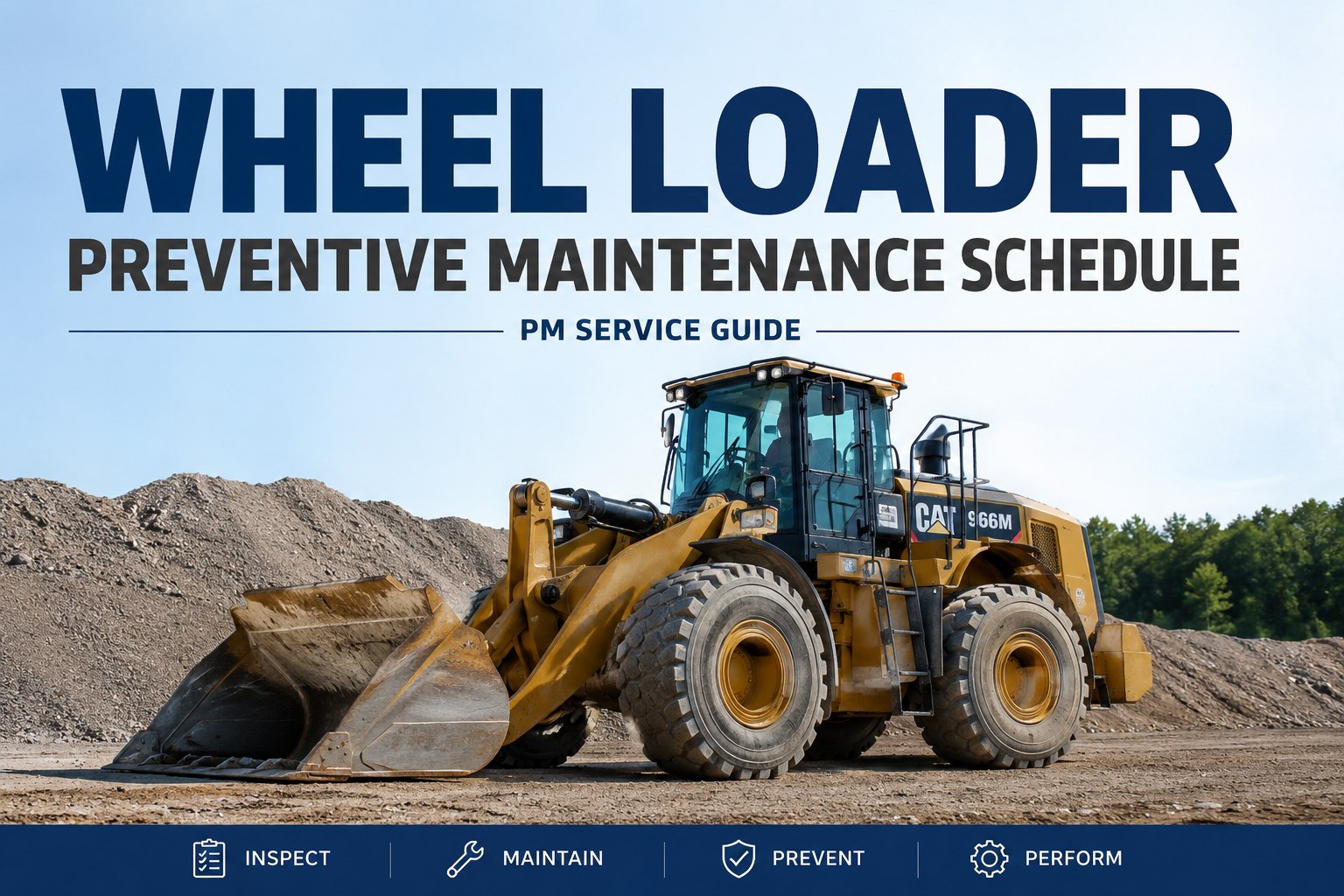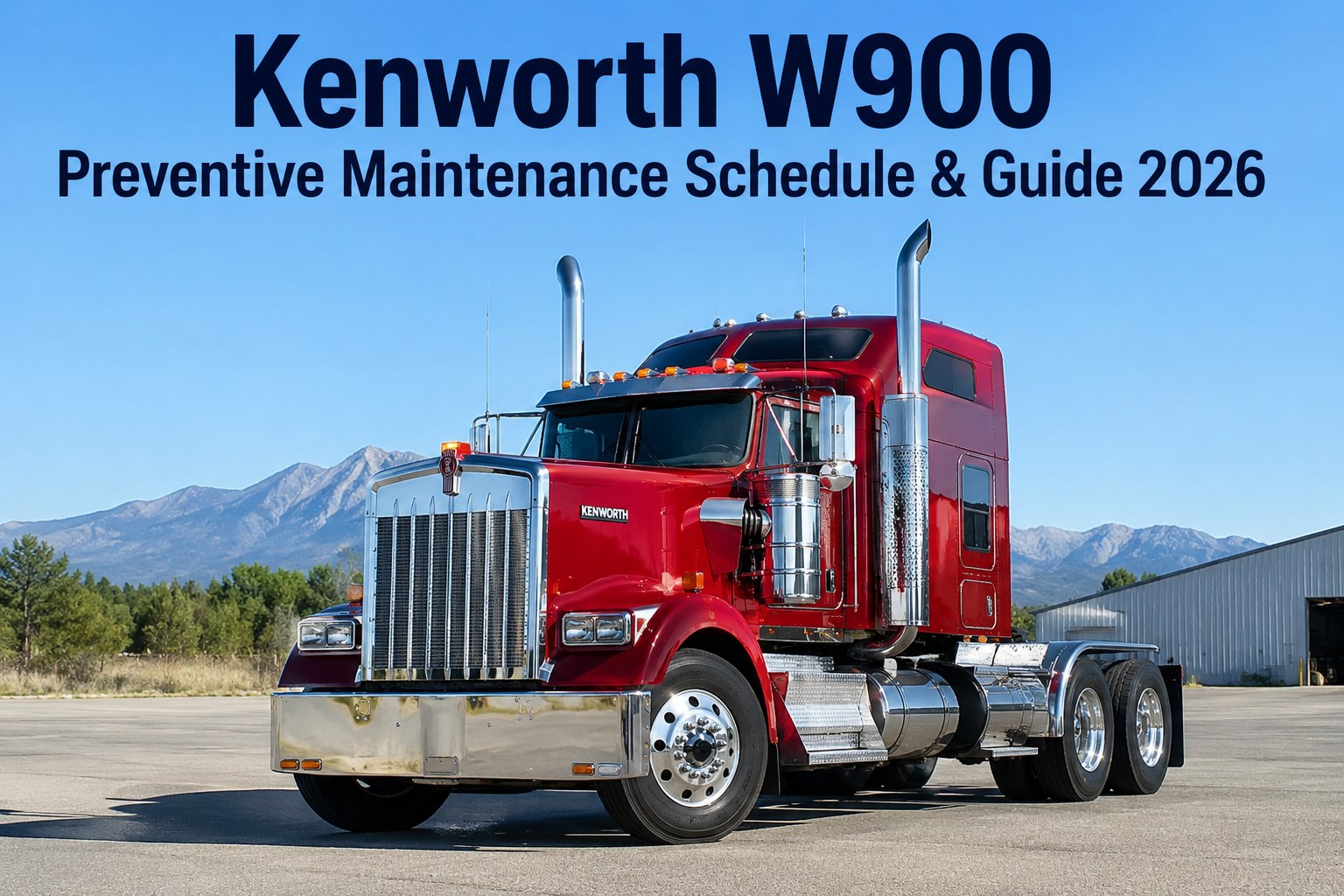
The Kenworth W900 has been the icon of North American trucking for over six decades — and owner-operators who run them treat the maintenance schedule like gospel. But which gospel depends on the engine: a PACCAR MX-13 and a Cummins X15 share the same cab and frame, yet their oil intervals, fuel filter cycles, and aftertreatment requirements are completely different. This is the complete Kenworth W900 preventive maintenance schedule for 2026, mapped by engine and duty cycle. Book a demo to see W900 PM scheduling automated in HVI.
Kenworth W900 PM Schedule: MX-13 vs. X15 — Every Interval, Side by Side
Two engines. Same legendary truck. Two completely different PM realities.
Whether you're an owner-operator running one W900L coast to coast or a fleet manager maintaining 30 of them across multiple applications, the PM schedule starts with one question: which engine is under that long hood? Below is how to build the right schedule for each configuration.
The W900 at a GlanceNorth America's most iconic Class 8 truck
The Kenworth W900 has been in continuous production since 1961 — making it one of the longest-running truck model lines in history. The W900L, with its 130-inch BBC long-hood silhouette, is instantly recognizable on every highway. Today's W900 is available with PACCAR MX-13 or Cummins X15 engines, PACCAR TX-18 automated or Eaton Fuller manual transmissions, and configurations ranging from day cabs to 86-inch studio sleepers. It handles everything from long-haul dry van to heavy-haul oversized loads, logging, and oilfield work.
The W900's durability is legendary — million-mile engines are common among owner-operators who maintain them properly. But "properly" means different things depending on the engine, the duty cycle, and whether the truck is running long-haul at 7 MPG or hauling oversize at 4 MPG. The wrong interval on the wrong engine is how million-mile potential becomes a 500,000-mile overhaul. Book a demo to see per-engine W900 PM scheduling in HVI
Cummins X15 PM Schedulethe power choice — intervals by fuel economy
Cummins defines X15 service intervals by average fuel economy — a four-tier system that maps directly to how hard the engine works. Most long-haul W900s fall into the Normal or Light tier; heavy-haul and vocational W900s land in Severe or Short-Haul.
| System / Component | Severe (3–4.9 MPG) | Short-Haul (5–5.9) | Normal (6–6.9) | Light (7+) |
|---|---|---|---|---|
| Engine oil + filter | 25,000 mi / 500 hrs | 35,000 mi / 750 hrs | 50,000 mi / 1,000 hrs | 50,000 mi / 1,250 hrs |
| Fuel filter | 25,000 mi / 500 hrs | 35,000 mi / 750 hrs | 50,000 mi / 1,000 hrs | 50,000 mi / 1,250 hrs |
| Air cleaner element | By restriction indicator — inspect at every oil service | |||
| Coolant | Test twice/year with refractometer · Full drain per Cummins CES14603 | |||
| Valve lash | Inspect at first oil drain · Adjust as needed per OEM spec | |||
| DPF ash cleaning | By check engine light — return to Cummins authorized location | |||
| Chassis lubrication | 15,000 mi | 20,000 mi | 25,000 mi | 25,000 mi |
| Brake inspection | 15,000 mi | 20,000 mi | 25,000 mi | 25,000 mi |
| Air dryer coalescent filter | 150,000 mi / 3,750 hrs — must use PACCAR filter | |||
Scroll right on mobile · Source: Cummins X15 Quick Reference Guide
Many experienced owner-operators run their X15 W900s on a 40,000 to 50,000-mile oil interval regardless of the Cummins recommendations — splitting the difference between the OEM maximum and their comfort level. That's a reasonable approach for steady-state highway operation. But a W900 pulling heavy-haul at 4 MPG needs oil at 25,000 miles and 500 engine hours, not 50,000. The fuel economy tier isn't optional; it's the engine telling you how fast it's consuming the oil's protective properties. Start free — set fuel-economy-based PM intervals per truck in HVI
PACCAR MX-13 PM Schedulethe efficiency choice — intervals by duty tier
The PACCAR MX-13 uses a three-tier duty-cycle classification: Long-Haul, Regional, and Severe. PACCAR publishes intervals using CK-4 or CJ-4 API-classified oil. The MX-13's cartridge-style oil filter and integrated engine brake simplify some service tasks, but the aftertreatment system requires the same careful attention as any modern diesel.
Oil: up to 60,000 miles. Fuel filter: same. Grease: 20,000–25,000 miles. Highway-dominant, >60K annual miles, >7 MPG average.
Oil: 35,000–45,000 miles. Mixed highway and urban, moderate idle, 5–7 MPG average.
Oil: 25,000–35,000 miles. Construction, heavy-haul, high-idle, dusty environments, <5 MPG. Book a demo
Coalescent filter every 150,000 mi / 3,750 hrs. Must use PACCAR filter. Failure causes emission and transmission damage.
The air dryer coalescent filter is the most commonly missed interval on PACCAR-powered W900s. At 150,000 miles, many shops don't track it separately from the engine PM cycle. But a failed coalescent filter allows moisture into the air system, corroding emission components, damaging the transmission shift actuators, and degrading brake system performance. It's a $50 filter that prevents $5,000 in downstream damage.
5 W900 PM Mistakesthe errors that shorten million-mile potential
A PACCAR MX-13 at 60,000 miles and a Cummins X15 at 50,000 miles have different intervals, different oil specs, and different filter configurations. A fleet running both engines on a single 50K schedule is over-servicing MX-13s and potentially under-servicing severe-duty X15s.
The X15's oil interval ranges from 25,000 to 50,000 miles based on average MPG. A W900 pulling heavy-haul at 4.2 MPG is on the 25K schedule. Applying the 50K light-duty interval means running 25,000 miles past when the oil should have been changed.
The 150,000-mile / 3,750-hour interval falls outside normal PM cycles. If it's not tracked as a separate milestone, it gets missed. Moisture in the air system corrodes emissions components and damages the transmission. Book a demo — HVI flags milestone PMs like the air dryer filter automatically
Moisture buildup in the air system is the root cause of a surprising number of W900 emission codes and transmission shift faults. Draining air tanks daily is a 30-second task that prevents corrosion across the entire air-dependent system.
Cummins recommends testing coolant with a refractometer twice per year. A floating-ball hydrometer isn't accurate enough. Degraded coolant causes liner pitting, water pump failure, and head gasket issues — all catastrophic on a truck with 800K miles that's 200K short of the million-mile goal.
From an owner-operator with 1.1 million miles on a W900L
I've run a 2019 W900L with an X15 565 since new. Hit 1.1 million miles last month — original turbo, original aftertreatment, no overhaul. I change oil at 45,000 miles, not the 50K Cummins says I can, because I'd rather spend $400 on an early oil change than $30,000 on a short block. Fuel filters every oil change. Grease every 20,000. Coolant tested with a refractometer every spring and fall.
The one thing I wish I'd tracked better early on was engine hours versus miles. On a few long hauls where I sat in traffic or idled overnight, the hours accumulated way faster than the odometer. A CMMS that tracks both would've caught that — I had to learn it the hard way when an oil sample came back dirty at 38,000 miles.
Frequently asked questions
What is the oil change interval for a Kenworth W900?
The oil change interval on a Kenworth W900 depends on the engine and duty cycle. For the Cummins X15, Cummins defines four tiers based on fuel economy: Severe (3 to 4.9 MPG) at 25,000 miles or 500 engine hours, Short-Haul (5 to 5.9 MPG) at 35,000 miles or 750 hours, Normal (6 to 6.9 MPG) at 50,000 miles or 1,000 hours, and Light (7+ MPG) at 50,000 miles or 1,250 hours. For the PACCAR MX-13, intervals range from 25,000 to 60,000 miles depending on the three-tier duty classification (Severe, Regional, Long-Haul). Many experienced owner-operators run conservative intervals of 40,000 to 50,000 miles regardless of the OEM maximum, viewing the modest cost of early oil changes as insurance on a high-value engine.
How often should a Kenworth W900 be greased?
Chassis lubrication on a Kenworth W900 should be performed every 20,000 to 25,000 miles for long-haul applications, and every 15,000 miles for severe-duty or vocational applications. Key grease points include king pins, drag links, tie rod ends, spring pins, fifth wheel, driveshaft U-joints, and slack adjusters. The fifth wheel plate should be greased and inspected for wear at every chassis lube service. Under-greasing leads to premature wear on steering components and king pin bushings, while over-greasing can push grease past seals and contaminate brake components. Using the correct NLGI #2 grade lithium-complex grease ensures proper lubrication across the full temperature range the W900 operates in.
When should the air dryer filter be changed on a W900?
The air dryer coalescent filter on PACCAR-equipped Kenworth W900s must be replaced every 150,000 miles or 3,750 engine hours, whichever comes first. The PACCAR-specified filter must be used — aftermarket substitutes may not provide adequate moisture removal. This interval is commonly missed because it falls outside normal PM cycles. A failed or clogged coalescent filter allows moisture into the air system, which corrodes emission system components, damages transmission shift actuators on automated transmissions, and degrades brake system performance. Daily air tank draining is also required to prevent moisture accumulation between filter changes.
What is the DPF service interval on a Kenworth W900?
DPF ash cleaning on both the PACCAR MX-13 and Cummins X15 is condition-based rather than mileage-based. The truck's check engine light or aftertreatment warning indicators will illuminate when ash accumulation requires cleaning. On the Cummins X15, Cummins recommends returning DPFs to a Cummins authorized repair location for exchange with a new or remanufactured unit. DPF cleaning typically costs $500 to $1,500, while a full replacement can be significantly more expensive. Maintaining proper oil change intervals directly affects DPF life because degraded oil produces more particulate matter. Owner-operators who extend oil drains beyond OEM recommendations frequently see earlier DPF service needs.
Can I use a CMMS to automate W900 preventive maintenance?
Yes. A CMMS like HVI (Heavy Vehicle Inspection) lets you configure PM schedules specific to each W900 based on engine type and duty cycle. For Cummins X15 trucks, set oil intervals by fuel economy tier with dual triggers (miles plus hours). For PACCAR MX-13 trucks, set intervals by duty classification. HVI tracks milestone items like the air dryer filter at 150,000 miles independently from recurring oil cycles, so nothing gets missed. The platform works for single owner-operators tracking one truck and for fleets managing dozens. Digital inspection reports, automatic work order generation, parts tracking, and complete service history are included, providing the documentation needed for warranty claims and DOT compliance.
Your Kenworth W900 — maintained for a million miles and beyond
Configure PM by engine and fuel economy tier. Track miles, hours, and milestone items. Auto-generate work orders. Maintain digital service records. Works for one truck or a hundred. Live in under two weeks.
No credit card · No hardware required · Works with any telematics provider