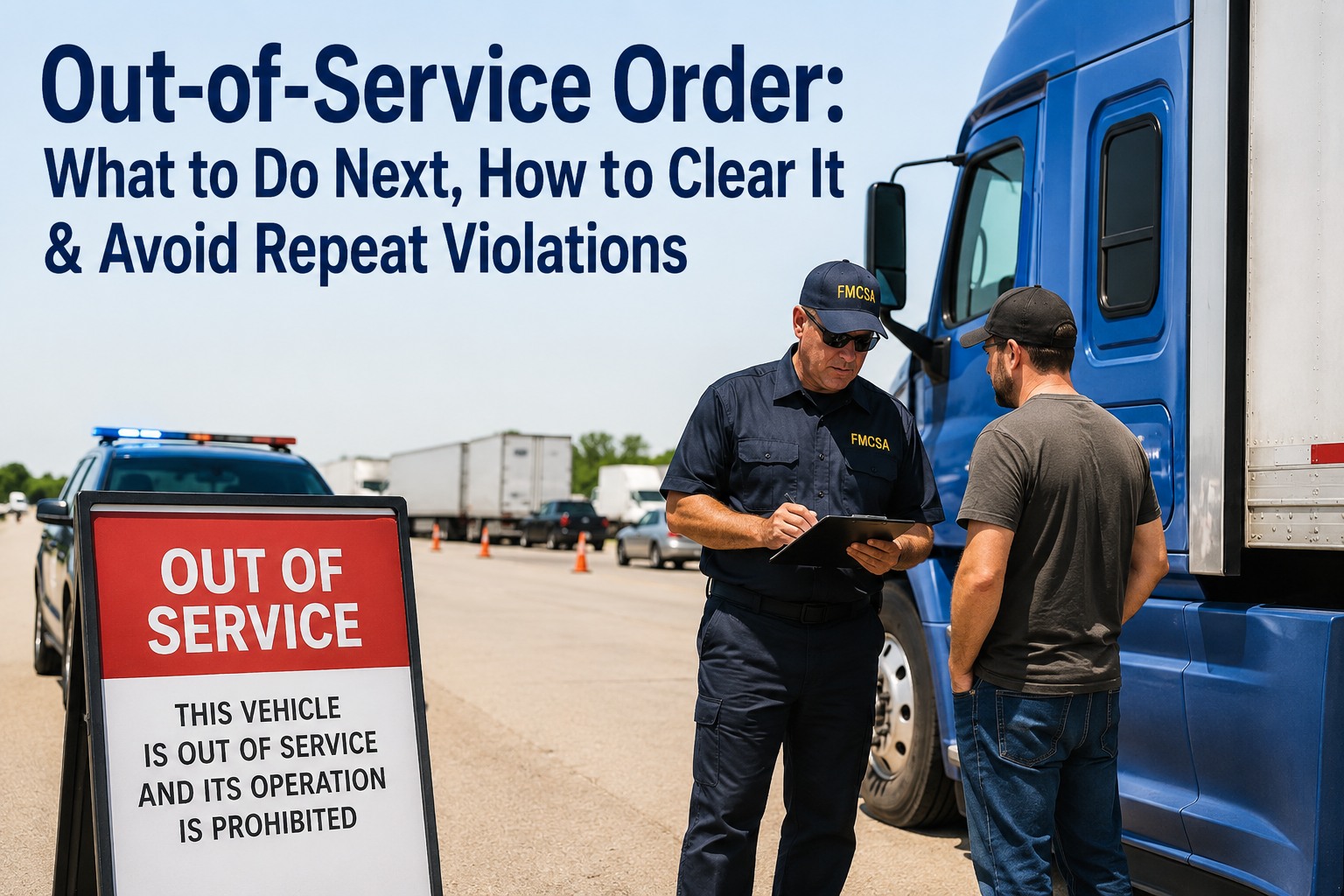
Your driver just called: the truck's been placed out of service at a roadside inspection, sitting on the shoulder with cargo aboard and a delivery window closing. An out-of-service order isn't a ticket you deal with later — it's a hard stop. That vehicle legally cannot move until the defect is corrected and the clearance requirements are met. This guide walks the immediate moves, how to certify and clear the order, and how to build the defect-to-repair record that protects you later. Book a demo to see the full evidence chain captured in HVI.
Out-of-Service Order: What to Do Next & How to Clear It
An OOS order stops the vehicle cold. What you do in the next few hours — and the record you build — decides how fast you're back on the road and how well you're protected later.
Educational overview — not legal advice. Follow the instructions on your specific inspection paperwork and confirm current requirements at fmcsa.dot.gov and your state agency.
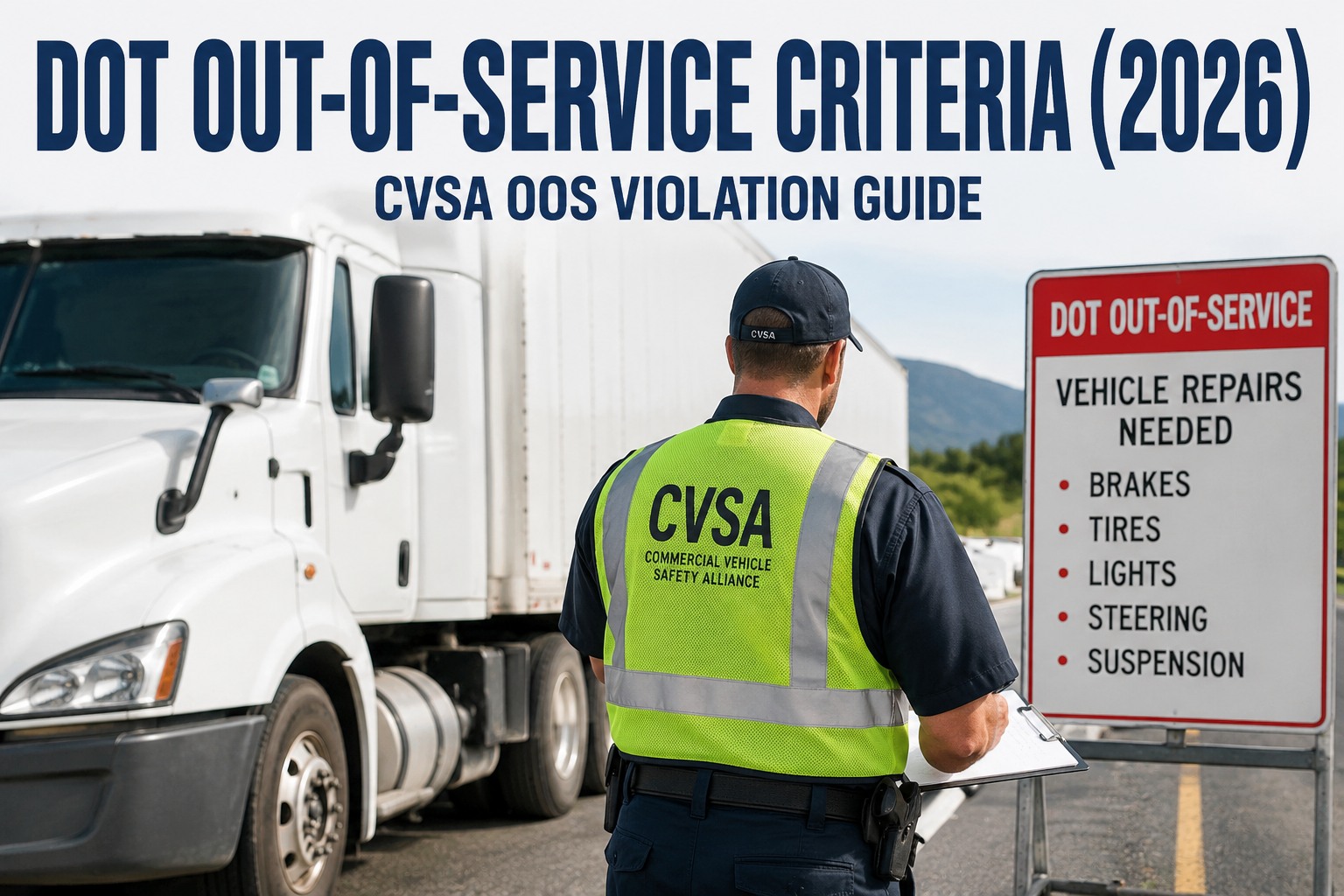
An out-of-service order demands immediate, careful action, because a commercial vehicle placed out of service cannot legally be operated until the condition that triggered it has been properly corrected and the applicable clearance requirements are satisfied. It's issued when a roadside inspection finds a violation serious enough to meet the North American Standard Out-of-Service Criteria — the pass-fail standard published by the Commercial Vehicle Safety Alliance and adopted by FMCSA. This isn't an ordinary violation you can defer. Handle it right and you're back on the road with a clean record; handle it wrong and you compound a mechanical problem into a compliance one.
What an out-of-service order actually means
First, understand what you're dealing with, because an OOS order is a different animal from a routine roadside violation. The distinction changes what you're allowed to do next.
A violation serious enough, under the CVSA Out-of-Service Criteria, that the vehicle or driver is prohibited from operating until it's corrected. The vehicle cannot be driven — full stop — except, where the inspector directs, to the nearest safe location for repair.
A less severe defect noted on the report that doesn't bar operation. Correction can often be deferred to a convenient time and place, though it still must be addressed and certified as required.
The findings are recorded on a Driver/Vehicle Examination Report (DVER) — the roadside inspection report. Your driver should get that report to you right away, because the clock on your clearance and certification obligations starts at the inspection. Continuing to operate under an active OOS order is a knowing violation that turns a fixable mechanical issue into a serious enforcement problem. Book a demo to capture the DVER and start the record immediately
The immediate response: your first moves
The first few hours matter most. The goal is to correct the defect legally and safely without creating a new violation by moving the vehicle when you shouldn't. Work through these in order.
The vehicle stays put — except, if the inspector directs it, a move to the nearest safe repair location. It cannot be driven to a distant shop unless the inspector authorizes it. When in doubt, don't roll it.
Line up on-site or mobile repair, repair at the inspection location where permitted, or a tow to a facility if the vehicle can't legally be driven. Use qualified personnel who can correct and certify the defect.
The inspection and OOS documentation tells you what's required to clear it and where to return the certified report. Follow those instructions exactly — requirements can vary by jurisdiction.
Make sure nobody dispatches the unit until it's cleared. A clear internal hold — and a record of it — prevents the single most damaging mistake: putting an OOS vehicle back in service too early.
The through-line in all four: legal correction first, and a record of every step as you go. The pressure of a stranded load pushes people to cut corners — moving the truck, skipping documentation, rushing it back out — and every one of those is a bigger risk than the delay. Start free on HVI to put a documented dispatch hold on the unit until it's cleared.
Repairing, certifying, and clearing the order
Once the vehicle is legally stopped and repair is arranged, clearing the order is a defined process. The repair alone doesn't clear it — the certification does. Under 49 CFR Part 396, the sequence looks like this.
Correct the specific defect that triggered the OOS condition, using someone qualified to do the work and attest to it.
The carrier (or its agent) certifies on the roadside inspection report that all noted violations have been corrected — completing the official's signature, title, and date portions of the form.
Within 15 days of the inspection, return the completed report to the issuing State agency if it requests it, following the address and instructions on the form.
In all cases, keep a copy at your principal place of business, or where the vehicle is housed, for 12 months from the inspection date.
Getting the certification right is what actually closes the loop. A repaired vehicle with no certified, retained report is only half-cleared on paper — and paper is what an auditor or investigator sees months later. Confirm current timelines and any re-inspection requirement against FMCSA and your state agency, since procedures can change. Book a demo to track certification deadlines and retention automatically
The documentation trail that protects you
Here's what carriers underestimate: clearing the order is only half the job. The other half is being able to prove, later, that you did everything right. That proof is a complete evidence chain, assembled as you go — not reconstructed under pressure.
The original roadside report identifying the OOS condition — the starting point of the whole chain.
Images of the defect as found and after repair — visual proof that's hard to dispute and easy to lose if not captured immediately.
The invoice, parts used, and work performed — showing what was actually done to correct the defect.
Documentation from qualified personnel attesting the defect was properly corrected — the professional sign-off behind your certification.
The signed roadside report certifying corrections, plus proof of return to the agency where required.
Internal proof the vehicle was held from dispatch until cleared — showing you never ran it under the order.
Assembled together and tied to the vehicle, these turn "we fixed it, trust us" into a defensible, time-stamped record. Scattered across a glovebox, an email thread, and a shop's files, they're the paperwork you can't find when it matters. The difference isn't whether the work happened — it's whether you can prove it. Start free to keep the full evidence chain on each vehicle's record.
How OOS violations affect your safety record
An out-of-service order doesn't just cost you a day and a repair bill — it follows you. Roadside inspection results feed into your carrier safety profile, so how often your vehicles are placed out of service matters beyond the individual incident.
Roadside results, including out-of-service violations, flow into FMCSA's Compliance, Safety, Accountability measurement system and weigh on your vehicle-maintenance safety picture.
Inspection data remains part of your profile for a period of time, so a cluster of OOS violations can draw enforcement attention and affect how you're viewed.
A weaker safety profile can influence enforcement scrutiny, shipper decisions, and insurance — so repeat OOS events cost more than the repairs themselves.
Because the exact scoring methodology, weightings, and data-retention specifics are set by FMCSA and can change, treat the direction as the takeaway rather than any fixed number: out-of-service violations hurt your safety standing, and reducing how often they happen is what improves it. Verify the current methodology and retention at fmcsa.dot.gov.
Common mistakes — and preventing the repeat
The costliest errors happen after the roadside stop, not during it. And the single biggest one is treating the immediate defect as the whole problem, when the real fix is preventing it from happening again across the fleet.
- Dispatching the vehicle before it's properly cleared
- Fixing the defect but never documenting the repair
- Losing the original inspection paperwork
- Missing the certification and return-of-report window
- Fixing the immediate defect but ignoring the underlying cause
- Review the root cause, not just the symptom that got flagged
- Check whether the same defect exists across other units
- Tighten the preventive-maintenance interval or inspection item
- Document the corrective action taken fleet-wide
- Trend recurring defects so patterns surface early
This is the difference between carriers who get one OOS order and carriers who get the same one every few months. If a brake or light or tire defect put you out of service once, the question isn't only "is this truck fixed" — it's "how many others are one inspection away from the same result, and what changed so it doesn't recur." That's a maintenance-controls question, and it's answerable only if you're tracking defects over time. Book a demo to turn a single OOS event into a fleet-wide fix
From a fleet manager who got audited a year later
We had a trailer put out of service for a brake violation on a Friday afternoon — worst possible timing, load on board, driver stuck. We got it repaired roadside, certified it, and moved on. What I didn't appreciate at the time was how much the documentation would matter later.
About a year on, we're in a review and the investigator pulls up that exact inspection. Because we'd logged the finding, the photos, the repair invoice, the mechanic sign-off, and the certified report all against that trailer, I answered every question in about two minutes. The carrier next to us in the same review spent days digging through paper. Same violation, totally different outcome — and the only difference was whether the record existed and I could find it.
Clear it right, and prove it later
An out-of-service order is a hard stop, but a manageable one if you move in the right order. Don't move the vehicle except where the inspector directs; arrange qualified repair; follow the instructions on your specific inspection paperwork; and hold the unit from dispatch until it's genuinely cleared. Clearing it means more than fixing the defect — under 49 CFR Part 396 you certify the corrections on the roadside report, return it to the issuing agency within 15 days where required, and retain a copy for 12 months, following any re-inspection requirement your jurisdiction imposes. And because out-of-service violations feed your CSA safety profile, the incident matters well beyond the day it happened. The biggest mistakes all come after the stop: rolling the vehicle too soon, failing to document, losing the paperwork, or fixing the symptom while ignoring the cause.
The thread through every part of this is documentation you can produce on demand. An OOS order tests two things — whether you corrected the defect properly, and whether you can prove it later — and the second is where carriers with disorganized records get hurt long after the truck is fixed. That's the role HVI plays: capturing the complete defect-to-repair evidence chain against the specific vehicle — the inspection finding, photos, repair and parts records, mechanic certification, the certified clearance, and the dispatch hold — all timestamped, retained, and retrievable in seconds, while surfacing recurring defects so you can prevent the repeat. To be clear about the boundary: HVI is a documentation and maintenance-records platform, not a repair provider, legal advisor, or guarantee of any compliance outcome — it doesn't clear the order for you, and your specific paperwork and applicable FMCSA and state requirements govern what's needed. Because those requirements and enforcement procedures can change, always confirm the current rules at fmcsa.dot.gov and with your state agency. Handle the order correctly, keep the proof, and fix the cause — and a roadside stop stays a bad afternoon instead of becoming a lasting problem. Book a demo to build your defect-to-repair evidence chain in HVI.
Frequently asked questions
What does an out-of-service order mean?
An out-of-service order means a commercial motor vehicle or driver has been found, during a roadside inspection, to have a violation serious enough that continued operation is prohibited until the condition is corrected. The determination is based on the North American Standard Out-of-Service Criteria, a pass-fail standard published by the Commercial Vehicle Safety Alliance (CVSA) and adopted by FMCSA, which is updated annually and identifies the critical inspection items and defect thresholds that render a vehicle or driver out of service. This is fundamentally different from an ordinary roadside violation: a less severe violation may be noted on the report but doesn't bar operation, and its correction can often be deferred to a convenient time and place. An out-of-service condition, by contrast, stops the vehicle — it cannot legally be operated, generally except for a move to the nearest safe repair location if the inspector directs it. The findings are recorded on a Driver/Vehicle Examination Report, the official roadside inspection report, which the driver should deliver to the carrier promptly. Continuing to operate a vehicle under an active out-of-service order is a serious knowing violation that can lead to significant additional consequences, which is why the order must be treated as an immediate hard stop rather than something to resolve later.
What should I do immediately after a vehicle is placed out of service?
Work through a clear sequence, prioritizing legal correction over speed. First, do not move the vehicle — it stays where it is, except for a move to the nearest safe repair location if the inspector specifically directs or authorizes it; it cannot be driven to a distant shop without that authorization, so a tow may be necessary. Second, arrange qualified repair: on-site or mobile repair, repair at the inspection location where permitted, or towing to a facility, using personnel qualified to both correct and certify the defect. Third, follow the instructions on your specific inspection and out-of-service paperwork, which tells you what's required to clear the order and where to return the certified report; requirements can vary by issuing jurisdiction, so the paperwork is your authoritative guide. Fourth, hold the vehicle from dispatch until it is genuinely cleared, and keep a record of that hold — this prevents the single most damaging mistake, which is putting an out-of-service vehicle back into service before clearance. Throughout, document each step as it happens: the inspection report, the repair, who did it, and the certification. The pressure of a stranded load and a closing delivery window tempts people into shortcuts like moving the truck or skipping documentation, but each of those creates a bigger problem than the delay itself.
How do I clear an out-of-service order?
Clearing an out-of-service order involves both correcting the defect and completing the required certification and paperwork — the repair alone doesn't clear it. The general process under 49 CFR Part 396 is: complete the repair using qualified personnel who correct the specific defect that triggered the order; certify the correction by completing the carrier official's signature, title, and date portions of the roadside inspection report, attesting that all noted violations have been corrected; within 15 days of the inspection, return the completed report to the issuing State agency if it requests it, following the address and instructions on the form; and in all cases, retain a copy at your principal place of business or where the vehicle is housed for 12 months from the date of the inspection. Some jurisdictions may additionally require the vehicle to be re-inspected before it returns to service, so it's essential to follow exactly what your specific out-of-service documentation and issuing agency require rather than assuming self-certification is sufficient everywhere. The key point many carriers miss is that a physically repaired vehicle is not fully cleared until the certification and retention steps are done — because months later, in an audit or review, the certified, retained report is the proof that the order was properly resolved. Confirm current timelines and any re-inspection requirements with FMCSA and your state agency, as procedures can change.
What documentation should I keep after an out-of-service order?
You should assemble and retain a complete defect-to-repair evidence chain, tied to the specific vehicle, so you can prove the entire story later. That chain includes: the original roadside inspection report (DVER) identifying the out-of-service condition; photographs of the defect as found and after the repair, which provide visual proof that's difficult to dispute and easy to lose if not captured right away; repair invoices and parts records showing exactly what work was performed; documentation of the mechanic or qualified person's certification that the defect was properly corrected; the certified clearance itself, meaning the signed roadside report certifying the corrections plus proof of return to the issuing agency where required; and an internal record showing the vehicle was held from dispatch until it was cleared. At minimum, regulations require retaining a copy of the certified inspection report for 12 months from the inspection date, but a strong practice keeps the full chain together. The reason this matters is practical: clearing the order is only half the job, and the other half is being able to produce, on demand, evidence that you handled it correctly. When these records are scattered across a glovebox, an email thread, and a repair shop's files, they become the paperwork you can't find when an auditor or investigator asks — whereas assembled against the vehicle and retrievable in seconds, they turn a stressful question into a two-minute answer.
How do out-of-service violations affect my CSA score?
Out-of-service violations affect your carrier safety profile because roadside inspection results, including out-of-service findings, feed into FMCSA's Compliance, Safety, Accountability (CSA) program through its Safety Measurement System. In broad terms, more frequent and more serious violations — and out-of-service conditions are among the more serious — contribute to a weaker safety standing, particularly in the vehicle-maintenance area of your profile, and inspection data remains part of that profile for a period of time. A weaker profile can have real business consequences beyond the individual incident: it can draw increased enforcement attention, influence how shippers and brokers view your operation, and affect insurance. However, it's important to be precise about what can be stated with confidence versus what should be verified: the exact scoring methodology, the specific weightings applied to different violations, and the precise data-retention periods are set by FMCSA and are subject to change, so rather than relying on a specific number or formula, the reliable takeaway is directional — out-of-service violations hurt your safety standing, and reducing how often they occur is what improves it over time. For the current methodology, weightings, and retention details, consult FMCSA directly at fmcsa.dot.gov. The most effective way to protect your score is to prevent out-of-service events in the first place through disciplined preventive maintenance and by addressing the root causes of any defect that does get flagged.
Build your defect-to-repair evidence chain in HVI
When a vehicle goes out of service, HVI captures the whole story against that unit — the inspection finding, defect and repair photos, parts and invoices, mechanic certification, the certified clearance, and a documented dispatch hold — timestamped, retained, and retrievable in seconds. Trend recurring defects to prevent the repeat, and never lose the paperwork that protects you in an audit. HVI is your documentation layer, not a repair shop or legal advisor. Mobile-first for the roadside and the shop, live in under two weeks.
Free to start · Defect-to-repair evidence chain · Photos, certification & retention on day one