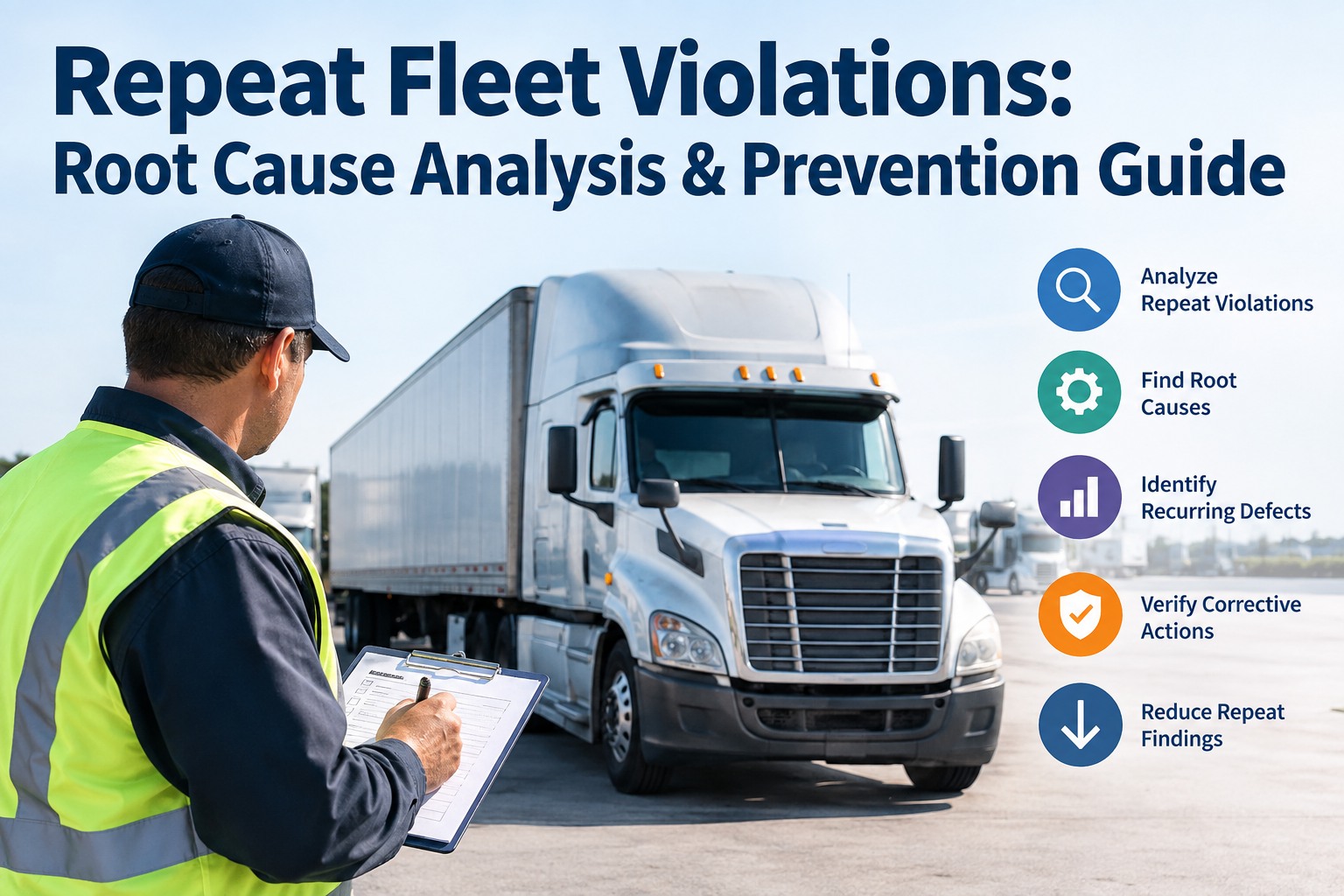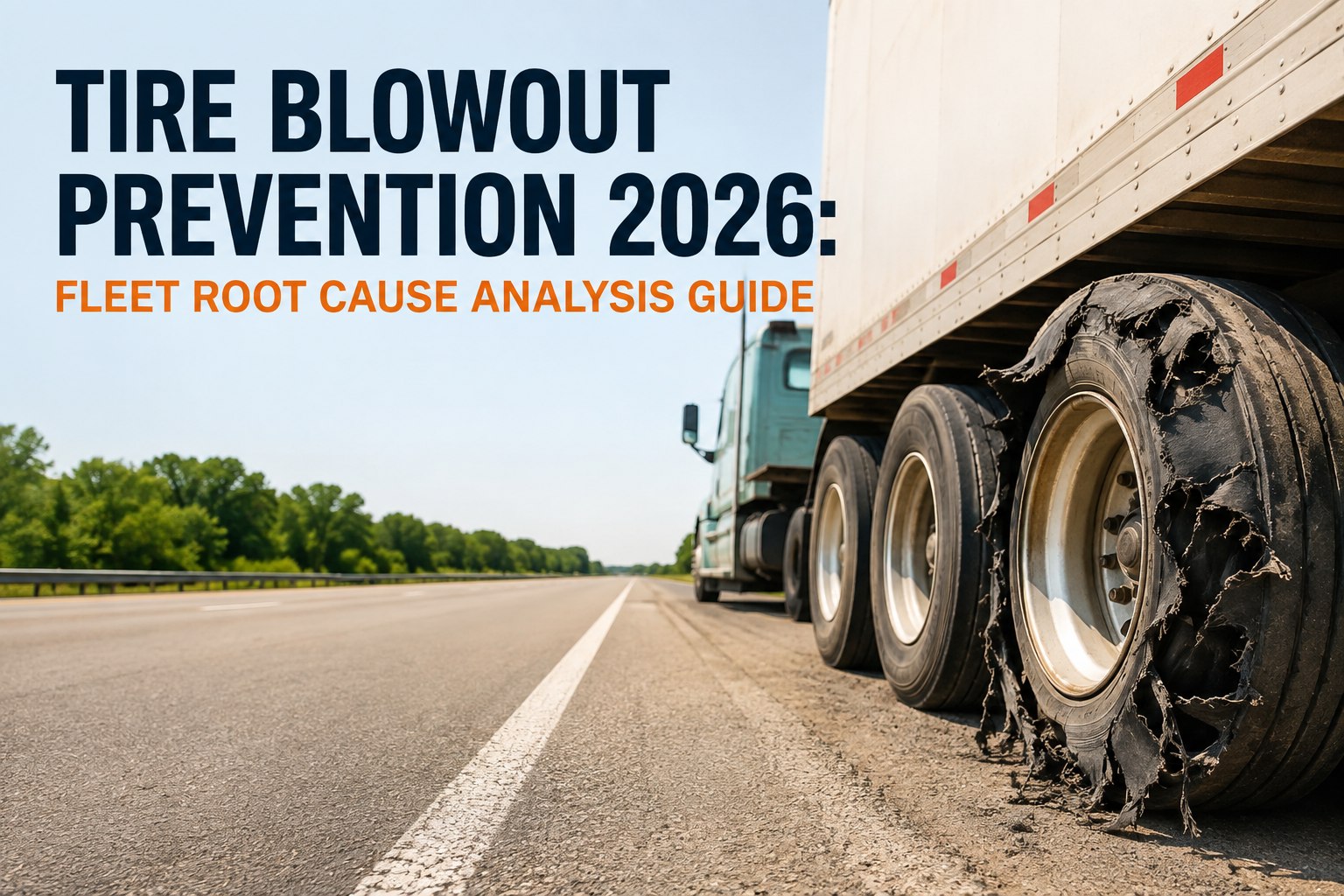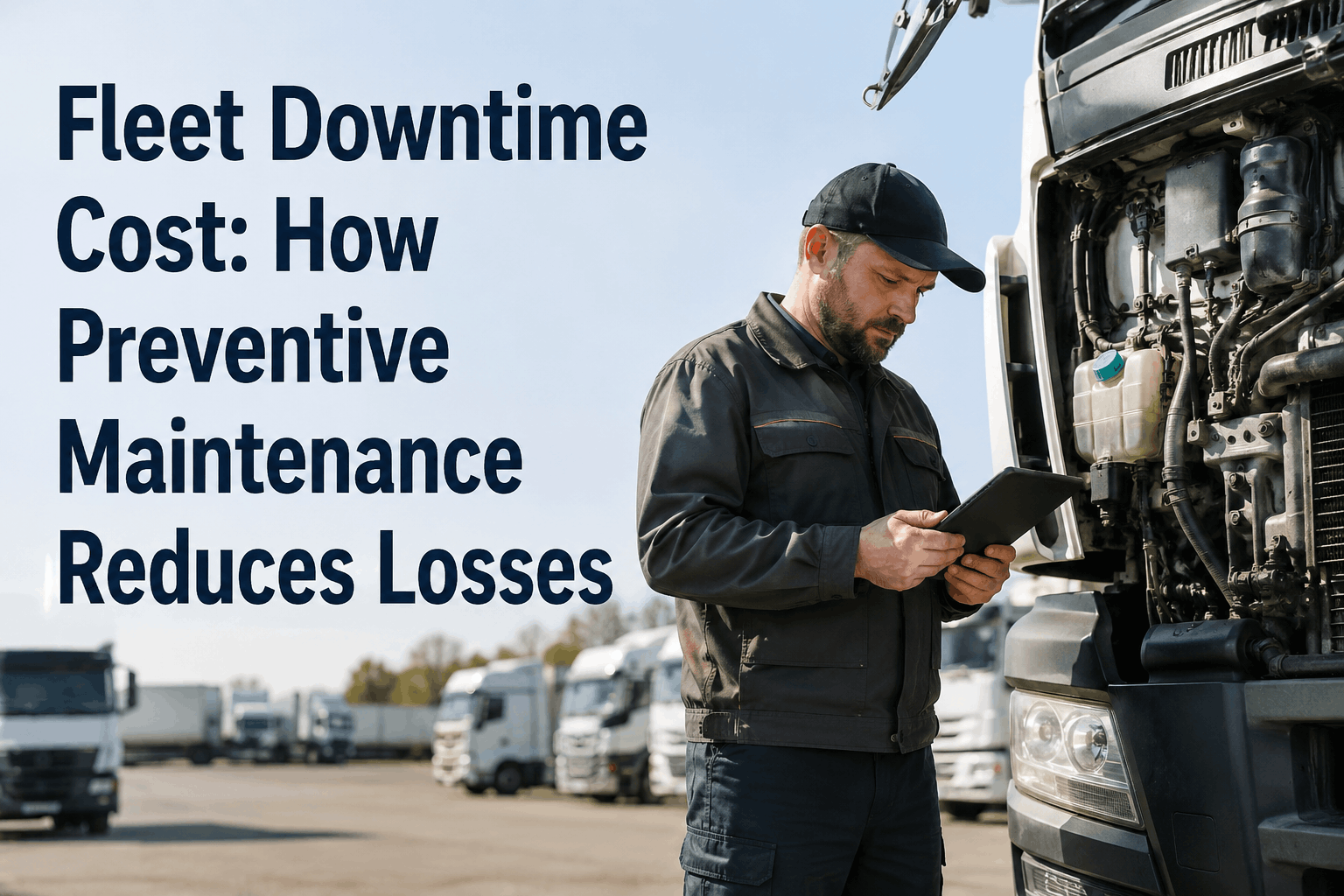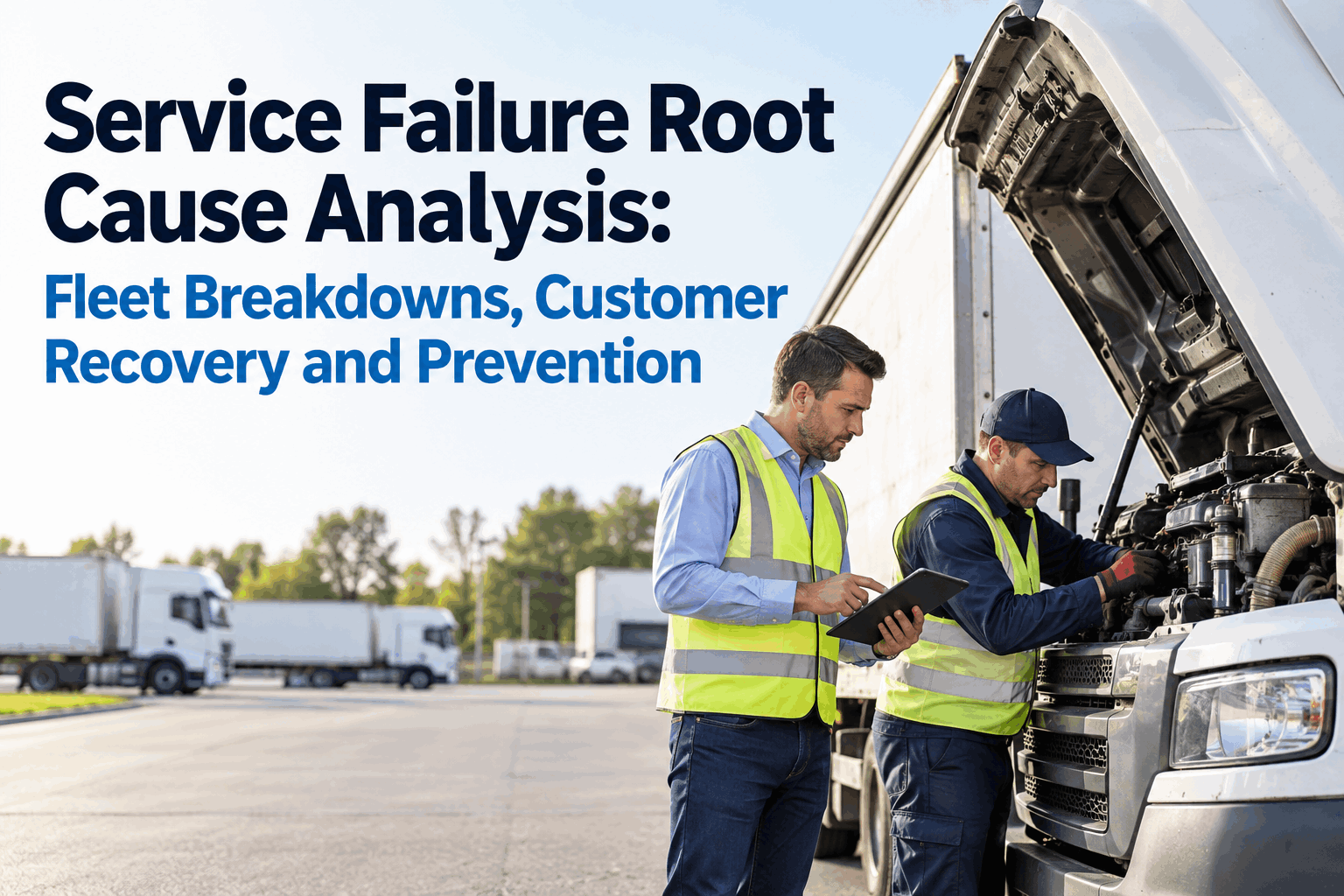
A fleet breakdown becomes a service failure when it disrupts a customer's delivery, route, jobsite or operating schedule. The immediate priority is to restore safe service, but a credible service failure root cause investigation must also explain what happened, why controls did not prevent it and how the operator will reduce recurrence. Clear maintenance evidence and timely customer communication help protect both reliability and commercial trust.
Service Failure Root Cause Analysis: Restore Service. Prove the Fix.
From the first breakdown alert to a verified corrective action, build a defensible response using fleet inspection and maintenance history.
Secure people → deploy replacement → update customer
Preserve evidence → test causes → verify corrective action
Separate Service Restoration from Root Cause Investigation
When a vehicle stops unexpectedly, dispatch, maintenance and customer-facing teams have different but connected jobs. Recovery decisions must protect safety first, then minimize disruption without compromising the investigation.
Restore safe service
- Stop unsafe operation and protect people and the scene.
- Confirm vehicle condition, location and cargo or equipment risk.
- Arrange recovery, a replacement vehicle or approved subcontractor.
- Reassign routes or reschedule work with realistic ETAs.
- Record customer impact and every major decision.
Preserve the facts
- Record fault codes, photos, driver statements and meter readings.
- Preserve relevant components and inspection records.
- Identify the last service, repairs and repeat defects.
- Keep observations separate from suspected causes.
- Assign an investigator and establish a review date.
Safety first: Never return a vehicle to service solely to protect an SLA. Release it only after appropriate assessment, repair, checks and authorization.
Keep the Customer Informed Before They Have to Chase You
Early communication is part of service recovery. Tell the customer what is known, the operational impact, the temporary plan and when the next update will arrive. Avoid promising a technical cause before the evidence is reviewed.
Need a stronger maintenance evidence trail for customer discussions? Book a Demo to See HVI Inspection and Repair Records.
Seven Steps for Fleet Service Failure Root Cause Analysis
A sound investigation follows the evidence instead of beginning with blame. Use the same sequence for a roadside breakdown, missed delivery, unavailable machine or repeated repair.
Define the event
Identify the asset, job, customer, time, failure mode and actual service impact.
Build a timeline
Combine driver reports, inspections, service events, alarms and dispatch actions.
Review asset history
Check preventive maintenance, work orders, previous defects and part replacements.
Inspect and test
Use qualified technicians to document physical findings and verify suspected mechanisms.
Analyze causes
Distinguish direct failure, contributing conditions and process-control weaknesses.
Assign actions
Document corrective and preventive tasks, owners, due dates and acceptance criteria.
Verify effectiveness
Confirm the repair and monitor comparable assets for recurrence after closure.
Evidence discipline: A fault code, missed PM date or driver statement may be relevant, but none alone establishes causation. Compare multiple sources and record uncertainty.
Example: A Delivery Truck Breaks Down During a Contracted Route
Consider a hypothetical refrigerated delivery truck that loses engine power on a scheduled customer route. The customer misses its receiving window and a replacement vehicle is dispatched.
Truck TRK-218 • Missed delivery window
Engine derate, roadside stop and late delivery.
Driver report, diagnostic codes, inspection history and repair notes.
Aftertreatment fault contributed to reduced engine power.
Qualified diagnostics, component assessment and historical fault review.
Illustrative 5 Whys — a hypothesis chain, not a finding
Technicians must confirm the actual technical cause. If the record review disproves the escalation hypothesis, revise the chain instead of forcing the evidence to fit it.
Keep the Inspection and Repair Trail Connected
See how HVI can help teams retrieve vehicle inspections, maintenance history and work orders during a failure investigation.
Do Not Confuse a Failed Part with the Root Cause
A failed component is often the visible end of a longer chain. Review technical, maintenance, operational and management-system factors before deciding what must change.
Equipment defect
Material failure, contamination, overheating, incorrect installation or a design issue.
Service-control gap
Missed PM, incomplete diagnosis, wrong part or ineffective repair verification.
Use and conditions
Load, route, duty cycle, environmental exposure or operator practices.
System weakness
Unclear escalation, missing ownership, poor handoffs or insufficient training.
More than one category may contribute. A practical root cause analysis documents the direct mechanism and the organizational conditions that allowed it to persist, while avoiding unsupported blame.
Build a CAPA Plan Customers Can Trust
Corrective action repairs the current problem. Preventive action reduces the likelihood of the same failure occurring elsewhere. Both need a named owner, deadline and verification method.
This example assumes the suspected cause is confirmed. Set monitoring periods and acceptance criteria based on asset risk and operating exposure, not an arbitrary universal deadline.
Protect Customer Trust Without Making Unsupported Promises
Technical repairs and relationship recovery run together. Commercial teams should acknowledge the impact, agree on a realistic recovery plan and communicate verified prevention steps when available.
Contract and financial review
- Identify service-level commitments and notification terms.
- Document actual delay, missed output and customer impact.
- Review penalty, credit and compensation provisions.
- Preserve evidence for any dispute or insurance process.
- Seek appropriate commercial and legal review where needed.
Customer recovery plan
- Assign one accountable customer contact.
- Explain interim service arrangements and milestones.
- Share facts separately from unverified hypotheses.
- Provide the corrective-action summary when approved.
- Follow up after service resumes to confirm satisfaction.
Do not promise that a breakdown will never happen again. A stronger commitment is to show what changed, how it was tested and how the fleet will detect recurrence.
KPIs That Show Whether Service Failure Prevention Is Working
Track both the customer outcome and the maintenance process. Compare trends by fleet size, operating hours or distance so that increased activity does not masquerade as deteriorating reliability.
Repeat breakdown rate
Repeat failures within a defined interval ÷ relevant failure population.
Mean time to repair
Total repair duration ÷ completed corrective repairs, with scope defined.
Unplanned downtime
Hours assets are unavailable due to unexpected faults.
Customer-impacting incidents
Failures that disrupt contracted service, by customer or route.
CAPA closure rate
Actions closed and verified ÷ actions due in the reporting period.
Time to customer update
Elapsed time from confirmed disruption to initial notice.
Want to connect repeat defects with maintenance records? Book a Demo to Review HVI Fleet Maintenance Histories.
Service Failure Investigation Checklist
Use this checklist to make each investigation reproducible. Tailor it to the equipment, contract and safety requirements rather than treating it as a universal legal form.
Capture the incident
✓ Asset, operator and customer identifiers
✓ Date, time, location and service impact
✓ Photos, faults and technician observations
✓ Driver and dispatcher statements
Analyze the evidence
✓ Prior inspections and open defects
✓ PM history, work orders and parts
✓ Timeline and contributing factors
✓ Tested cause and unresolved questions
Close and verify
✓ Recovery and customer communications
✓ CAPA owner, deadline and evidence
✓ Repair verification and safe release
✓ Recurrence monitoring and approval
Use HVI to Retrieve the Records Behind a Credible Investigation
HVI can support the operational evidence chain through vehicle inspections, maintenance histories and work-order records. Investigation judgments, customer remedies and formal root cause sign-off still belong to responsible personnel.
Inspection History
Review earlier condition checks, reported defects and recurring findings.
Maintenance Records & Work Orders
Examine repair dates, work performed and outstanding corrective tasks.
Vehicle Records
Connect incidents and repair histories to the same asset identifier.
Access & Export
Share appropriate records with authorized internal reviewers and prepare customer evidence packages.
Incident SF-042 • Truck TRK-218
Evidence gatheringSee the inspection-to-maintenance evidence workflow: Book a Demo for HVI Service Failure Investigation Records.
Service Failure Root Cause Analysis FAQs
What is service failure root cause analysis in fleet operations?
It is a structured investigation into why a vehicle or equipment problem disrupted service, including the physical failure mechanism, contributing operating conditions and process weaknesses. The goal is to support verified corrective actions and reduce recurrence.
What should a fleet do first after a customer-impacting breakdown?
Protect safety, assess the disabled asset, arrange a feasible recovery option and notify the customer in line with contract requirements. Preserve relevant technical evidence while service recovery proceeds.
Can the 5 Whys method identify every fleet breakdown cause?
No. It helps structure questions, but complex failures can have multiple interacting causes. Use physical inspections, diagnostics, history and other appropriate investigation techniques to test hypotheses.
Which maintenance records are useful in a failure investigation?
Pre-trip and periodic inspections, defect reports, preventive maintenance history, work orders, parts replacement details, meter readings, fault logs and post-repair verification can all contribute.
How can HVI support customer recovery after a breakdown?
HVI can help teams retrieve relevant inspection, maintenance and work-order records and document follow-up activity. The fleet remains responsible for technical diagnosis, customer communications, contractual remedies and verifying preventive actions.
Make the Next Fleet Breakdown Easier to Investigate—and Harder to Repeat
Give operations, maintenance and commercial teams a more reliable evidence trail for failure reviews, corrective actions and customer follow-up.