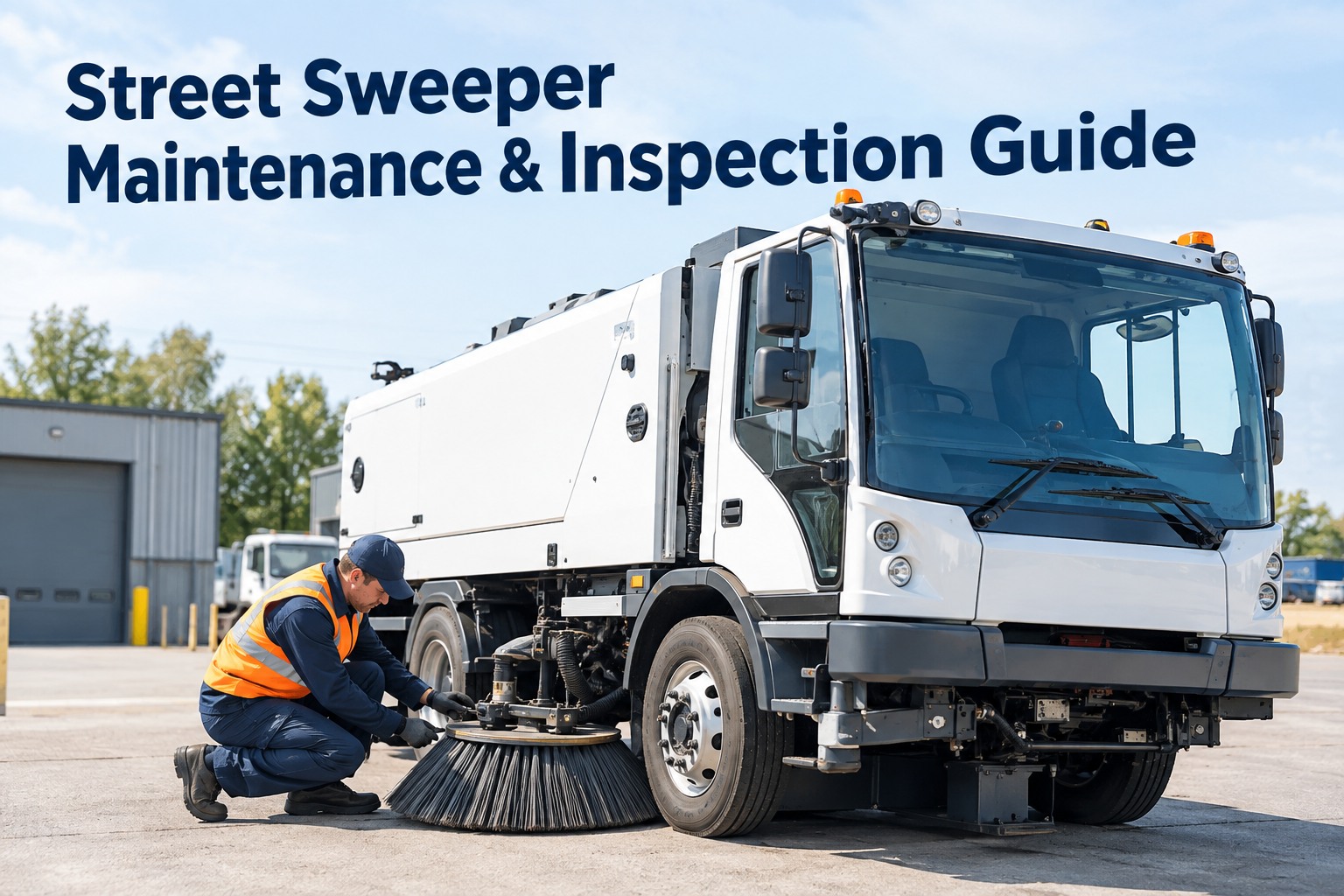
Your operator radios in at 6am — the gutter broom is riding along instead of touching the curb, and a stormwater inspection is scheduled on that stretch at noon. This is what street sweeper maintenance actually protects: not just uptime, but the one compliance tool your city has that's actually working. Here's what breaks first, what to check between routes, and how to schedule PM for a machine that is really two machines bolted together. Book a demo to see it tracked per unit.
Track a Sweeper Like Two Machines, Not a Truck With a Broom
Chassis miles on one PM clock, auxiliary engine and broom-system hours on another — with inspection templates for brooms, water systems, hoppers and hydraulics, logged from a tablet in the cab.
- Separate PM clocks for chassis miles and working-body hours
- Configurable templates for the six points sweepers fail at
- Readiness & compliance history reported per sweeper
Two Engines, Two Maintenance Clocks
Most gutter broom and regenerative air sweepers run a dual-engine layout, and it's the single most missed fact in street sweeper maintenance programs. A chassis engine moves the truck down the route. A separate auxiliary engine — running the whole time the broom is down — powers the broom head, the blower or fan, the dust suppression pump, and the hydraulics. Log one PM date for the whole unit and you're guessing about at least one of those clocks, and it's almost always the auxiliary engine that gets neglected, because it never shows up on an odometer.
Drives the truck to the route
- Serviced on mileage, like any Class 6–8 truck
- Oil, brakes, tires, DOT annual inspection
- Load varies with traffic and route distance
- Shows up clearly on odometer-based PM
Runs the whole working body
- Serviced on run-hours, not miles
- Powers broom, blower/fan, water pump, hydraulics
- Runs at continuous high load for the entire route
- Typically needs oil changes at roughly half the chassis interval
A sweeper can rack up hours on the auxiliary engine while covering very few actual miles — slow curb speed, stop-and-go routes, hours of continuous broom time. A schedule built only around odometer readings will consistently underestimate wear on the broom system, the hydraulics, and the fan. Book a demo to see chassis and auxiliary hours tracked as separate PM clocks on the same unit.
Street Sweeper Maintenance: The Six Points Where Sweepers Actually Fail
Gutter & Main Brooms
Bristles wear unevenly and the sweep pattern narrows long before anyone notices — it just leaves a thin strip of debris along the curb. Check pattern width and tine gap on a fixed interval, not when someone finally complains about a dirty gutter line.
Dust Suppression & Water System
A clogged nozzle or a weakening pump turns a wet-suppression sweeper into a dry, dusty one — which is exactly the failure mode that draws an air-quality complaint. Flush nozzles and check tank, pump pressure and filters on schedule, every route if the water is hard or gritty.
Hopper & Conveyor
One neglected wear item upstream — a worn broom, a slipping conveyor belt — loads the hopper unevenly and strains everything downstream of it. Check conveyor tension, hopper door seals and hydraulic tip-cylinder condition before a full load turns a minor issue into three repairs.
Hydraulics
Hydraulics drive the brooms, the conveyor and the hopper lift, and contaminated fluid is a leading cause of expensive sweeper repairs industry-wide. Keep fluid clean, change filters on schedule, and treat any weeping fitting as a same-week fix, not a wait-and-see item.
Fan, Impeller & Filtration
On regenerative air and vacuum sweepers, the fan and filters do the job the water system does on a broom sweeper. A dirty filter or a worn impeller cuts pickup efficiency and strains the fan motor — check both before every heavy-debris route, not after pickup visibly drops.
Chassis & Undercarriage
A sweeper spends more time at low speed near curbs and drains than most trucks in the fleet, which means brakes, tires and undercarriage corrosion wear differently than a standard route vehicle. Inspect against its own duty cycle, not the same interval used for a highway unit.
None of these six show up clearly on a quick walk-around while the sweeper sits parked in the yard — they show up under load, mid-route, with a full hopper and a live water system. Book a demo to see configurable inspection templates built around exactly these six points, logged from a tablet in the cab.
A Street Sweeper Maintenance Schedule That Actually Fits the Duty Cycle
Street sweeper maintenance breaks down when every task gets forced onto one calendar interval. Sweepers earn their keep in hours on the route, not miles on the odometer, so the schedule needs cadences that match how the machine is actually worked — daily, weekly, monthly and seasonal, each catching a different category of wear.
- Broom pattern and tine condition
- Water tank level and nozzle spray check
- Hopper door seal and debris carryover
- Fluid leaks under the unit
- Auxiliary engine oil and coolant level
- Conveyor belt tension and wear
- Water pump pressure test
- Broom bristle length measurement
- Hydraulic fluid condition and filter check
- Fan/impeller and filter inspection
- Broom gearbox and bearing check
- Chassis brake and tire inspection
- Full hydraulic system flush and service
- Water system deep clean and descale
- DOT chassis inspection and undercarriage wash
- Auxiliary engine major service per OEM hour interval
Fleets running two shifts or contract routes should shorten broom and filter intervals rather than stretch the calendar to fit — the machine doesn't care what day of the week it is, only how many hours it's been under load. Book a demo to build this exact cadence once and apply it across every sweeper in the fleet, or sign up free to load a starter PM schedule and adjust it to your own routes.
Why a Sweeper Off the Road Is a Compliance Problem, Not Just a Downtime One
A sweeper parked for repairs isn't just a missed route — for most cities it's also the cheapest stormwater control tool sitting idle. Street sweeping is the rare best-management-practice that both keeps roads clean and satisfies environmental permit requirements at the same time, which is exactly why keeping the fleet running has stakes beyond the maintenance budget.
Under the EPA's NPDES Phase II stormwater program, PM10-compliant street sweeping counts as a recognized Best Management Practice — which means a sweeper that's down for an unplanned hydraulic failure isn't only a scheduling headache, it can be a gap in a permit obligation that a city has to answer for. Keeping the fleet mechanically ready is as much a compliance function as a cleanliness one, and it's usually a smaller lift than it sounds once readiness is tracked per unit instead of assumed across the whole fleet. Book a demo to see readiness and compliance history reported per sweeper, ready to hand to an auditor or council member without digging through paper logs first.
What a Fleet Supervisor Actually Watches For
We used to track everything off the chassis odometer because that's what showed up in the fleet system. Turned out the auxiliary engine on two of our sweepers was running nearly double the hours we assumed, just from slow curb routes racking up almost no mileage. Once we split the PM clocks and started logging broom and water-system checks separately, our mid-route breakdowns dropped hard — the failures we used to get mid-shift now mostly get caught the day before, sitting in the yard.
The Takeaway
Street sweeper maintenance goes wrong the moment a fleet treats the sweeper like a truck with a broom bolted on, instead of two machines sharing one frame. Split the PM clocks between chassis miles and auxiliary hours, build cadences around the six points that actually fail — brooms, water system, hopper, hydraulics, fan and chassis — and the mid-route breakdowns that used to be routine start showing up in the yard instead, where they're a five-minute fix instead of a missed route. Sign up free and get every sweeper in the fleet onto its own two-clock schedule this week.
Frequently Asked Questions
How often should a street sweeper's brooms be replaced?
Gutter and main broom life depends heavily on surface type, route mileage and debris load, so bristle length and sweep pattern should be measured on a fixed weekly interval rather than replaced on a calendar guess. A broom that's worn unevenly narrows the sweep pattern long before it looks obviously bald, leaving a thin strip of debris along the curb that's easy to miss on a quick visual check but shows up immediately on a measured tine-gap inspection.
Why does a sweeper have two engines, and does each need its own service schedule?
Most gutter broom and regenerative air sweepers run a chassis engine to drive the truck and a separate auxiliary engine to power the broom head, blower or fan, water pump and hydraulics. Yes, each needs its own schedule — the chassis engine services on mileage like a standard truck, while the auxiliary engine runs at continuous high load during every route and typically needs oil and filter changes at roughly half the chassis interval, measured in hours rather than miles.
What causes dust suppression to stop working on a sweeper?
The most common causes are a clogged spray nozzle, a weakening or failing water pump, a low or empty tank that goes unnoticed until the route is already underway, or a clogged inline filter restricting flow. Any of these turns a wet-suppression sweeper into a dry one, which is the specific failure mode that generates air-quality complaints and can put a stormwater or air permit obligation at risk, so the water system deserves the same inspection priority as the broom itself.
How often should sweeper hydraulic fluid and filters be checked?
Hydraulic fluid condition and filters should be checked monthly at minimum, with a full system flush and service at least annually, since hydraulics drive the brooms, conveyor and hopper lift on nearly every sweeper design. Contaminated hydraulic fluid is one of the leading causes of expensive sweeper repairs, and any visible weeping at a fitting or hose connection should be treated as an immediate fix rather than logged for the next scheduled service.
Why does street sweeper downtime matter for stormwater compliance, not just cleaning?
Under the EPA's NPDES Phase II stormwater program, PM10-compliant street sweeping is a recognized Best Management Practice that many municipalities rely on to meet permit obligations for reducing pollutants entering storm drains and waterways. A sweeper down for unplanned repairs isn't just a missed cleaning route — it's a gap in one of the lowest-cost, highest-impact tools a city has for stormwater and air-quality compliance, which is why fleet readiness gets scrutiny beyond the maintenance budget.
Give Every Sweeper Its Own Chassis and Working-Body PM Schedule
HVI tracks chassis mileage and auxiliary engine hours as separate PM clocks, runs configurable inspection templates for brooms, water systems, hoppers and hydraulics, and keeps parts inventory and full maintenance history tied to each unit — in the field or from the office.
No credit card · No hardware required · Live before your next route audit