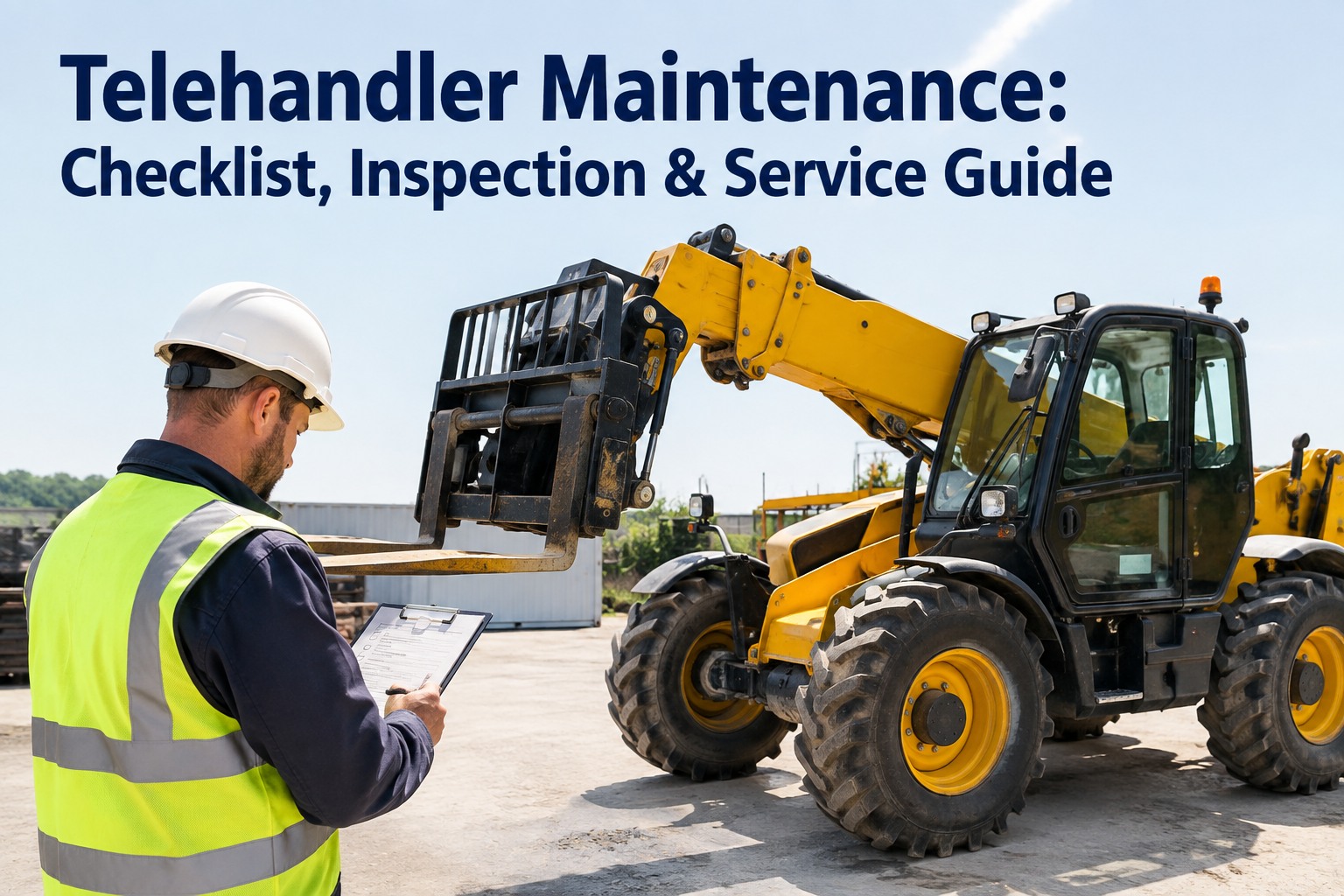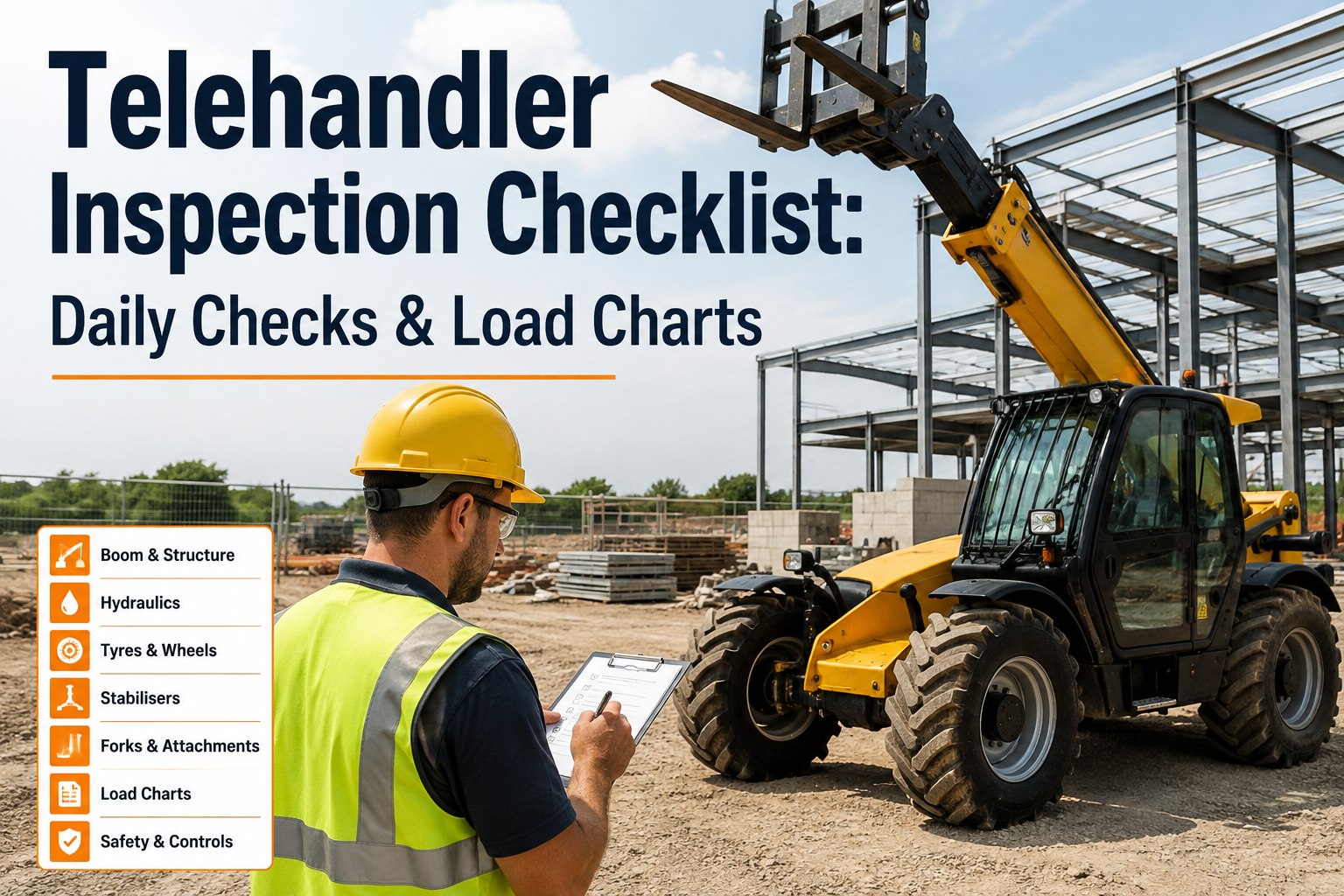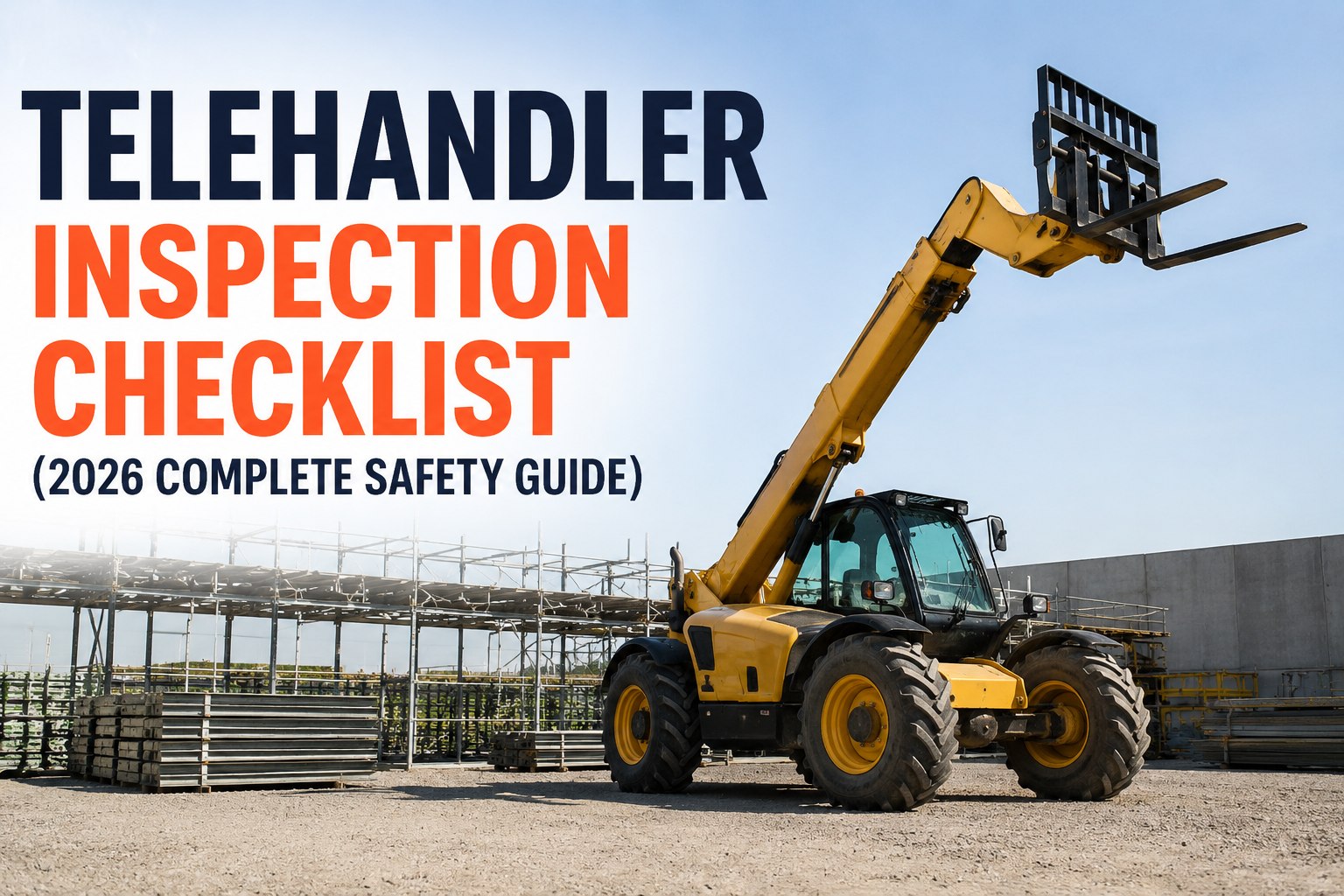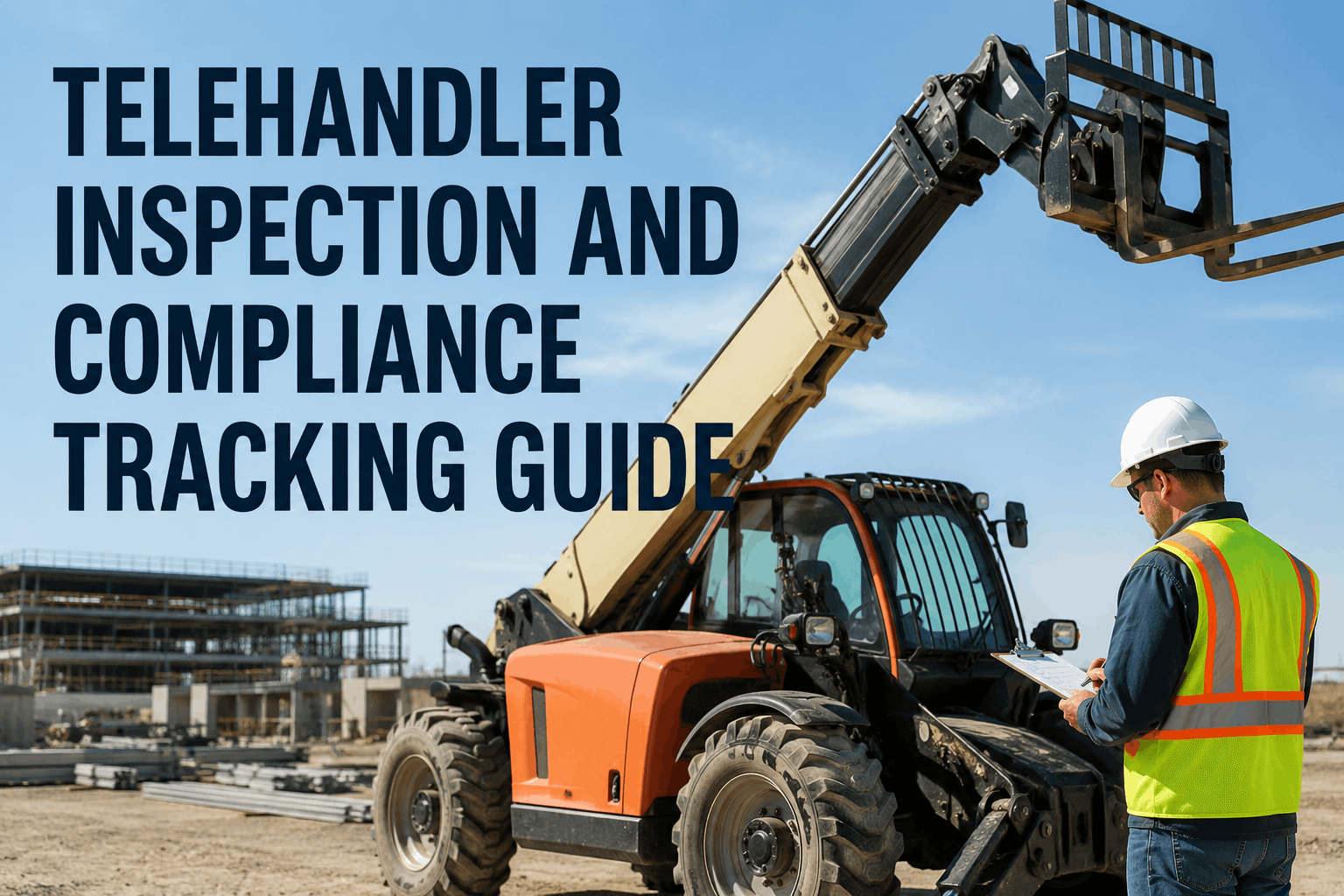
A telehandler is the most deceptively dangerous machine on a construction site — it's part forklift, part crane, and its lifting capacity drops sharply the moment the boom extends or rises. That single physics fact is why telehandlers are tied to a disproportionate share of site fatalities, with tip-overs the leading cause. The compliance picture is just as demanding: OSHA 29 CFR 1926.602 requires a documented daily inspection before each shift, ANSI B56.6-2021 specifies a detailed inspection standard covering load charts, stability systems, and attachments, and inspection records must be retained for years — with willful-violation fines reaching into six figures. Yet the failure mode that catches most contractors isn't a missed bolt; it's missing paperwork. A paper checklist in a cab can't prove an inspection happened when an OSHA investigator or insurer asks. HVI's telehandler inspection software turns the daily walkaround, the load-chart and attachment checks, and every defect into one timestamped, photo-backed, audit-ready record across your whole fleet. This guide breaks down the compliance framework, how to read a load chart, the inspection zones that matter, and how HVI keeps the documentation defensible. schedule a 30-minute walkthrough with our team to see it mapped to your JLG and Genie machines.
The inspection keeps the machine upright. The record keeps you out of court.
HVI puts OSHA- and ANSI-aligned telehandler checks on every operator's phone — load-chart verification, attachment locks, hydraulics, and stability systems — logged with photos, time-stamped per machine, and exportable for an auditor in seconds.
The telehandler compliance framework
Three overlapping authorities govern telehandler inspections. Mapping them is the first step to a program that survives an audit — and a tip-over investigation.
OSHA 29 CFR 1926.602
Requires a documented daily visual inspection before each shift, with findings recorded. A defective machine is removed from service until repaired. Annual third-party inspection requirements apply to certain configurations.
ANSI B56.6-2021
The detailed industry standard for rough-terrain telehandlers — covering load charts, stability systems, and attachments. It defines the inspection criteria contractors are expected to meet in practice.
Recordkeeping & state rules
Documentation must capture operator, date, deficiencies, corrective actions, and supervisor sign-off. Records are retained for years, and some states add their own intervals — making provable history essential.
Willful violations resulting in serious injury can reach into six-figure fines per violation, with criminal prosecution possible after a fatality. Documentation isn't bureaucracy — it's the legal shield that proves the machine was inspected and safe before it went to work.
Read the load chart before you lift — every time
The single most important habit on a telehandler is consulting the load chart. Lifting capacity is not a fixed number — it shrinks as the boom changes position, and each attachment has its own chart.
Capacity drops as the boom extends
A telehandler's rated capacity falls sharply as the boom extends outward or lifts higher. A machine that lifts its full rating retracted may handle only a fraction of that at full reach. The load chart maps capacity against boom angle and extension.
Every attachment has its own chart
Fork carriages, buckets, and truss booms each carry a separate load chart. The correct chart for the fitted attachment must be installed and legible in the cab — using the wrong chart is a direct path to overload and tip-over.
Know the operating envelope
The chart shows the operating range (min/max boom angles, retracted to fully extended) and the operating envelope — the safe zone for a given load. Stay inside it, and confirm the load stability indicator before placing any load at height.
Verifying the right load chart is installed for the fitted attachment is a check operators skip under time pressure — and one HVI can require before the inspection is marked complete. sign up for a free HVI account and make load-chart verification a required, logged step, or schedule a live demo to see attachment checks tied to each machine automatically.
The daily inspection by zone
Work the machine in zones so nothing is missed. In HVI, each zone is a checklist section the operator completes on a phone — with a photo required on any flagged item.
Zone 1 Boom & hydraulics
- Boom sections and cylinders for cracks, wear, or leaks
- Hoses, fittings, and frame-level cylinder for seepage
- Boom extend, retract, raise, and lower — smooth, no drift
- Boom angle and retract sensors functioning
- Hydraulic fluid level and condition
Zone 2 Forks & attachment
- Fork blades for bends, cracks, or excessive wear
- Carriage locks fully engaged
- Correct load chart displayed for the fitted attachment
- Attachment recognition and quick-attach secure
- Pins, mounts, and powered-attachment lines intact
Zone 3 Stability & chassis
- Stabilizers/outriggers deploy and hold
- Load stability indicator (LSI) sensor working
- Tires for pressure, cuts, and even wear; wheel assemblies
- Front and rear axles, frame for damage
- Frame-level system functions correctly
Zone 4 Cab, engine & safety
- Engine oil, coolant, and fuel; no leaks underneath
- ROPS/FOPS, seat belt, mirrors, and wipers
- Service and parking brakes hold
- Lights, horn, backup alarm, and reversing camera
- Gauges and warning lights clear through warm-up
JLG recommends a documented walkaround of common wear items — boom sections and cylinders, axles, wheels, cab, sensors — then a warm-up and operational check with brakes, lights, and mirrors verified before any load work begins.
Found a defect? Remove it from service
Telehandler defects don't wait. A finding that affects structure, stability, hydraulics, or the load system takes the machine out of service until it's repaired and documented.
Stop & lock out
A defective telehandler is removed from service immediately — tag it out so no one operates it before repair.
Document it
Record the deficiency, operator, date, and the corrective action — the exact fields an OSHA investigation will request.
Repair & verify
Fix the fault, get supervisor sign-off, and return to service only with a documented, verified repair on record.
This is where paper loses and software wins: in HVI a flagged defect auto-creates a work order, sets the machine to out-of-service, and keeps it locked until the repair is signed off — with the full corrective-action trail retained for the years your records must survive. sign up free and turn every defect into a tracked, documented work order.
Paper records vs. HVI compliance tracking
Both run the same inspection. Only one produces the defensible documentation that protects your crew, your company, and your safety officer when it matters most.
Paper records
- Completed checks sit in a cab, invisible to safety managers
- No proof of daily inspection when OSHA arrives
- Load-chart and attachment verification taken on trust
- Defects mentioned verbally, then forgotten
- Annual and recurring inspections lapse unnoticed
- Years of records to store, search, and somehow produce on demand
With HVI software
- Every check time-stamped per operator and machine
- Audit-ready inspection history exports in seconds
- Load-chart and attachment checks required to complete
- A defect becomes a photo-backed work order that locks the machine out
- Annual and recurring inspections scheduled and flagged before they lapse
- Multi-year records stored, searchable, and retained automatically
per willful violation — with criminal charges possible after a fatality and tip-overs the leading cause of telehandler deaths. A documented daily inspection is the single most effective control and the first thing an investigator checks. HVI makes sure it's done, logged, and provable on every machine, every shift.
Frequently asked questions
How often must a telehandler be inspected?
A documented daily visual inspection is required before each shift under OSHA 29 CFR 1926.602, with findings recorded and a defective machine removed from service until repaired. Beyond the daily check, ANSI B56.6-2021 sets the detailed inspection standard for rough-terrain telehandlers, and certain configurations require periodic third-party inspection. Some states impose additional intervals. Inspection records must be retained for years and include the operator, date, deficiencies, corrective actions, and supervisor verification. HVI schedules daily, recurring, and annual inspections automatically and flags them before they lapse, while retaining the full history.
Why is the load chart so important on a telehandler?
Because a telehandler's lifting capacity is not a single number — it drops sharply as the boom extends outward or rises higher. A machine rated to lift its full capacity when retracted may safely handle only a fraction of that at full reach. The load chart maps safe capacity against boom angle and extension, defining the operating range and operating envelope. Critically, each attachment — fork carriage, bucket, truss boom — has its own chart, and the correct one must be installed and legible in the cab. Using the wrong chart or ignoring it is a direct cause of overloads and tip-overs, which are the leading cause of telehandler fatalities.
What does a daily telehandler inspection cover?
Work it in four zones. Zone 1 is the boom and hydraulics — boom sections and cylinders for cracks and leaks, hoses, boom and retract sensors, and smooth extend/retract with no drift. Zone 2 covers forks and attachment — fork blades, carriage locks, the correct load chart for the fitted attachment, and secure quick-attach. Zone 3 is stability and chassis — stabilizers, the load stability indicator sensor, tires, axles, and frame-level system. Zone 4 is the cab, engine, and safety systems — fluids, ROPS/FOPS, seat belt, brakes, lights, horn, and backup alarm. After the walkaround, a warm-up and operational check confirms brakes, lights, and mirrors before any load work.
What records do I need to keep for telehandler compliance?
Documentation must capture the operator name, date and time, any deficiencies found, the corrective actions taken, and supervisor verification. These records must be retained for years — electronic and paper records carry minimum retention periods, and some states require longer. The reason matters: after a tip-over or injury, the first thing an OSHA investigator or insurer requests is proof the machine was inspected and safe before the shift. Missing or incomplete records turn a defensible position into liability. HVI captures every required field automatically and retains a searchable, exportable history, so producing years of documentation takes seconds rather than a frantic file hunt.
How does HVI help with telehandler inspection and compliance?
HVI turns the whole program into one provable system. Operators run OSHA- and ANSI-aligned daily zone checks from a phone, with photos required on flagged items and load-chart and attachment verification built in as required steps. Defects auto-create work orders and lock the machine out of service until a documented, supervisor-verified repair is logged. Daily, recurring, and annual inspections are scheduled per machine and flagged before they lapse, and the full multi-year inspection and service history exports in seconds for an OSHA audit, insurer, or investigation. It works the same across JLG, Genie, SkyTrak, and mixed telehandler fleets. schedule a demo and we will set it up around your specific machines and attachments on the call.
Make every telehandler inspection logged, scheduled, and defensible.
HVI runs your daily zone checks, load-chart and attachment verification, defect work orders, and multi-year recordkeeping in one platform built for construction fleets. Meet OSHA 1926.602 and ANSI B56.6 with documentation you can produce in seconds — and keep every telehandler upright and every operator safe. Sign up free today.
No credit card required · Live in under two weeks · Daily checks + load-chart verification + defect work orders + audit export in one platform